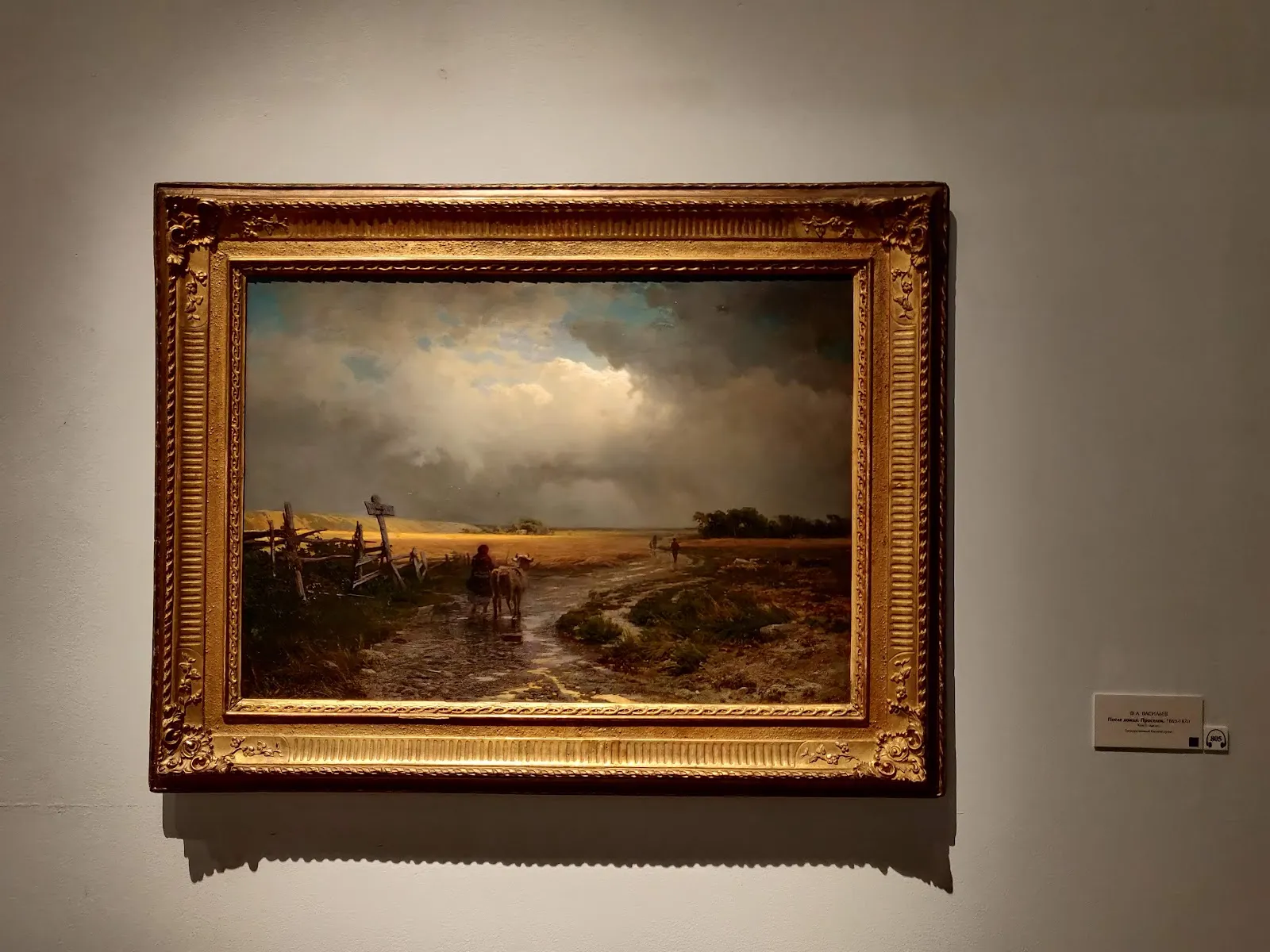
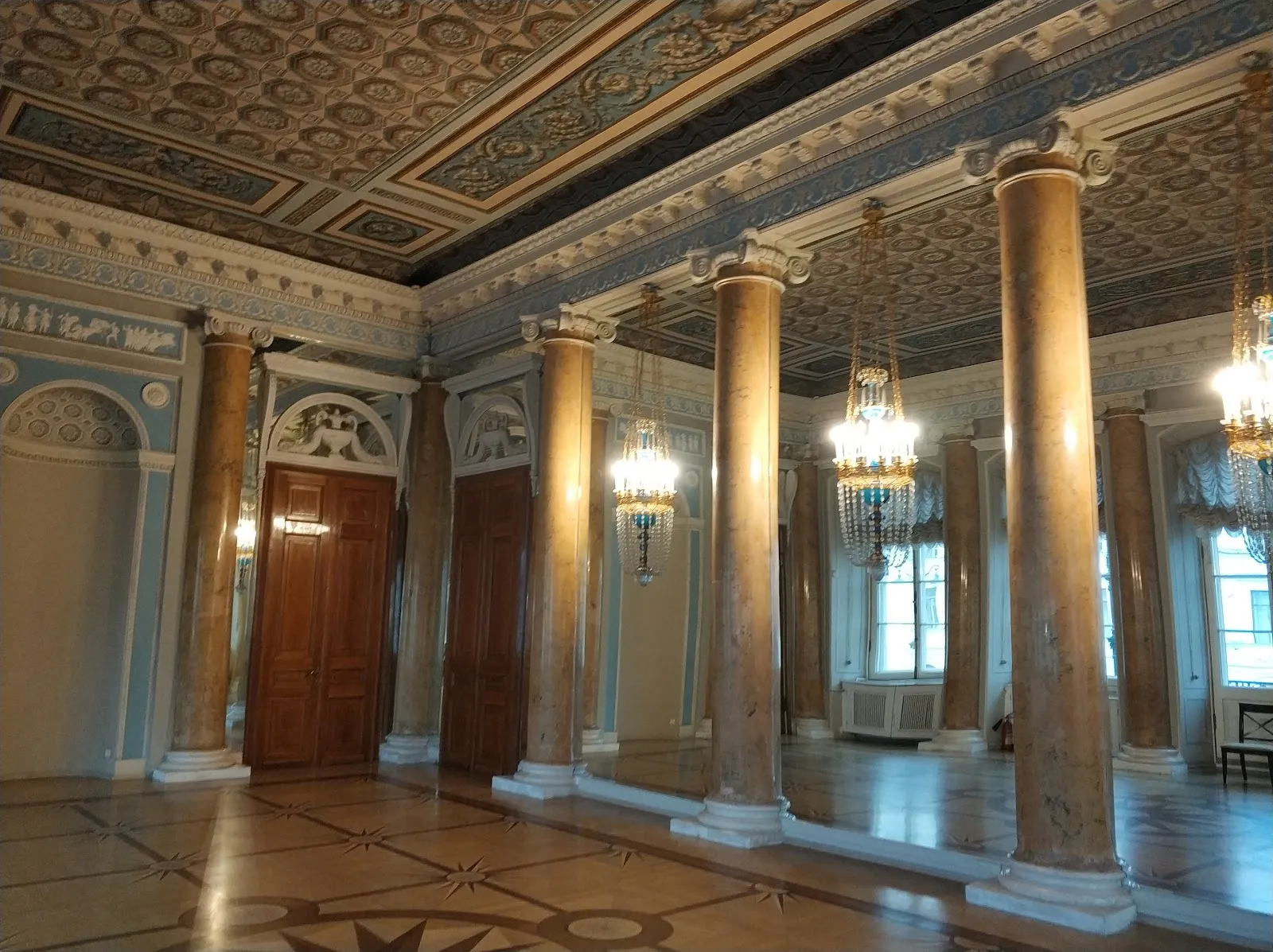
On Nevsky Prospekt at the Moika River, Stroganov Palace is a branch of the Russian Museum housed in a mid-18th-century Baroque residence. Its restored rooms give a sense of the wealth and taste of the Stroganov family, once among Russia’s richest. Look for the Arabesk room, decorated parade rooms, paintings and sculptures; exhibitions may also be included downstairs. The palace suits visitors with time to explore beyond St Petersburg’s busiest sights, especially those interested in historic interiors and aristocratic life.
A palace on Nevsky Prospekt
Stroganov Palace stands where Nevsky Prospekt meets the Moika River. Italian architect Francesco Bartolomeo Rastrelli designed the building for Baron Sergei Stroganov, and construction took place between 1752 and 1754. The family was among the wealthiest in Russia, and the palace’s elaborate interiors reflected that standing.
The present palace replaced a smaller Stroganov residence, probably built in the 1720s. Its position on the city’s main avenue makes it an easy stop on a central St Petersburg walk, close to the Moika embankment.
Baroque design and decorated rooms
The palace is a late Baroque work by Rastrelli, whose other projects included the Winter Palace and Catherine Palace. Its exterior has retained much of its original design. The facade’s decorated windows and large columns face the avenue and river crossing.
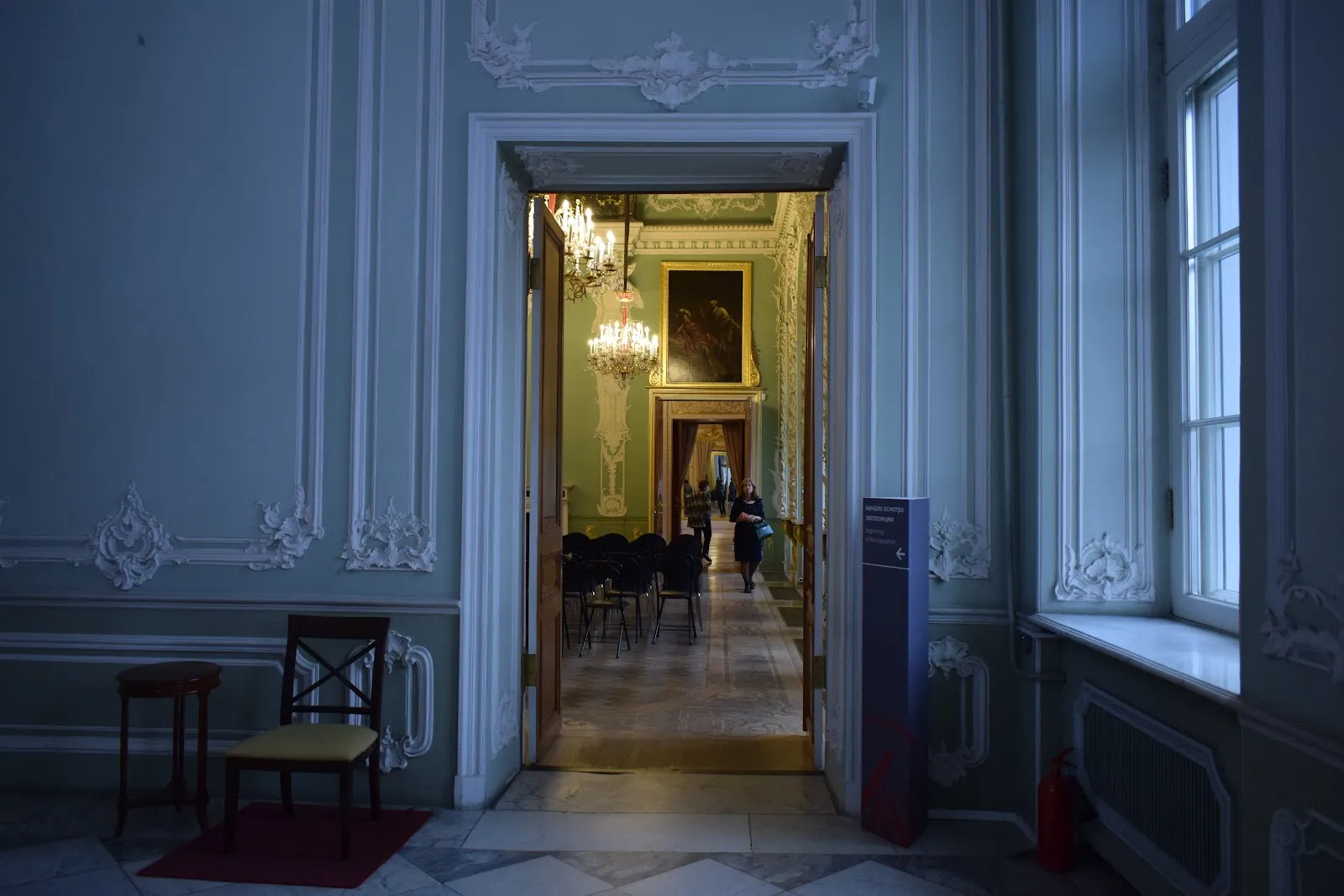
Inside, the contrast between rooms is part of the visit. Some interiors are richly ornamented, while others are more restrained. Paintings, chandeliers, antiques, sculptures and marble details appear among the rooms. The Arabesk room is a particular highlight, and the parade rooms give a sense of the formal spaces used in aristocratic life.
From family residence to museum
The palace changed roles after the Russian Revolution. It was nationalized in 1918 and used as a museum devoted to aristocratic life; the building later housed the Ministry of Shipbuilding. The Russian Museum took ownership in 1988, and the palace now operates as one of its branches, with permanent and temporary exhibitions.
Before setting out, check the Russian Museum’s palace page for current exhibition and event information. The entrance can be easy to miss: look for a small door directly on Nevsky Prospekt, rather than entering through the courtyard associated with the chocolate museum. Ask at ticket purchase whether a downstairs exhibition is included. Concerts and other events are also held at the palace.
Perguntas frequentes
Where is Stroganov Palace?
It is at Nevsky Prospekt and the Moika River in central St Petersburg, at Nevsky Ave, 17.
What should I see inside Stroganov Palace?
Look for the Arabesk room, parade rooms, paintings, sculptures and decorative interiors. The palace also has permanent and temporary exhibitions.
How do you find the entrance?
Look for a small door directly on Nevsky Prospekt. The entrance is not inside the courtyard where the chocolate museum is located.
Is Stroganov Palace part of the Russian Museum?
Yes. The palace is a branch of the Russian Museum, which has owned the building since 1988.