On Ulitsa Volkhonka, near the Kremlin and the Moskva River, the Cathedral of Christ the Saviour is a major Russian Orthodox church with white walls and gilded domes. The original 19th-century cathedral commemorated Russia’s victory over Napoleon; after its demolition in 1931, the building was reconstructed in the 1990s. Inside, look for the wall paintings, mosaics and ornate decoration. For a wider view of central Moscow, visit the observation platforms between the bell towers, 40 metres above the ground.
A cathedral built to remember the war of 1812
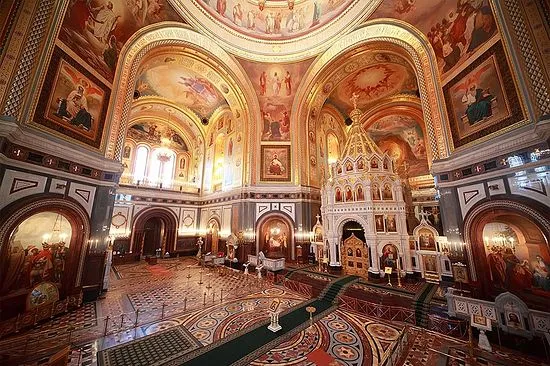
Tsar Alexander I ordered the cathedral to commemorate Russia’s victory over Napoleon and honour those who died in the 1812 war. Construction began in 1839, following a design by architect Konstantin Ton, and the original church was completed in 1883.
Its history changed sharply in the 20th century. Soviet authorities demolished the cathedral in 1931, and a planned Palace of the Soviets was never completed. The church was reconstructed in the 1990s, using the original project as its model, and the new building was completed in 2000.
What to look for inside
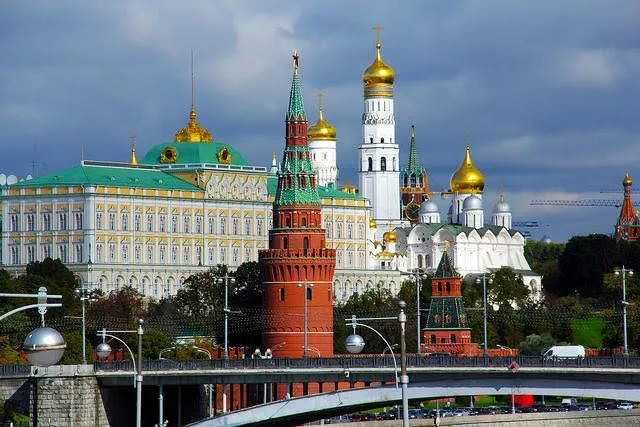
The cathedral’s white exterior and golden domes are visible across central Moscow, but the interior is a substantial part of a visit. Look up to the soaring ceilings and dome, then take time with the wall paintings, mosaics and ornate decoration. Religious relics and artefacts are also displayed inside.
This is a working Russian Orthodox church, not only a landmark. Its role in worship is part of the setting, so keep your voice low and follow the expectations for visitors. Clothing that covers shoulders and knees is appropriate. Photography and mobile-phone rules appear in visitor accounts, but the available information is inconsistent, so check posted instructions at the entrance.
Views from the observation platforms
Four panoramic platforms sit between the bell towers, about 40 metres above the ground. From this central position, you can see the Moskva River, the Kremlin, Gorky Park, the old lanes around Ostozhenka and Prechistenka, and the former industrial buildings on Red October Island. Binoculars are available for closer views, including toward the Kremlin.
Access to the platforms requires a ticket. An elevator takes visitors part of the way, but stairs remain, so the climb may not suit anyone who needs step-free access. The cathedral entrance and parking are listed as wheelchair accessible, but that does not establish that the observation platforms are accessible.
Perguntas frequentes
Is there an entry fee for the cathedral?
The cathedral itself is described as free to enter. The observation platforms require a separate ticket.
How long should I spend at the Cathedral of Christ the Saviour?
Allow about one to two hours to see the interior and, if you choose, visit the observation platforms.
Can you go up to an observation deck?
Yes. Four platforms between the bell towers offer views over central Moscow from about 40 metres up. Access requires a ticket and includes stairs.
What should I wear to the cathedral?
Wear clothing that covers your shoulders and knees when entering.