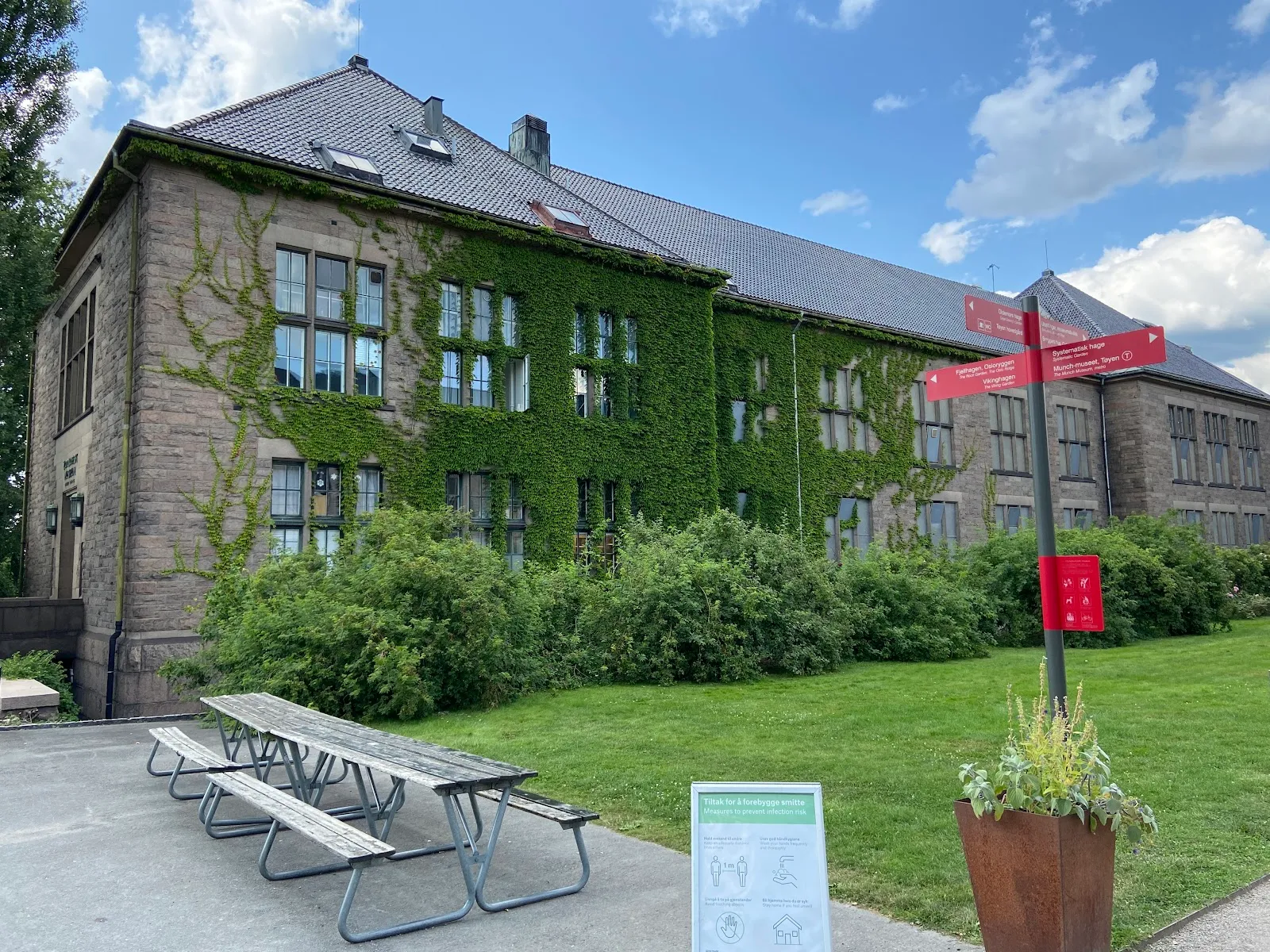
Oslo’s Natural History Museum sits within the Botanical Garden in Tøyen, with galleries devoted to geology, zoology and climate. Look for fossils, dinosaur skeletons, crystals and minerals in Brøgger’s House, then see Norwegian wildlife in detailed animal displays. The Climate House uses interactive exhibits to explain climate change and possible responses. The garden adds a quieter outdoor stop, with a Scented Garden and glasshouses including the Palm House and Victoria House. Museum admission is charged; the garden is free to enter.
Three ways to explore nature
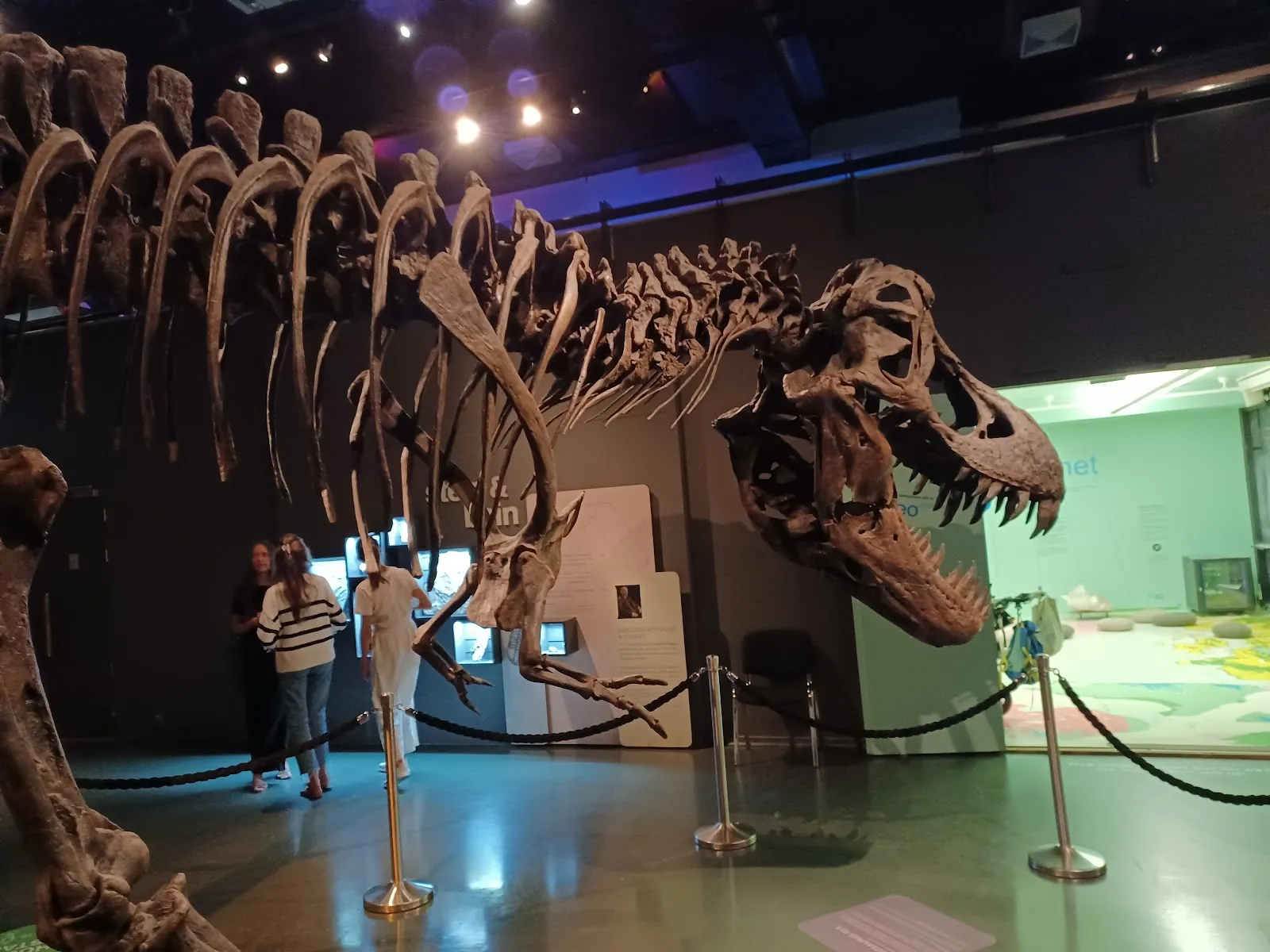
The museum’s collections are arranged across buildings with different subjects. Brøgger’s House focuses on geology, the Zoology Museum presents animal life, and the Climate House takes an interactive approach to climate change. Together, they cover everything from minerals and fossils to wildlife and the systems that shape the planet.
Give yourself time to move between the sections rather than treating the museum as a single gallery. The displays include both large-scale sights, such as dinosaur skeletons, and smaller specimens, including minerals and birds. Explanatory text accompanies the zoological displays, with English translations available for many of them.
Geology, fossils and animal displays
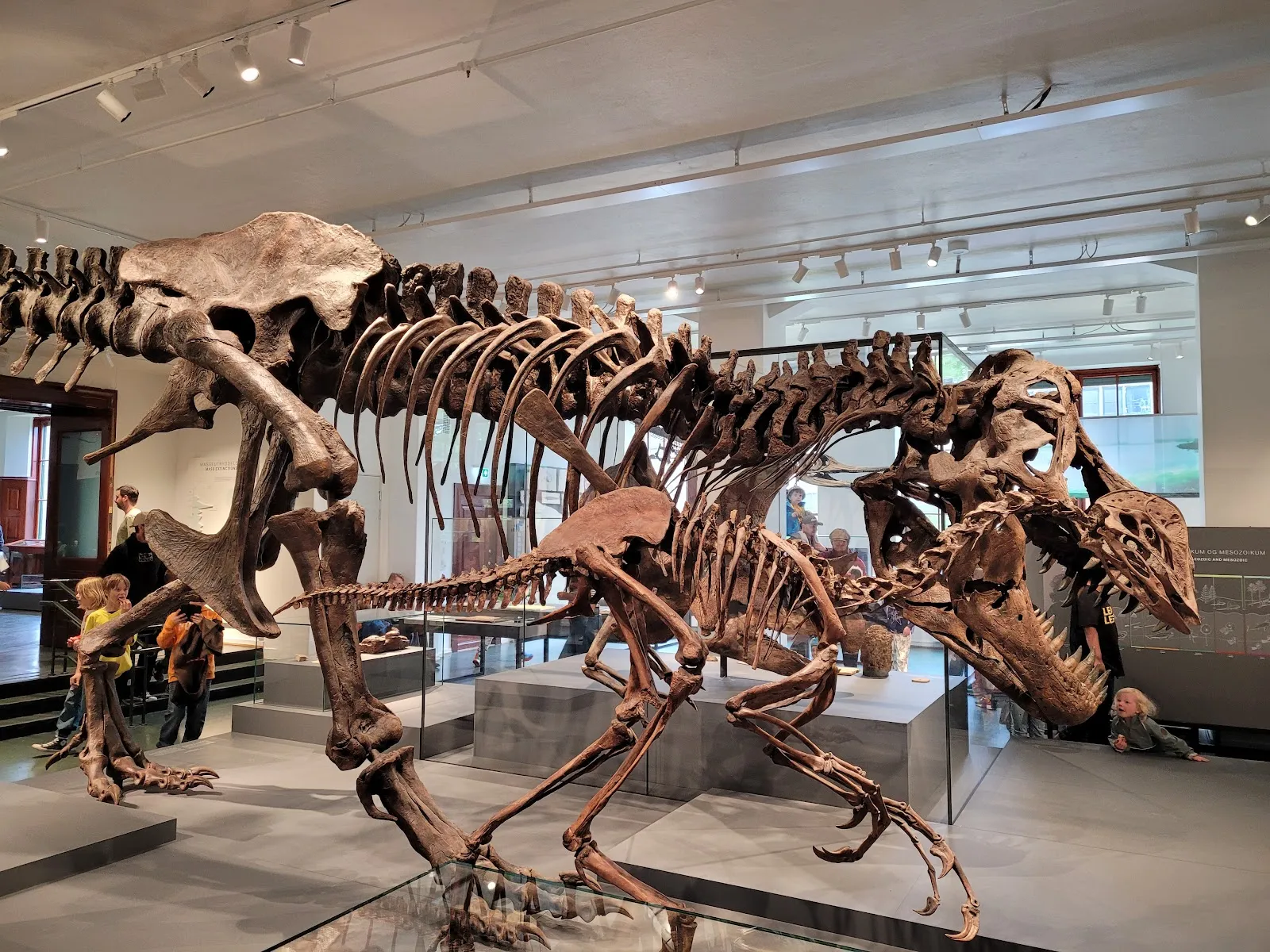
Brøgger’s House brings together crystals, minerals and fossils. The geology collection includes a recreated crystal cave, while the fossil displays cover prehistoric life. The museum also has dinosaur skeletons, making this section a natural place to start if you are visiting with children interested in fossils and ancient animals.
In the Zoology Museum, carefully arranged scenes show animals in settings that evoke their habitats. The collection ranges from Norwegian wildlife, including Arctic species, to animals from other parts of the world. Displays include a model of a beaver dam and scenes of wildlife from Antarctica and African rainforests. The range makes this section useful for seeing how varied animal life is across regions.
Climate House and the Botanical Garden
The Climate House, or Klimahuset, uses sensory and interactive exhibits to explain climate change. Its displays focus on how the climate works as well as responses to change, giving visitors a more hands-on experience than the specimen galleries.
Outside, the Botanical Garden is part of the museum grounds and is free to explore. Its glasshouses include the Palm House and Victoria House, and the garden also has a Scented Garden. Older garden areas preserve heritage plants, while the Arboretum has flowering trees in spring. If you want to see both the indoor collections and the grounds at an unhurried pace, set aside several hours.
Perguntas frequentes
Is the Botanical Garden free to visit?
Yes. The garden is free to enter, while museum admission is charged.
What can you see at Oslo’s Natural History Museum?
The museum has geology, zoology and climate exhibits, including minerals, fossils, dinosaur skeletons, animal displays and interactive climate exhibits.
How long should you plan for a visit?
Allow several hours to explore the museum sections and the Botanical Garden.
Is the museum suitable for children?
Yes. The collections include dinosaurs, fossils and animal displays, and the Climate House has interactive exhibits.