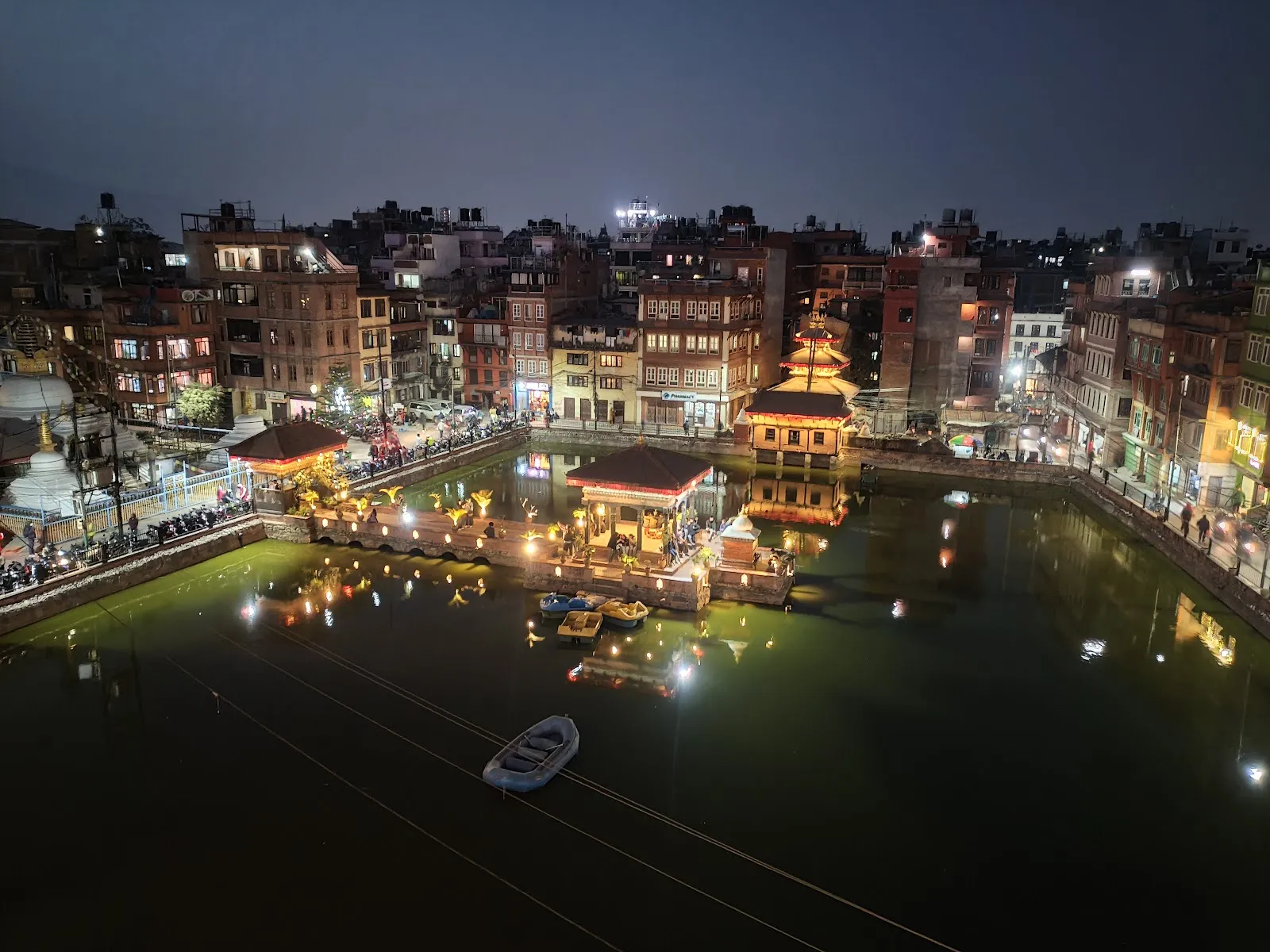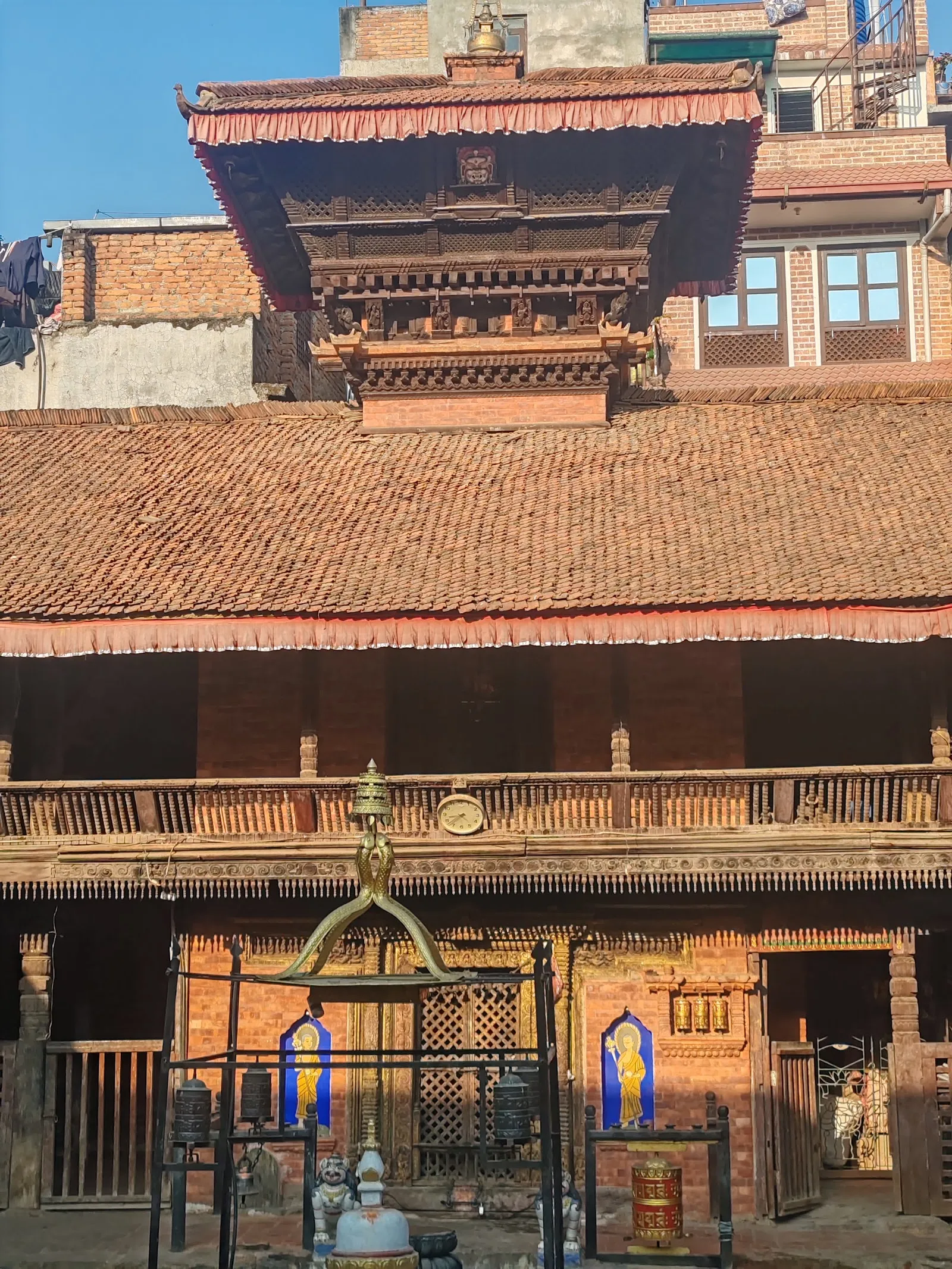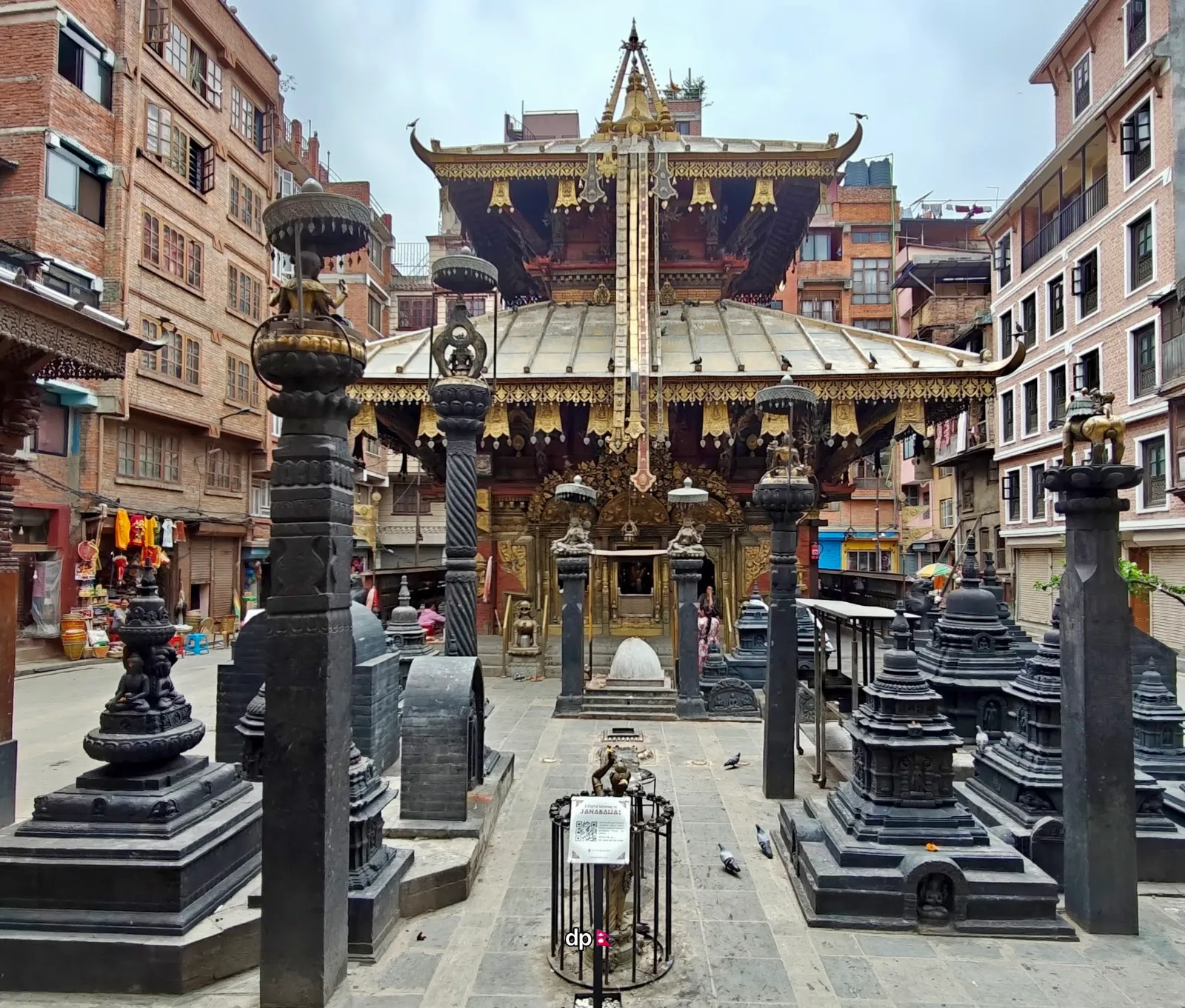
Janabaha Dyo, also called Seto Machhindranath Temple, is a Hindu and Buddhist place of worship in Kathmandu’s old city, between Asan and Indra Chowk. Its quiet courtyard is a welcome pause from the busy lanes, with Newari woodwork, bronze images, stupas and smaller shrines to look at. The central deity is revered by both communities and associated with Avalokiteshvara and Karunamaya. If your visit coincides with the annual chariot festival, you can see the deity carried through Kathmandu’s streets.
A shared place of worship
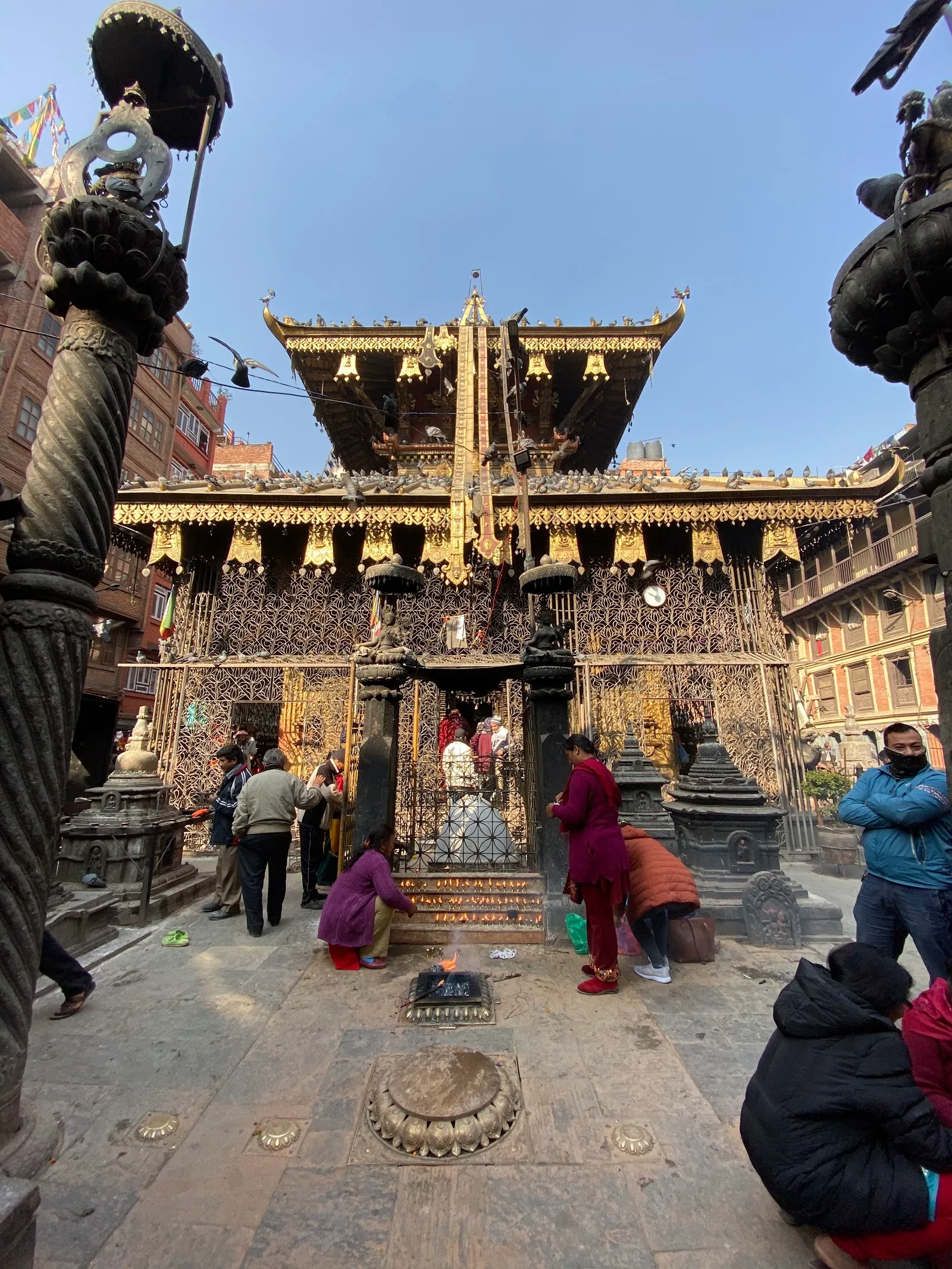
Janabaha Dyo is known by several names, including Jana Baha and Seto Machhindranath Temple. Its central deity is revered by Hindus and Buddhists. Buddhist traditions associate Seto Machhindranath with Avalokiteshvara, while the deity is also known as Karunamaya. These connections give the temple a place in the religious life of both communities.
The temple sits in Kathmandu’s old city, between Asan and Indra Chowk. Busy streets surround the complex, but the courtyard offers a quieter place to pause. It is a working religious site, so take care around people who are praying and treat the space with respect.
What to see in the courtyard
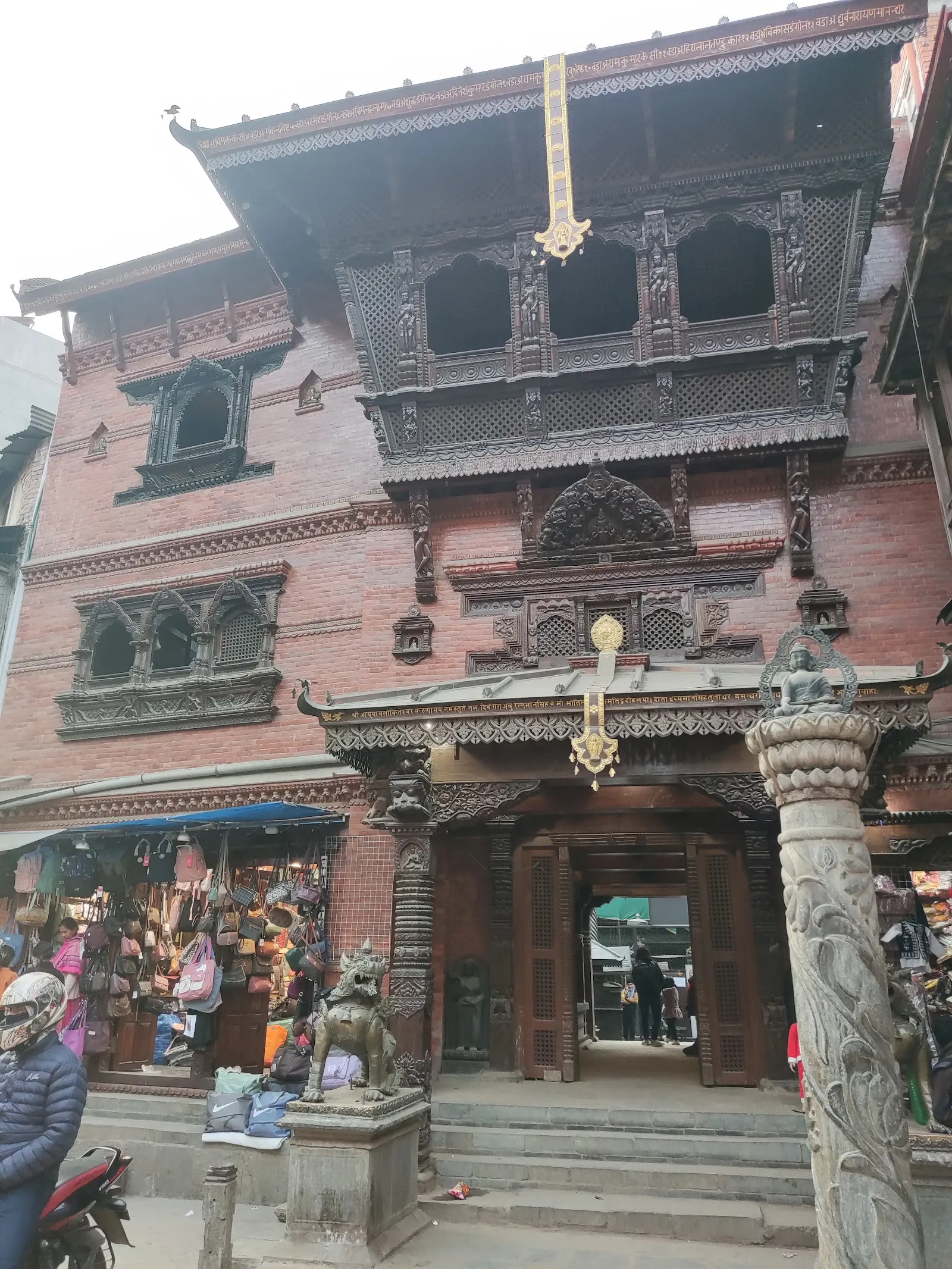
Look beyond the main temple to the smaller shrines, chaityas, stupas and statues around the courtyard. The Newari architectural details include intricate wood carvings, while bronze images of Lokeshvara are among the works associated with the site. The combination of the central shrine and surrounding sacred structures gives the courtyard plenty to notice at a measured pace.
A small domed structure outside the main temple is believed to be a stupa dedicated to Kanakmuni Buddha. One account holds that it was buried to protect it from looters and that only its upper portion is visible today. Treat this as a local belief, not a confirmed account of the structure’s history.
The chariot festival
The temple is closely linked to the annual Jana Baha Dyah Jatra, also called the Seto Machhindranath Chariot Festival. During the procession, the deity is carried through Kathmandu’s streets. The event is a major reason to time a visit for the festival period, which falls around March or April; check the dates locally before making plans.
A legend connected with the procession tells of King Yaksha Malla capturing Yamaraj, the god of death, and seeking immortality. In the story, Seto Machhindranath advises the king to build a temple and arrange an annual chariot procession so the deity can bless people with happiness and long life. The account links the festival to the temple’s continuing devotional role.
Perguntas frequentes
Where is Janabaha Dyo Temple?
It is in Kathmandu’s old city, between Asan and Indra Chowk, on Siddhidas Marg.
Can both Hindus and Buddhists visit the temple?
The deity is revered by both Hindus and Buddhists. The site is described as welcoming to people of all faiths.
When is the Seto Machhindranath chariot festival?
The annual Jana Baha Dyah Jatra takes place around March or April. Check locally for the procession dates.
What is there to see in the courtyard?
The courtyard has shrines, chaityas, stupas and statues, along with Newari wood carvings and bronze images.