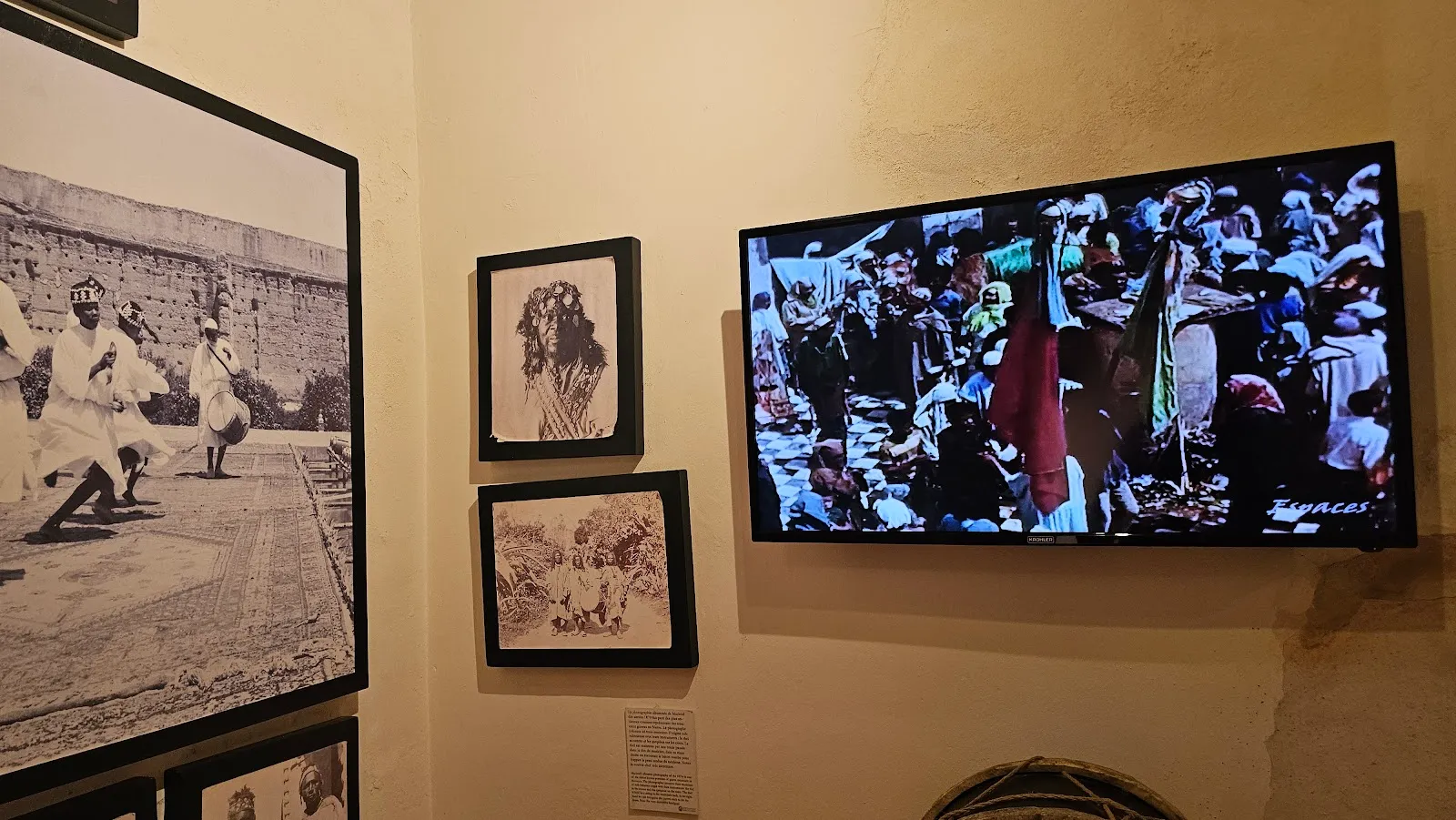
Dar Si Said Museum is a museum of Moroccan arts and crafts in a former 19th-century palace at 8 Rue de la Bahia, in Marrakech’s medina, near Bahia Palace. Its rooms and courtyards are part of the visit: look for zellij mosaics, carved wood and decorated ceilings alongside carpets, clothing, jewelry and other craftwork. The collection includes pieces from different Moroccan regions, with weaving and carpets at its centre. The spacious layout is often quiet, giving you room to study the details and take photographs.
A palace shaped by Moroccan craftsmanship
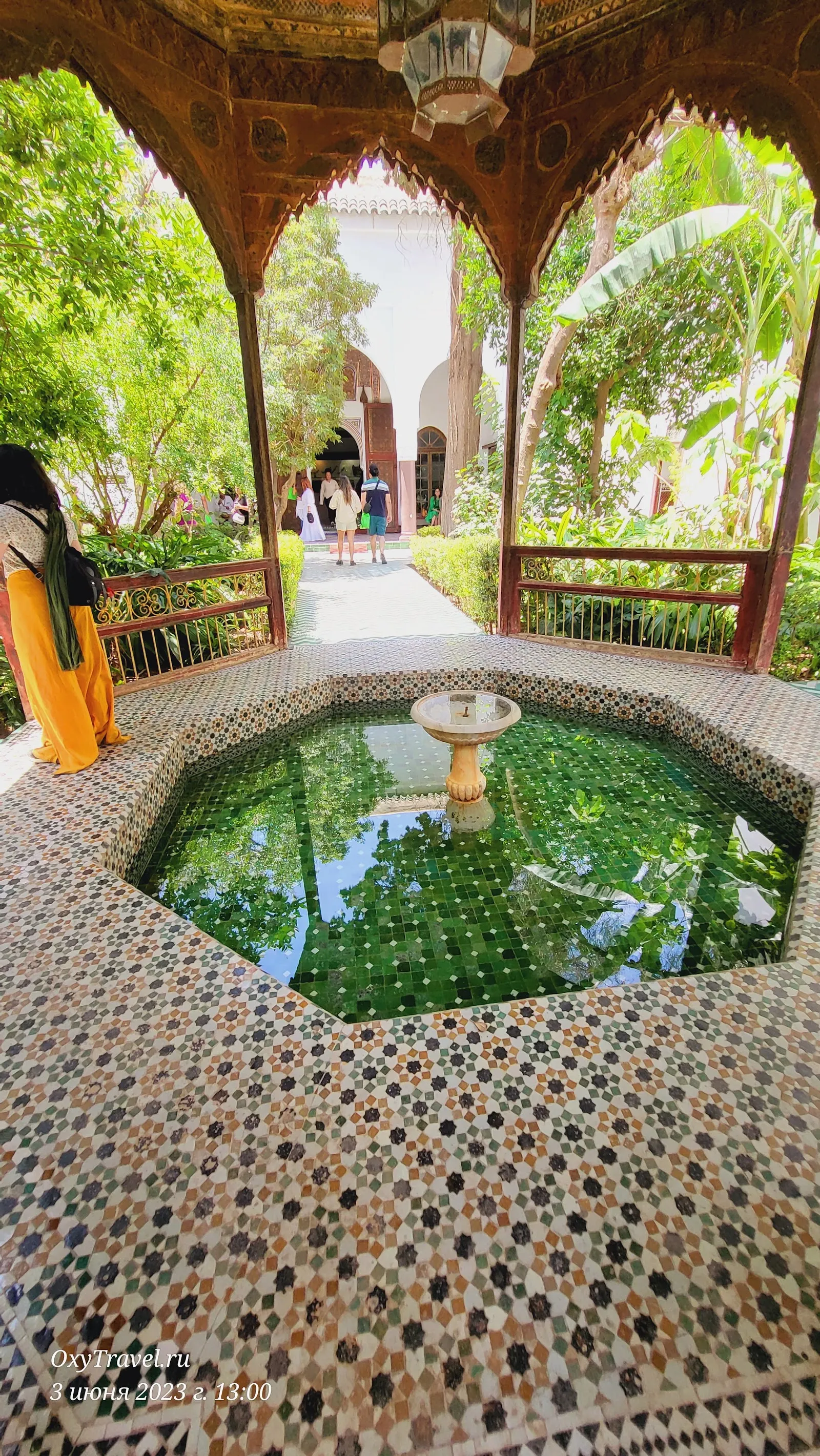
Dar Si Said occupies a 19th-century mansion in the medina, built for Si Said, brother of Grand Vizier Bou Ahmed. The building is arranged around courtyards, with rooms on two floors. Its original residential setting matters: this is a place to look at both the objects on display and the decoration that surrounds them.
Carved wood, painted surfaces, plasterwork and zellij tilework appear across the palace. Courtyards connect the rooms, and upper-floor spaces give you a different view of the interior. Take a moment at the entrance to the courtyard and on the second floor, where particularly fine decoration has been noted. The building’s doors, ceilings and balconies also reward a slower look.
Carpets and objects from across Morocco
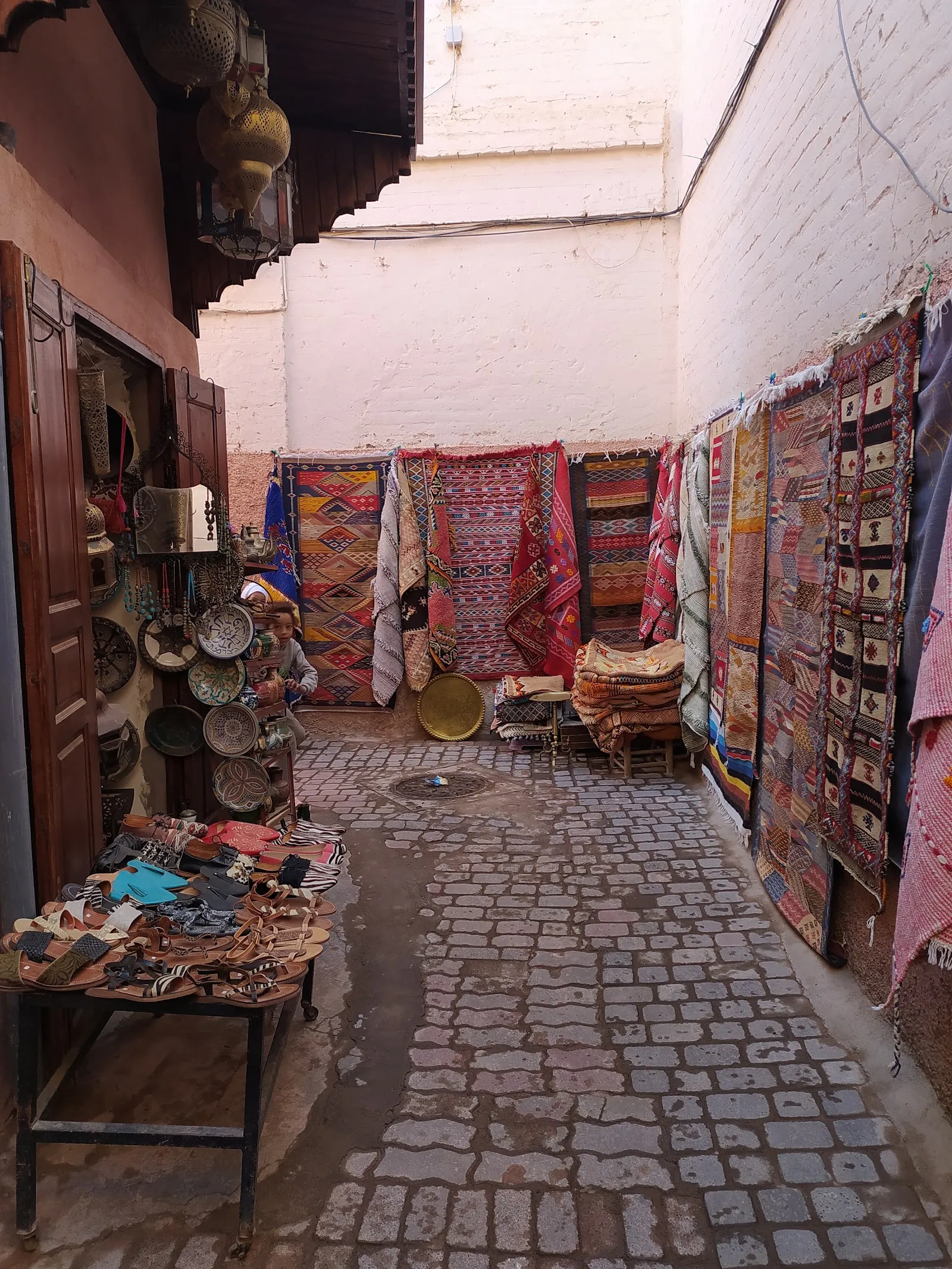
The collection centres on weaving and carpets, with examples associated with areas including the Haouz and the High Atlas. Textiles and traditional clothing sit alongside jewelry, ceramics, leatherwork and other objects. Jewelry in the collection includes pieces linked to the High Atlas, the Anti-Atlas and Morocco’s far south. Pottery examples come from Safi and Tamgroute, while Taroudant is represented by oil lamps.
The range makes the museum useful if you want to compare regional materials and decorative styles in one visit. Wool carpets are a natural place to start, but the other crafts help put weaving in a wider context. Weapons and musical instruments are also among the objects reported in the displays. Short labels accompany at least some exhibits, so you can browse without arranging a guide.
Moving through the rooms
The palace is spacious, with several courtyards and galleries across two floors. Allow time to move between them rather than treating the museum as a single exhibition room. The calm interior and open spaces offer a contrast to the medina’s busier lanes, and the courtyards provide places to pause between displays.
Dar Si Said is close to Bahia Palace, so the two can be visited on the same outing. Finding the museum can take attention: it sits among the medina’s narrow streets, and signs or a map can help. If someone approaches with an offer to lead you there, agree on any payment beforehand or make your own way.
Perguntas frequentes
Where is Dar Si Said Museum?
It is at 8 Rue de la Bahia in Marrakech’s medina, near Bahia Palace.
What can you see at Dar Si Said Museum?
The museum displays carpets, textiles, clothing, jewelry, ceramics and other Moroccan crafts. The palace itself has decorated rooms, courtyards, mosaics and carved woodwork.
Is Dar Si Said Museum free on Fridays?
One visitor reported free admission on Fridays, but the available information does not confirm this as a current policy. Check before you go.
How long should you spend at Dar Si Said Museum?
Allow about 1 to 2 hours to explore the collection, palace rooms and courtyards.