The Angel of Independence, officially the Monumento a la Independencia, stands on a large roundabout on Paseo de la Reforma in Mexico City. A gilded bronze figure of Nike, the Greek goddess of victory, tops a 36-metre Corinthian column. The monument was inaugurated in 1910 for the centenary of the War of Independence and honours the heroes of that struggle. Bronze statues of law, justice, peace and war sit in the lower part, and a mausoleum beneath holds the remains of key figures. It is free to see and is especially fine at sunset and when lit at night.
Built for the centenary of 1910
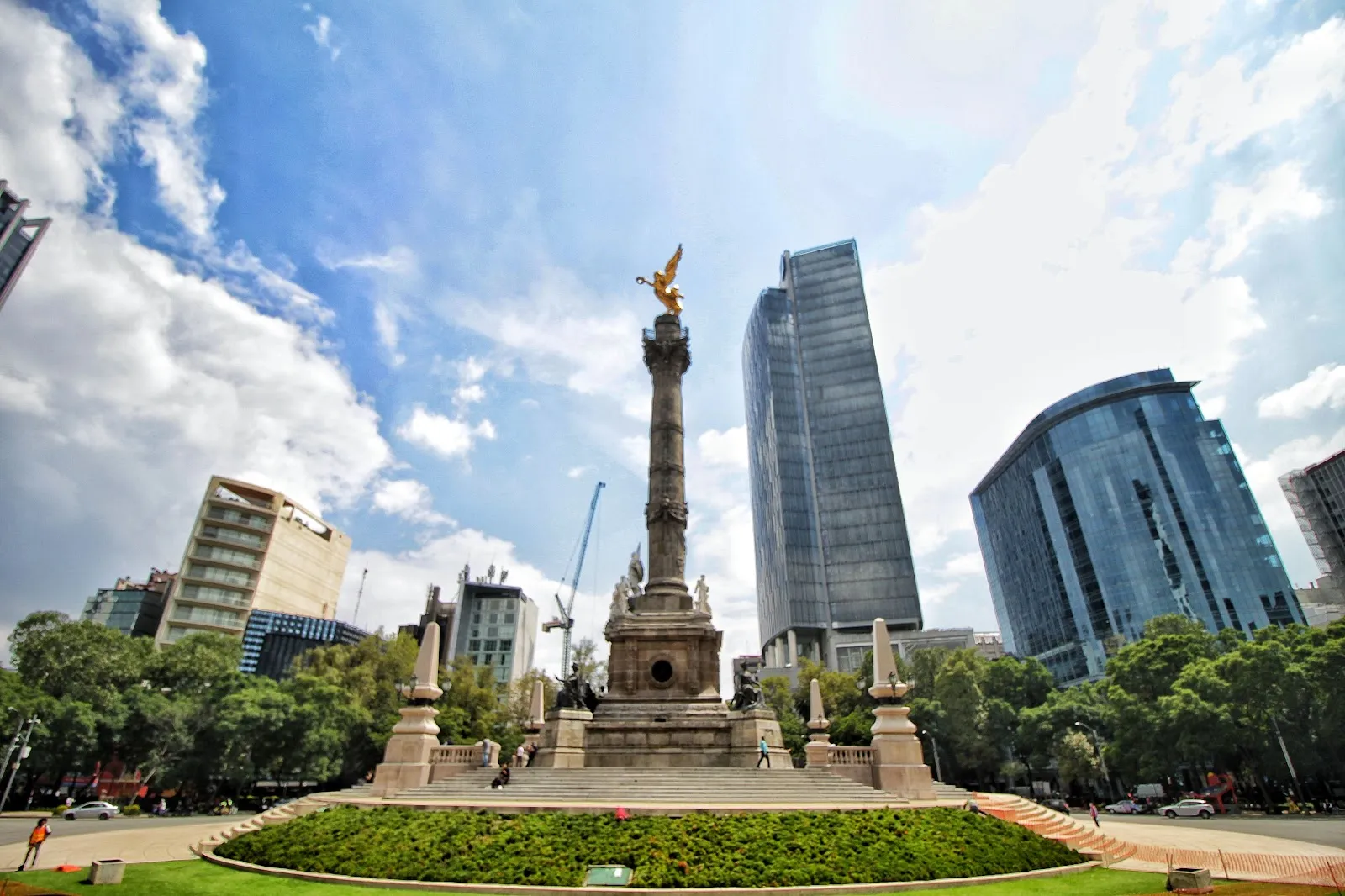
The Angel of Independence was inaugurated in 1910 to mark one hundred years since the start of Mexico's War of Independence. It was commissioned during the presidency of Porfirio Díaz. Its official name is the Monumento a la Independencia, and most people simply call it El Ángel.
The monument stands in the middle of a large roundabout on Paseo de la Reforma, the biggest in the capital. It celebrates Mexico's freedom from Spain and the people who fought for it. An eternal flame burns in front of it in honour of those heroes.
The column and its figures
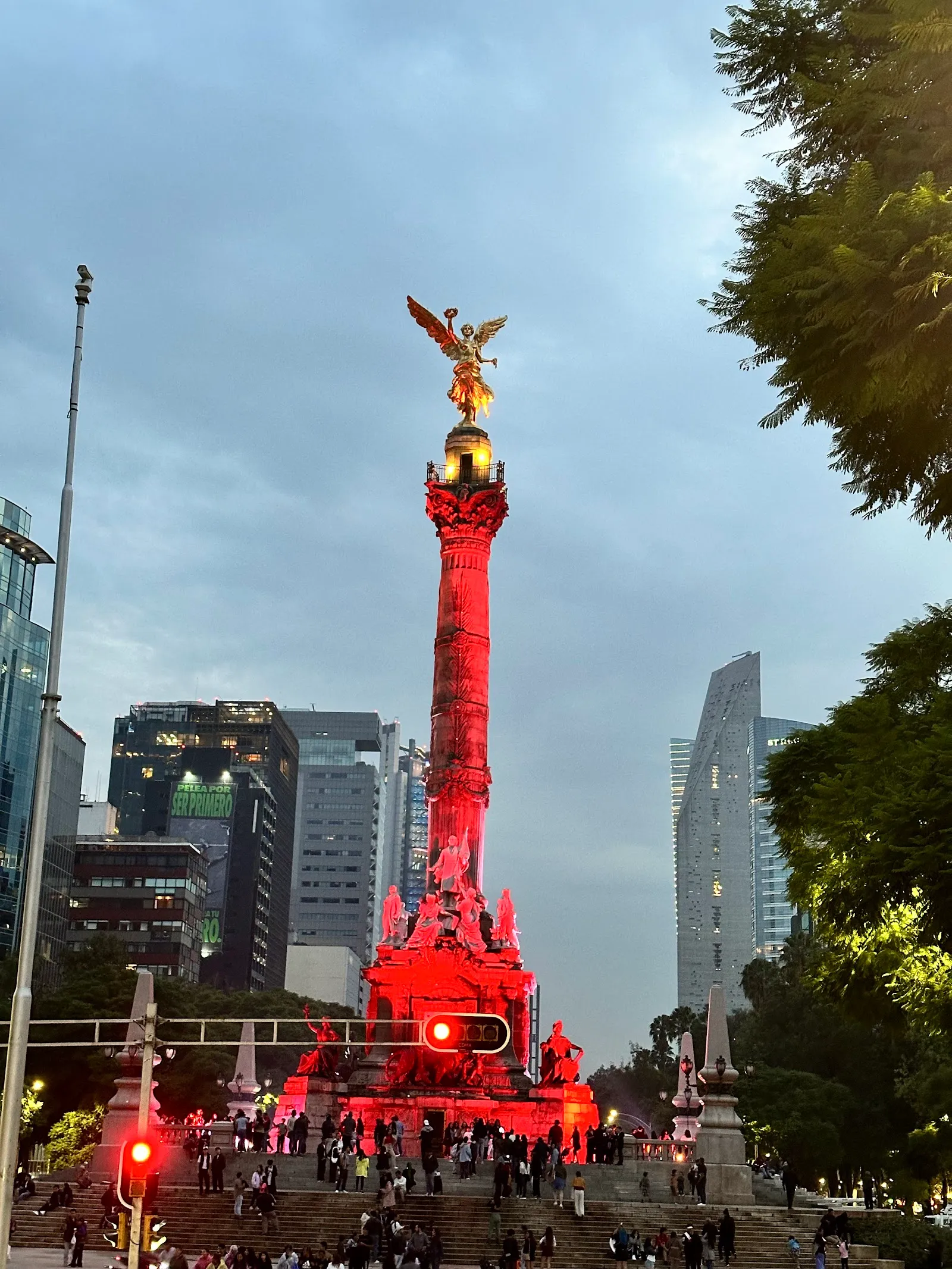
A Corinthian column about 36 metres high carries the statue at the top. The figure is Nike, the Greek goddess of victory, often called the Angel because of her wings. She holds a laurel crown in one hand and a broken chain in the other, a sign of freedom. The statue is made of bronze, weighs about seven tons and is covered in 24-carat gold.
At the base of the column is a statue of Miguel Hidalgo, the independence hero. Lower on the monument are four bronze figures that represent law, justice, peace and war. Together they link the struggle for independence to the values the nation built afterwards.
The mausoleum beneath
Below the monument is a mausoleum that holds the remains of several key figures of the independence movement, among them Miguel Hidalgo. This is why many Mexicans see the site as a place of remembrance as well as a landmark. A quiet walk around the circle, reading the sculptures, is a fitting way to visit.
Life around the monument
The Angel is also a gathering point. Celebrations, cultural events and demonstrations take place around it, and festive crowds fill the avenue before fireworks displays, with music and dancing. Barricades are sometimes put up to protect the monument during protests, and that can limit how close you can get.
In the second week of July the 21K half marathon ends here, after starting at the Torre del Caballito. On Sunday mornings Reforma is closed to cars, so cycling or riding a scooter past the monument is an option.
Paseo de la Reforma and the neighbourhood
Paseo de la Reforma runs diagonally across the city. The Austrian architect Ferdinand von Rosenzweig designed it on the orders of Maximilian I, who ruled Mexico briefly as emperor until 1867. The tree-lined avenue has sculptures, fountains and cafés, and several of the capital's best-known landmarks stand along it.
Walking west from the Angel takes you toward Chapultepec Park and Chapultepec Castle. The monument also sits close to the Zona Rosa district and to many hotels and restaurants.
Perguntas frequentes
Is there an entry fee for the Angel of Independence?
No. The monument is free to see. It stands on a roundabout on Paseo de la Reforma and can be viewed from the surrounding area.
Can you walk up to the base of the Angel of Independence?
Not always. Barriers or boards sometimes close off the base, for example to protect it during protests. The monument can still be seen in detail from the edge of the roundabout.
What is the best time to see the Angel of Independence?
Sunset and the evening are popular, as the gilded statue catches the light and is illuminated at night. Seeing it at different times of day gives a different impression.
What is under the Angel of Independence?
A mausoleum lies beneath the monument. It holds the remains of key figures of Mexico's independence movement, including Miguel Hidalgo.
Where is the Angel of Independence and what is nearby?
It is on Paseo de la Reforma in Mexico City, in the Juárez area of Cuauhtémoc. Walking west along the avenue leads to Chapultepec Park and Chapultepec Castle.