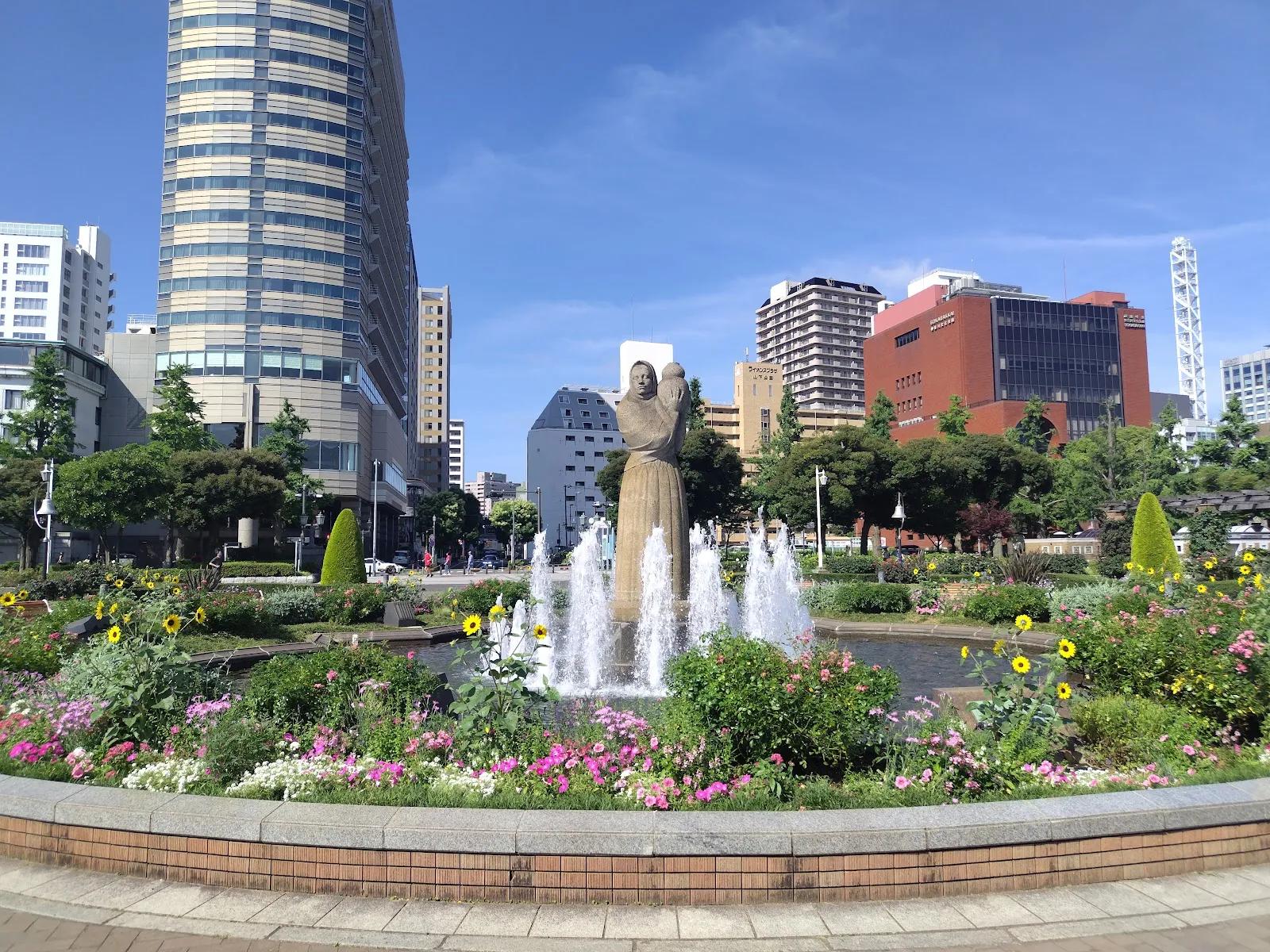
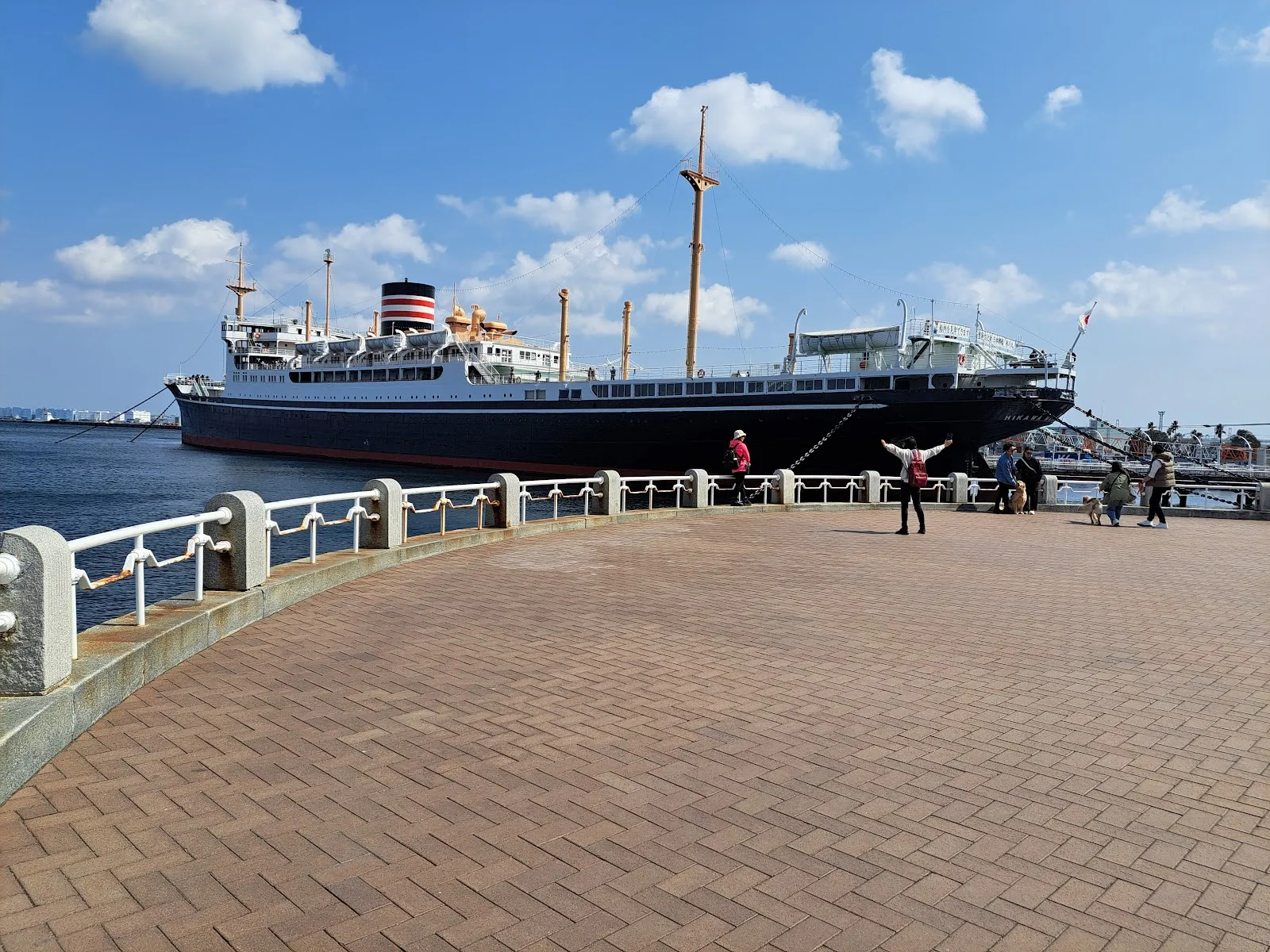
Yamashita Park is a waterfront green space in Yokohama, stretching beside the harbor between Osanbashi and Yamashita Pier. Its promenade, lawns and flower gardens make a calm break between nearby Chinatown and the port sights. Look for the Little Girl in Red Shoes statue, the Indian Water Tower and the Guardian of Water, then take in views of ships, Yokohama Bay Bridge and the moored Hikawa Maru, now a museum. Roses and cherry blossoms bring seasonal color to the gardens.
A park built during Yokohama’s recovery
Yamashita Park opened in 1930 as part of Yokohama’s recovery after the Great Kanto Earthquake of 1923. Rubble from damaged buildings was used to reclaim land along the waterfront. The park’s setting beside the port links its open lawns and gardens to the city’s history as an international harbor.
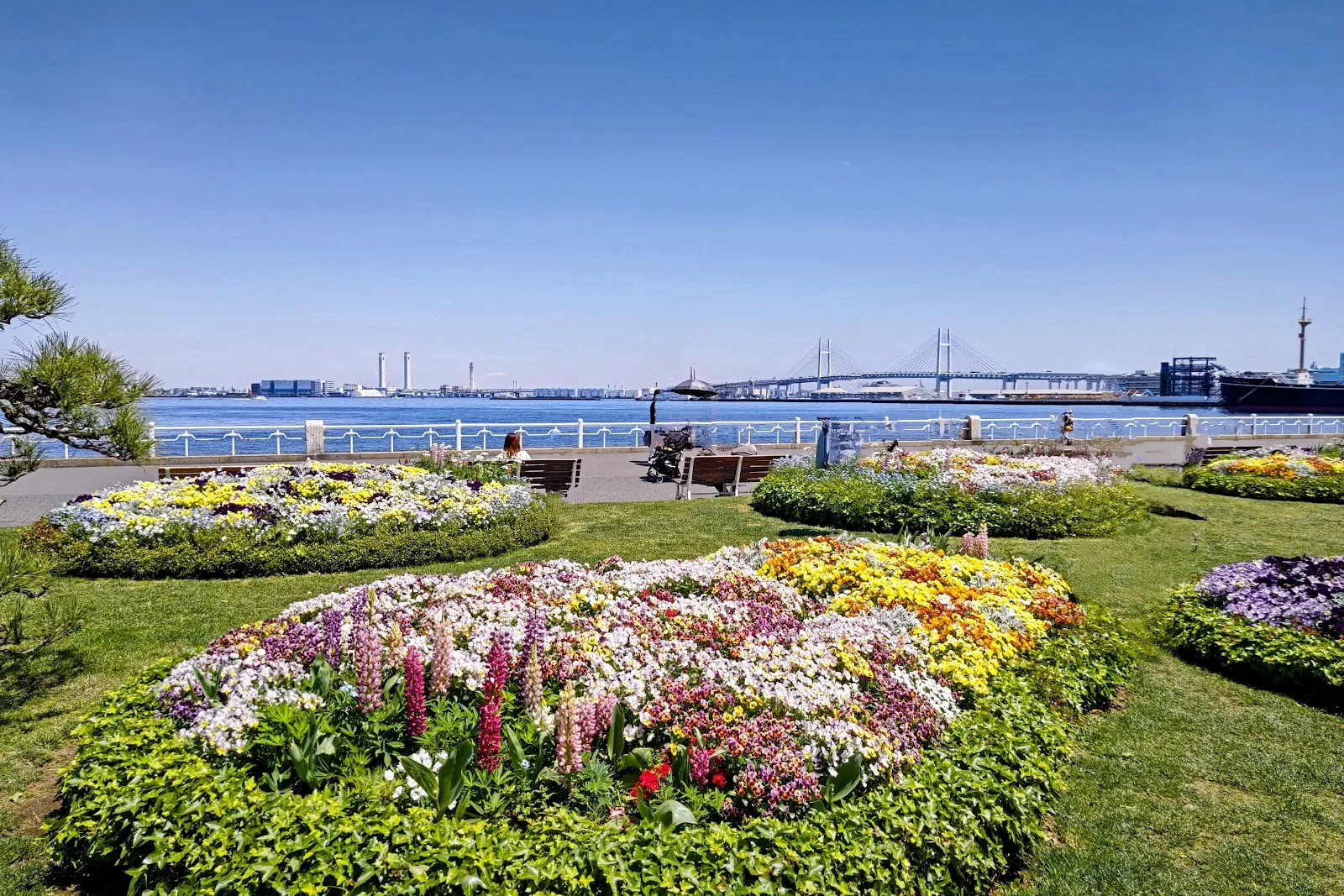
The park runs along the water between Osanbashi and Yamashita Pier. Its promenade gives you a clear view across the harbor, with ships passing through and the Yokohama Bay Bridge in the distance. Across the bay, the Minato Mirai skyline adds a modern city backdrop to the waterfront.
Monuments and gardens along the promenade
Several monuments mark Yokohama’s connections with other places and stories. The Indian Water Tower, also known as the Indian Water Fountain, has mosaic tilework and was donated by the Indian Association in Japan. The Guardian of Water was given by San Diego, Yokohama’s sister city. The Little Girl in Red Shoes statue refers to the story of Kimi Iwasaki, whose life inspired a Japanese song. The Kamome Sailor song monument is another landmark in the park.
The gardens include lawns, flower beds and a rose garden. Roses bloom in spring and autumn, while cherry blossoms add seasonal color in spring. Yamashita Park Avenue, beside the park, is lined with ginkgo trees. Their autumn leaves make the avenue a seasonal extension of a waterfront walk.
Hikawa Maru and the route beyond
The Hikawa Maru is permanently moored beside the promenade. It began carrying passengers to Vancouver and Seattle in 1930, and people associated with its first-class accommodation included the Japanese imperial family and Charlie Chaplin. After its seafaring days, the liner became a museum. You can pair a walk through the park with a visit to the ship, though the park and museum are separate stops.
From the park, continue toward Osanbashi Pier, Yokohama’s cruise terminal, or walk inland toward Chinatown. The promenade also connects with other waterfront sights, including Yokohama Marine Tower. This makes the park useful as a pause between attractions, as well as a destination for a longer stroll.
Choosing when to visit
The park is open at all hours, so you can fit it around nearby sights or visit after dark. Spring and autumn bring seasonal flowers, with roses in both seasons and cherry blossoms in spring. In autumn, the ginkgo-lined avenue beside the park adds another reason to walk the area.
Spring and summer weekends can be lively, with families and groups of friends using the lawns and paths. If you want a quieter walk, choose another time. Benches and open grassy areas give you room to pause and look out over the harbor.
Perguntas frequentes
Where is Yamashita Park?
It is on the waterfront in Yokohama, beside the port and near Chinatown, Osanbashi Pier and Yokohama Marine Tower.
Is Yamashita Park open at night?
Yes. The park is open around the clock, and the harbor and skyline can be seen after dark.
What flowers can you see at Yamashita Park?
The park has roses and cherry blossoms. Roses bloom in spring and autumn, while cherry blossoms appear in spring.
What is the Hikawa Maru?
It is a retired ocean liner permanently moored beside the park. The ship is now a museum.