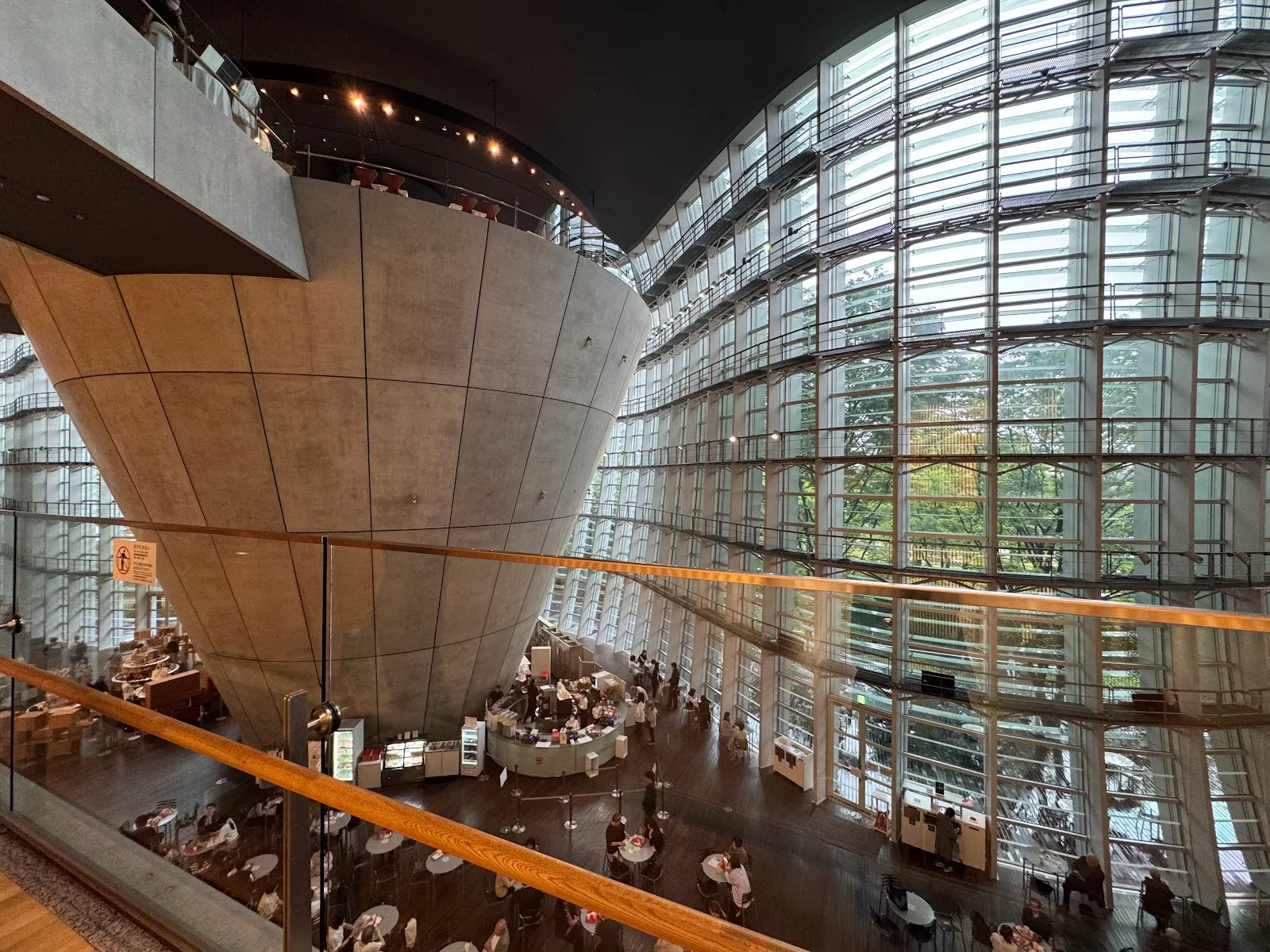
In Roppongi, The National Art Center, Tokyo pairs a striking glass façade with changing exhibitions of Japanese and international art. Designed by Kisho Kurokawa, the building has a broad, light-filled atrium and one of Japan’s largest exhibition spaces. It has no permanent collection, so the art on view changes with the programme; some smaller exhibitions are free, while others charge admission. Look around the architecture between galleries, then pause at a café or browse the museum shop. A restaurant inside occupies one of the building’s distinctive cone-shaped spaces.
A museum built around exhibitions
The National Art Center opened in Roppongi in 2007. Unlike a museum that displays its own collection, it operates as a venue for exhibitions organised by art groups, its curators and partner institutions. That means there is no permanent display to rely on: the works and themes change with the programme.
Shows cover Japanese and international art, with subjects ranging from contemporary work to photography, ceramics, drawings and paintings. Larger temporary exhibitions share the building with smaller presentations, some of which are free. Admission is determined separately for each exhibition, so check the current programme and ticket details before setting out.
Kisho Kurokawa’s glass-and-cone design
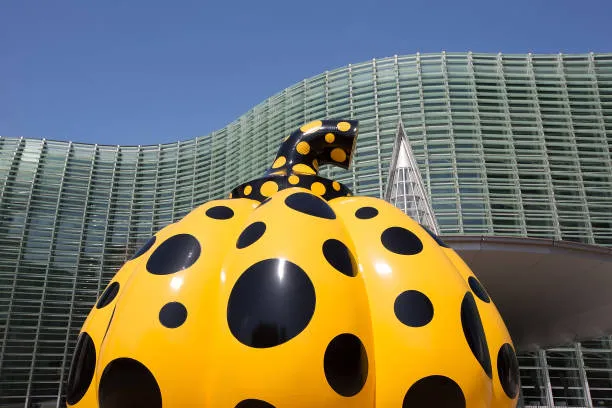
Architect Kisho Kurokawa designed the centre as an open place for art and public use. Its wavy glass exterior gives the building a distinctive outline in Roppongi. Inside, the spacious atrium is brightened by daylight passing through the glass curtain wall. The lobby feels open to the surrounding city, while trees around the site bring greenery into view.
Look for the building’s cone-shaped structures and the details that filter daylight through the glass overhangs. Interior lighting behind wooden panels adds another layer to the design. The main public spaces are worth taking time to see even if the exhibition programme is not a match for your interests. An architecture guide called CONIC is available for visitors who want to explore the design in more detail.
Galleries, reading and a break
The centre has a large exhibition area spread across multiple galleries, as well as an art library, museum shop, cafés and a restaurant. The library collects art-related information and materials, including books and periodicals. It can be useful for students and anyone looking to read further about art.
Between exhibitions, the cafés provide places to sit in the naturally lit interior, and the shop sells art-related goods and other distinctive items. Brasserie Paul Bocuse Le Musée serves French cuisine inside one of the inverted cone spaces. The building also hosts educational activities, talks and workshops, so check the current schedule if you want more than a gallery visit.
Perguntas frequentes
Does The National Art Center, Tokyo have a permanent collection?
No. It is an exhibition venue without a permanent collection, and the works on view change with the programme.
Are exhibitions free?
Admission depends on the exhibition. Some smaller shows are free, while other exhibitions charge an entrance fee.
What is the building known for?
Kisho Kurokawa designed the centre, which is known for its flowing glass façade, spacious atrium and cone-shaped structures.
What can you do besides see exhibitions?
You can visit the art library, cafés, museum shop and restaurant. The centre also holds educational activities, talks and workshops.