Koishikawa Korakuen is an Edo-period strolling garden in Bunkyo, next to Tokyo Dome. Begun in 1629 for the Mito branch of the Tokugawa family, it combines Japanese and Chinese landscape ideas in paths around ponds, hills, bridges and carefully placed stones. Look for miniature scenes inspired by famous places, including a rice paddy that is still cultivated. Seasonal changes bring plum and cherry blossoms in spring, then vivid maple and ginkgo foliage in autumn. Take time to notice the historical markers and pause for dango from the food truck.
A garden shaped by the Mito Tokugawa family
Work on Koishikawa Korakuen began in 1629 under Yorifusa Tokugawa, the first lord of the Mito domain. His son Mitsukuni continued the project, which was completed in the 17th century. The garden belonged to the family’s Edo residence and was created as a place to walk through carefully composed views.
The name Korakuen draws on a Chinese poem about a ruler finding pleasure only after securing the well-being of the people. Chinese influence also entered the garden’s design through the scholar Shu Shunsui, while the grounds depict scenery associated with both China and Japan. The result is a strolling garden where the view changes as you move along its paths.
Ponds, bridges and miniature landscapes
The garden is arranged around a central pond, with paths leading past water, wooded areas, stones and man-made hills. Its scenes evoke four kinds of landscape: sea, mountain, river and countryside. Rather than presenting a single view, the route offers different compositions as you walk.
Look for Engetsu Bridge, also known as the Round Moon Bridge, whose arch is reflected in the water. Other named features include the Seiko embankment, associated with Chinese scenery, and Shorozan Hill, named after a mountain in China. The garden also includes a small rice paddy, which continues to be cultivated. These details make the grounds a place to notice design choices as well as seasonal colour.
Seasonal changes and a modern setting
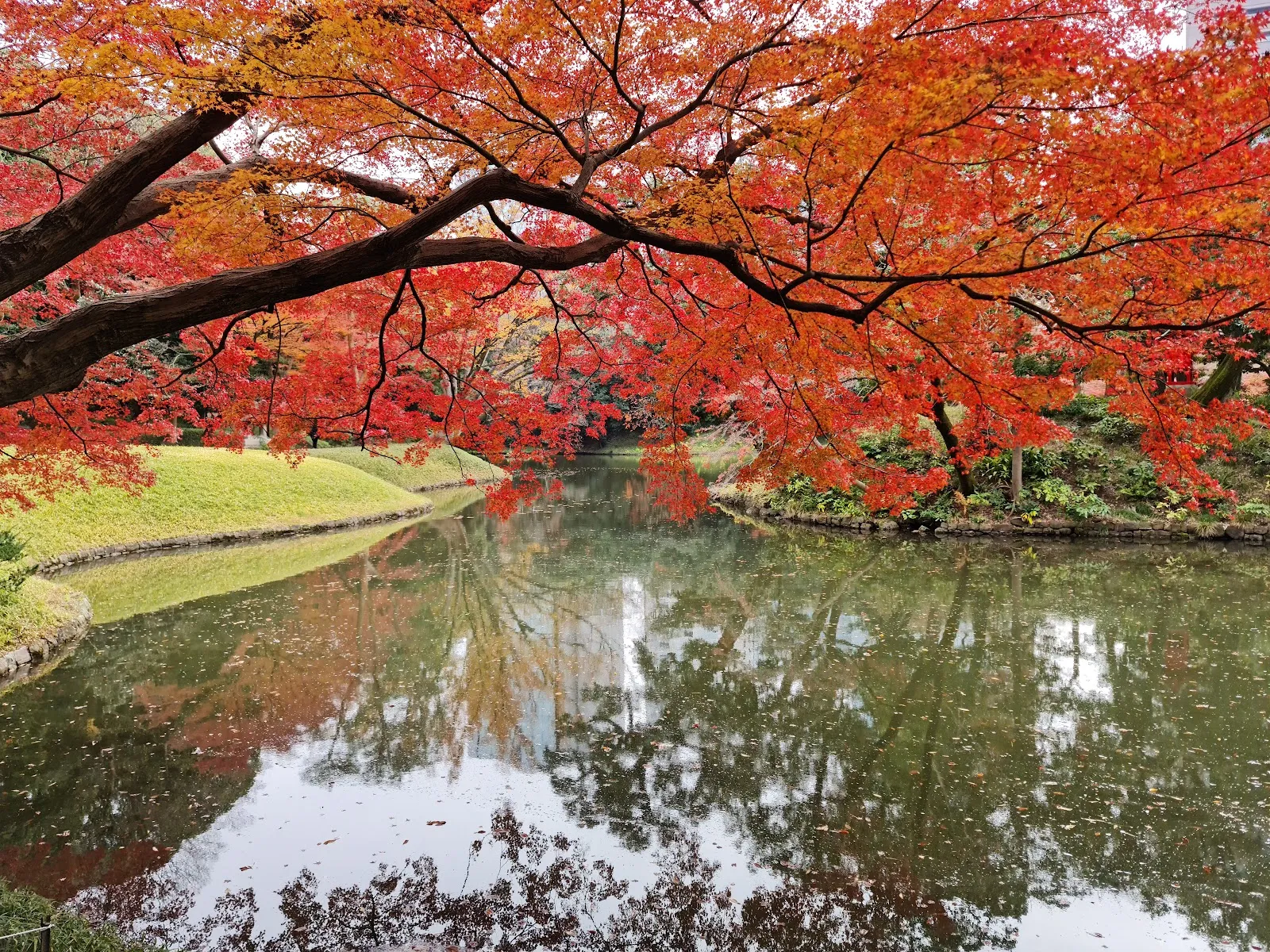
Flowers and foliage shift the garden’s appearance over the year. Plum blossoms arrive in spring, followed by cherry blossoms, including weeping cherry trees. In autumn, maples turn red and orange, while ginkgo leaves add yellow to the grounds. The garden’s ponds and paths provide changing views of the seasonal trees.
Koishikawa Korakuen has been designated both a Special Historic Site and a Special Place of Scenic Beauty. It sits beside Tokyo Dome and the surrounding modern city, and some contemporary buildings enter the garden’s views. The contrast is part of the setting: a historic landscape sits close to a baseball stadium and urban attractions, while the garden’s winding route keeps attention on its ponds, bridges and planted slopes.
Perguntas frequentes
When was Koishikawa Korakuen built?
Construction began in 1629 under Yorifusa Tokugawa and continued under his son Mitsukuni. The garden was completed in the 17th century.
What is there to see at Koishikawa Korakuen?
The strolling garden has ponds, hills, bridges and scenes inspired by landscapes in Japan and China. Look for Engetsu Bridge, Shorozan Hill and the cultivated rice paddy.
When is the best time to visit Koishikawa Korakuen?
Spring brings plum and cherry blossoms, while autumn brings red and orange maples and yellow ginkgo leaves. A weekday is a good choice for a quieter visit.
Can you eat inside Koishikawa Korakuen?
A food truck inside the garden serves dango.