Beside the Imperial Palace in central Tokyo, Kita-no-maru Park has wooded paths, open lawns and traces of Edo Castle. Its landscape shifts from shaded stretches with water and stones to sunny clearings edged by ginkgo trees. In spring, cherry blossoms draw visitors to the nearby Chidorigafuchi Moat; in autumn, Japanese maples around Mt. Momiji and yellow ginkgo leaves bring seasonal color. Entry is free, and the park makes a quiet pause between nearby sights such as Nippon Budokan and the National Museum of Modern Art.
From Edo Castle grounds to a public park

Kita-no-maru Park occupies the northern defensive enclosure of Edo Castle. Its setting still carries traces of that earlier role: moats, raised earthworks and remnants of stone walls mark the edges of the grounds. Inside, the landscape feels more like woodland than a formal garden, with paths leading between trees, water and open lawns.
The site later served as living quarters for members of the Tokugawa clan and as a barracks for the Imperial Guards. It opened to the public in 1969. Today, its historic traces sit within a green space in central Tokyo, close to the Imperial Palace.
Gates, paths and changing scenery
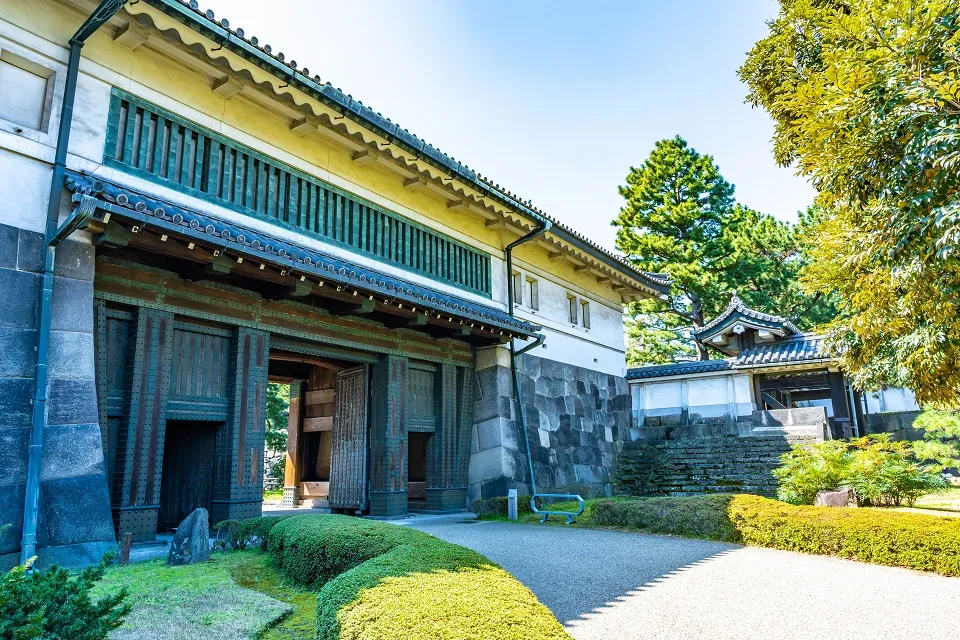
Tayasumon Gate and Kiyomizu Gate are designated Important Cultural Properties. Entering through either gives you a route into the former castle grounds and a chance to see their historic edges as you explore. The park’s paths pass through different settings rather than one continuous formal layout.
In wooded areas, a narrow stream runs among stones and undergrowth, with tall maples filtering the light. Elsewhere, the trees give way to broad lawns bordered by ginkgo. The contrast between shaded paths and open ground is especially clear in autumn, when the ginkgo leaves turn yellow and the Japanese maples around Mt. Momiji add another patch of color.
Seasonal visits and nearby sights
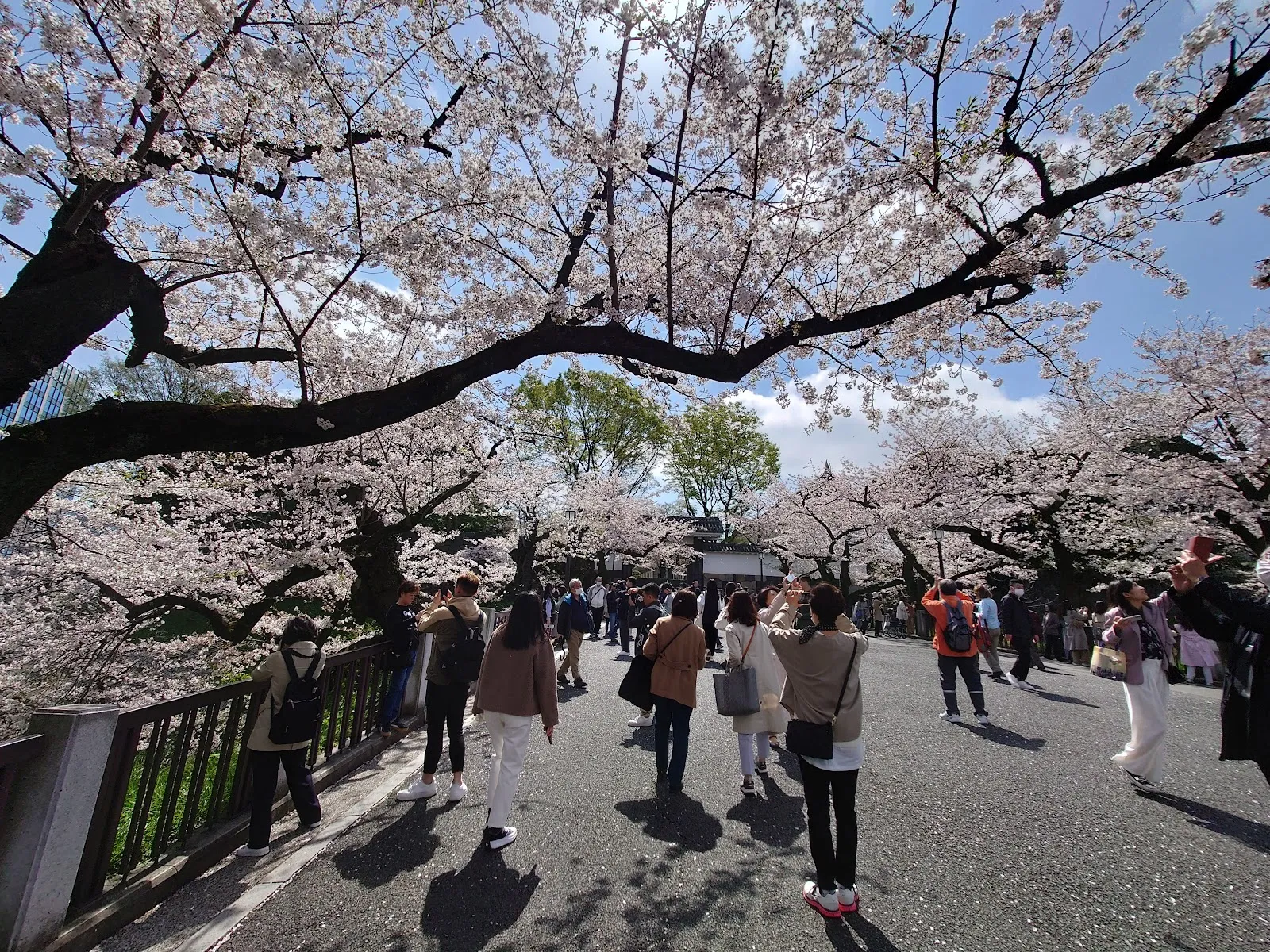
Spring brings cherry blossoms around Chidorigafuchi Moat, a popular spot for seasonal viewing. The blossom period can draw crowds, so an early visit is a sensible choice if you want a quieter walk. Late November is a good time to look for autumn color, particularly around the maples and ginkgo-lined lawns.
Birds can also be seen in the park, including Japanese wagtails and waterfowl such as common goldeneyes. If you want to extend your visit, Nippon Budokan and the National Museum of Modern Art are nearby. You can also bring a picnic and take a break on the park’s open grounds.
Perguntas frequentes
Is Kita-no-maru Park free to enter?
Yes. Entry to the park is free.
When is the best time to visit Kita-no-maru Park?
Visit in spring for cherry blossoms near Chidorigafuchi Moat, or in late November for autumn leaves. Early morning is a quieter time for a walk.
What can you see in Kita-no-maru Park?
The park has wooded paths, lawns, moats, earthworks and stone-wall remnants from Edo Castle’s former grounds. Look for seasonal color around Mt. Momiji and the ginkgo-lined lawns.
How long should I spend at Kita-no-maru Park?
The available information describes it as a place for a short stroll or a quiet break but does not give a typical visit length.