
Itsukushima Jinja is a Shinto shrine on Miyajima, an island in Hiroshima Bay, and a UNESCO World Heritage site since 1996. Its vermilion halls stand on stilts in a small cove, joined by boardwalks above the water. The 16-metre red torii in the bay is the image most people know. At high tide the buildings seem to float, and at low tide you can see the gate's base. The ferry crossing and a walk of about half a kilometre from the pier bring you to the shrine. Deer roam the paths nearby.
Why the shrine stands over the water
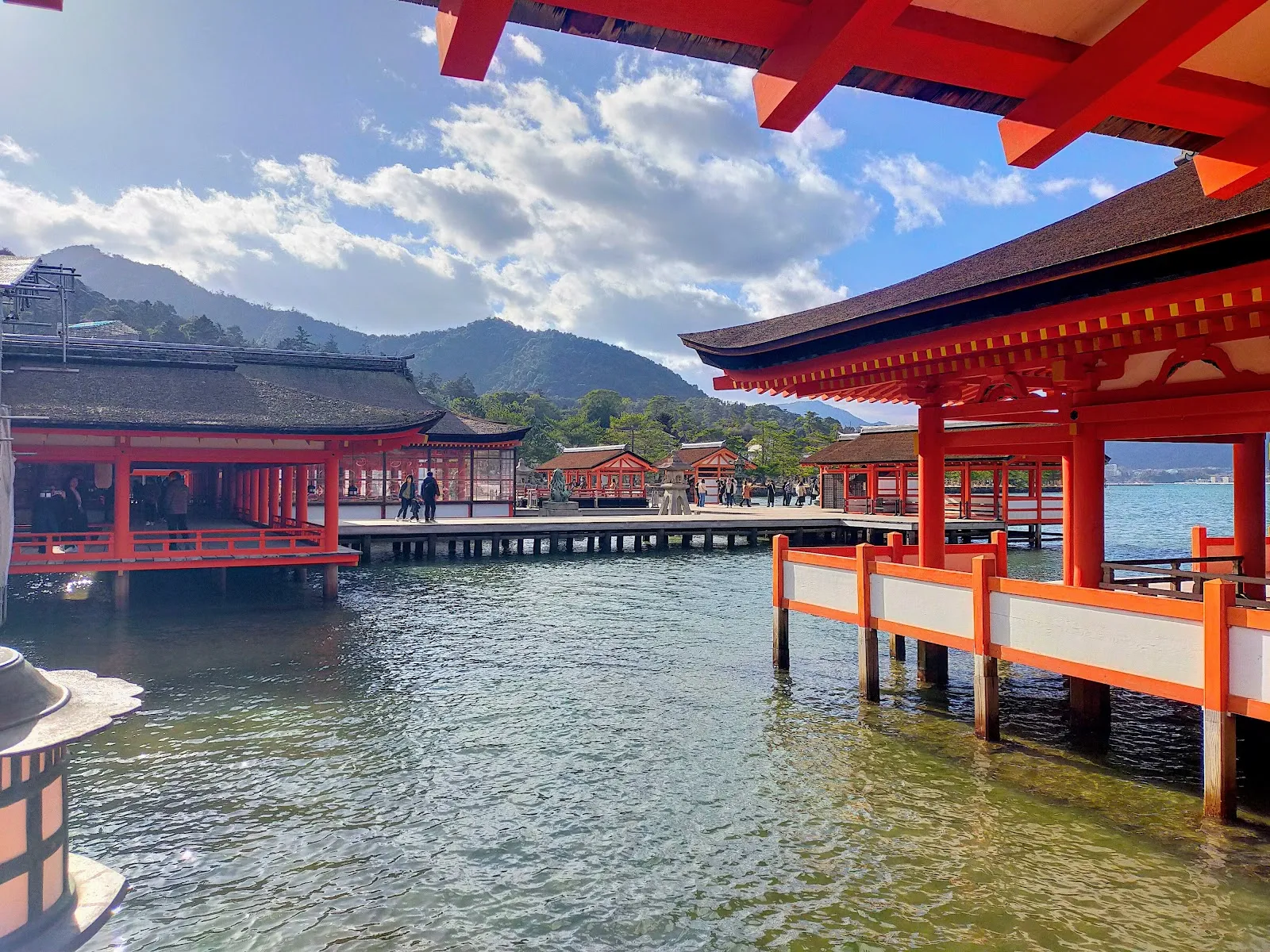
Miyajima was long regarded as sacred ground, and ordinary people were kept off it. The shrine was therefore built on stilts, so that pilgrims could arrive by boat and pass beneath the buildings without setting foot on the island itself. That origin explains the layout you see today: a main hall, a prayer hall and a Noh theatre stage, all raised above the sea and connected by boardwalks.
The shrine's origins go back to the end of the 6th century, in the reign of Empress Suiko. Saeki no Kuramoto is named as its founder. The main hall in its present form, in the shinden-zukuri style of Heian-period palaces, was established by the military commander Taira no Kiyomori around 1168. The lacquered vermilion halls and their corridors are the best surviving expression of that palace style. The shrine was registered as a World Heritage site in 1996.
Shinto, the kami and the torii
Itsukushima Jinja enshrines the Three Munakata Goddesses. They are worshipped as guardians of the sea and safe sailing, and people also pray to them for good luck and for wishes to be fulfilled.
Shinto is Japan's indigenous religion. It has no single founder and no central sacred text. It centres on respect for kami, the sacred spirits and natural forces found in mountains, rivers, trees and revered figures, and it values ritual purity and harmony with nature. A torii marks the boundary between the everyday world and the space of the kami. It is a symbolic threshold rather than a barrier. Walk through the shrine quietly, as you would in any place of worship, and keep to the marked routes on the boardwalks.
The great torii and the tide
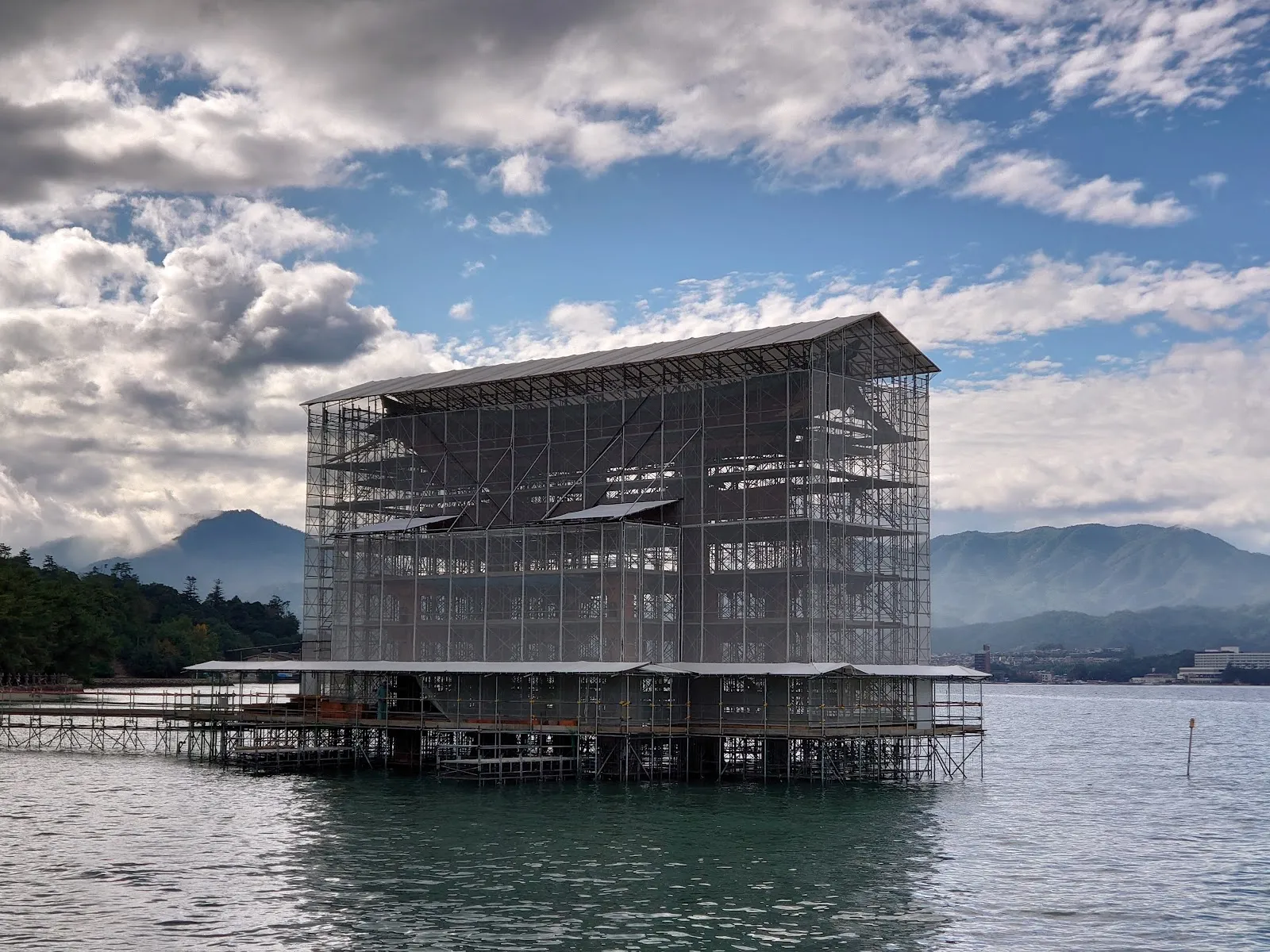
The red torii in the bay is 16 metres tall and made of camphor wood, which resists decay. It is not fixed into the seabed. It stands by its own weight.
The tide decides what you see. At high tide the gate and the shrine appear to rest on the water. At low tide the gate's base and the wear on it are visible, and the sand around it can be seen. Both views are part of the place. A traditional wedding ceremony has been seen at the shrine, and the Noh stage occasionally hosts performances, so a visit can overlap with a ritual or an event.
Planning the day on Miyajima
From Hiroshima, a quick ferry takes about 22 minutes, which is shorter than the route via Miyajimaguchi. An excursion boat from the stop in front of the Atomic Bomb Dome takes about 45 minutes. From the island pier the shrine is a walk of around half a kilometre, past shops, food stalls and deer.
The shrine takes only part of the day. Mount Misen, with an observatory, temples and trekking routes, is reached by ropeway. Grilled oysters are sold on the main street. Momiji manju, steamed buns shaped like maple leaves, are the island's famous snack and are best eaten freshly cooked. If you collect stamps, the tourist information centre has the World Cultural Heritage stamp on its second floor.
Perguntas frequentes
Is there an entry fee for Itsukushima Jinja?
Yes. Admission is around ¥300 for adults. Bring cash to be safe.
How do you get to Itsukushima Jinja from Hiroshima?
Take a ferry to Miyajima. A quick ferry from Hiroshima takes about 22 minutes, and an excursion boat from the stop in front of the Atomic Bomb Dome takes about 45 minutes. From the island pier, walk about half a kilometre to the shrine.
When is the best time to see the floating torii?
At high tide, when the gate and shrine appear to float on the water. Check the tide table before you go. Early morning is calmer.
Is it still worth visiting at low tide?
Yes. The gate looks different, with its base visible, but the shrine buildings, the boardwalks and the island are still worth the trip.
How long do you need at Itsukushima Jinja?
The island works well as a day trip from Hiroshima. Plan half a day to a full day if you also want to eat on the main street or ride the ropeway up Mount Misen.


