
Taizō-in is a Zen Buddhist temple within the large Myōshin-ji complex in Kyoto’s Ukyo Ward. Its grounds bring together the dry landscape garden Motonobu-no-niwa, the pond garden Yoko-en and Josetsu’s ink painting “Catching a Catfish with a Gourd.” You can also explore Zen practice through meditation sessions, tea ceremonies and English interpretation. The temple is a quieter stop among Myōshin-ji’s many sub-temples, with gardens that change character through the seasons.
A sub-temple within Myōshin-ji
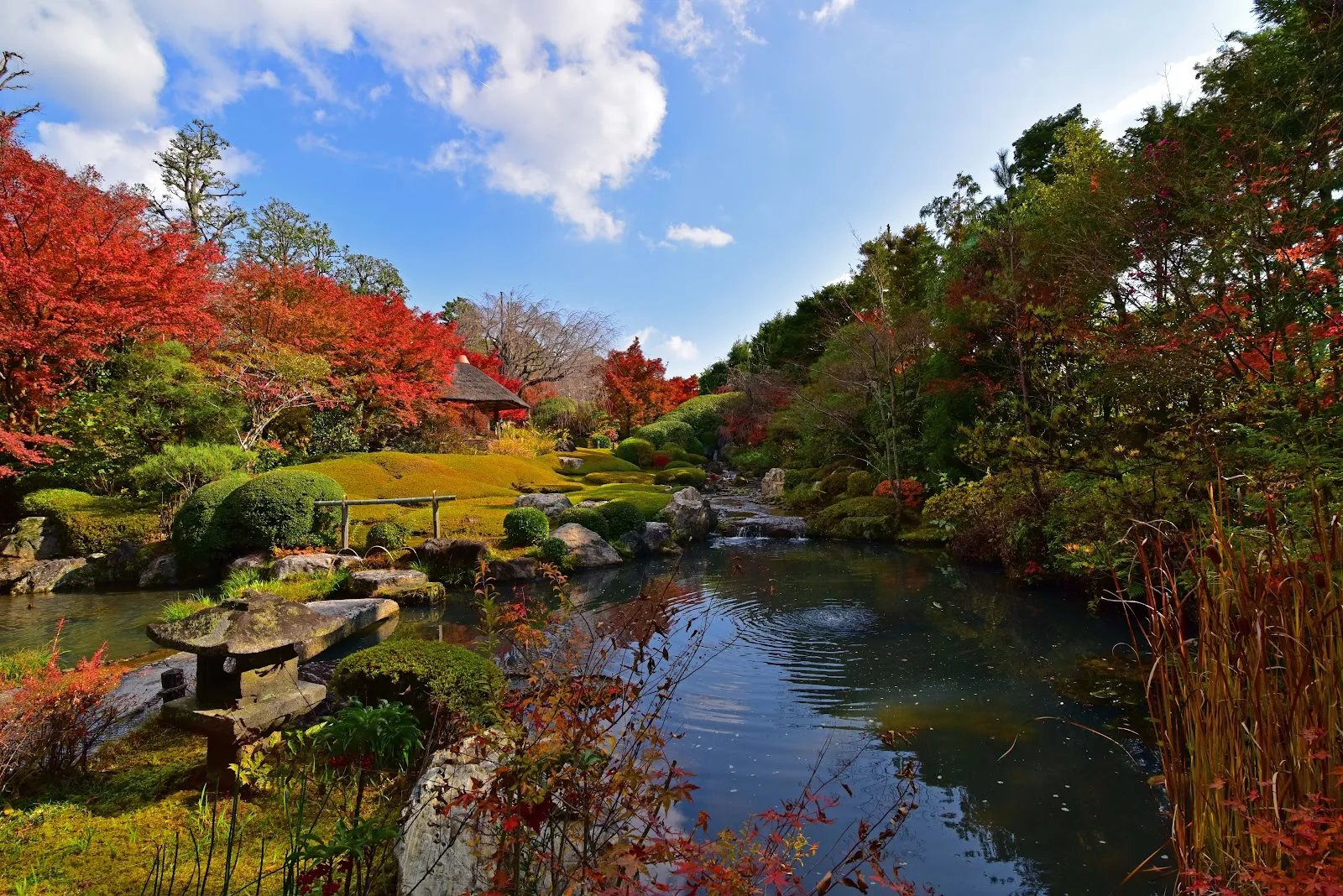
Taizō-in is one of the sub-temples in Myōshin-ji, a large temple complex in northern Kyoto. Winding paths pass old temple buildings, but many sub-temples are not open to visitors. Taizō-in is among those that welcome the public, giving you a chance to see gardens and cultural objects within the complex.
The grounds are compact enough to explore at a measured pace, with several distinct garden spaces. Their designs reward looking closely: a dry garden draws attention to raked sand and stones, while the pond garden invites a slower walk around water and planting.
Gardens shaped by the seasons
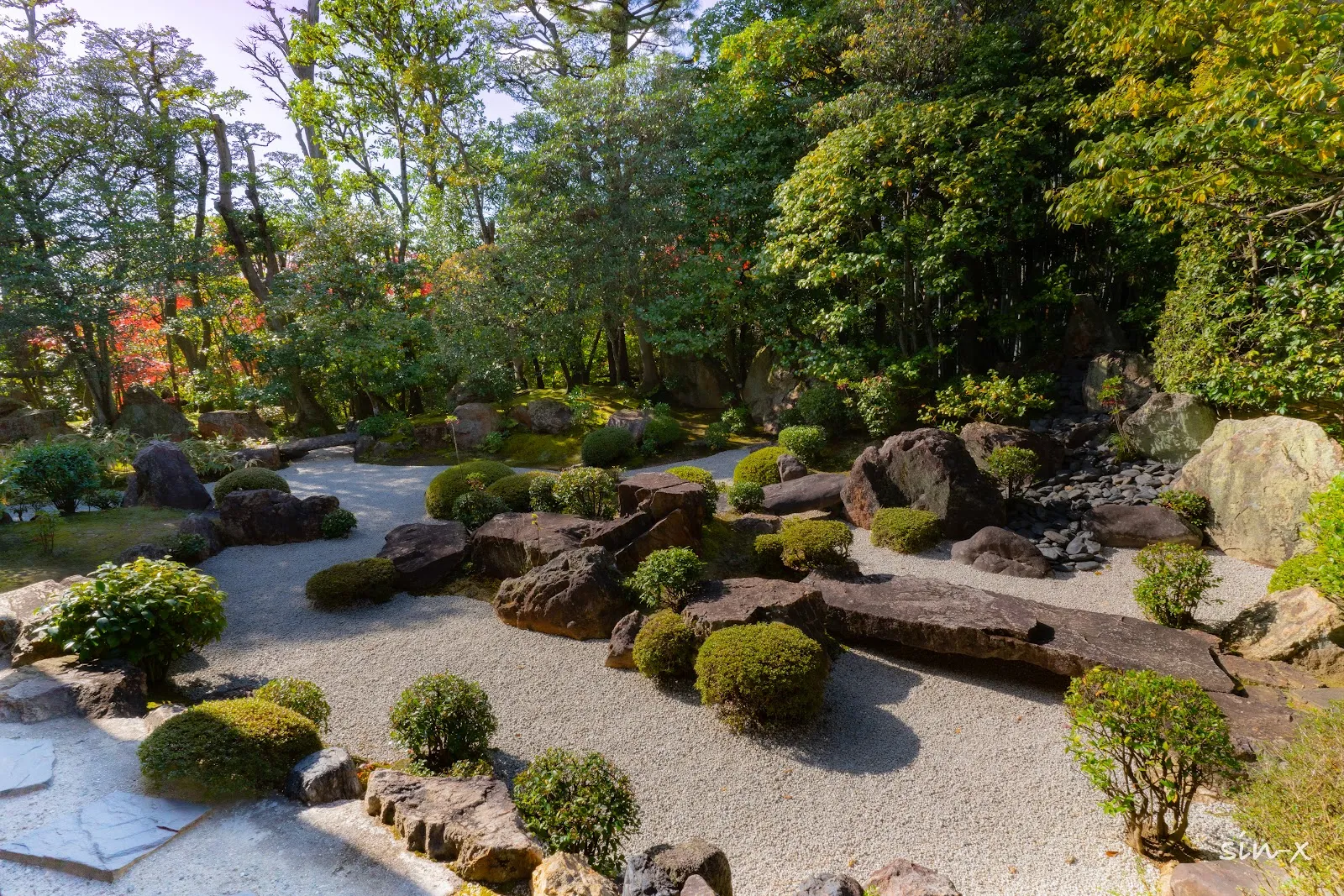
Motonobu-no-niwa is the temple’s dry landscape garden, associated with the painter Kano Motonobu. Its composed arrangement is especially clear in winter, when bare branches leave the raked patterns and forms in view. A striking rock-and-sand arrangement also gives the garden a strong visual contrast.
Yoko-en is a pond-and-stroll garden with flowers that change through the year. Water lilies and lotus bloom in early summer, while autumn brings color to the trees around the water. In spring, a large weeping cherry tree is held up by bamboo supports and frames the garden. The different plantings mean the scene is not the same on every visit.
Painting, water and sound
Taizō-in preserves Josetsu’s ink painting “Catching a Catfish with a Gourd,” also known by its Japanese title, Hyonenzu. The work is counted among Japan’s oldest surviving ink paintings. It gives the temple visit a connection to the history of Japanese painting as well as to its garden design.
Look and listen for the suikinkutsu, a ceramic chamber set underground. Water drips into it from above, producing a delicate sound compared with the tone of a koto. The temple has also had a sound installation created by ambient musician Chihei Hatakeyama. Its availability is not guaranteed, so treat it as an extra rather than the focus of a visit.
Taking part in Zen practice
Meditation sessions and tea ceremonies give visitors a way to engage with Zen culture beyond viewing the grounds. A meditation visit can include instruction and a tour of the temple interior and gardens. An English-language audio guide and interactive displays also explain aspects of the site and Zen practice.
If you plan to attend a session, arrange it in advance and arrive promptly. The main hall can be occupied by ceremonies or school groups on weekdays, so access to that part of the temple may take longer. For a quieter garden visit, late morning on a weekday is a useful time to consider.
Perguntas frequentes
Where is Taizō-in Temple?
It is within the Myōshin-ji temple complex in Kyoto’s Ukyo Ward.
What can you see at Taizō-in?
The grounds include Motonobu-no-niwa, the pond garden Yoko-en, and Josetsu’s ink painting “Catching a Catfish with a Gourd.”
Can visitors take part in meditation at Taizō-in?
Meditation sessions are available. Reserve in advance and arrive on time.
Is there English interpretation?
English interpretation is available through the On The Trip app, and the temple has English audio interpretation and interactive displays.


