
Sanjūsangendō, officially Rengeō-in, is a Buddhist temple in Kyoto’s Higashiyama Ward, known for the 1,001 Kannon statues inside its long wooden hall. The central figure represents Senju-Kannon, associated with compassion and salvation; rows of life-size figures stand alongside guardian deities. Look closely as you walk through: the statues have individual details, and their faces are not all alike. Outside, the temple grounds provide a quieter place to pause. Photography is not allowed inside, so plan to take in the hall without a camera.
The temple and its name
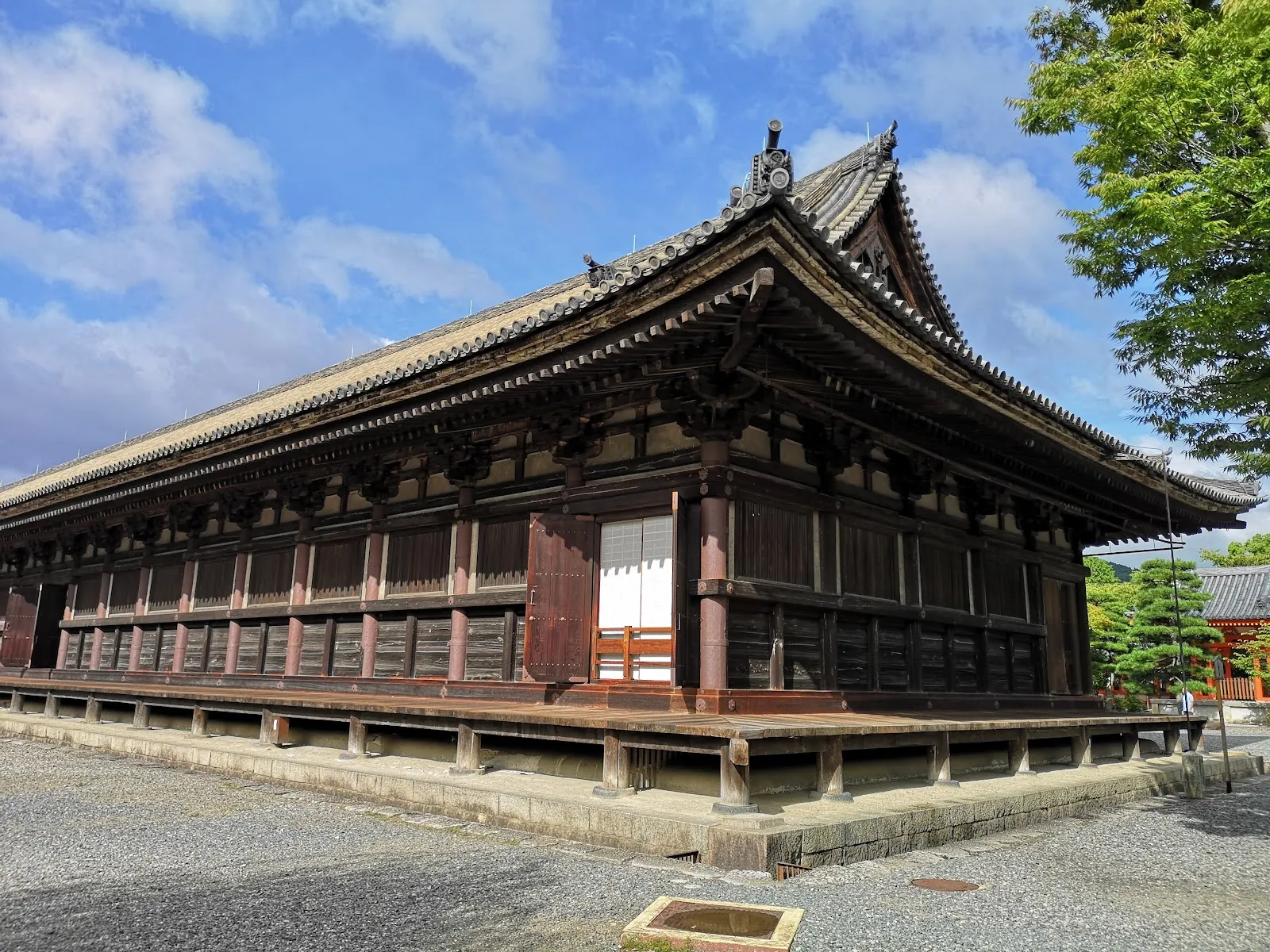
Sanjūsangendō is the common name for Rengeō-in, a Buddhist temple in Kyoto’s Higashiyama Ward. Its name refers to the 33 spaces, or bays, between the posts of its hall. The number also connects with the belief that Kannon can appear in 33 forms.
The temple was first built in 1164 with the support of Taira no Kiyomori, in the grounds of the palace of retired Emperor Go-Shirakawa. A fire destroyed the original building. The present main hall was completed in 1266, and the complex has undergone major renovations in later centuries.
Inside the main hall
The hall stretches 120 metres from north to south. At its centre is a seated figure of Senju-Kannon, the thousand-armed form of Kannon, associated with mercy and the granting of salvation. The statue was made by the Buddhist sculptor Tankei and stands 4.8 metres tall.
Rows of life-size standing Kannon figures line the hall. Together with the central image, they account for 1,001 statues of Kannon. The figures were made during the 12th and 13th centuries. Look carefully as you move along the hall: small differences in the statues’ faces and details give each one its own character.
The display also includes figures of Fujin, the wind god, and Raijin, the thunder god, as well as the Nijūhachibushū, a group of 28 deities who protect followers of Kannon. The hall contains 1,032 Buddhist figures in total; these figures are designated National Treasures.
A quiet, camera-free visit
The main hall’s subdued interior and the close-set rows of statues invite a slower visit. Photography is not allowed inside, so leave the camera away and give yourself time to look at the sculptures directly. The grounds outside offer a place to pause after the hall.
An early visit can bring a quieter atmosphere. Inside, move at a considered pace and look from different angles to take in the full rows. Designated seating areas give you a chance to rest and reflect before leaving.
Perguntas frequentes
What is Sanjūsangendō Temple known for?
It is known for 1,001 statues of Kannon inside its long wooden main hall. The hall also contains guardian figures, including Fujin and Raijin.
How old is the main hall?
The original temple was built in 1164 and destroyed by fire. The present main hall was completed in 1266.
Can you take photos inside Sanjūsangendō?
No. Photography is not allowed inside the hall.
When is a good time to visit?
Go early in the day for a quieter visit.


