
Ginkaku-ji, the Silver Pavilion, is a Zen temple in Kyoto’s Sakyo Ward, known for its restrained wooden architecture and carefully composed garden. Follow the path past moss, trees, ponds and sculpted sand, then climb partway up the hillside for a view over the grounds and Kyoto. The pavilion was never covered in silver, despite the name. A visit suits travelers who want a quieter garden walk and an example of understated Japanese design; the uphill approach and garden path involve some walking.
Yoshimasa’s unfinished plan
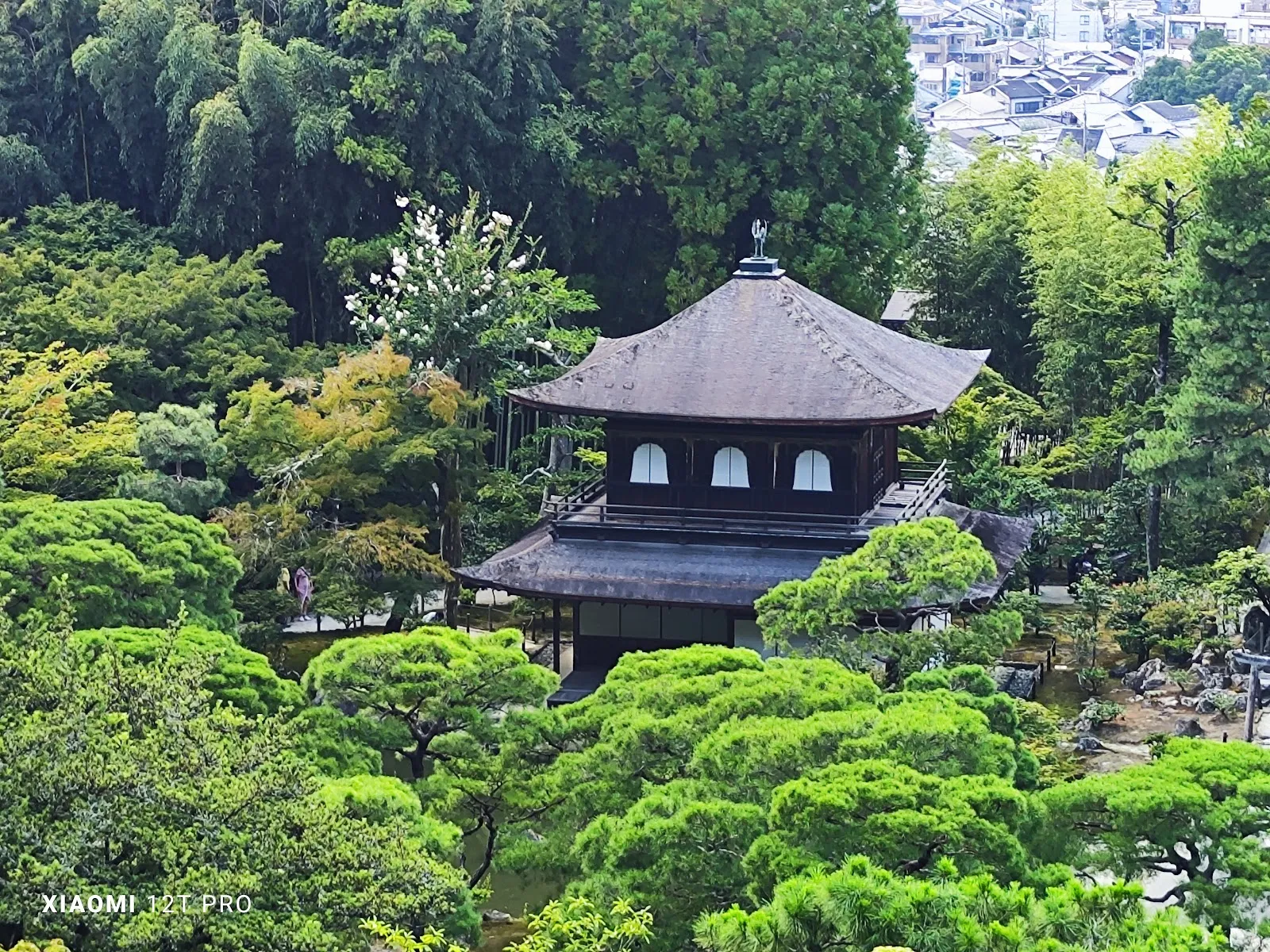
Ginkaku-ji was built between 1460 and 1490 by shogun Ashikaga Yoshimasa. Its name, the Silver Pavilion, recalls an original plan to cover the building in silver, inspired by Kinkaku-ji, the Golden Pavilion commissioned by Yoshimasa’s grandfather. That covering was never added. The pavilion’s wooden exterior remains understated, and its name points to an intention rather than its appearance today.
The temple’s appeal lies in the relationship between the building and its setting. The garden’s sand, moss, ponds and trees draw attention to texture and form, while seasonal flowers bring changes through the year. The composed, quiet design is associated with wabi-sabi, an appreciation of simplicity and imperfection.
A garden shaped for a walk
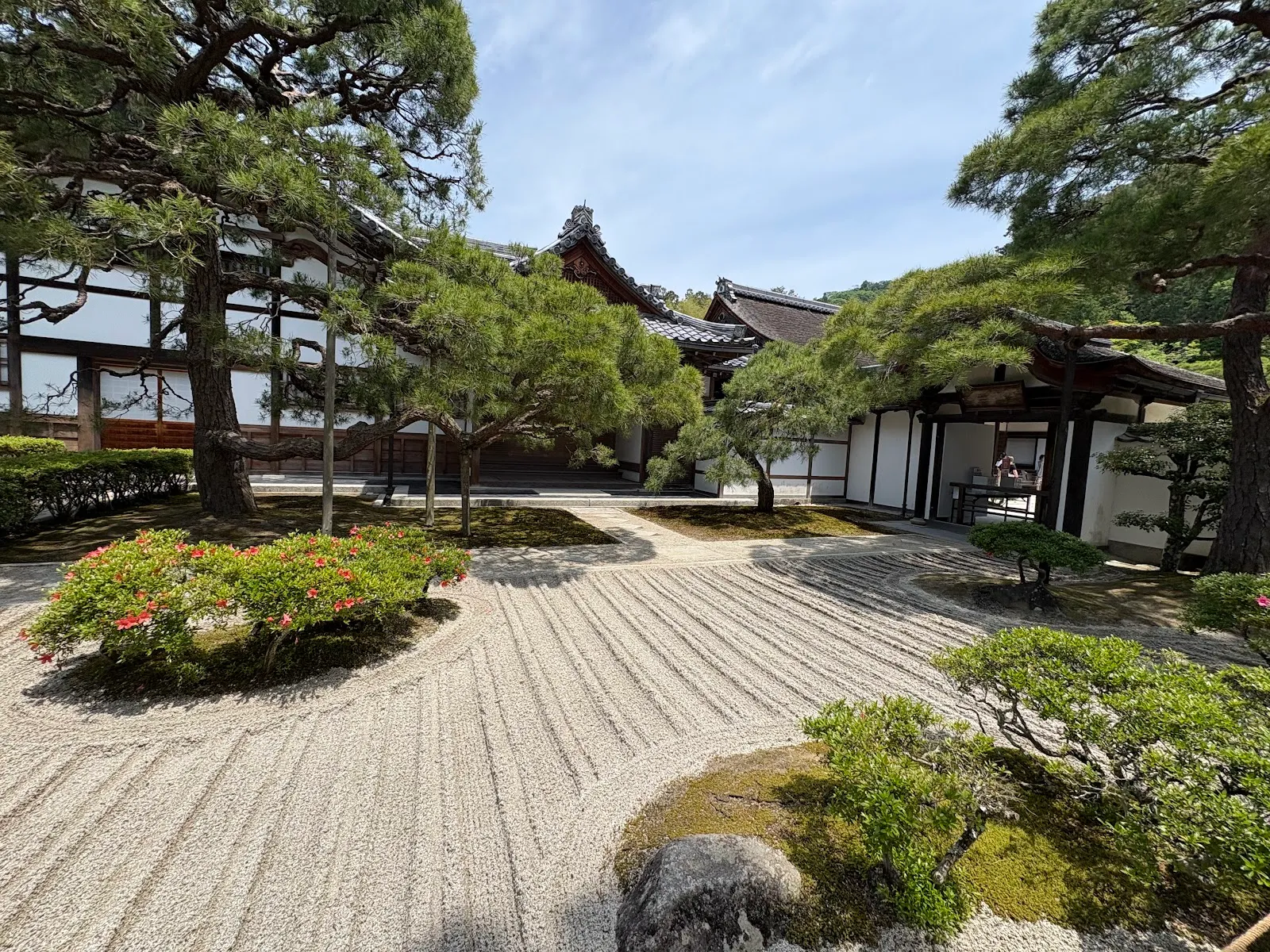
The grounds are a stroll garden, with a path that takes you past carefully maintained sand formations, moss-covered areas, trees and water. One sand formation is described as resembling Mount Fuji. Mirror Pond, also called Kyōko-chi, reflects the pavilion and surrounding greenery. Take time to notice the garden’s smaller details, including exposed tree roots and the way the path moves between open and wooded sections.
The route continues uphill through a wooded area. It climbs partway up the eastern hillside, where viewpoints look back over the temple grounds and out across Kyoto. The rise gives the visit a different perspective from the garden below, though it involves walking uphill.
Planning the visit
The entrance is reached by a short uphill walk from the city. Shops selling local crafts, snacks and souvenirs line the approach, and more food stalls and souvenir shops are near the temple exit. The temple also provides handwritten Goshuin, a commemorative seal associated with temple visits.
Early morning is a useful choice if you prefer fewer people. One account found December around 10 a.m. quieter, but that is a specific observation rather than a guarantee. Public transport options are described as limited; a taxi or ride-hailing service can make the arrival more convenient. The garden walk itself has been estimated at 15 to 30 minutes, depending on pace.
Perguntas frequentes
Why is Ginkaku-ji called the Silver Pavilion?
The name refers to Ashikaga Yoshimasa’s plan to cover the pavilion in silver. The plan was never carried out.
How long does a visit to Ginkaku-ji take?
The garden walk is estimated at about 15 to 30 minutes, depending on your pace.
Can you see Kyoto from Ginkaku-ji?
Yes. The walking path climbs partway up the hillside to viewpoints over the temple grounds and the city.
Does Ginkaku-ji provide Goshuin?
Yes. A handwritten Goshuin temple seal is available at the temple.


