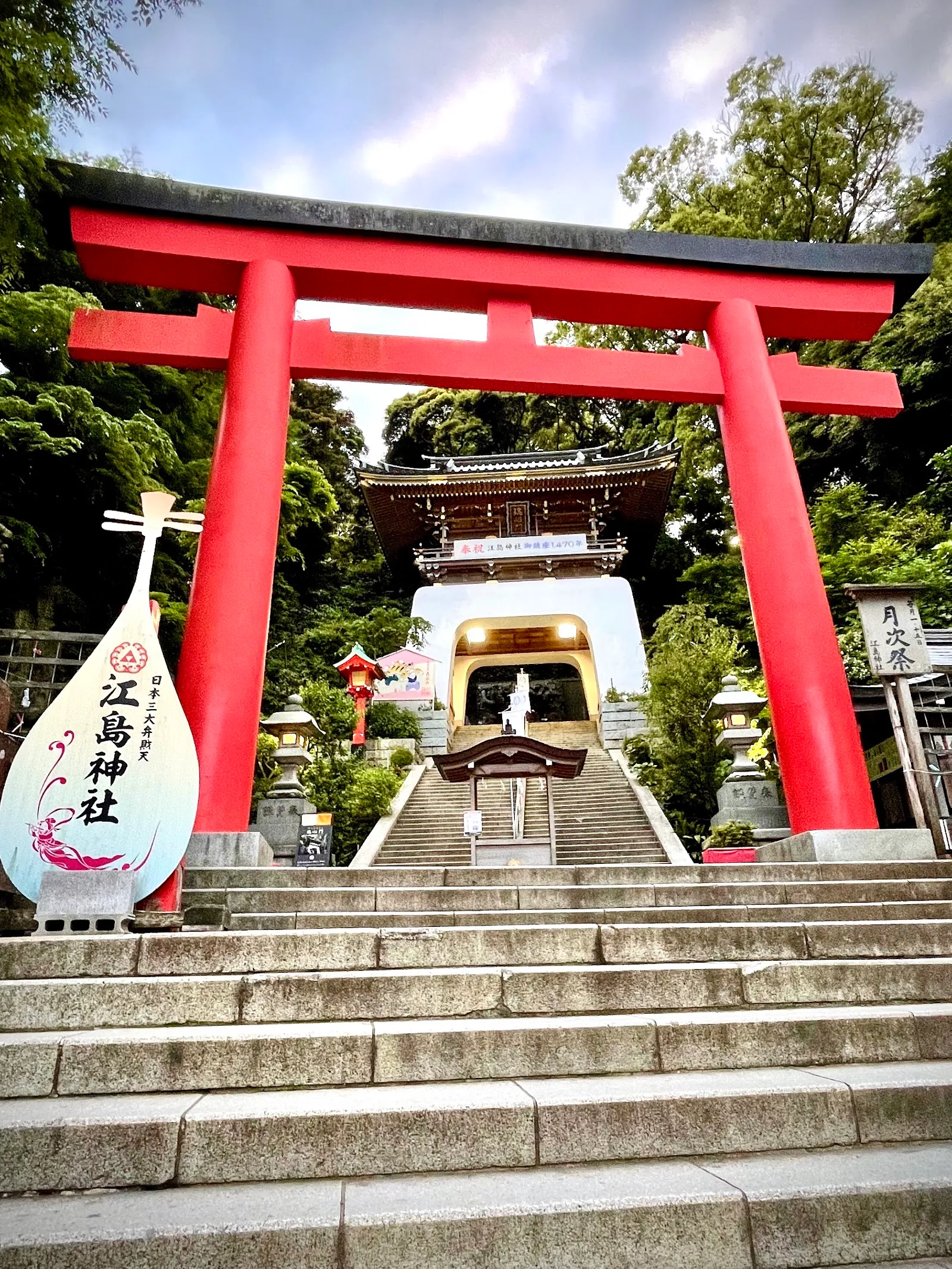
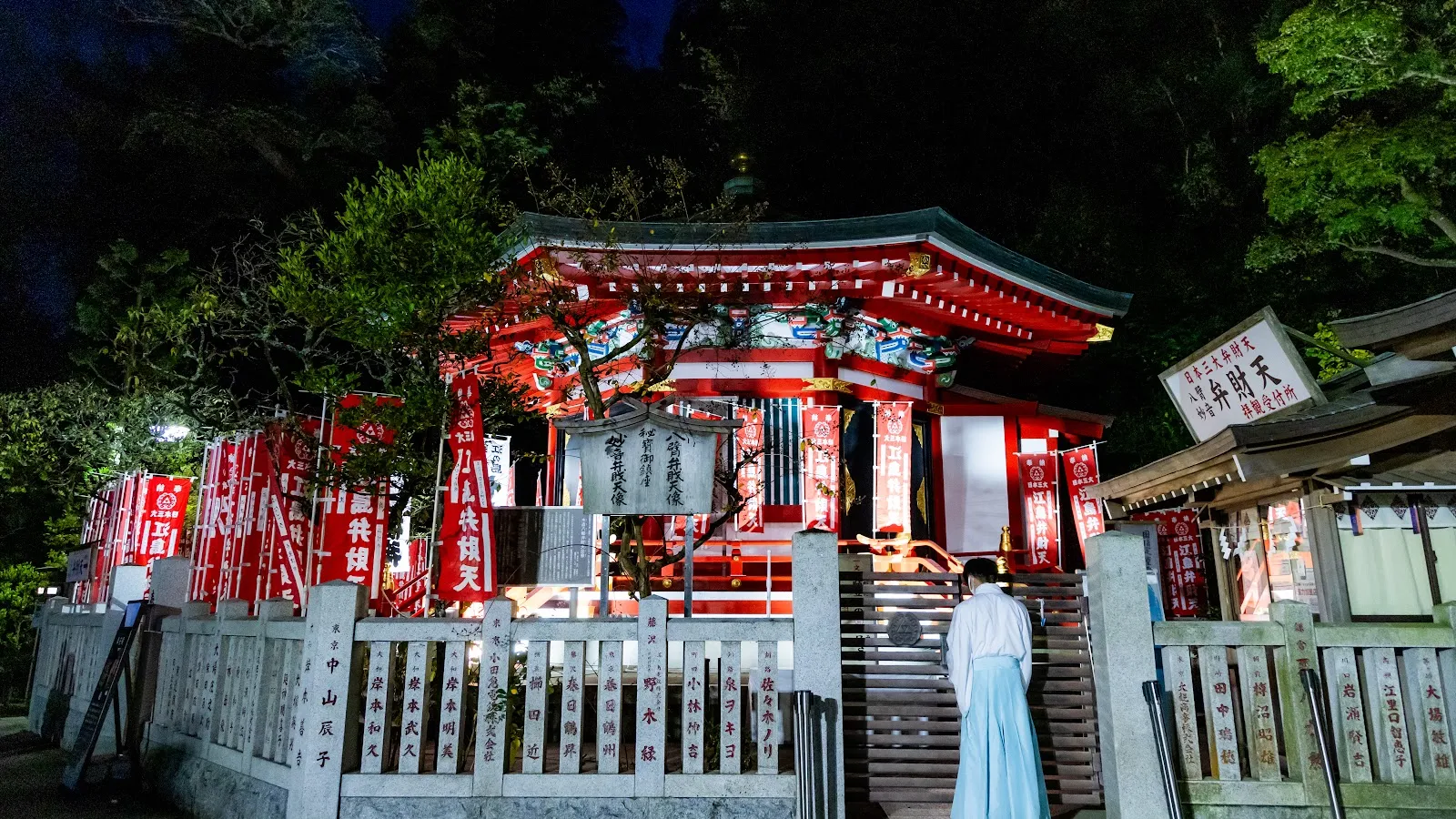
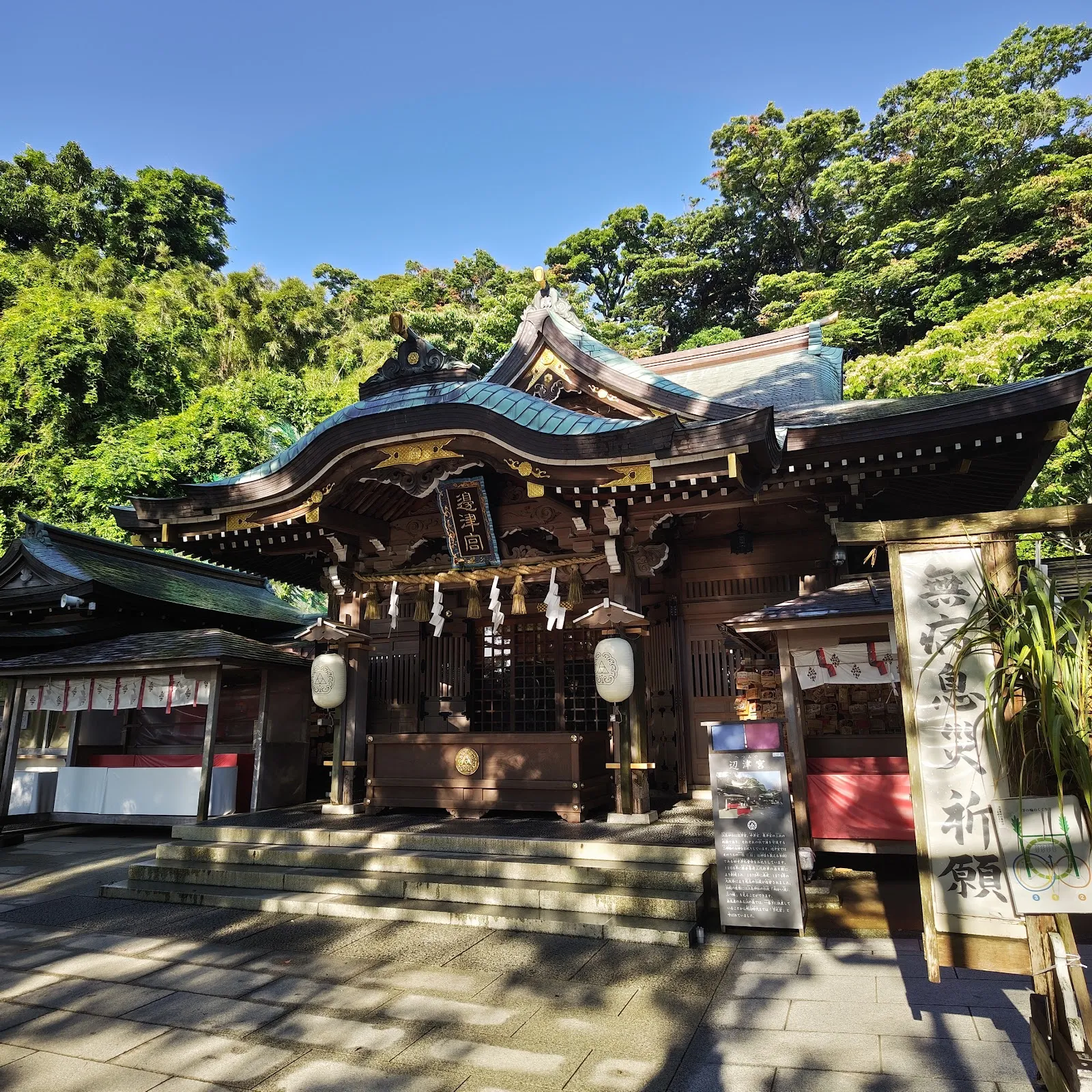
Hetsumiya is the first of the three halls that make up Enoshima Shrine, on Enoshima island near Kamakura. Its red buildings and a carved dragon statue give the grounds a strong look, and the approach runs past small shops and rest spots. The shrine honors Benzaiten, the goddess linked with music, the arts, water and good fortune. Come for the bay views, the amulets and the calm you find once you step off the main path.
Getting there and what to eat on the way
Hetsumiya sits at the lower end of the island's shrine complex. From Enoshima Station the walk takes about 20 minutes along a shopping street lined with shops and restaurants.
The street is a good place to try local food. Octopus rice crackers (tako senbei), turban shells (sazae) and manju, a warm bun with a sweet filling, are all sold here. Don't fill up too much, because the market streets are full of food stalls and you will want to try several.
Once you cross the bridge onto the island, the crowds are at their thickest in the market streets near the foot of the shrine. They thin out as you climb higher.
The climb and the escalators
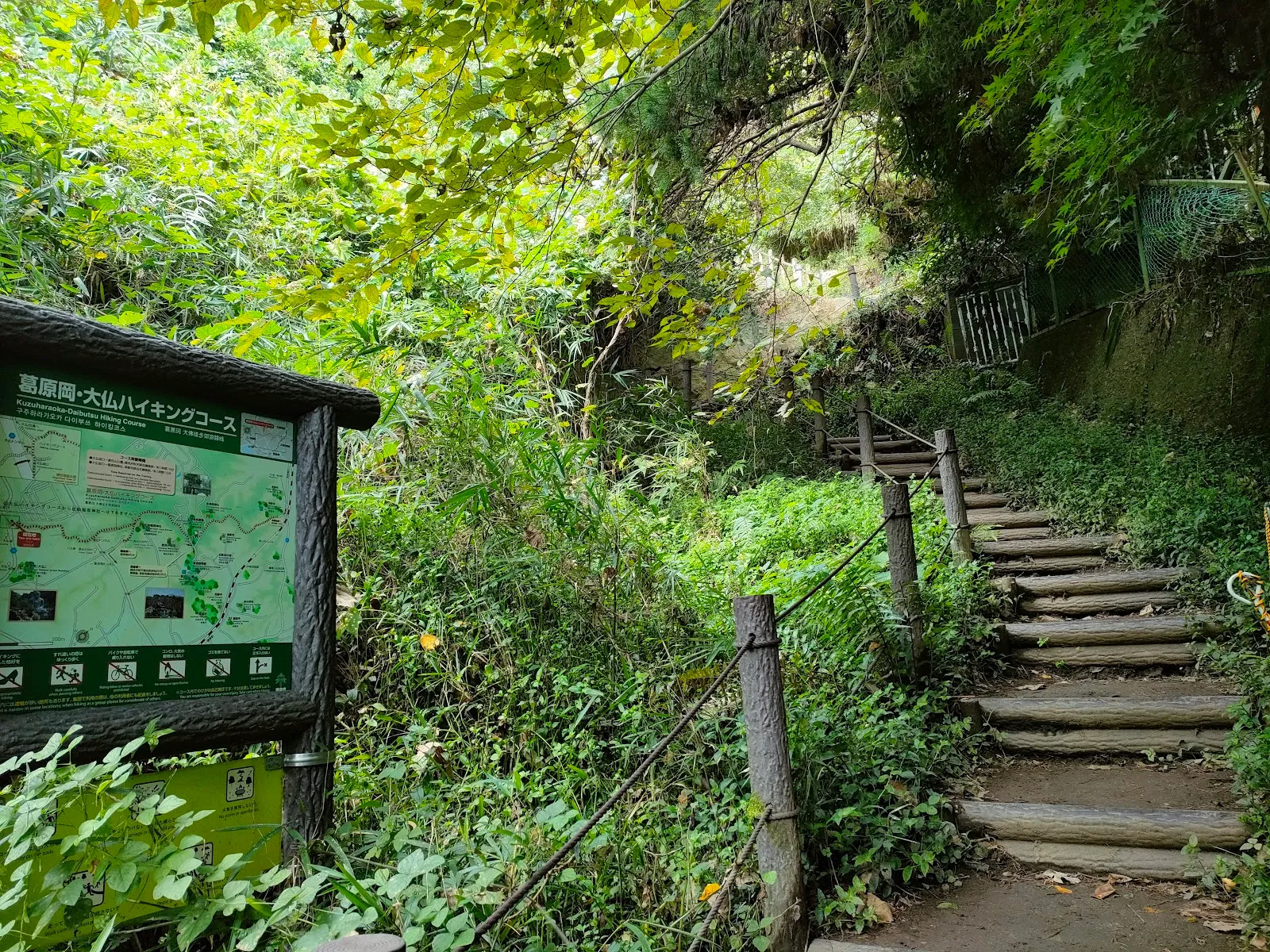
The route to the shrine includes many stairs and some steep sections. Escalators are available for an extra fee, and you can pay with a PASMO card. Visitors who prefer not to climb the full way often use them.
The entrance is wheelchair accessible, and there is a wheelchair accessible parking lot. The stairs above the first level are the limit for strollers and wheelchairs, so families with small children should decide early how far up they will go.
Inside the grounds
The main path leads past the red buildings and under a large red torii gate. A dragon statue is one of the notable carved details. The grounds are kept clean, and the buildings have traditional architecture with colorful details.
Off the main path, the area is quieter and easier to enjoy. There are small shops and rest spots along the approach, so you can stop to look at the view or take photos. As long as you behave respectfully, photography is allowed at Shinto shrines in Japan.
Purification before entering
Before you go into the shrine, stop at the temizuya, the water basin used for purification. Fill the provided ladle with water and wash your left hand, then your right. If you want, you can pour a little water into your palm, drink it and spit it out to cleanse your mouth. Then rinse the ladle handle before you put it back.
The ritual takes only a minute, and it is a simple way to show respect for the shrine before you move on.
Benzaiten and the history of the shrine
Enoshima Shrine is traditionally dated to the 6th century. It began as worship of a god said to dwell in the Iwaya caves on the island. That god was believed to protect sea and land travel and fishing, and to bring good luck and success.
The complex is now dedicated to Benzaiten, a goddess connected with music, arts, water and fortune. The shrine is linked with three sister goddesses, and it is one of the major places in Japan devoted to Benzaiten. Visitors on the island are often interested in the shrine's large statue of Benten, which is housed in an octagonal building in the complex.
The island was a pilgrimage site in the Kamakura Period, and the Enoshima pilgrimage became especially popular in the Edo Period. Scenes of this pilgrimage appeared in ukiyo-e woodblock prints from that time. Minamoto no Yoritomo, founder of the Kamakura shogunate, is recorded as praying here for victory in battle.
Charms, rituals and what to take home
Omamori amulets are the most common purchase. The Safe Driving amulet is a popular choice, and one was priced at 1,000 yen at the time of a recent visit.
The Enoshima shrine complex also has traditional rituals for visitors. People wash their money in a basket at the shrine pond to wish for wealth, pass through a bamboo ring for safety, and leave a message on a pink board for love. Choose the ritual that matches what you are hoping for, and take a moment to observe the people around you before you join in.
Perguntas frequentes
Is it hard to climb to Enoshima Shrine?
The route has many stairs and some steep sections. Escalators are available for an extra fee, and you can pay with a PASMO card.
Is Hetsumiya accessible with a stroller or wheelchair?
The entrance is wheelchair accessible, and there is a wheelchair accessible parking lot. The stairs above the first level are difficult with a stroller, so plan your route in advance.
Can I take photos at the shrine?
Yes. As long as you are respectful of your surroundings, taking pictures at Shinto shrines in Japan is fine.
What should I do before entering the shrine?
Use the temizuya water basin. Fill the ladle, wash your left hand and then your right, and if you wish, rinse your mouth and spit the water out.