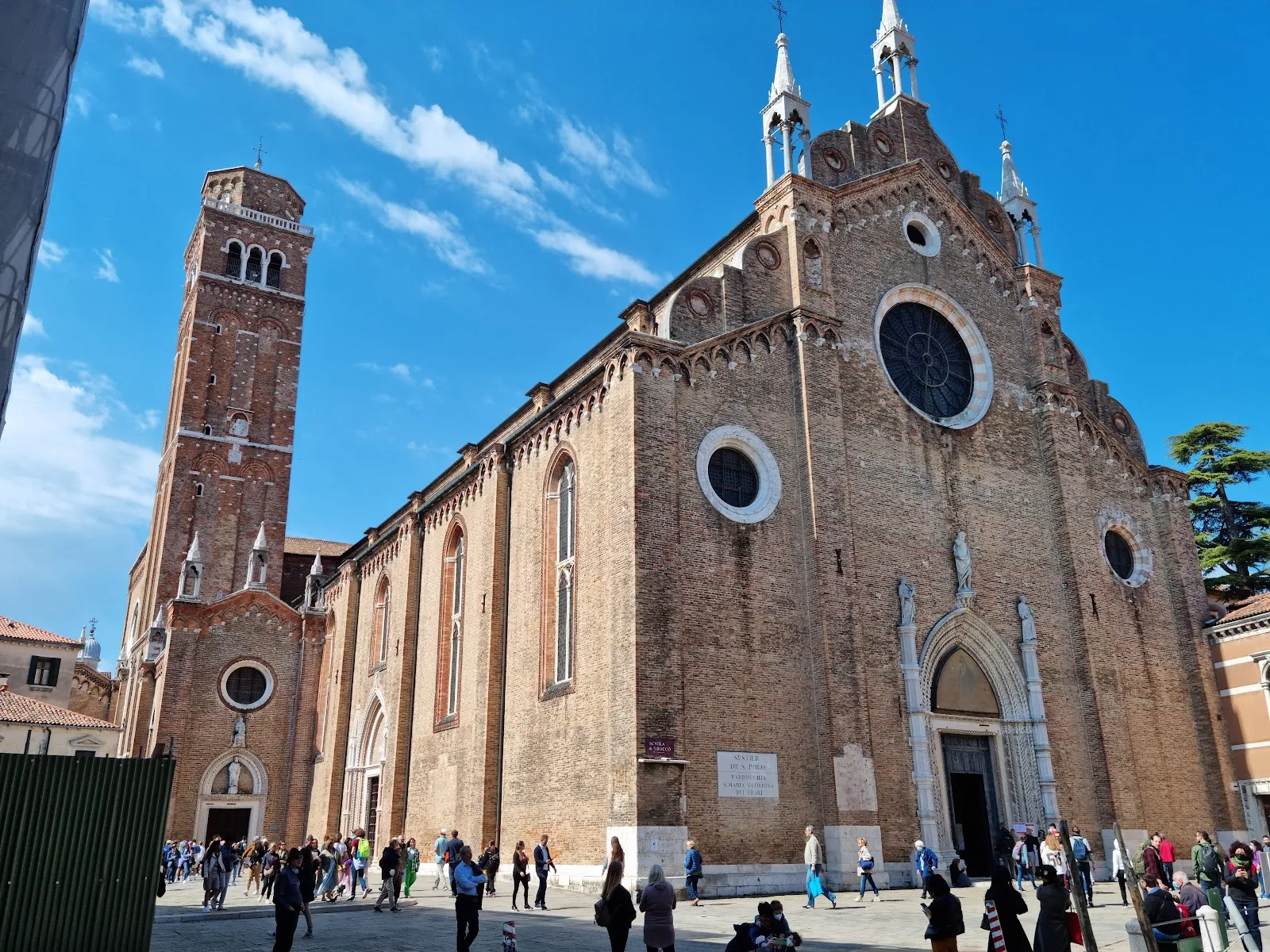
In San Polo, the Basilica of Santa Maria Gloriosa dei Frari pairs a restrained brick exterior with a vast Gothic interior filled with Venetian art and memorials. Look for Titian’s Assumption above the high altar, his Madonna di Ca’ Pesaro in the left aisle, and Giovanni Bellini’s triptych in the sacristy. The church is also the burial place of Titian and sculptor Antonio Canova. Its carved wooden choir and different styles of tombs reward a slow circuit, even if you are visiting for art and architecture rather than worship.
A Gothic church in San Polo
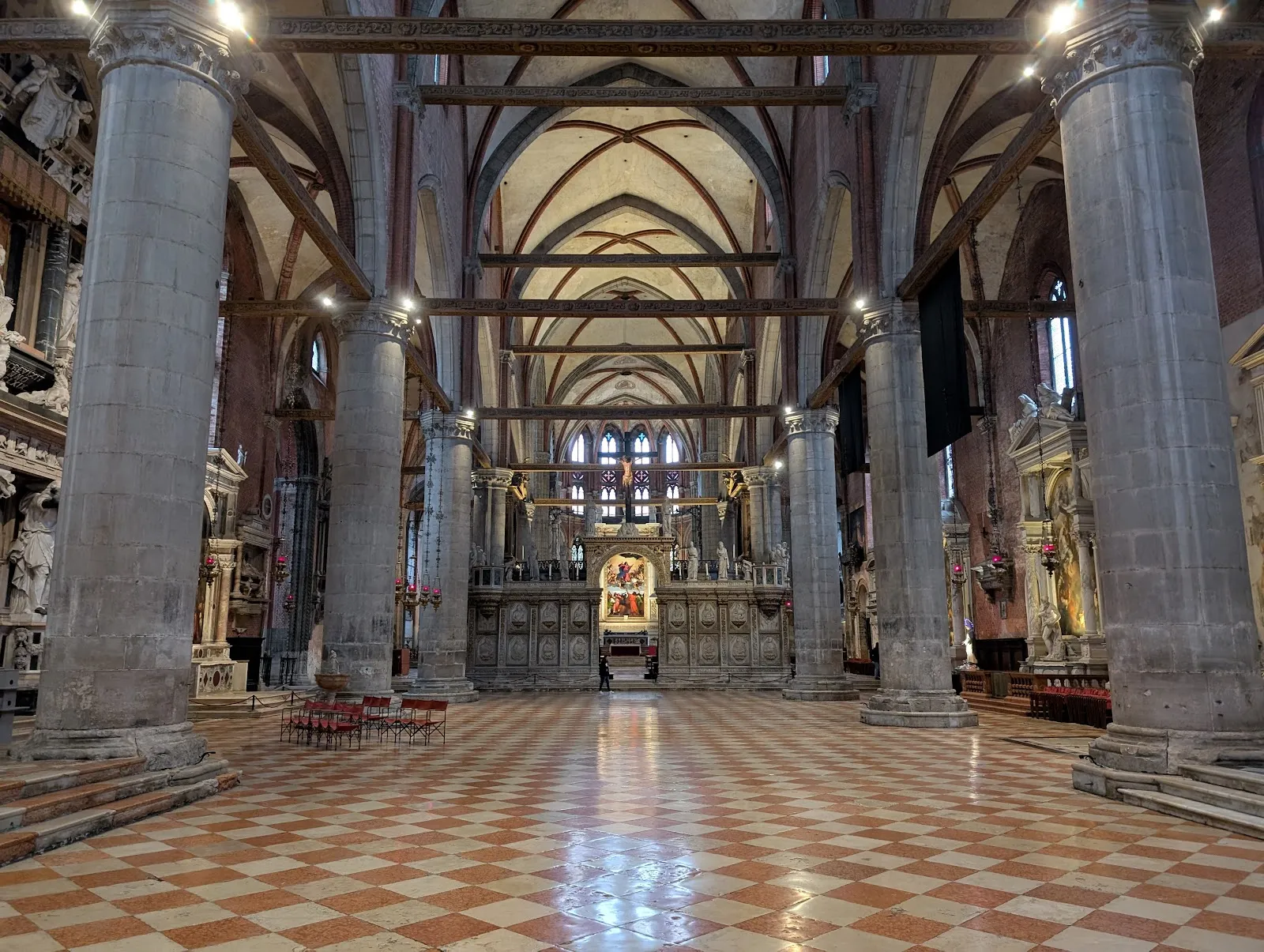
The Basilica of Santa Maria Gloriosa dei Frari is usually called the Frari. The Franciscans began building the church in the 13th century, and it took shape over many decades. Its brick construction and spare exterior reflect the simple style associated with Franciscan churches. Inside, the building’s scale becomes clear: a long central nave, side aisles and high columns lead the eye toward the altar.
The Frari is among Venice’s largest churches and one of its important Gothic buildings. Its plain façade is a useful contrast to the paintings, sculpture and elaborate monuments inside. The church belongs to the San Polo district, on Campo dei Frari.
Titian’s paintings and burial place
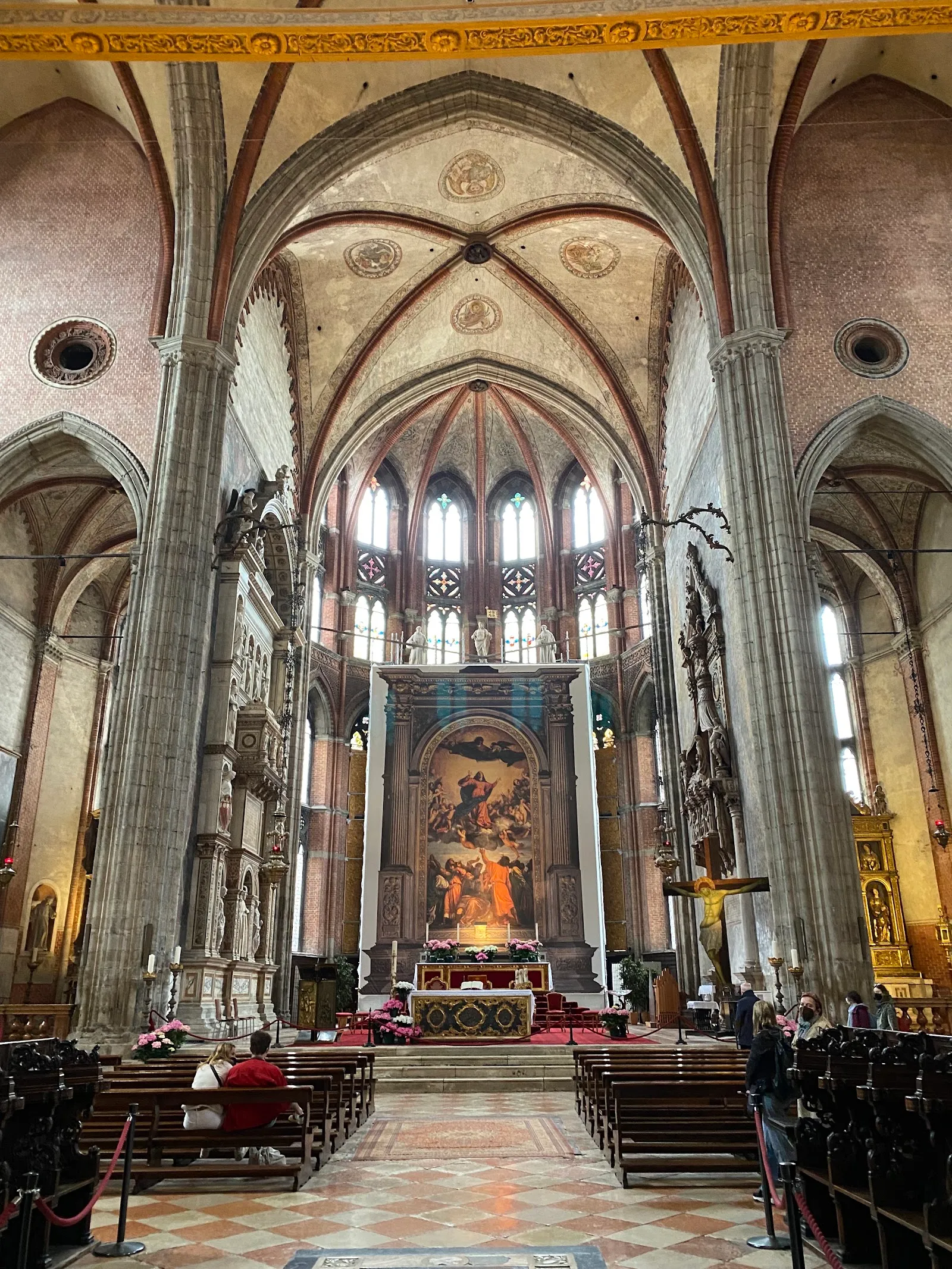
Titian’s Assumption dominates the high altar. Painted for the church, the work shows the Virgin rising toward heaven, her red clothing drawing the eye against the surrounding space. Two other major works by Titian are associated with the basilica: Madonna di Ca’ Pesaro, displayed in the left aisle, and the Pietà, now held at the Gallerie dell’Accademia.
Titian is buried in the Frari, close to the work that made the church one of the principal places to see his art. His tomb is among several memorials to notable figures. Antonio Canova’s monument takes the form of a large pyramid, based on a design by the sculptor. Look around the church for other tombs and memorials, which give the interior a different character from a gallery devoted only to paintings.
The sacristy and choir
Begin a visit in the sacristy, where Giovanni Bellini’s Madonna and Child with Saints triptych was painted for its setting. The work dates to 1488. Its placement lets you see the painting in the room it was made for, rather than as an isolated panel in a museum.
The church’s carved wooden choir stands in front of the high altar. It is a rare surviving example of a freestanding choir of the kind used by monks in the medieval period. Take time to notice its detailed carving, then look back toward the altar and the surrounding paintings. The choir, sacristy and monuments each call for a slower pace than a quick glance at the main canvas.
Planning your visit
The Frari is a working Catholic church as well as a place to see art. Keep your clothing respectful and behave quietly inside. An audio guide is available for visitors who want more context on the artworks; tickets in advance are recommended.
The church is open Monday through Saturday from 9 am to 7:30 pm and on Sunday from 1 pm to 6 pm. These hours can help you fit the visit into a day in San Polo. If you are short on time, focus on the Assumption, the sacristy triptych and the choir. With more time, continue through the aisles to take in the paintings, sculptures and tombs.
Perguntas frequentes
Where is the Basilica of Santa Maria Gloriosa dei Frari?
It is on Campo dei Frari in Venice’s San Polo district.
What artworks should I look for inside?
See Titian’s Assumption above the high altar, his Madonna di Ca’ Pesaro in the left aisle, and Bellini’s triptych in the sacristy. The carved wooden choir is another highlight.
Is there an audio guide?
Yes. An audio guide is available for more information about the artworks.