Porta Camollia is a northern entrance through Siena’s medieval walls, on Via Camollia and close to the route from the train station into the historic centre. Its imposing stonework and three arches make a brief walk-through a worthwhile stop. Look above the arch for the Latin inscription welcoming visitors, then continue along Via Camollia toward San Pietro alla Magione and Palazzo Salimbeni. A small park beside the gate gives you a view over the city. Take care crossing: the central arch carries traffic, while the side arches are for pedestrians.
A gateway on the northern approach
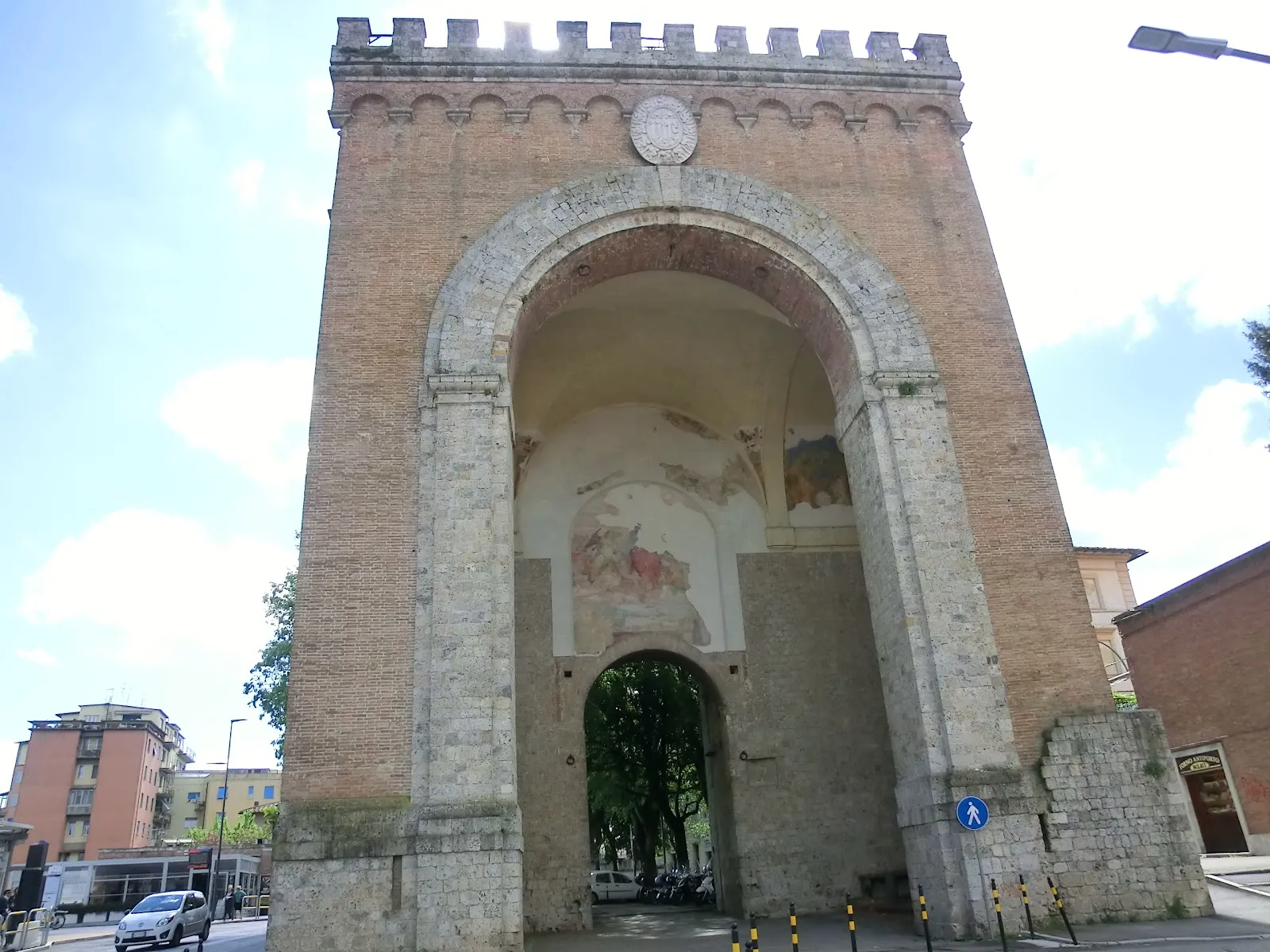
Porta Camollia stands on Via Camollia, at the northern edge of Siena’s walled historic centre. It is a natural point to pass if you are walking between the train station and the old town. Escalators from the station climb the slope toward the gate, easing the uphill approach.
The gate’s three arches have different uses: pedestrians can pass through the side openings, while the central arch carries vehicles. Pause to look at the structure, but keep to the pedestrian route when crossing.
The inscription above the arch
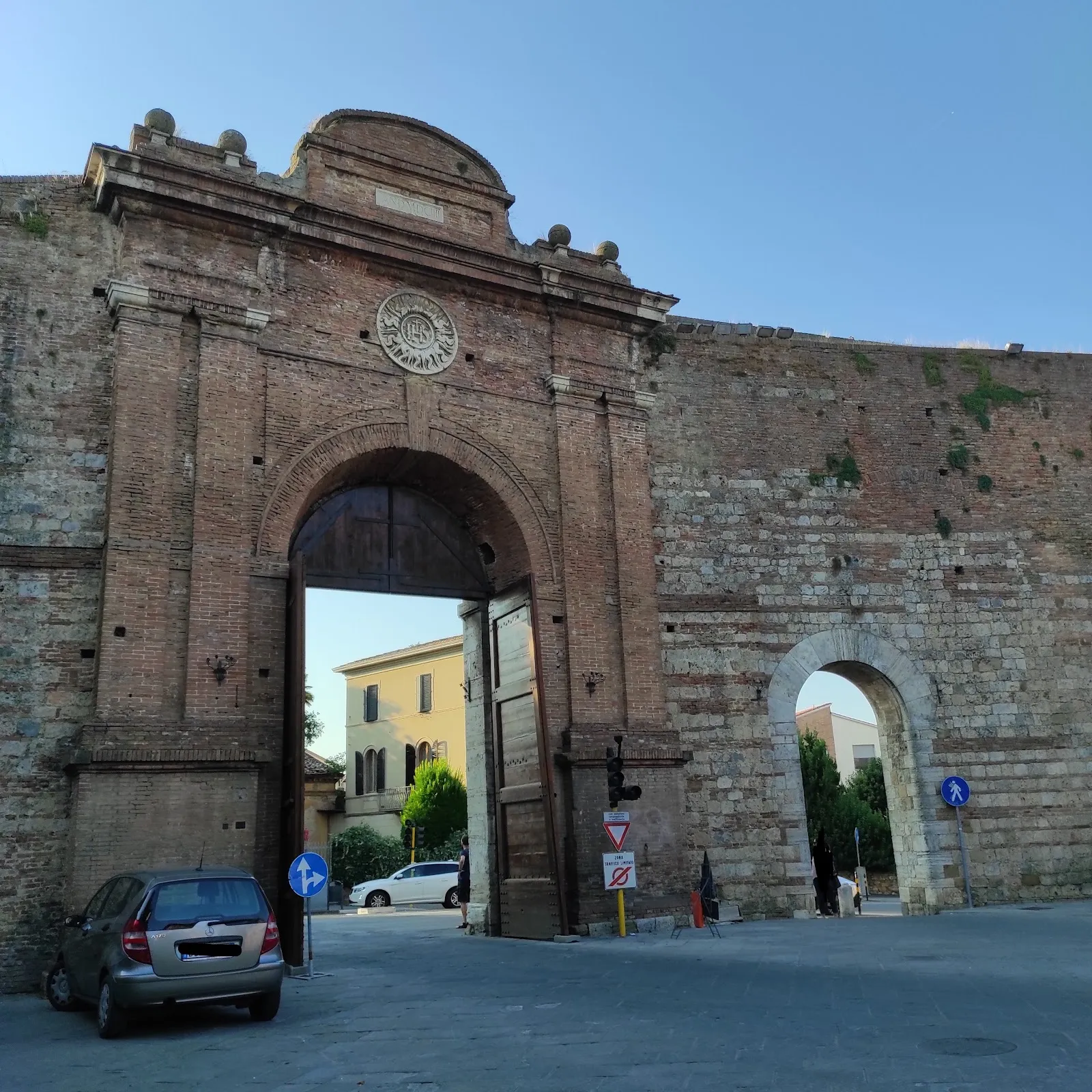
A marble panel bears the Latin words “Cor magis tibi Siena pandit,” expressing the welcome that Siena opens its heart to visitors. The message gives the entrance a personal note alongside its imposing scale.
The gate is associated with Siena’s medieval defences and the road toward Florence. It also marks the start of Via Camollia, a route historically connected with pilgrims travelling the Via Francigena between Canterbury and Rome.
The gate and its changing history
The original gate was destroyed during the 1555 siege of Siena. The present structure dates to 1604 and was designed by Alessandro Casolari, with decoration by sculptor Domenico Cafaggi. A Medici coat of arms at its centre recalls the family’s power in Tuscany.
The name is linked in local tradition to Camulio, said to have settled where the gate now stands. The inscription and the gate’s role as an entrance have also made it a memorable first encounter with the old city.
Continue along Via Camollia
After passing through, follow Via Camollia into the historic centre. San Pietro alla Magione is a simple-fronted church associated with a former hospice for pilgrims. Farther along, Via Camollia becomes Via Montanini, where Palazzo Salimbeni rises above the street. The Gothic palace was once the fortified home of a wealthy banking family and has housed Monte dei Paschi since 1472.
Beside Porta Camollia, a park provides a place to look out over the city. There is also a market building nearby. Together, these stops make the gate an easy starting point for a walk into Siena rather than a destination that requires a long visit.
Perguntas frequentes
Where is Porta Camollia?
It stands on Via Camollia at the northern entrance to Siena’s walled historic centre, on the route between the train station and the old town.
Can pedestrians use the main arch?
The central arch carries vehicle traffic. Use one of the side arches to pass through on foot.
What does the inscription above the gate mean?
“Cor magis tibi Siena pandit” means that Siena opens its heart to you.
How long should I spend at Porta Camollia?
The walk through takes only a few minutes. You can add time to see the nearby park and continue along Via Camollia.