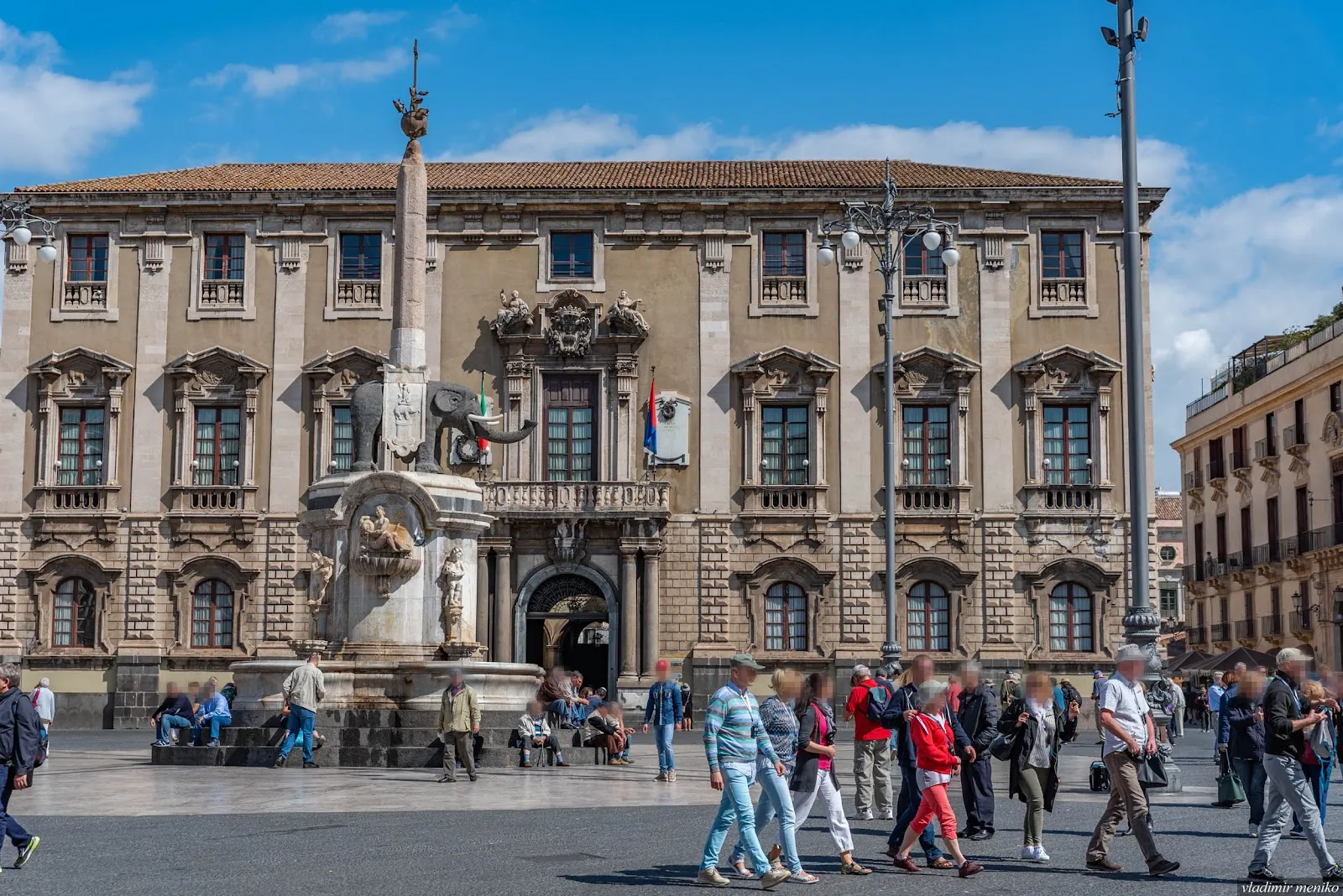
On the north side of Piazza del Duomo in Catania, Palazzo degli Elefanti is the city hall, housed in a Baroque palace designed by Giovanni Battista Vaccarini. The building dates to the period after the 1693 earthquake and is worth a stop for its architecture and the historic carriages displayed inside. In the square, look for the black elephant fountain and the elephant carved into the paving. The palace courtyard and some exhibits may be accessible, though refurbishment can limit entry.
A town hall rebuilt after the earthquake
Palazzo degli Elefanti stands on the north side of Piazza del Duomo and houses Catania’s town hall. Construction began in 1696, after the 1693 earthquake. Giovanni Battista Vaccarini later shaped the palace’s Baroque design.
Its name refers to the elephant in the nearby square. The building sits among other landmarks around Piazza del Duomo, including the cathedral and Palazzo dei Chierici.
The carriages and their ceremonial use
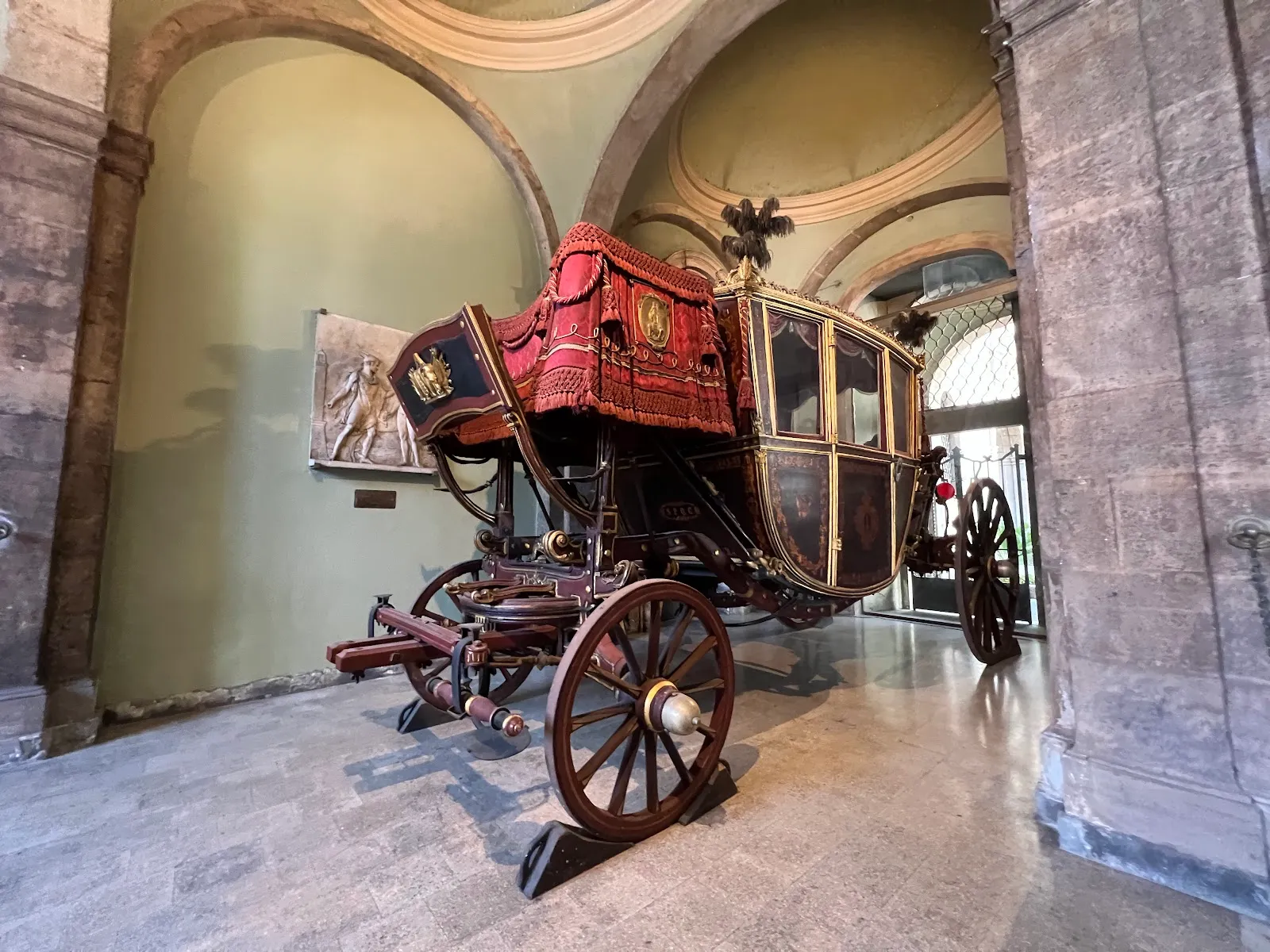
Two 18th-century carriages are kept inside the town hall. One was made in Germany. The carriages have a ceremonial role during celebrations for Saint Agatha: one is used to take the mayor to the church of San Biagio on February 3.
The interior is not always fully open to the public. Refurbishment has previously restricted access to parts of the building, so check conditions before setting aside time to explore inside.
Perguntas frequentes
Can you go inside Palazzo degli Elefanti?
The courtyard and some exhibits, including historic carriages, have been accessible to the public. Refurbishment can restrict access to other areas.
What can you see inside the palace?
The town hall displays two 18th-century carriages. One was made in Germany, and one is used in a Saint Agatha ceremony.
Where is Palazzo degli Elefanti?
It is on the north side of Piazza del Duomo in Catania.
How long should you spend at Palazzo degli Elefanti?
Allow about 30 to 60 minutes for the palace and nearby elephant details in the piazza.