Cretto Burri, also called The Great Crack, is a vast land-art memorial on the ruins of Gibellina in Sicily, destroyed by the 1968 earthquake. Concrete walls trace the old town’s layout, turning its former streets into paths through the work. Walk among them to take in the scale and the shifting sounds, wind and views across the landscape. The site is free to enter, with parking nearby. Poggioreale, another town damaged by the earthquake, is a few kilometres away.
A town traced in concrete
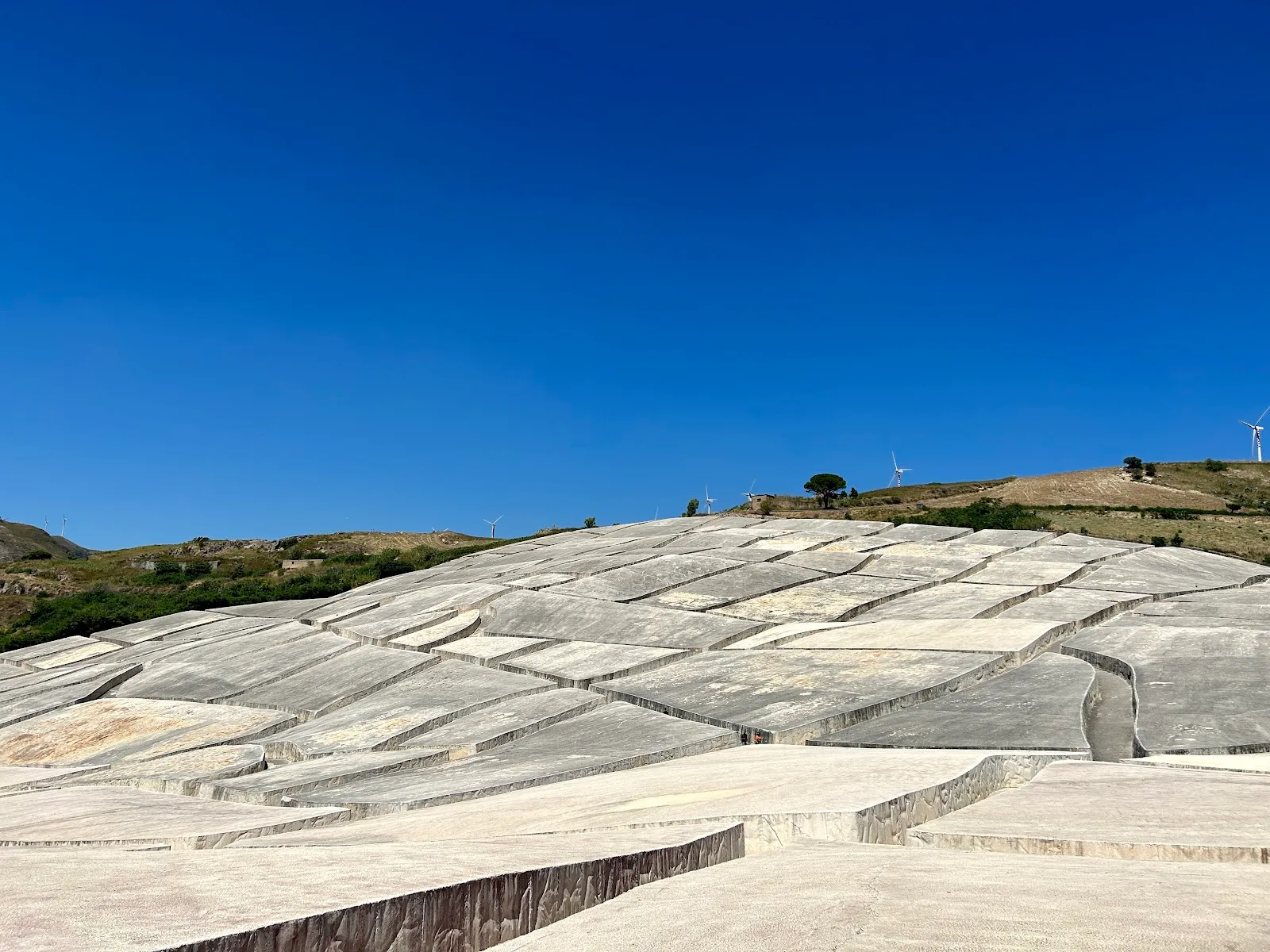
Cretto Burri was built over the ruins of Gibellina, destroyed by the 1968 earthquake. The concrete lines follow the layout of the old town, preserving its pattern in a form that visitors can walk through.
The work is also known as The Great Crack. Its scale becomes clear on foot: paths run between broad concrete blocks, giving the former streets a new, stark presence in the Sicilian landscape.
Walking through the work
The visit is an outdoor walk among the concrete paths. The experience changes with the conditions around you: wind, sound, smell, sky and views across the landscape all become part of the setting. You can wander freely, without an entrance fee or access restrictions.
The route includes steep sections. Approaching from the north can reduce the amount of climbing. In summer, take plenty of water because the site is exposed to intense heat.
Road access and nearby ruins
Cretto Burri is on the road between Gibellina and Salaparuta. Parking is available, but some roads in the area are damaged and can be difficult for a regular car; a 4x4 may be more suitable.
Poggioreale, a few kilometres away, was also damaged by the earthquake. Visiting its ruins alongside Cretto Burri can add another perspective on the disaster and its impact on the area.
Perguntas frequentes
Is there an entrance fee for Cretto Burri?
No. The site is free to enter, with no access restrictions.
How long do you need at Cretto Burri?
Allow around 30 to 60 minutes to walk among the concrete paths.
Can you drive to Cretto Burri?
There is parking nearby. Some roads are damaged and may be difficult for regular cars, so a 4x4 can be useful.
What is the best way to approach the site on foot?
Approach from the north to avoid the steepest climbs.