In Nuoro, the Museo del Costume explores Sardinian life through clothing, textiles, food traditions and festival objects. Its displays include village costumes, filigree jewellery, woven pieces and examples of ceremonial bread, alongside material on weaving and local customs. Look for the bright skirts and distinctive silk-trimmed dresses, then make time for Room 10, in a separate part of the building, with Mamuthones masks and music. QR codes provide English translations for displays whose printed text is in Italian. Plan a couple of hours to see the collection at an unhurried pace.
Sardinian life through objects
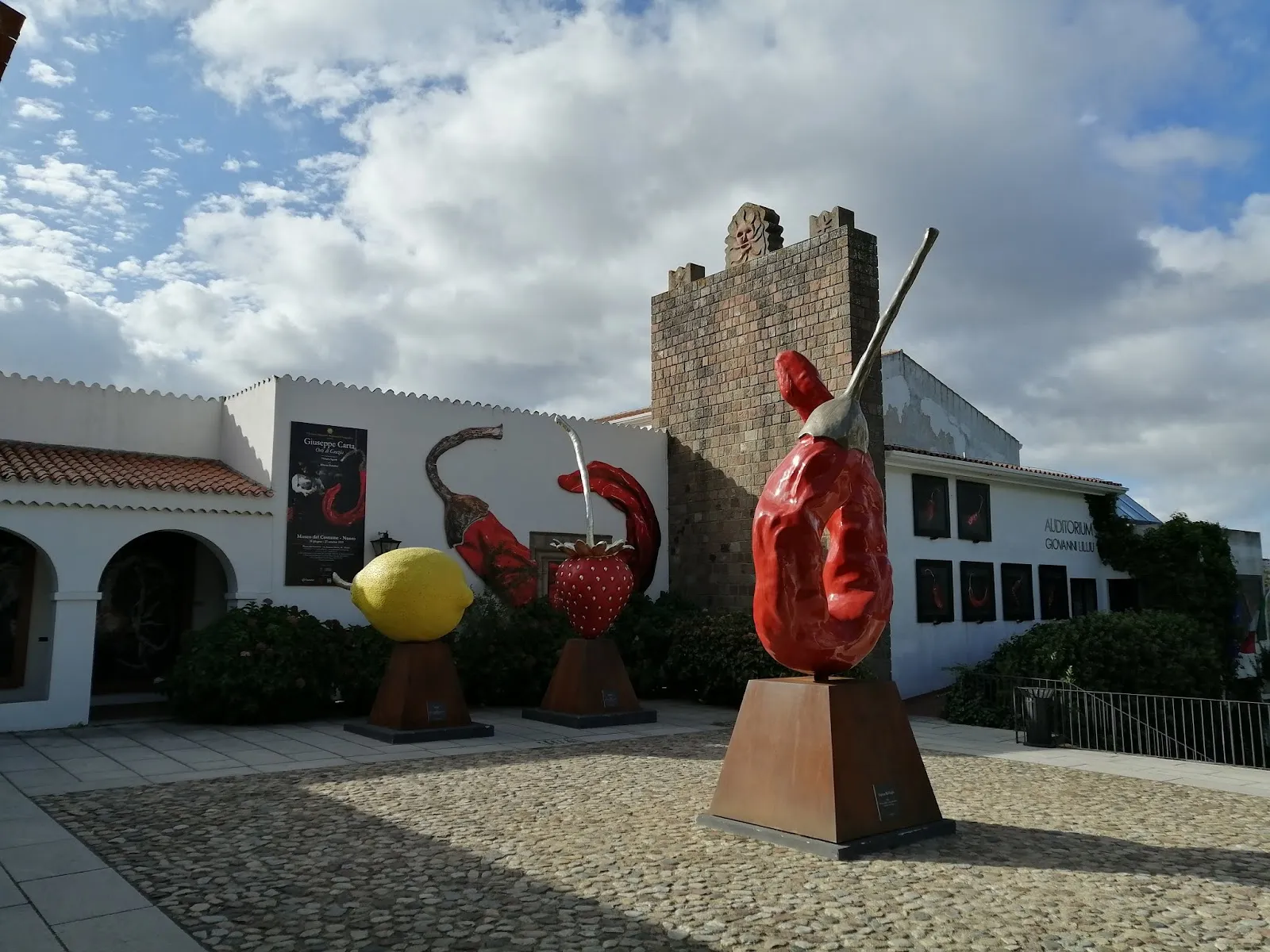
The Museo del Costume in Nuoro focuses on the island’s everyday life and material culture. Clothing is central to the visit, but the collection also brings together textiles, food-related objects, musical instruments, weapons and masks. Taken together, these displays connect local customs with the people and villages that shaped them.
Give yourself time to look closely. The rooms contain extensive information, and some displays have further items tucked into drawers. Topics include weaving techniques and cultural traditions, so the visit moves beyond a survey of garments into the skills and practices behind them.
Costumes, textiles and village styles
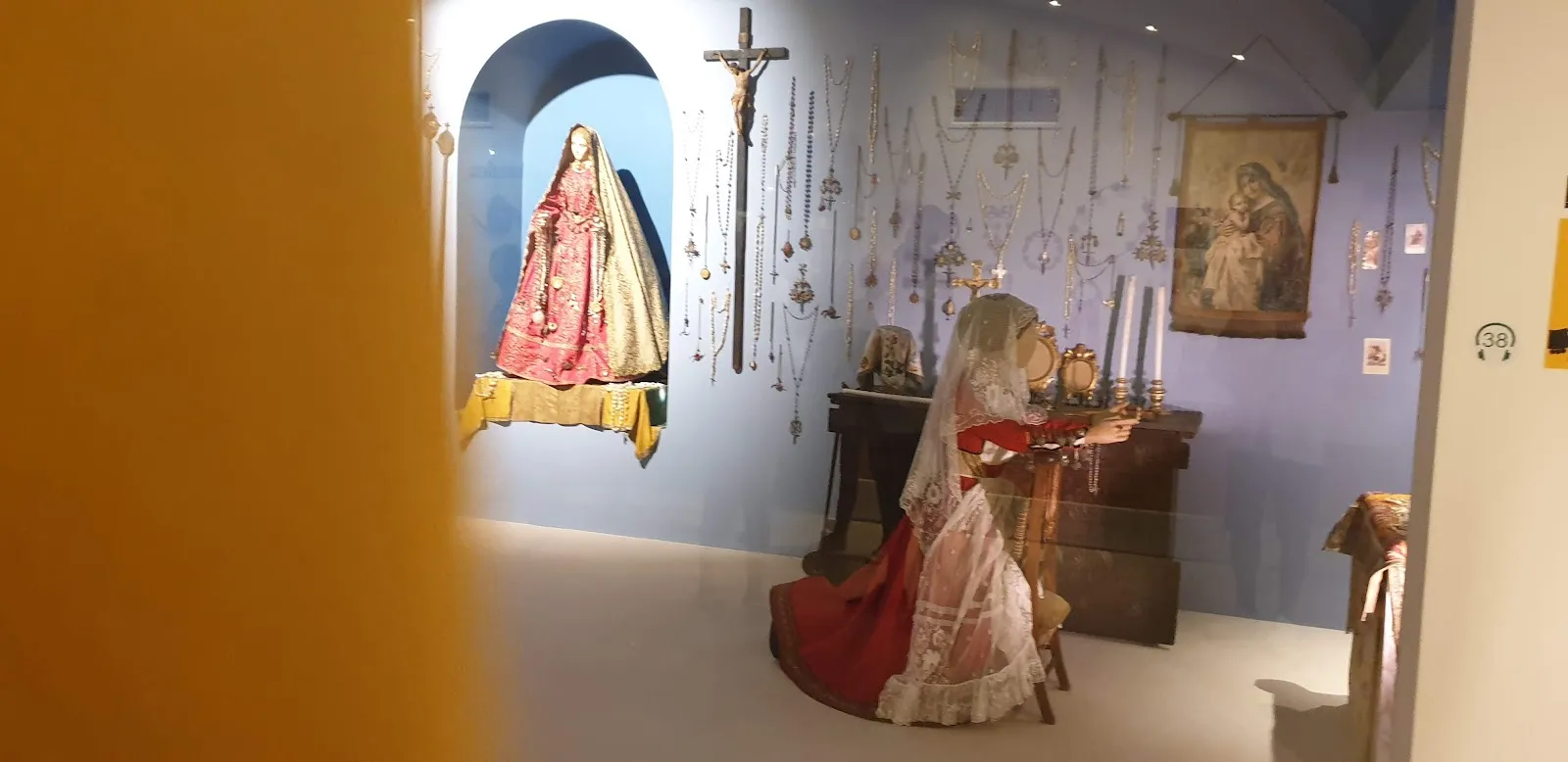
The clothing displays show how dress varies between Sardinian communities. Bright red skirts are associated with mountain villages, while garments from Orgosolo and Desulo have silk borders in blue and yellow and are influenced by Armenian styles. Headdresses from Ittiri and Osilo offer another distinct form to look for.
Alongside the costumes, the museum displays filigree jewellery, carpets, tapestries and embroidery. These pieces give context to the patterns, materials and decorative work found in traditional dress. The collection also includes ceremonial bread, a striking part of the museum’s presentation of Sardinian food customs.
Room 10 and finding English text
Room 10 is separate from the main sequence of rooms, so make a point of locating it before you leave. It focuses on the Mamuthones, with masks, music and festival clothing. The woolly costumes and their bells offer a different view of Sardinian tradition from the garments displayed in the main costume section.
Most of the exhibit text is in Italian. QR codes in the rooms link to English translations, and the museum has free Wi-Fi. Scan the codes as you go if you want to follow the explanations alongside the objects. A weekday afternoon can be a quieter time to explore, and visitors have found it easier to buy tickets at the desk then.
Perguntas frequentes
How long do you need at Museo del Costume?
Allow at least a couple of hours to explore the rooms and read the displays.
Are there English translations at Museo del Costume?
The printed exhibit text is in Italian, but QR codes in the rooms provide English translations. Free Wi-Fi is available.
What should I look for at Museo del Costume?
Look for the village costumes, textiles and ceremonial bread, then visit Room 10 for Mamuthones masks, music and festival clothing.