
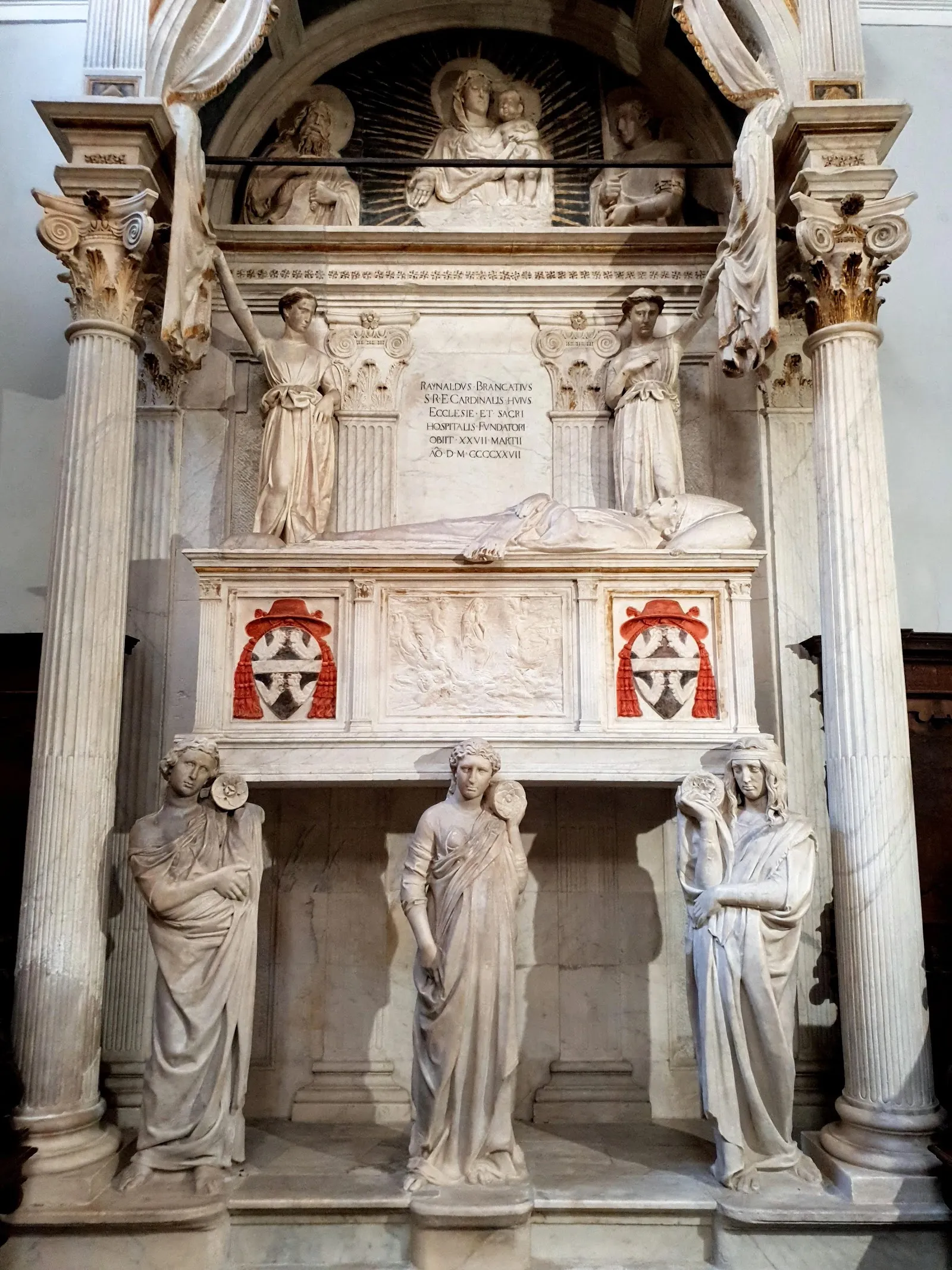
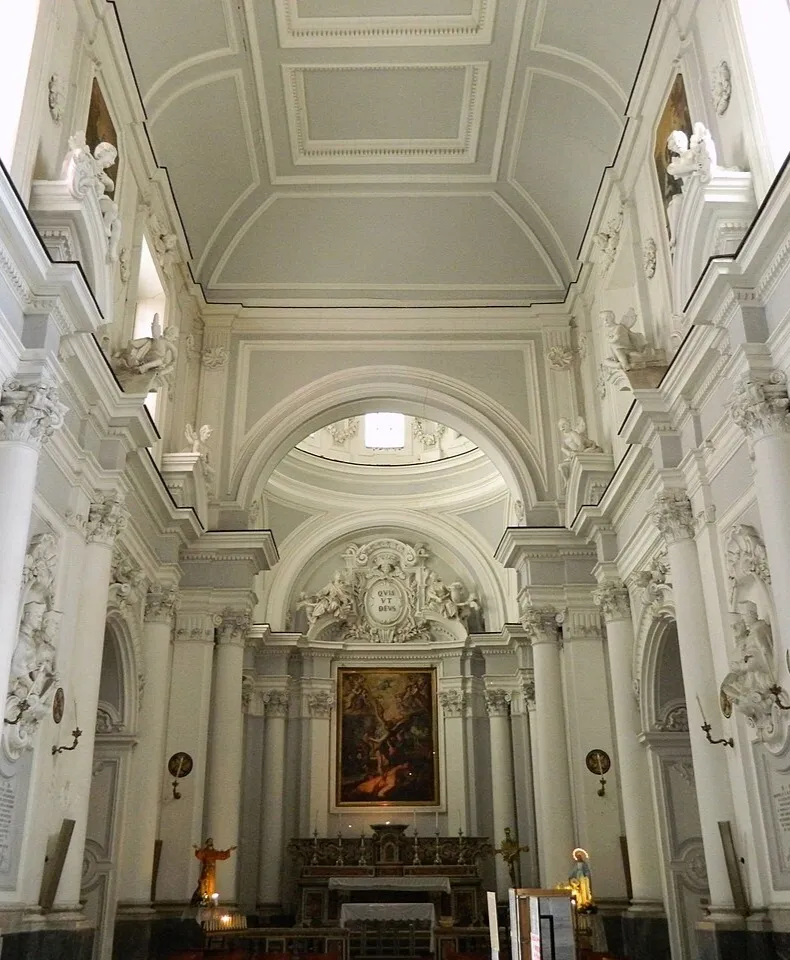
Sant'Angelo a Nilo is a small church in Piazzetta Nilo, in Naples’ Greco-Roman quarter. Its main draw is the funerary monument to Cardinal Rinaldo Brancaccio, made by Donatello and Michelozzo with Pagno di Lapo Partigiani. Look closely at the carved details, then take in the church’s sculptures and its plain interior. The building dates to the 14th century and was reshaped in the 18th. Check that it is open before making a detour, as it can be closed unexpectedly.
The church and its origins
The church stands in Piazzetta Nilo, near the edge of the original Greek-Roman town. The square takes its name from the god Nile, whose cult was followed by Egyptian merchants in the area.
The Brancaccio family established a chapel here in 1385, dedicating it to Saints Angelo and Marco. The main portal on Via Mezzocannone is the surviving element attributed to the earlier Gothic-Catalan building. Architect Arcangelo Guglielmelli oversaw the renovation that gave the church its present appearance in 1709.
The Brancaccio monument
The church’s best-known work is the funerary monument of Cardinal Rinaldo Brancaccio, who founded the chapel. Donatello, Michelozzo and Pagno di Lapo Partigiani created it in Pisa between 1426 and 1427. It was then sent by sea to Naples.
Take time with the relief carving: its details can be easy to miss at first glance. The church also contains an altarpiece by the Sienese painter Marco Pino.
Perguntas frequentes
What is Sant'Angelo a Nilo known for?
It contains the funerary monument of Cardinal Rinaldo Brancaccio, made by Donatello, Michelozzo and Pagno di Lapo Partigiani.
When was Sant'Angelo a Nilo built?
The Brancaccio family established a chapel here in 1385. The church was renovated in 1709.
Where is Sant'Angelo a Nilo?
It is at Piazzetta Nilo in Naples, near the edge of the city’s original Greek-Roman town.


