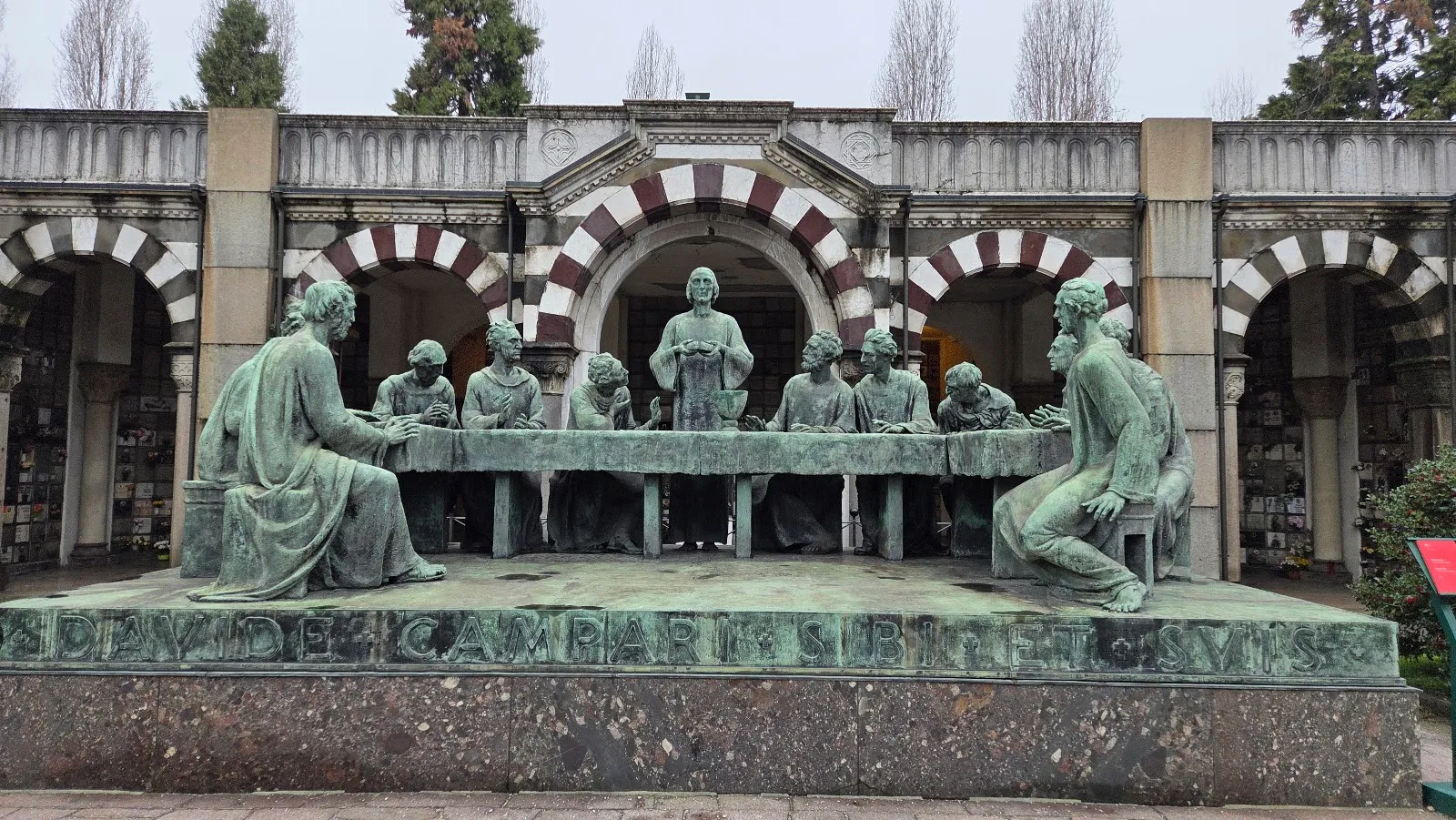
At Piazzale Cimitero Monumentale, this historic cemetery feels like an outdoor collection of sculpture and architecture. Opened in 1866, it is known for its elaborate tombs, family mausoleums, obelisks and crypts, with designs ranging from classical forms to modern works. The Famedio, the marble-and-stone Hall of Fame near the main entrance, is a good place to begin. Inside, look for the Last Supper sculpture on the western side and take time to notice the details carved into the monuments. The grounds also offer a quiet setting for reflection.
A cemetery built as a public landmark
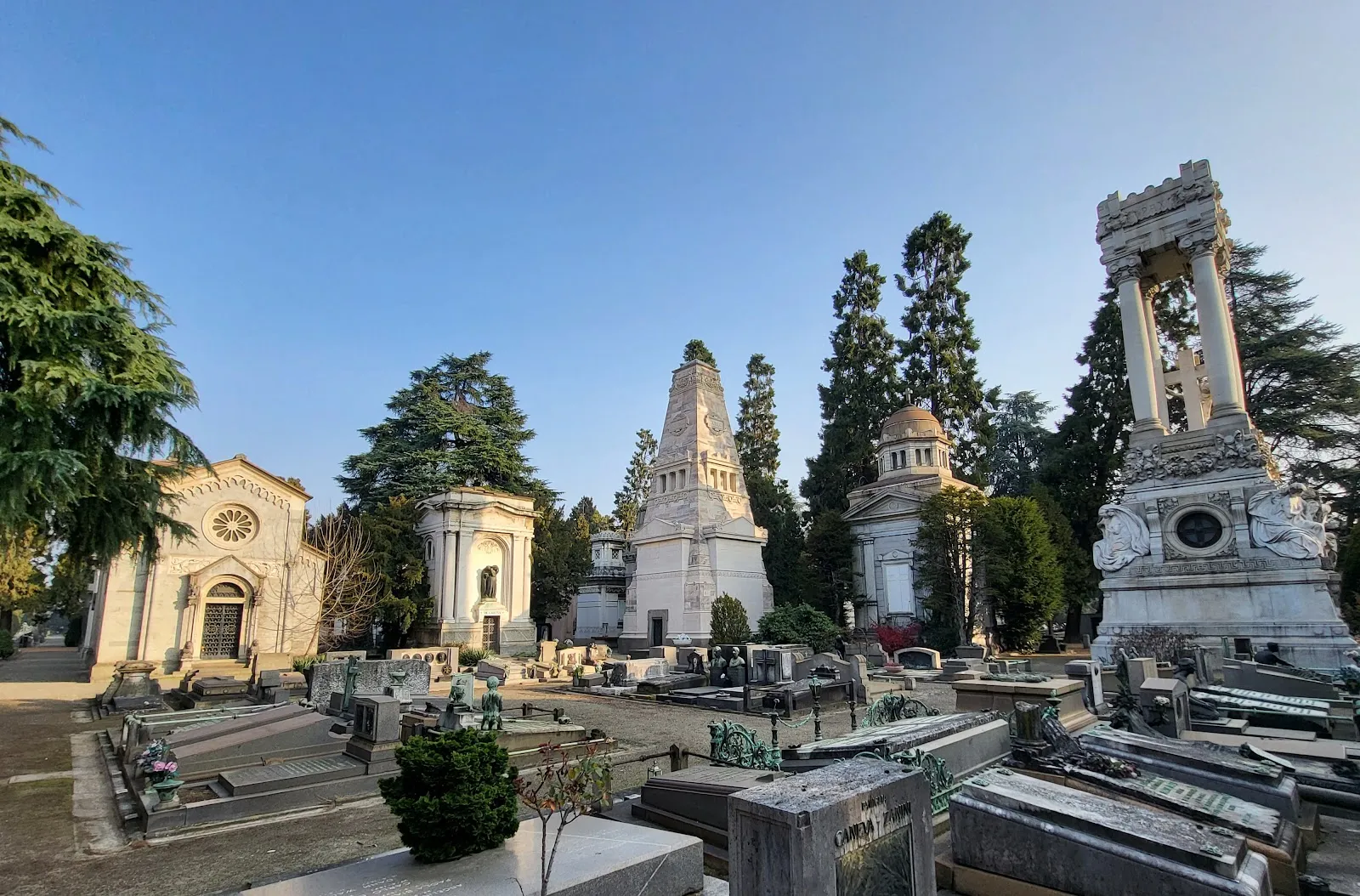
The Monumental Cemetery opened in 1866, after architect Carlo Maciachini designed it for Milan at Porta Volta. Its grounds brought together burial places that had been scattered around the city. The cemetery is now known for the scale and variety of its monuments, from family tombs to sculptural works and chapels.
Its entrance leads to the Famedio, a marble-and-stone building also known as the Hall of Fame. The structure is associated with Milan’s most prominent citizens and is one of the cemetery’s key landmarks. Starting here helps orient a visit before you follow the paths into the grounds.
Sculpture, architecture and memory
The monuments range from Greek-temple forms and obelisks to Gothic-inspired structures, family crypts and more modern designs. A small-scale version of Trajan’s Column is among the distinctive works to look for. The tombs also show how families have used architecture and sculpture to mark remembrance, with forms that can feel solemn, grand or intimate.
Artists whose work is represented here include Adolfo Wildt, Giò Ponti, Arturo Martini, Lucio Fontana, Medardo Rosso and Giacomo Manzù. Their works sit among pieces by many other sculptors and architects, creating a varied collection rather than a single architectural style. On the western side, look for the Last Supper sculpture.
How to plan your visit
The grounds are extensive, and a map from the visitor center can help you locate particular monuments instead of relying on chance. Choose a few areas or works you want to see, then leave space to pause over details along the way. A visit can also include the Famedio near the entrance.
This is a cemetery as well as an artistic site. Keep voices low and move through the grounds with care around graves and memorials. The cemetery has a wheelchair-accessible entrance, seating, restrooms and parking.
Perguntas frequentes
When did the Monumental Cemetery open?
The cemetery opened in 1866. Architect Carlo Maciachini designed it between 1863 and 1866.
What should I see at the Monumental Cemetery?
Start at the Famedio near the main entrance, then look for the varied tombs, obelisks, family mausoleums and the Last Supper sculpture on the western side.
How long should I allow for a visit?
Allow around 2 to 3 hours to explore the grounds and take time with the monuments.
Is the cemetery wheelchair accessible?
The entrance, seating, restrooms and parking are listed as wheelchair accessible.