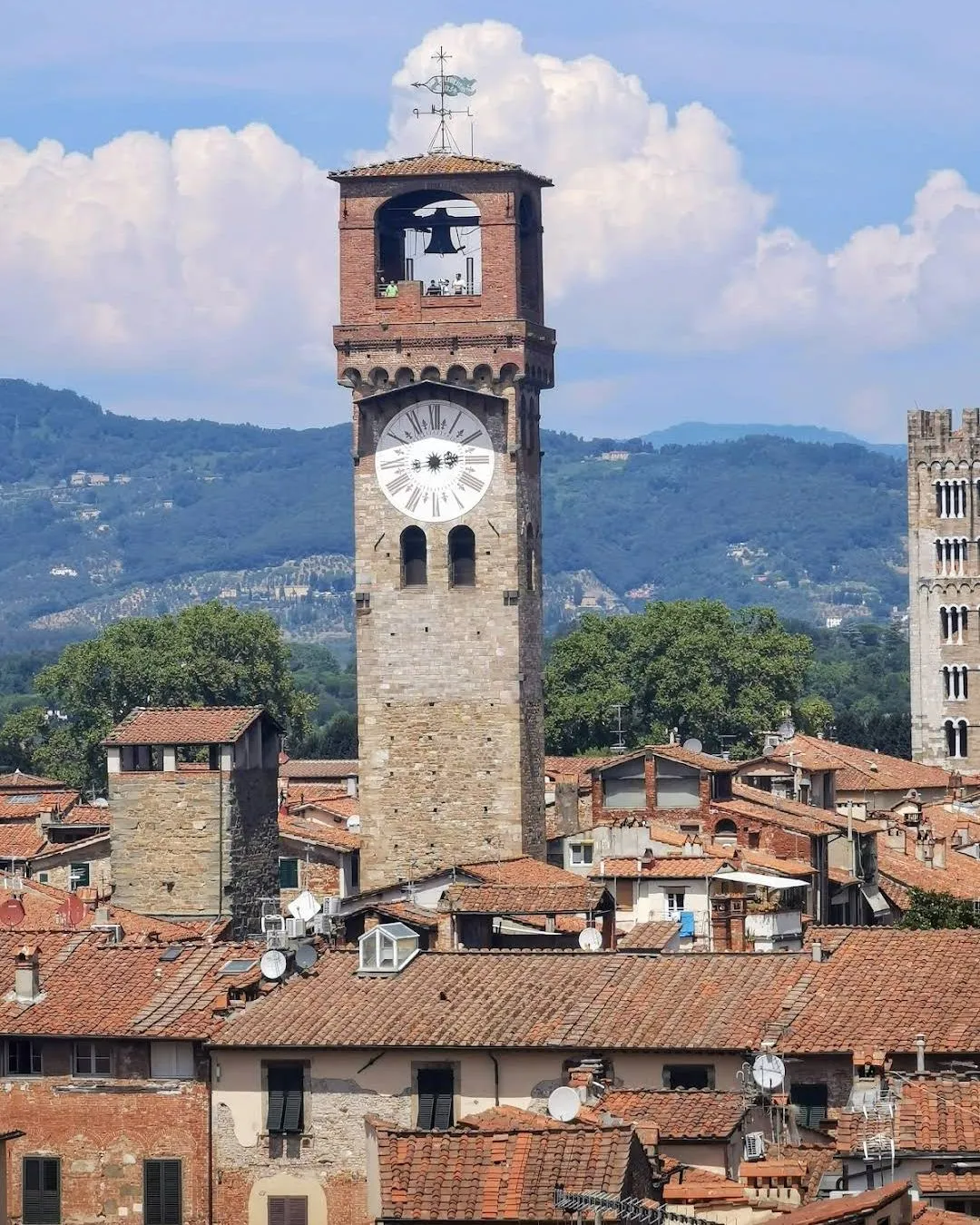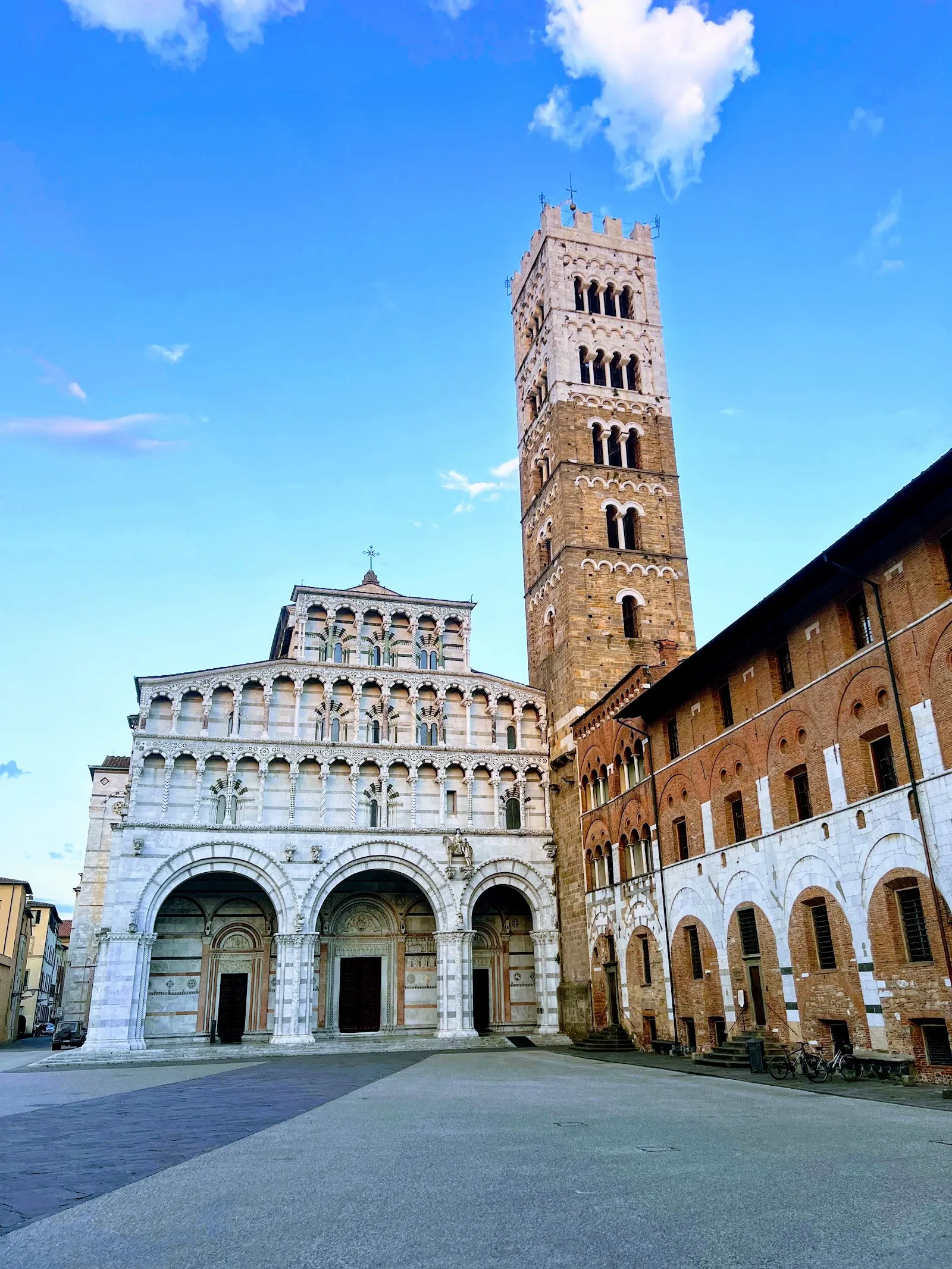
Duomo di San Martino is Lucca’s cathedral, on Piazza Antelminelli in the old town. Its Romanesque marble façade is covered with carved scenes and rows of arches, including one smaller arch shaped around the pre-existing bell tower. Step inside to see works by artists including Tintoretto and Ghirlandaio, the wooden Volto Santo crucifix and Jacopo della Quercia’s marble tomb of Ilaria del Carretto. A carved labyrinth on the entrance portico adds another detail to look for outside.
A façade shaped around an older tower
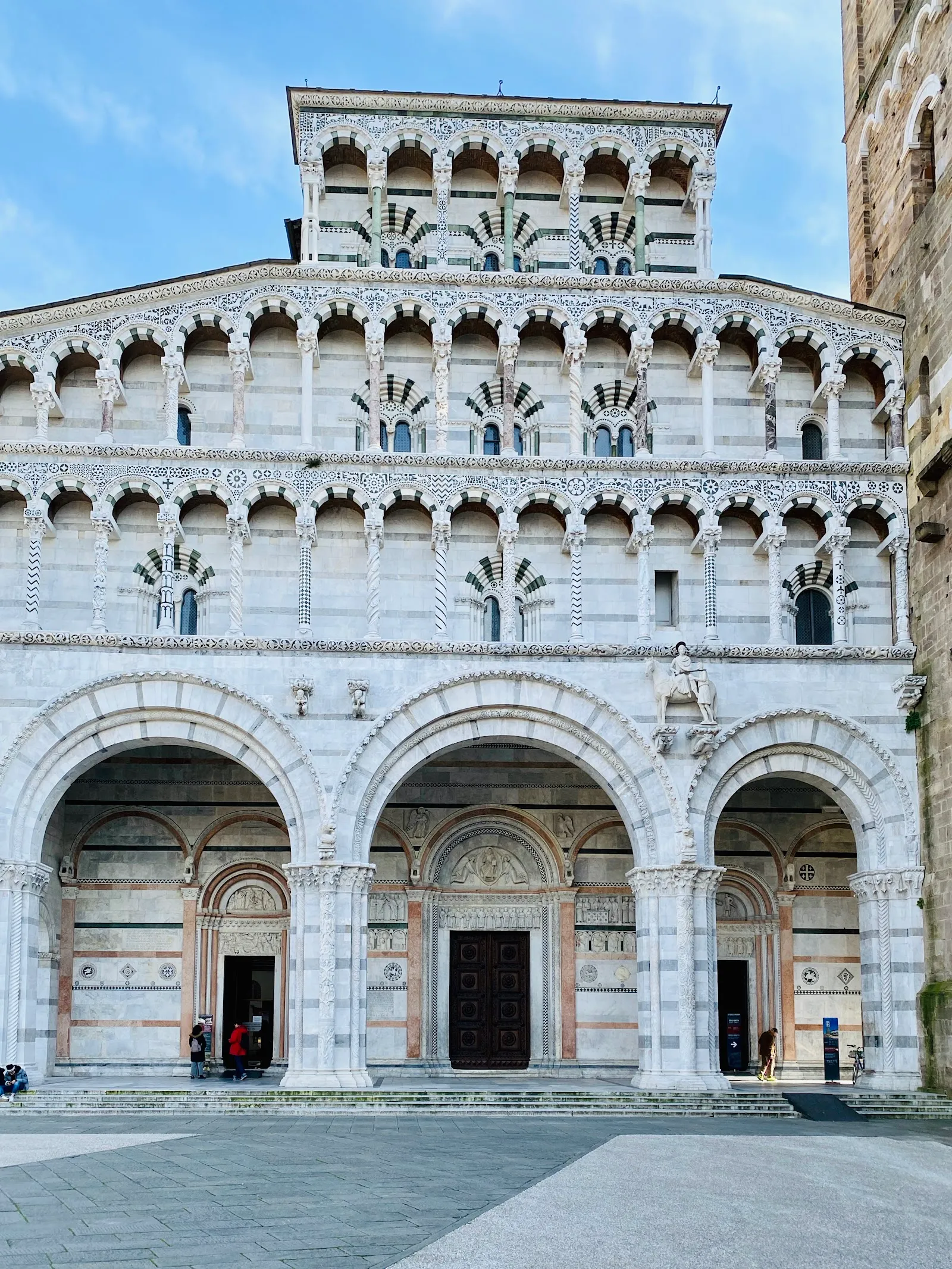
The cathedral stands on Piazza Antelminelli, in Lucca’s historic centre. Its Romanesque façade is made of polychrome marble, with rows of arches and detailed reliefs beneath the portico. Look closely at the arches: one is smaller than its neighbours because the façade had to fit around the bell tower already beside it.
The carved scenes include episodes from the life of Saint Martin, as well as other figures and stories. A sculpture of the saint sharing his cloak appears on the façade; the original is now inside the cathedral. The reliefs over the left doorway are attributed to Nicola Pisano, while work on the portico carvings began in 1233 under the Lombard master Guido da Como.
A labyrinth is carved on a column of the entrance portico. It is associated with pilgrimage, including the Via Francigena, and is one of the details worth seeking out before you go inside.
Artworks and the Volto Santo
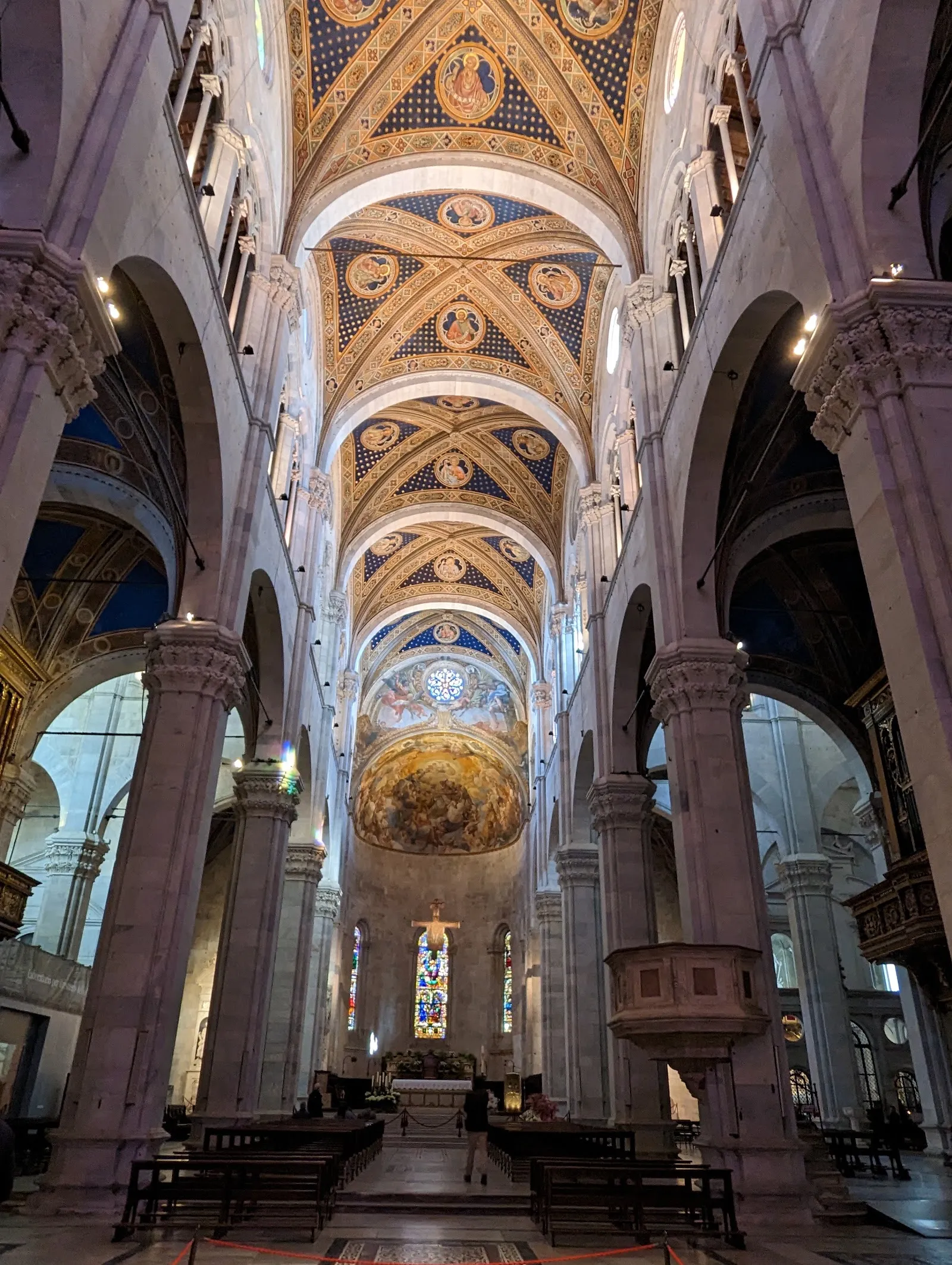
The interior brings together works from different periods. Among the paintings are Ghirlandaio’s Madonna and Child with Saints and Tintoretto’s Last Supper. The marble floor includes the Judgement of Solomon, an inlaid work by Antonio di Ghino da Siena. Other works noted inside include a Dead Christ by Filippino Lippi.
The Volto Santo, or Holy Face, is a wooden crucifix held in a small gated chapel. It is a treasured image of Christ and a focus of Lucca’s religious life. Tradition connects it with the Holy Land and Nicodemus, though accounts of its origin vary. During the annual Santa Croce celebration in September, the figure is dressed in gold vestments, and the chapel gates are opened so people can pass in front of the crucifix.
In the sacristy, look for the marble tomb of Ilaria del Carretto, made by Jacopo della Quercia. The carved figure lies in her bridal dress, with a small dog at her feet. The monument dates to the early 15th century and is among the cathedral’s best-known works.
A cathedral rebuilt over centuries
Tradition attributes the cathedral’s foundation to San Frediano, a bishop of Lucca who died in 588. The building was rebuilt around 1060 under Bishop Anselmo da Baggio, who later became Pope Alexander II. The cathedral was consecrated in his time, and construction and alterations continued over the following centuries.
The Romanesque façade belongs to a longer building history: its reconstruction began in the 12th century, and the cathedral’s interior was later altered with Gothic elements. The apse and transept wall were completed in 1372. Work on the façade continued into the 17th century, giving the building its layered appearance.
The bell tower was first built as a watchtower and later incorporated into the cathedral. Its brickwork and later additions make the change in construction visible. The tower can be visited, but the stairs are narrow metal steps in an open space, so the climb may not suit everyone.
Perguntas frequentes
Where is Duomo di San Martino?
The cathedral is on Piazza Antelminelli in Lucca’s historic centre.
What are the main things to see inside?
Look for the Volto Santo, the marble tomb of Ilaria del Carretto, Tintoretto’s Last Supper and Ghirlandaio’s Madonna and Child with Saints.
Can you climb the bell tower?
The tower is accessible. Its stairs are narrow metal steps in an open space.
When is the Santa Croce celebration?
The celebration takes place in September. During it, the Volto Santo is dressed in gold vestments and the chapel gates are opened.