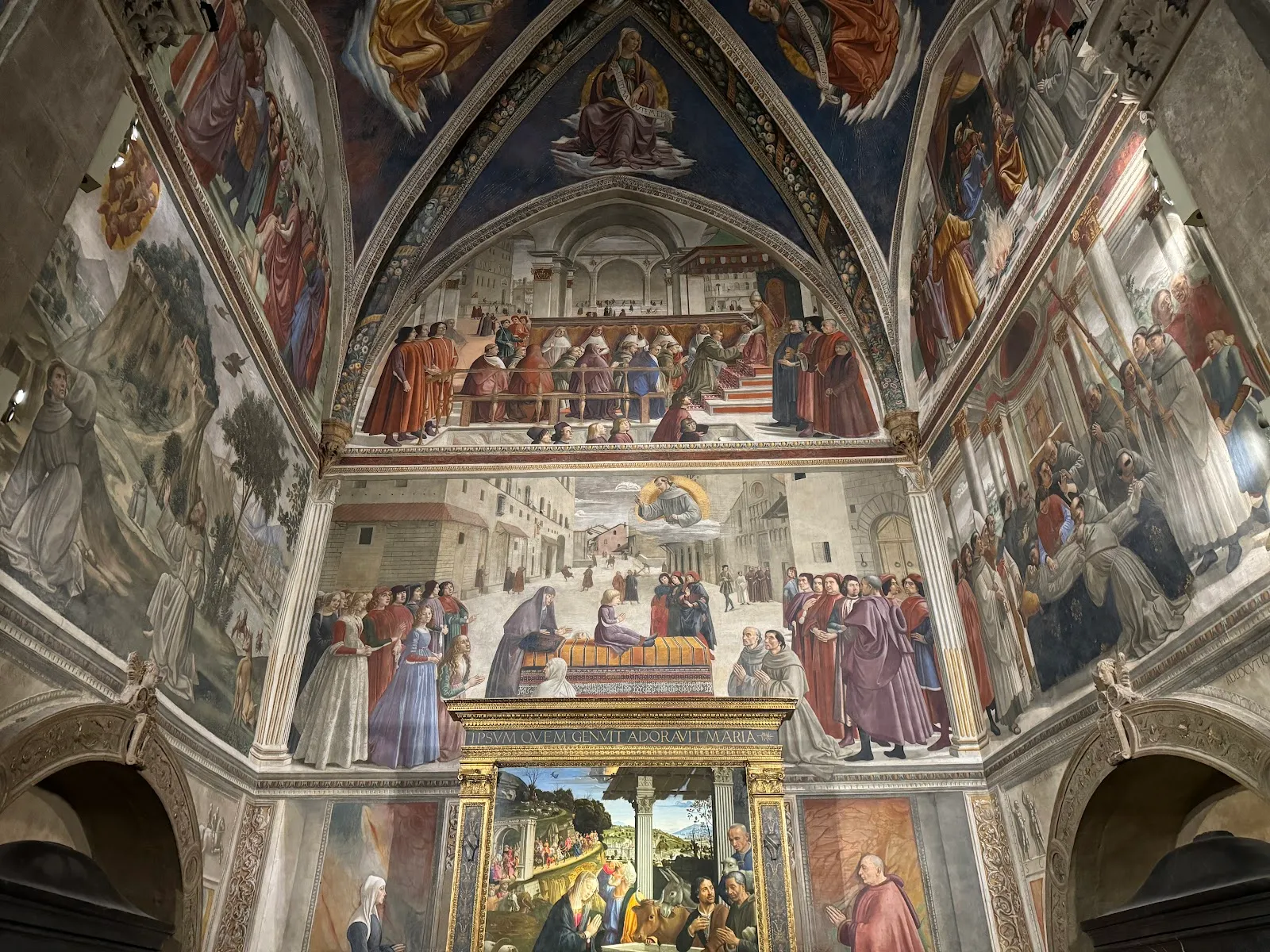
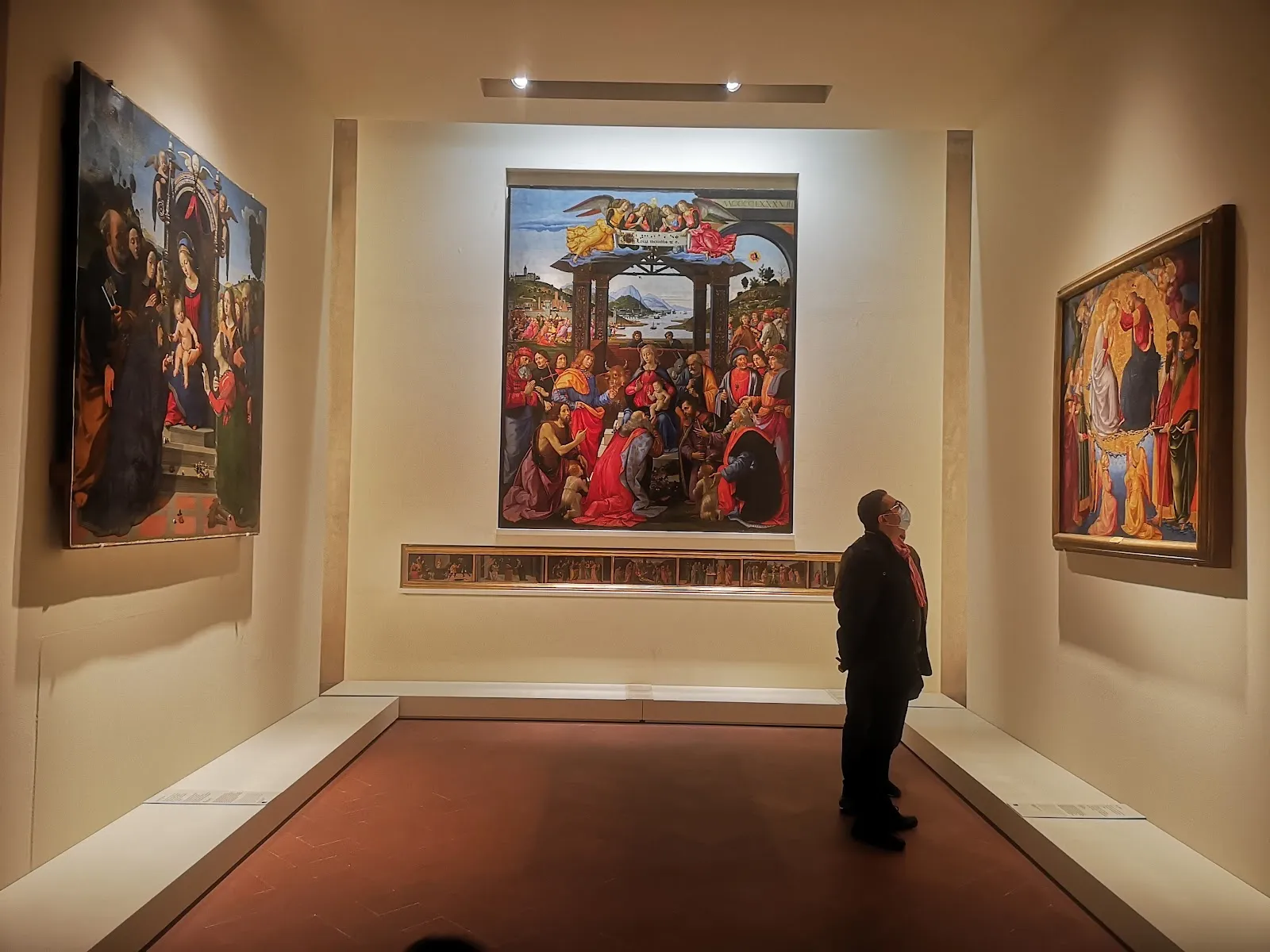
On Piazza della Santissima Annunziata, the Museo degli Innocenti traces the history of Florence’s foundling hospital, founded in 1421 and housed in a complex designed by Filippo Brunelleschi. Its galleries bring together the institution’s story, its architecture and religious art, including works by Botticelli, Ghirlandaio, Piero di Cosimo and the Della Robbia family. Look for Andrea della Robbia’s blue-and-white infant medallions on the façade, then explore the permanent displays and any temporary exhibition. The rooftop café has views across Florence.
A hospital built to care for children
The Istituto degli Innocenti was founded in 1421 to care for children who could not be raised by their families. The wealthy silk weavers’ guild funded the institution, and Filippo Brunelleschi designed its loggia. The complex became a foundling hospital and later an orphanage, with care for children continuing until 1875.
The museum tells this history through the building, its records and objects, and the stories of the women and children who lived there. Its displays also explain the institution’s work in childcare. The institute continues to operate, with its work now focused more on supporting families.
Brunelleschi’s loggia and the façade
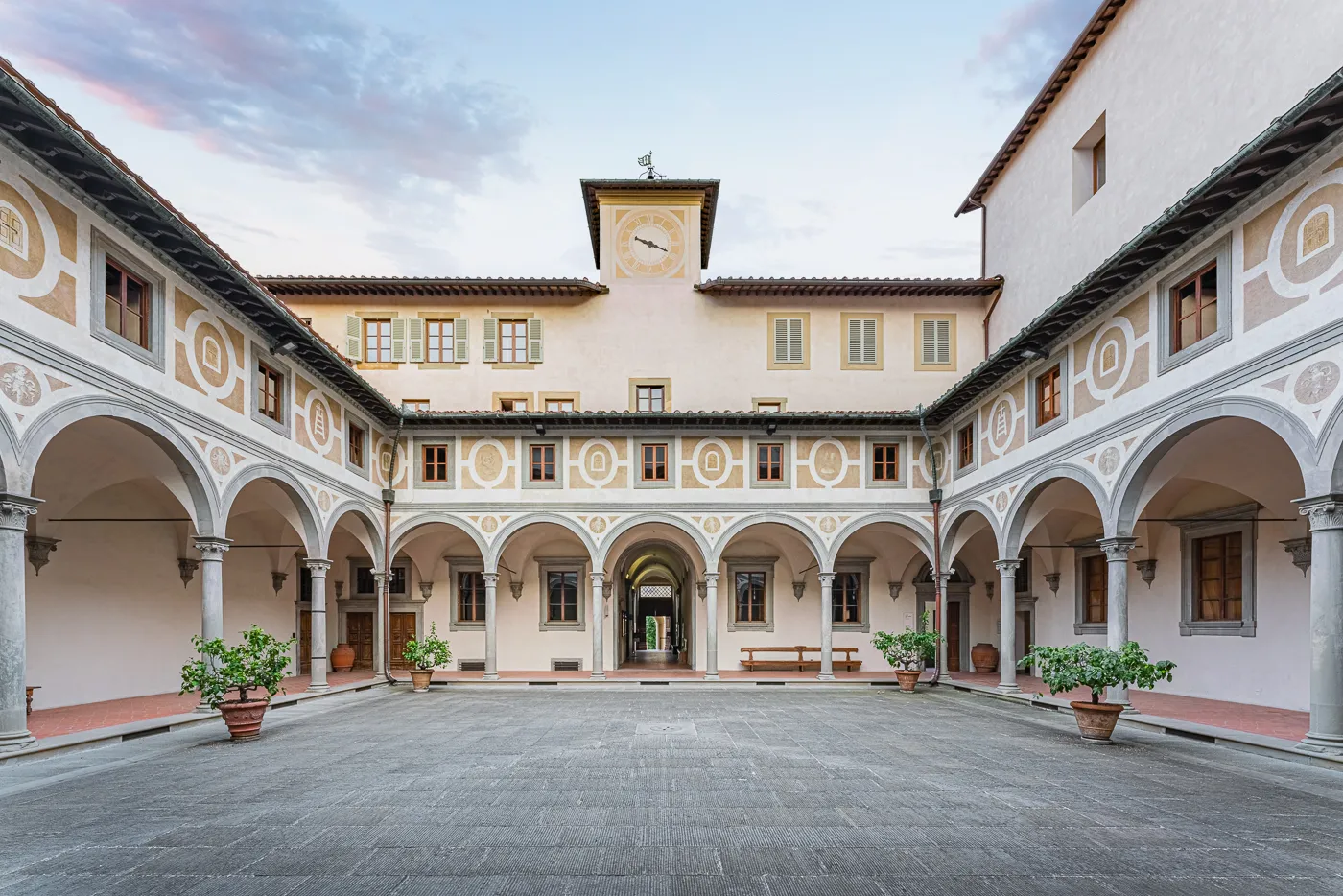
The museum occupies a monumental complex on Piazza della Santissima Annunziata. Brunelleschi’s loggia is marked by rounded arches and Roman capitals, an early expression of Renaissance architecture in Florence. The orderly arcade gives the façade its measured rhythm.
Look above the arches for Andrea della Robbia’s blue-and-white glazed terracotta medallions. Made in the 1480s, they depict swaddled infants and commemorate the children cared for by the institution. Each was shaped by hand, so the figures differ slightly. The exterior is a meaningful part of the visit, even before you enter the galleries.
Art and the history of the institution
The museum’s route connects the history of the institute with its architecture and art. The collection includes paintings, sculptures and other works, with pieces by Botticelli, Ghirlandaio and Piero di Cosimo, as well as works by the Della Robbia family. Religious art and objects associated with the institution sit within a story about childhood and care.
The galleries also bring attention to the records behind the institution’s work. Historical archive glimpses recall the ledgers used to document life there, adding a practical dimension to the history told in the rooms. The collection is concentrated, with each gallery contributing to the account of the Innocenti complex and its place in Florence.
Temporary exhibitions and family visits
Alongside its permanent displays, the museum hosts temporary exhibitions on historical and contemporary subjects. Past exhibitions have included work by Toulouse-Lautrec and a show about Japanese spirits and folktales; the programme changes, so check what is on during your visit.
The museum is designed to welcome younger visitors. Children can use audio-guided routes, and family materials include a treasure-hunt kit and a family tour kit for exploring the city centre. Captions and audio guides are available in multiple languages, helping families follow the museum’s account of care and hospitality.
The rooftop café
A café on the upper level looks out over Florence. It makes a natural pause after the galleries, with views across the city from the rooftop. The café is part of the museum visit, so leave time for it if you want to take in the view as well as the collections.
Perguntas frequentes
What is the Museo degli Innocenti?
It is a museum in Florence’s historic Istituto degli Innocenti, a foundling hospital founded in 1421. Its displays cover the institution’s history, architecture and art.
What can you see at the museum?
The museum has historical displays, architectural material and religious art, including works by Botticelli, Ghirlandaio, Piero di Cosimo and the Della Robbia family. Temporary exhibitions are also held.
Is the museum suitable for children?
Yes. It has audio-guided routes for younger visitors, plus family materials that include a treasure-hunt kit and a tour kit.
Can you visit the rooftop café?
A café on the upper level has views over Florence.