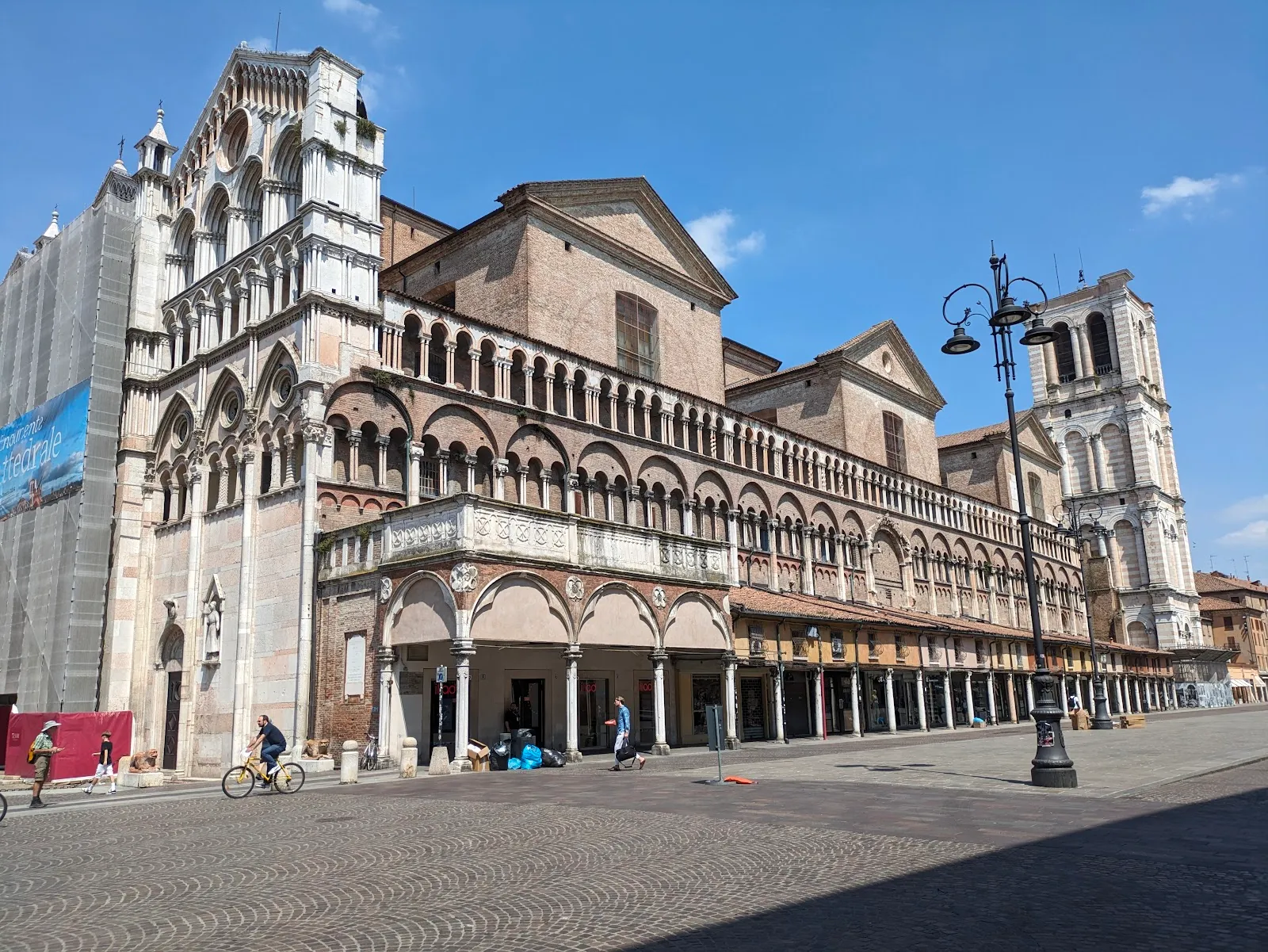
The Duomo di San Giorgio is Ferrara's cathedral, dedicated to St George, the city's patron saint. It stands on Piazza Trento e Trieste in the historic centre. The facade mixes Romanesque and Gothic styles, with carved scenes on three tiers and a Last Judgment above the main door. Inside, you will find paintings and sculptures by Renaissance and Baroque artists, including Guercino and Bastianino. Entry to the church is free. The unfinished bell tower, built in pink and white marble, stands beside the square.
From 1135 to the upper facade
The cathedral was consecrated in 1135, and its design is credited to Wiligelmus. The lower facade is Romanesque and dates from that first period. The upper part was completed about a century later in the Gothic style, so the front shows two building periods side by side.
Over the centuries the building was changed several times. The members of the Adelardi family, a noble Guelf line, are named among those who helped build it in the twelfth century.
The Romanesque and Gothic facade
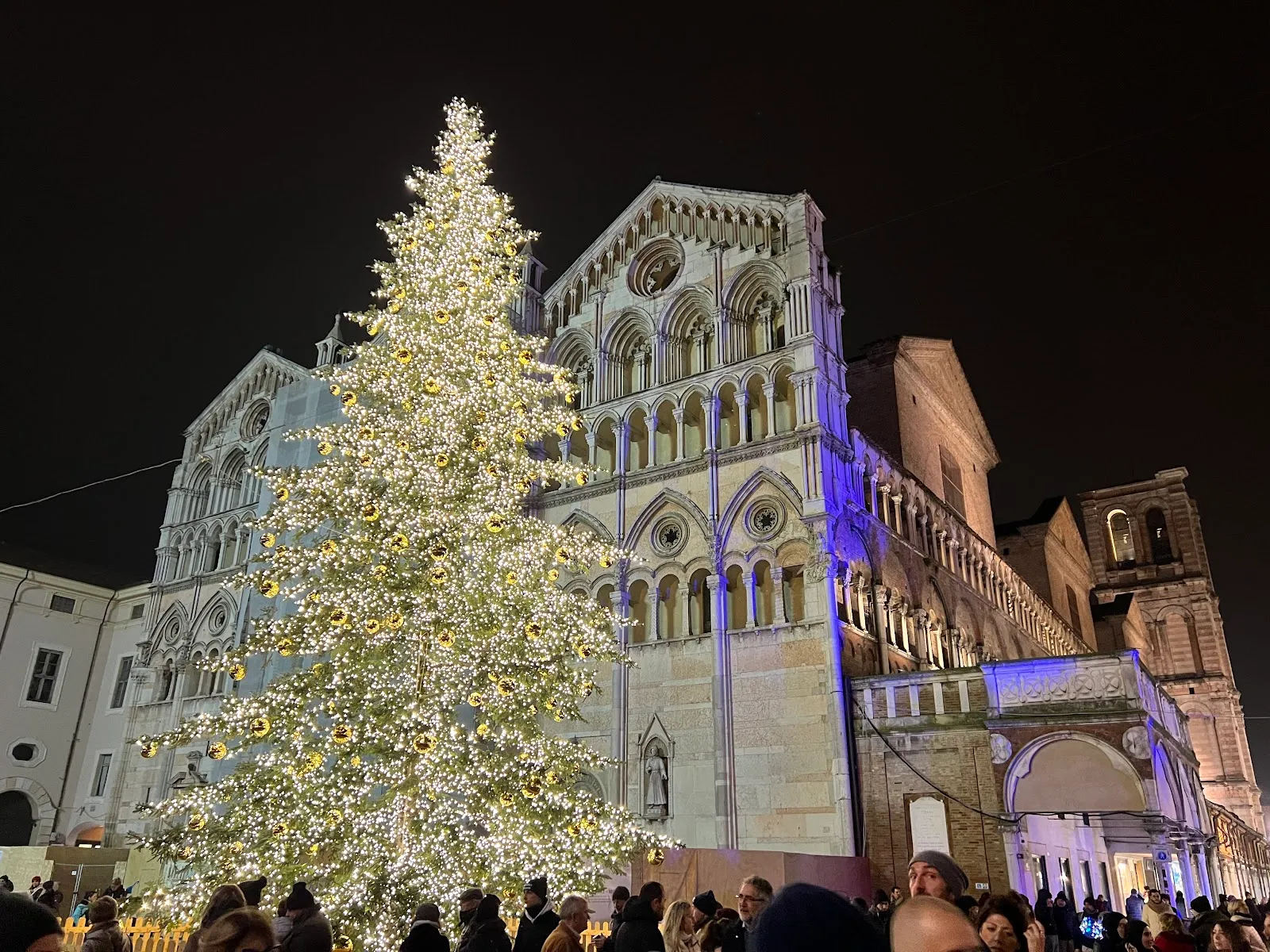
The facade is built of pink and white marble and has three tiers. Its carvings include scenes from the New Testament. The tympanum above the central door shows the Last Judgment, with the damned and the elected. A bass-relief on the front is credited to Nicolò.
Parts of the facade have been under restoration at some visits, so check the state of the front before you plan photos.
Inside the cathedral
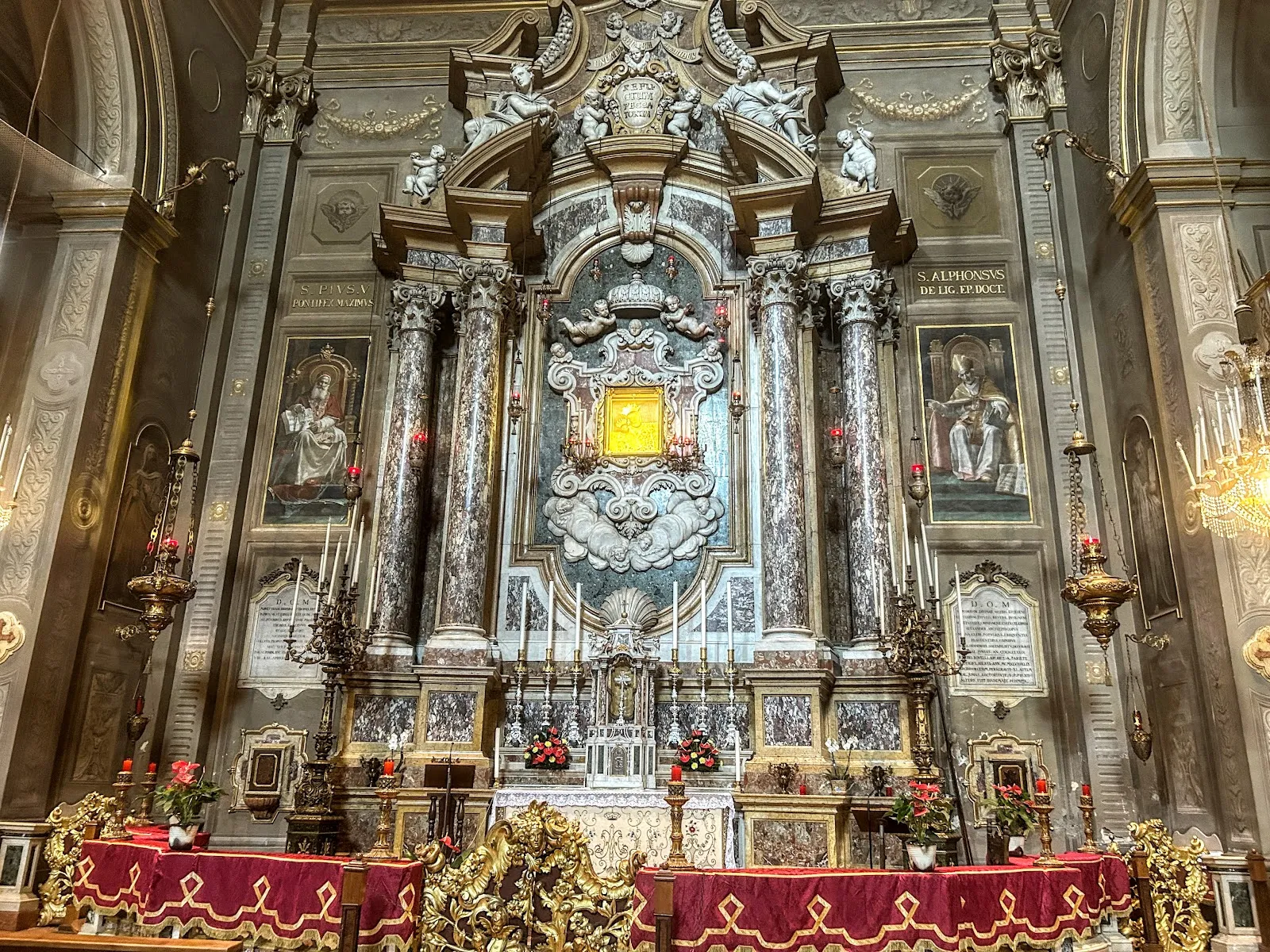
The interior was largely remodelled in the seventeenth century, and its decoration is Baroque in character. The light is low, and the mood is quiet and contemplative. Paintings, sculptures and murals by Renaissance artists, including Guercino and Bastianino, are the main works to look for. The tomb of Pope Urban III is also here.
The church has many altars. At some visits, netting has covered parts of the ceiling during work, and the frescoes above it are hard to make out. Allow time to walk the side areas slowly.
Restoration on view
Parts of the building have been under restoration in recent years. Exhibits show the studies behind the work and how medieval architecture lies beneath later layers. Much of the explanatory material is in Italian, so a short look at the displays is worthwhile even without the language.
The unfinished bell tower
The bell tower stands at the end of the loggia along the side of the cathedral. It was built between 1451 and 1493 in pink and white marble. Work continued in the sixteenth century, but the tower was never completed.
The tower is attributed to Leon Battista Alberti. Like the facade, it has been under renovation at some visits.
The museum across the square
The Museum of the Cathedral is in the former church of San Romano, next to the cathedral. It is part of the Civic Museums of Ancient Art and holds most of the works that were once in the cathedral. The collection moved there in December 2000.
Highlights include the ancient organ doors, painted with the Annunciation and St George and the Dragon by Cosmè Tura, leader of the fifteenth-century Ferrara school. The museum also has thirteenth-century tiles from the Porta dei Mesi, a side entrance destroyed in the 1700s, along with tapestries, illuminated antiphonaries, reliquaries and sculptures.
The loggia along the side of the cathedral has a row of small shop fronts, and the Palazzo Municipale stands opposite the square.
Perguntas frequentes
Is there an entry fee for the cathedral?
The church itself is free to enter. The Cathedral Museum across the square often charges an entrance fee.
Do I need to book tickets in advance?
Getting tickets in advance is recommended. Check the current arrangements before you visit, since parts of the building have been under restoration.
Is the cathedral open on Sundays?
Yes, Sunday is one of the opening days. Sunday mass draws a congregation, so keep noise to a minimum.
What is in the Cathedral Museum?
It holds the organ doors painted by Cosmè Tura, thirteenth-century tiles from the Porta dei Mesi, tapestries, sculptures, illuminated antiphonaries, reliquaries and paintings.
Is the whole cathedral open to visitors?
Not always. Parts of the building have been under restoration, and some areas have been covered at certain visits, so check ahead about what is open.