Carmel Market, or Shuk HaCarmel, is Tel Aviv’s largest open-air market, running along HaCarmel Street through the Yemenite Quarter. Stalls sell fruit, vegetables, spices, bread, meat, sweets, clothes, toys and souvenirs, while food stands and small restaurants make it easy to stop for a meal or a fresh juice. The market is busy, colorful and noisy, with plenty to browse beyond the main lane. On Tuesdays and Fridays, nearby Nahalat Binyamin adds handmade art and crafts to the outing.
A market along HaCarmel Street
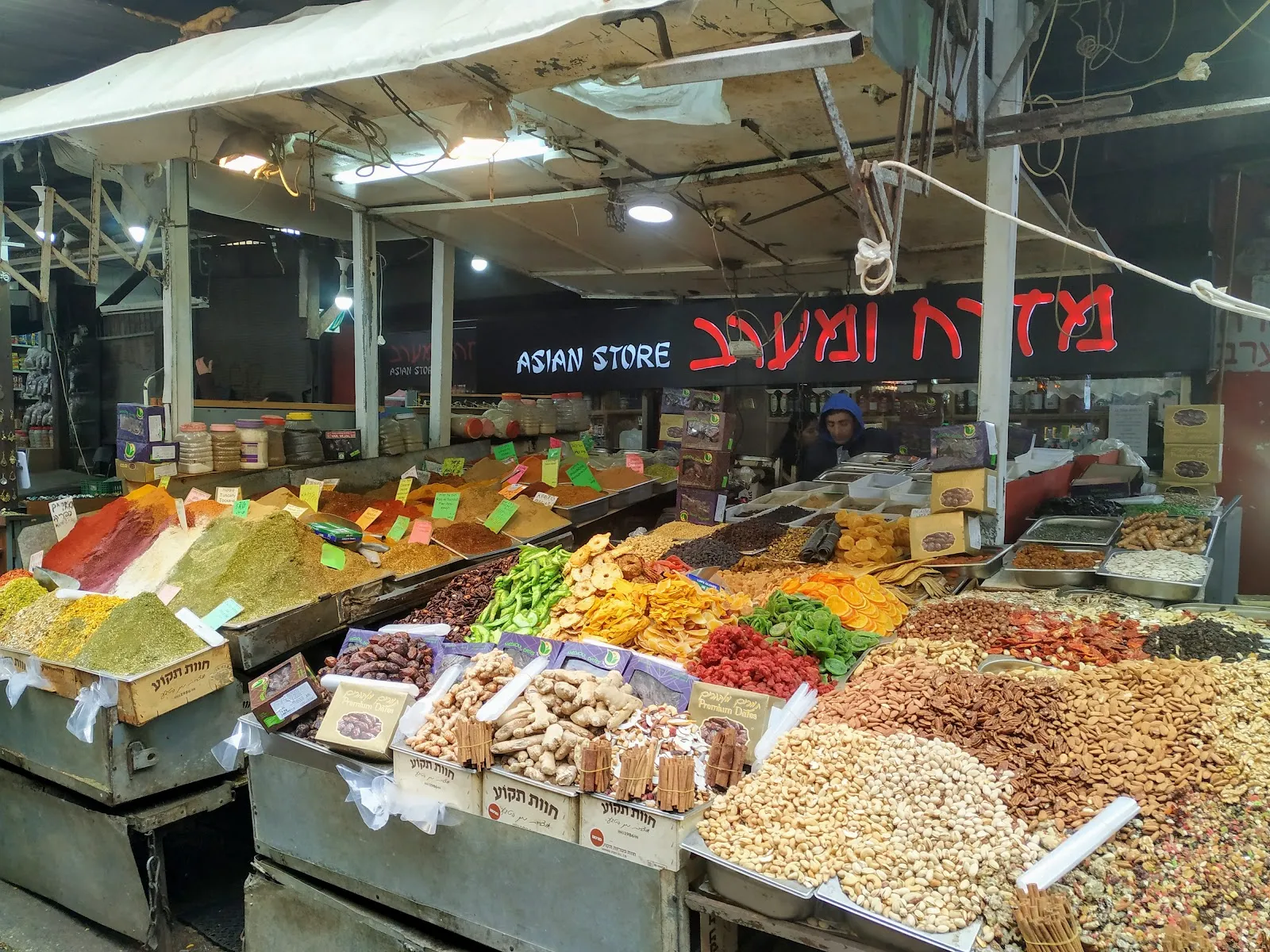
Known locally as Shuk HaCarmel, Carmel Market is an open-air market on HaCarmel Street in central Tel Aviv. Its stalls sell fresh fruit and vegetables, meat, fish, bread, spices, sweets, flowers, clothes, toys and household goods. Smaller stalls and shops continue into the side lanes, so the market is more than a single row of produce stands.
The market runs through Kerem HaTeimanim, the Yemenite Quarter, and sits near the pedestrian street of Nahalat Binyamin. The main market lane is crowded and lively, with vendors calling out their goods and shoppers moving between stalls. Food stands, cafes and small restaurants give you plenty of places to pause as you explore.
Food to try as you browse
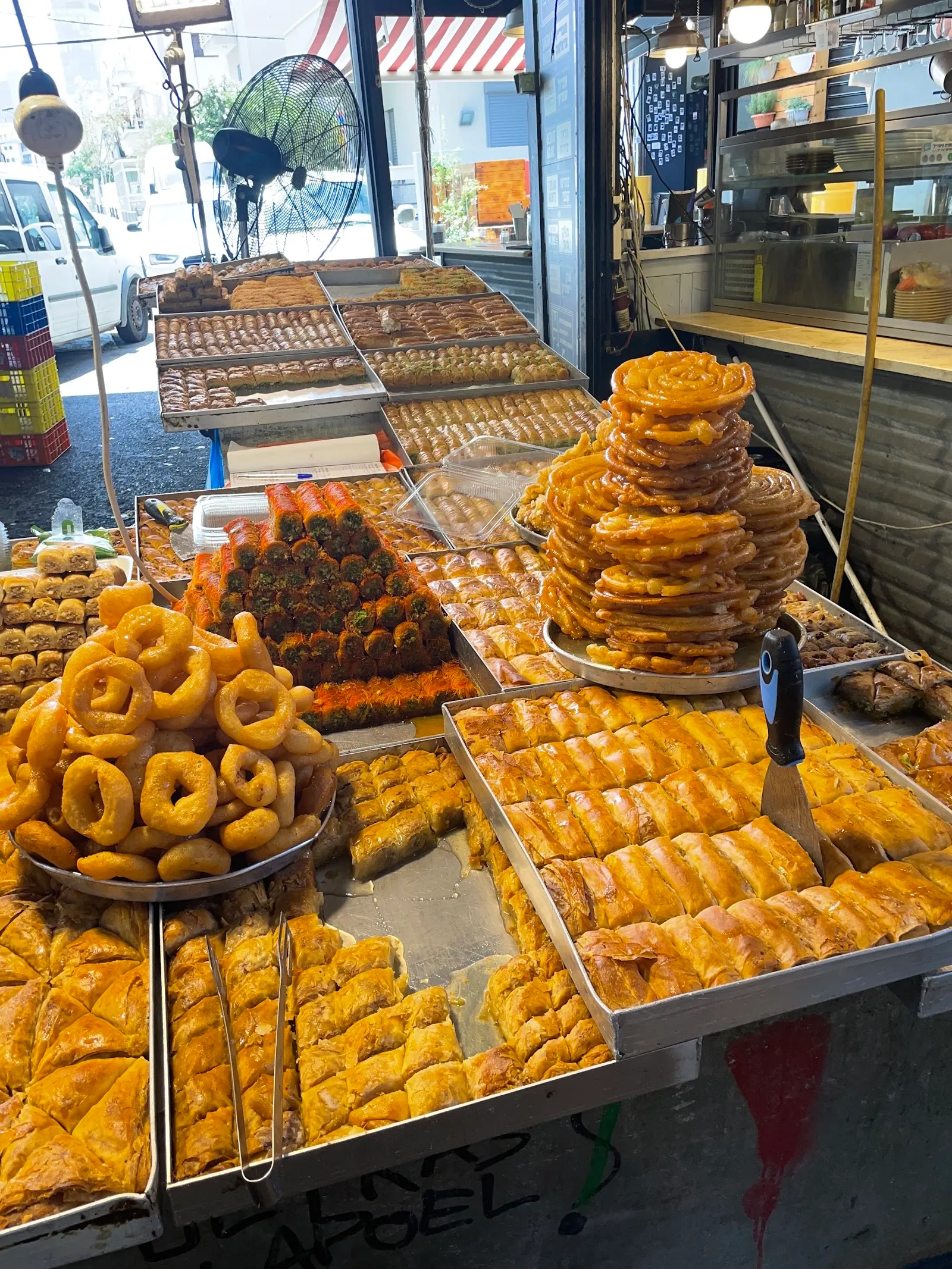
The market works well as a grazing stop. You can pick up fresh juice, browse local produce and look for cooked food at the stalls and restaurants. Options mentioned around the market include falafel, hummus, kebabs, baklava and Yemeni breads such as mallawah and lachuch. The range of food changes from stall to stall, so walk a little before choosing where to eat.
If you are shopping for food to take away, stalls sell ingredients such as fruit, vegetables, olives, spices and bread. You can also find cheeses, dried fruit and sweets. Some market restaurants have seating, while other stalls are better suited to a quick bite on the move.
Handmade crafts on nearby Nahalat Binyamin
Nahalat Binyamin, beside the market, is known for its independent artists and craft sellers. On Tuesdays and Fridays, stalls display handmade work including art, sculptures and jewelry. These market days bring a different focus from the food and household shopping on HaCarmel Street, and give you a chance to look for a locally made souvenir.
Prices at craft stalls can be higher than at ordinary market stands. If you are interested in buying, ask about the price and bargain where appropriate. The nearby streets and lanes also lead into Kerem HaTeimanim, where small cafes and local eateries sit among narrow streets and houses.
Planning your visit
The market is open on Sundays through Fridays and closed on Saturdays. Friday is a particularly busy shopping day as locals prepare for Shabbat, so go early if you want to browse with fewer people around. Tuesdays and Fridays are the days to visit if you want to see the craft stalls on Nahalat Binyamin as well.
The lanes can become crowded, and some sellers may approach shoppers directly. Keep your belongings close, take time to compare prices and decide whether you want to eat, shop or simply walk through. Credit and debit cards and NFC mobile payments are listed as accepted, though it is sensible to check payment options at an individual stall before ordering.
Perguntas frequentes
Is Carmel Market open on Saturdays?
No. The market is closed on Saturdays and open Sundays through Fridays.
When is Carmel Market busiest?
Friday is especially busy, as locals shop before Shabbat. Arrive early for a calmer visit.
When can I find handmade crafts near Carmel Market?
Independent artists and craft sellers set up on nearby Nahalat Binyamin on Tuesdays and Fridays.
What can you eat at Carmel Market?
Food options include falafel, hummus, kebabs, Yemeni breads, baklava and fresh fruit juice. The stalls and restaurants vary.