Rumi Darwaza is a 60-foot gateway on Hussainabad Road in Lucknow, standing between the Bara Imambara and the Chota Imambara. Nawab Asaf-ud-Daula had it built in 1784, in the Awadhi style, at a time when work was needed for people hit by famine. Floral carvings, symmetrical panels and an octagonal umbrella-shaped dome at the top mark the design. It is also called the Turkish Gate and is used as the city's emblem. Traffic still passes through the arch. There is no entry fee, and the gate is lit in the evening.
Built in 1784 as famine work
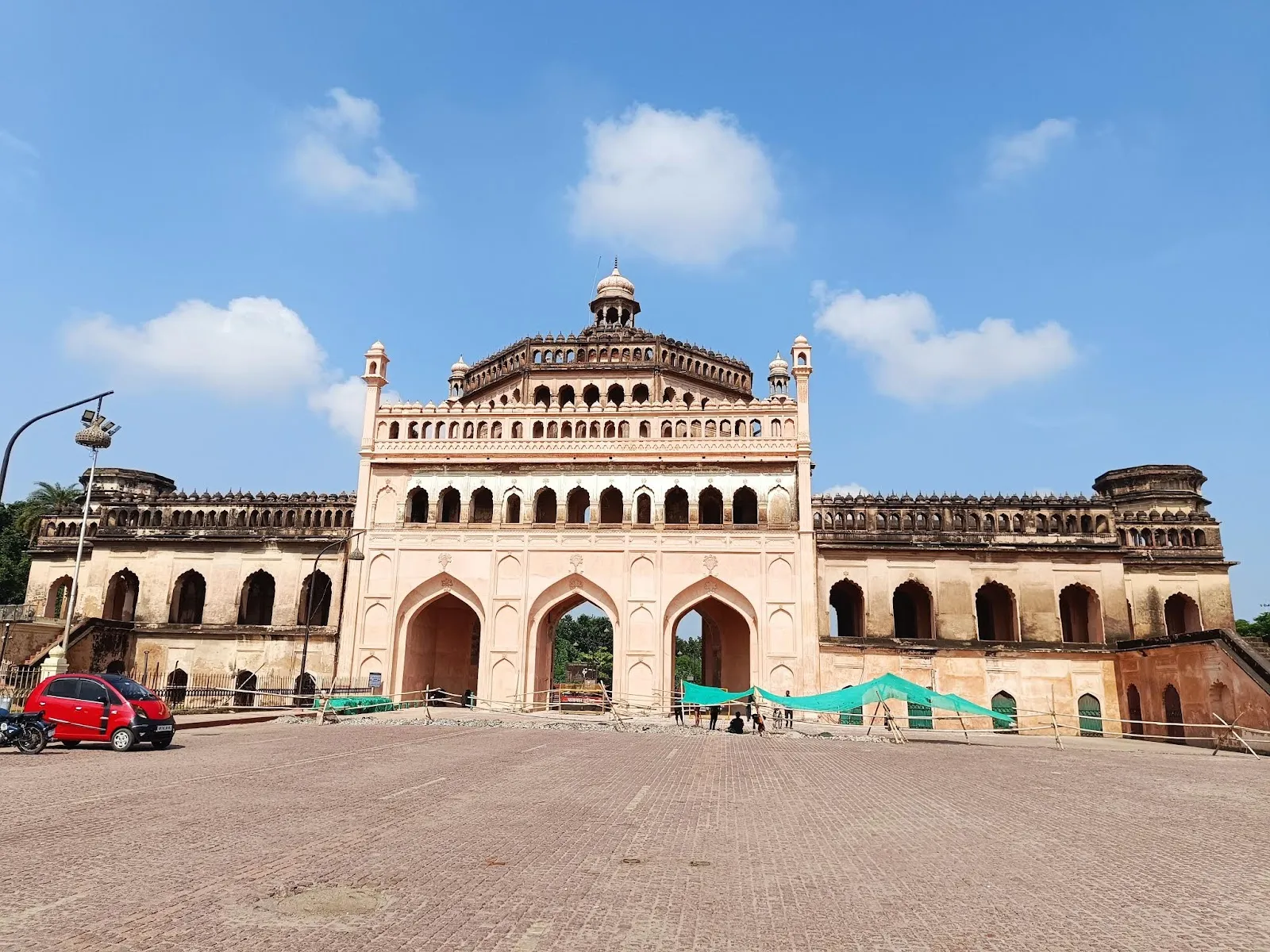
Nawab Asaf-ud-Daula ordered the gateway in 1784, when a severe famine had left many people in Lucknow without work. The project was run as a food-for-work scheme, so that labourers could earn their living. The Bara Imambara was built in the same period for the same purpose. One account names Kifayatullah as the architect.
The gate is called the Turkish Gate because its design is said to follow a gateway in Constantinople, today's Istanbul. Some writers link it to the Sublime Porte, the Ottoman palace gate, and others to Bab-i-Humayun. The comparison is a long-held tradition, not a documented copy. In the nineteenth century the gate was known as Kustuntunia, a name that points to Constantinople.
The structure and its carving
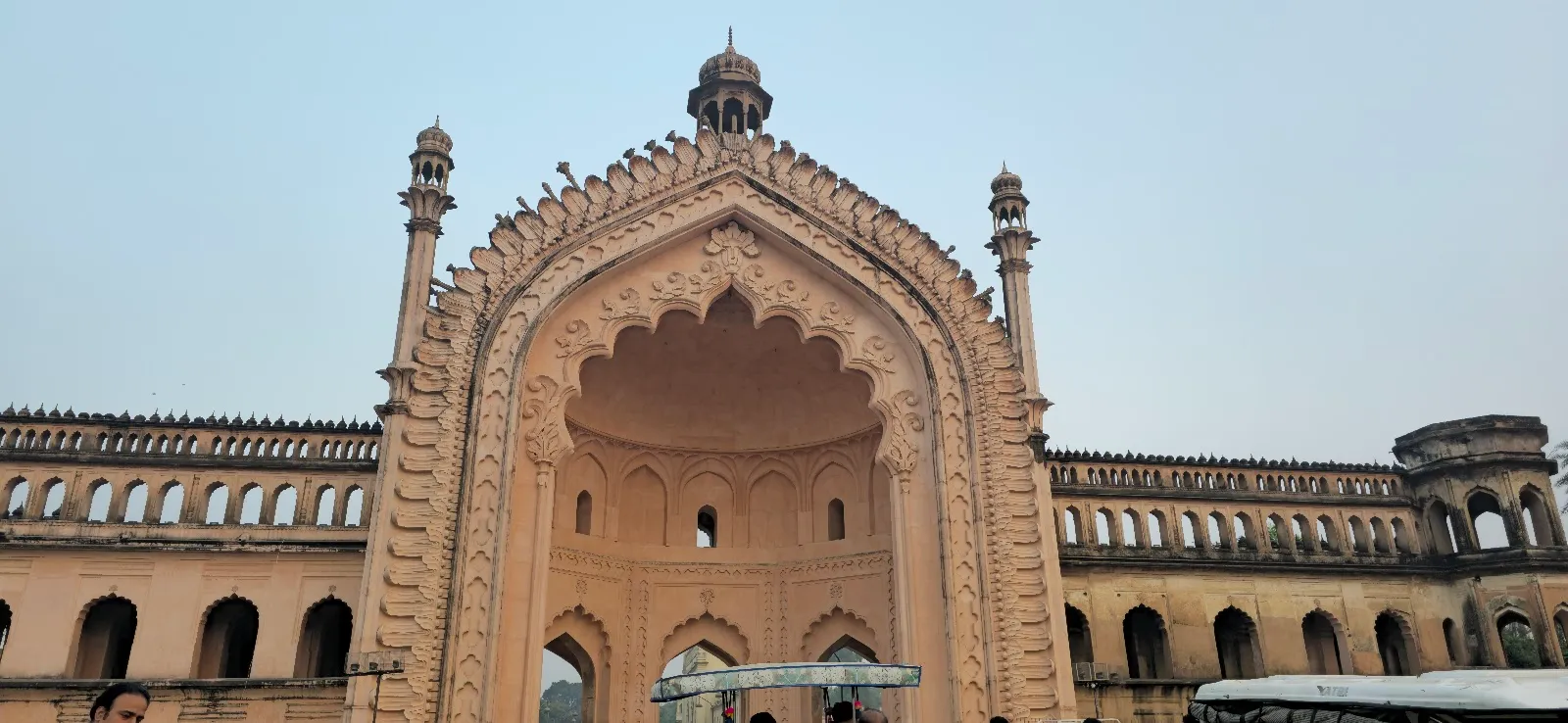
The gateway is about 60 feet tall and crowned with an octagonal umbrella-shaped dome, called a chhatri. Floral patterns are carved across the arch, and the panels, brackets and small belled turrets are laid out symmetrically. Writers describe a blend of Turkish, Mughal and Persian ideas, and the gate is often treated as the model for later Awadhi design.
The arch has no visible wood or iron fittings holding it up, and it still stands. The tower area on top once held a large lantern that lit the gate at night. The two faces of the gate look different, so walk through to the other side and turn around.
Where it is and how to see it
Rumi Darwaza stands on Hussainabad Road, about 5 km from Lucknow Junction and about 12 km from the airport. It once marked the entrance to the old city, and vehicles still go through the arch, so the traffic and noise of the old city are part of the visit. The sunrise and late-night hours are the quiet ones.
No ticket is needed and there are no entry times. The entrance is wheelchair accessible. Around the gate you will find people taking photographs, and couples and wedding photographers often use it as a backdrop.
The Bara Imambara is a short walk away. The Chota Imambara, built in 1838, and the Husainabad Clock Tower are also close, and Chattar Manzil is among the other sights of the area. Many visitors combine them with the gate in one outing.
Perguntas frequentes
Is there an entry fee for Rumi Darwaza?
No. The gate stands on a public road and is free to see. It is open around the clock.
Who built Rumi Darwaza and when?
Nawab Asaf-ud-Daula had it built in 1784. The work gave employment to local people during a famine.
Why is it called the Turkish Gate?
Its design is said to echo a gateway in Constantinople, now Istanbul, often linked to the Sublime Porte. The link is a tradition, so the name comes from that resemblance.
What is the best time to visit Rumi Darwaza?
Early morning is calmer and has less traffic. In the evening the gate is lit, which suits photographs. Sunrise and late night are the best times for shots without vehicles.
What can you visit near Rumi Darwaza?
The Bara Imambara and the Chota Imambara are within walking distance. The Husainabad Clock Tower and Chattar Manzil are also in the area.