Panna Meena ka Kund is a 16th-century stepwell in Amer, near Jaipur’s Amer Fort. Its intersecting stairways form a precise geometric pattern around the water, with warm-toned stone adding to the effect. The kund once stored water and served as a place for people to gather and rest. You can take in the design from the upper levels, where the staircases make striking photo compositions. It is a short, quiet stop to add to a visit to Amer Fort.
A stepwell built around water
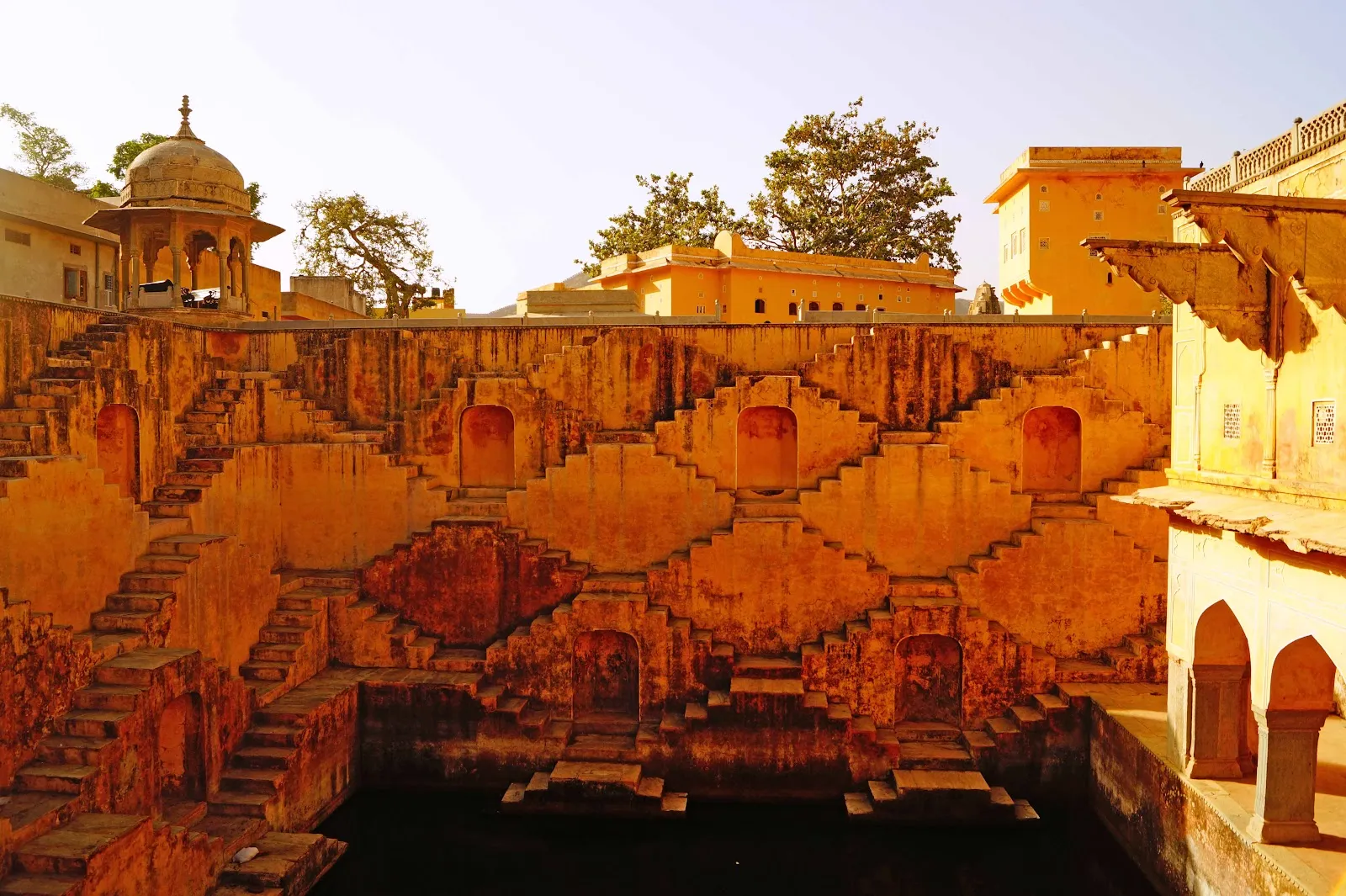
Panna Meena ka Kund is a baori, or stepwell, in Amer, just outside Jaipur. Built in the 16th century, it stored water for local use. Before piped systems, stepwells gave people access to water through flights of stairs leading down to a reservoir. The kund also had a social role: people came to collect water, meet and spend time together.
Stepwells are a distinctive form of architecture from the Indian subcontinent. In Rajasthan, where water has long been an important resource, their design joined practical storage with spaces for daily life. Panna Meena ka Kund is one of the region’s surviving examples, and its structure remains clearly visible today.
Reading the stairway pattern
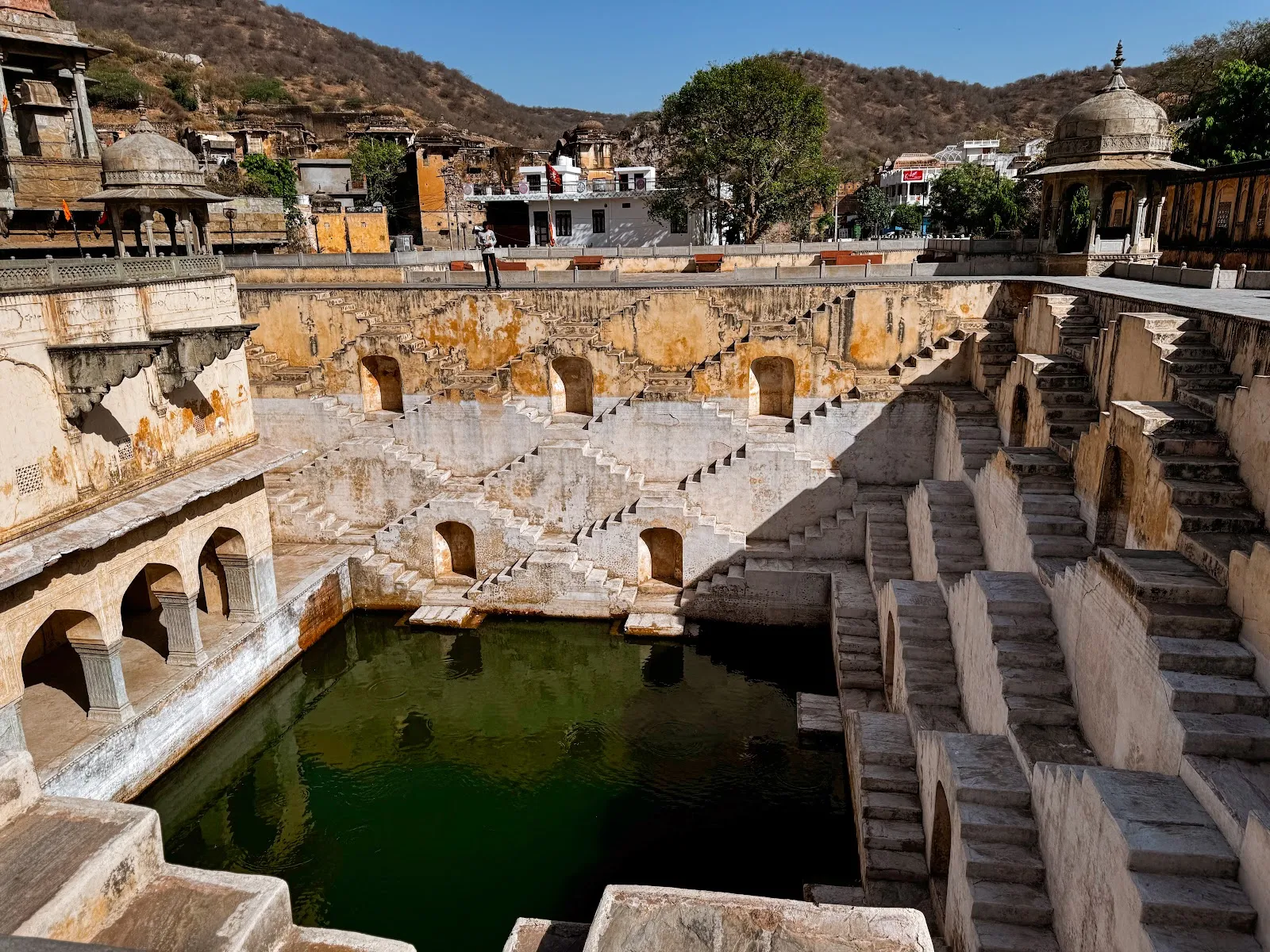
The square stepwell is best known for its orderly, intersecting flights of stairs. Repeated lines of steps create a crisscross pattern around the central water, and the symmetry changes as you look from different sides. The geometry is the main detail to study: follow the stairways with your eyes, then compare the view from the two front-facing corners.
The stonework and stair edges give the structure its warm, muted colour. From above, the pattern is easy to take in as a whole; closer views bring out the even cuts and the way the staircases meet. The arrangement is often said to make it difficult to use the same stairs to descend and climb back up, but visitors should not test the layout by going down.
Viewing the kund respectfully
Visitors are generally asked to stay at the top rather than walk down the steps. You can still see the full arrangement from the upper levels and take photographs from there. Treat the site as a historic structure, and keep to the areas visitors are allowed to use.
The visit is brief, so the kund fits easily into a trip to Amer Fort. It is close enough to make a convenient stop on the way to or from the fort. Allow time to look at the stair pattern from more than one angle, rather than only taking a quick photograph. Early morning or near sunset can give you softer light; in the middle of the day, the open site can feel sunny.
Perguntas frequentes
Is there an entry fee for Panna Meena ka Kund?
The site is listed as having free admission.
Can you walk down the steps?
Visitors are generally not allowed to go down. You can view the stepwell and take photographs from above.
How long do you need at Panna Meena ka Kund?
Allow about 30 to 45 minutes for a relaxed look and photographs.
Is Panna Meena ka Kund near Amer Fort?
Yes. The stepwell is in Amer, near Amer Fort, so you can combine the two stops.