Jantar Mantar is an open-air astronomical observatory on Sansad Marg, near Connaught Place in New Delhi. Built by Maharaja Jai Singh II of Jaipur in 1724, its monumental masonry instruments were designed to track the sun, moon and planets and help calculate time and astronomical events. Look for the Samrat Yantra sundial, the Ram Yantra and the Jai Prakash Yantra, each made for a different kind of observation. The unusual geometric forms make the site as interesting to study as they are to photograph.
An observatory built for measurement
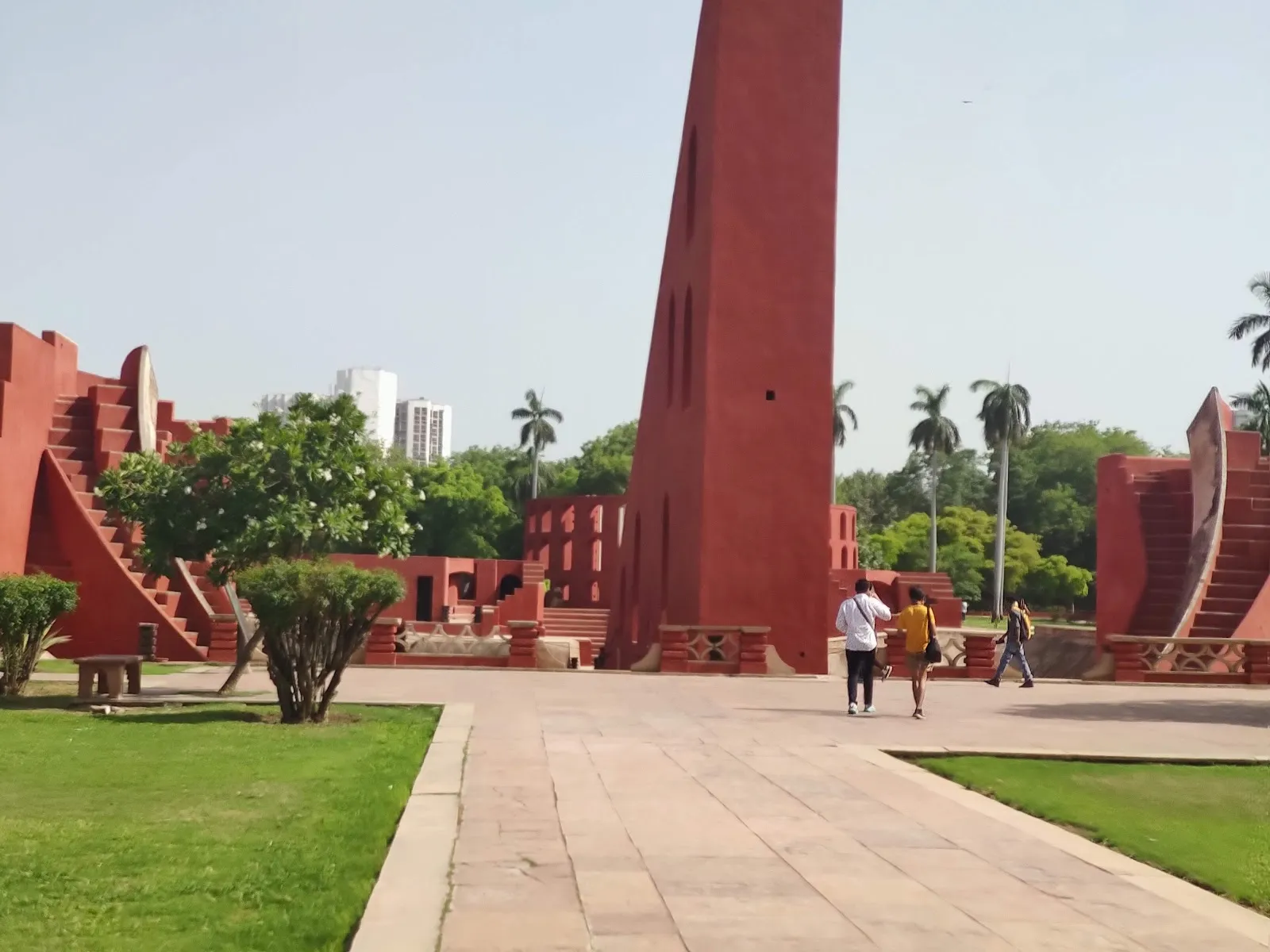
Maharaja Jai Singh II of Jaipur built Jantar Mantar in Delhi in 1724 as one of a group of observatories. The others were in Jaipur, Ujjain, Varanasi and Mathura. Jai Singh wanted more useful astronomical measurements than smaller instruments could provide, so the Delhi observatory was built around large, fixed structures.
The instruments were intended to help compile astronomical tables and calendars. Their observations concerned the positions and movements of the sun, moon and planets, as well as the measurement of time. Astronomy and the timing of auspicious moments for religious rituals were both among the reasons associated with the observatory’s work.
How the instruments worked
The Samrat Yantra is a monumental sundial. Its sloping edge is aligned parallel to Earth’s axis, allowing it to measure time from the sun’s position. Its scale gives the instrument a practical purpose as well as a striking architectural form.
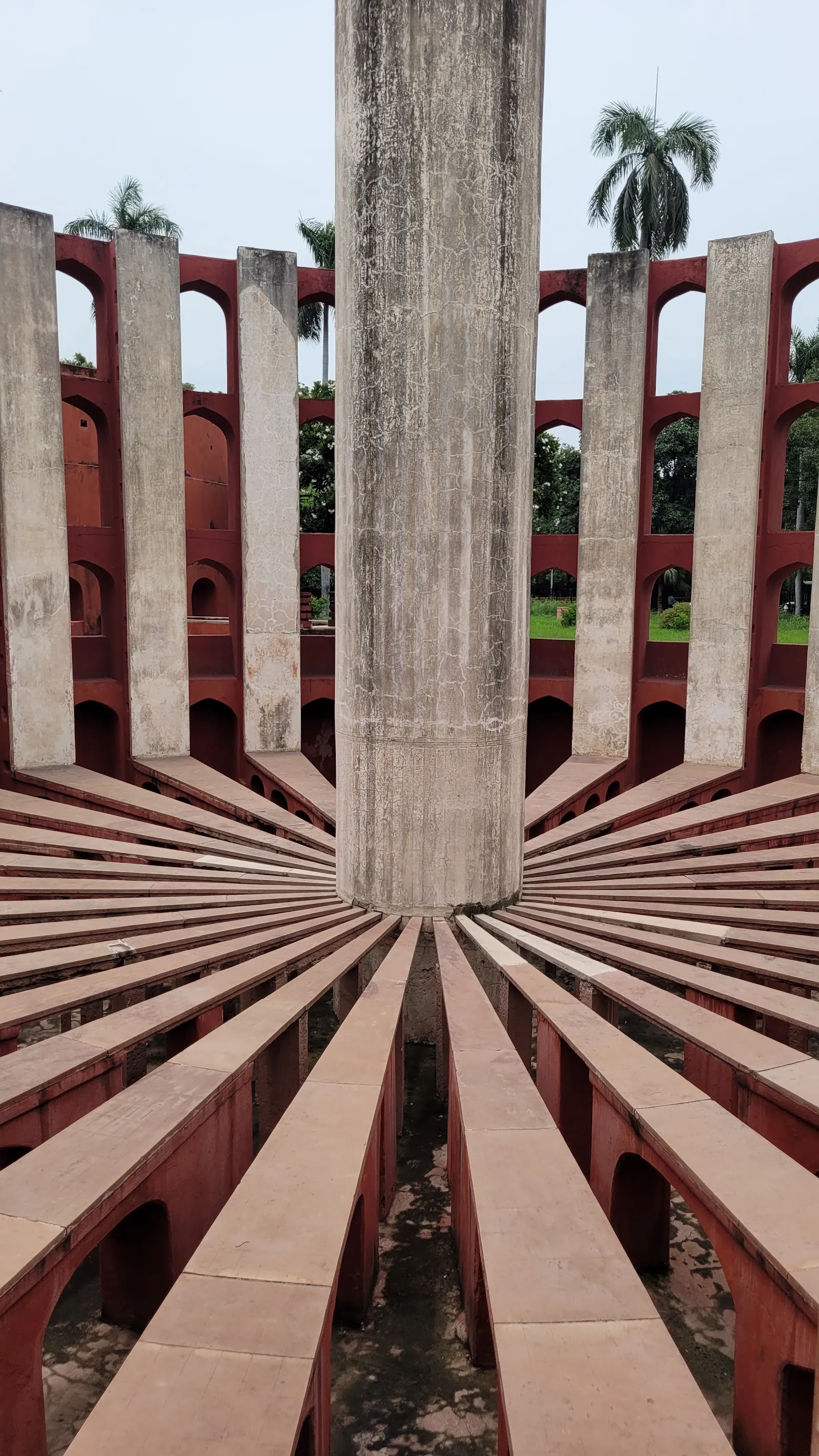
The Ram Yantra was used to measure the sun’s altitude. The Jai Prakash Yantra, attributed to Jai Singh’s own design, helped check the time of the spring equinox. The Mishra Yantra could identify the year’s longest and shortest days and determine noon at different points on Earth. Together, these structures show how observations were made with the naked eye and large, carefully positioned instruments.
What to look for on site
Walk among the instruments and notice how differently each one is shaped. Their curves, angles and open spaces are part of their function: they were built to frame observations of the sky, not simply to stand as buildings. The scale can make the observatory feel like a collection of abstract forms until you connect each structure to the measurement it was designed to make.
Jantar Mantar is close to Connaught Place, so it can fit into a visit to this part of central Delhi. The surrounding buildings now obstruct some astronomical observations, but the instruments still make the methods and ambitions of 18th-century astronomy visible. Take time to read the structures as working tools, rather than viewing them only from a distance.
Perguntas frequentes
Where is Jantar Mantar in Delhi?
It is on Sansad Marg, near Connaught Place in New Delhi.
How long should I spend at Jantar Mantar?
Plan for about 45 to 60 minutes to explore the site.
What are the main instruments to see?
Look for the Samrat Yantra sundial, the Ram Yantra and the Jai Prakash Yantra. The Mishra Yantra is also notable for its calendar-related measurements.
Can the instruments still make accurate observations?
Tall buildings around the observatory now limit accurate observations from the site.