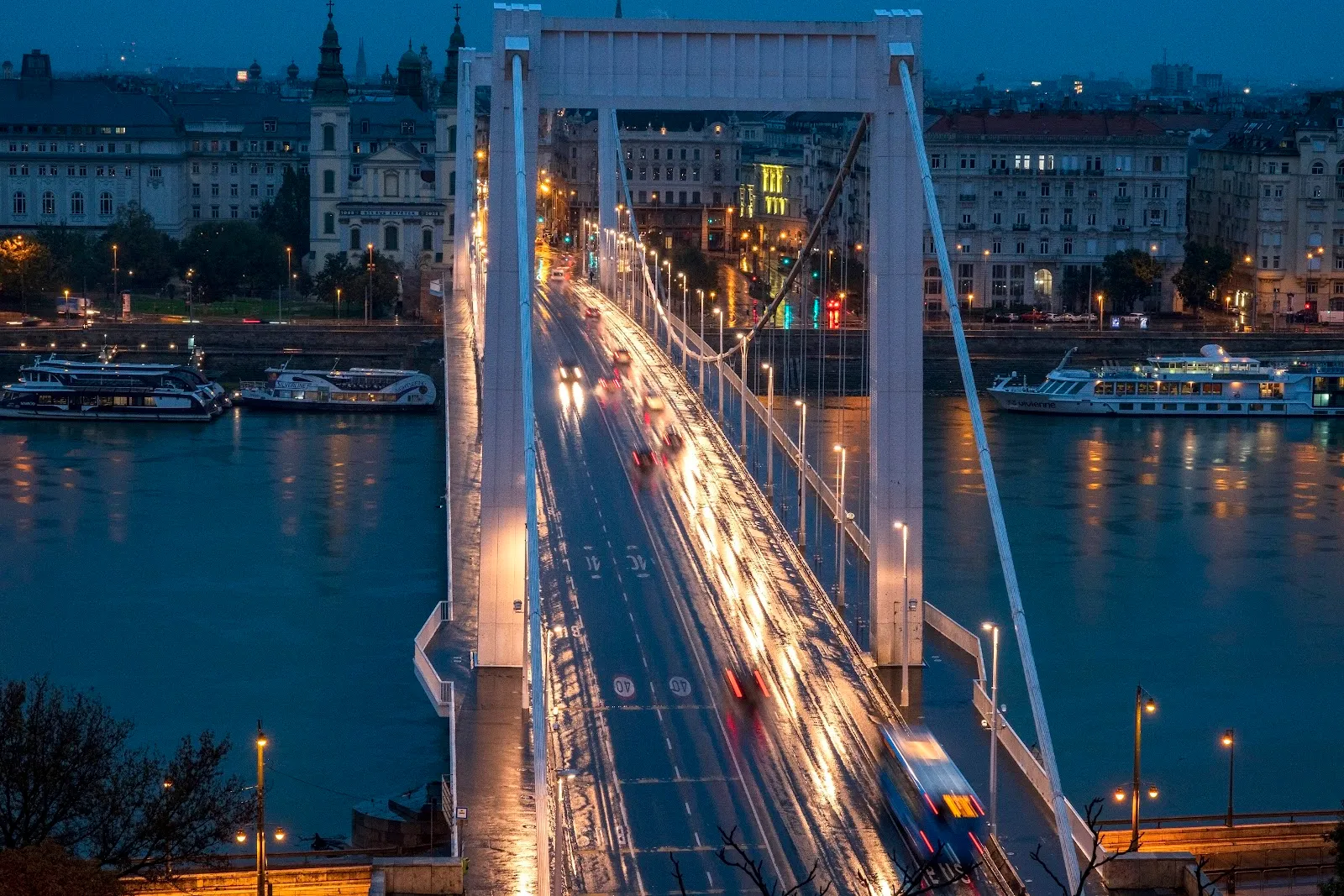
Elisabeth Bridge (Erzsébet híd) crosses the Danube between central Pest and Buda, near Gellért Hill. Its slim white cables and clean lines set it apart from Budapest’s more ornate bridges. Walk across for open views of the river, the skyline and the nearby riverbanks, or pause to watch boats pass. The bridge is named after Empress Elisabeth, known as Sisi. Its original structure opened in 1903 and was destroyed during World War II; the modern replacement opened in 1964.
A modern crossing between Buda and Pest
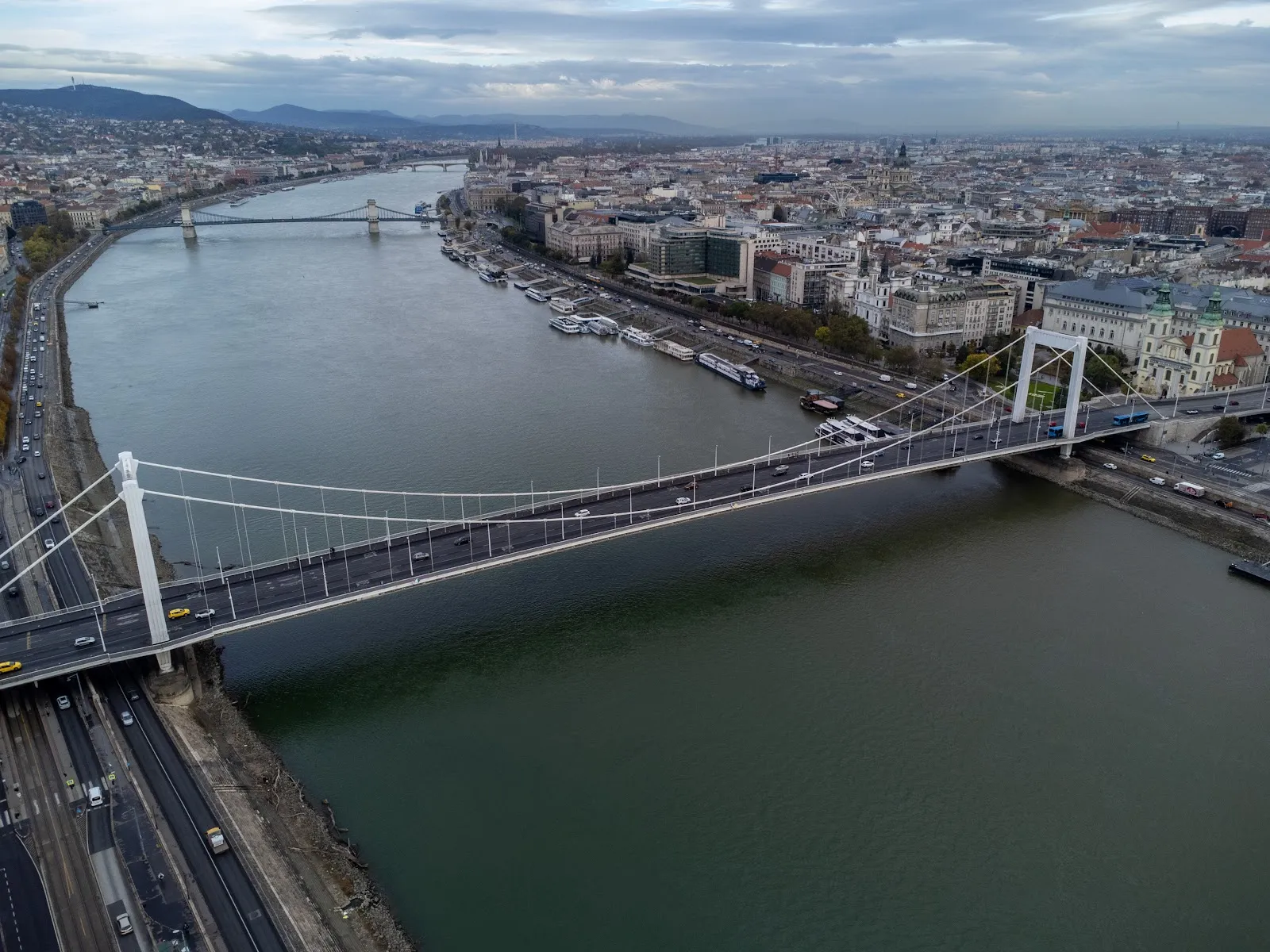
Elisabeth Bridge connects central Pest with Buda across the Danube. Its white cables and spare outline give it a different appearance from the city’s more ornate bridges. The crossing sits at a narrow stretch of the river, about 290 metres across, with wide sidewalks for pedestrians.
From the bridge, look toward Gellért Hill and along the riverbanks. The open views also make it a useful place to watch boats and photograph the Danube with the city behind it. Its central position links areas on both sides of the river, so you can include the crossing while moving between nearby sights.
From Sisi’s bridge to the present structure
The bridge takes its name from Empress Elisabeth of Austria-Hungary, widely known as Sisi. Construction of the original bridge began in 1898, the year she was assassinated, and it opened in 1903. That first structure was an iron suspension bridge.
The original was destroyed during World War II and could not be restored. The replacement, designed by Pál Sávoly, was built in a modern style and opened in 1964. Elisabeth Bridge is the only Budapest bridge rebuilt in a new architectural form after the wartime destruction. A statue of Elisabeth stands in a small garden near the Buda end.
Choosing a time to cross
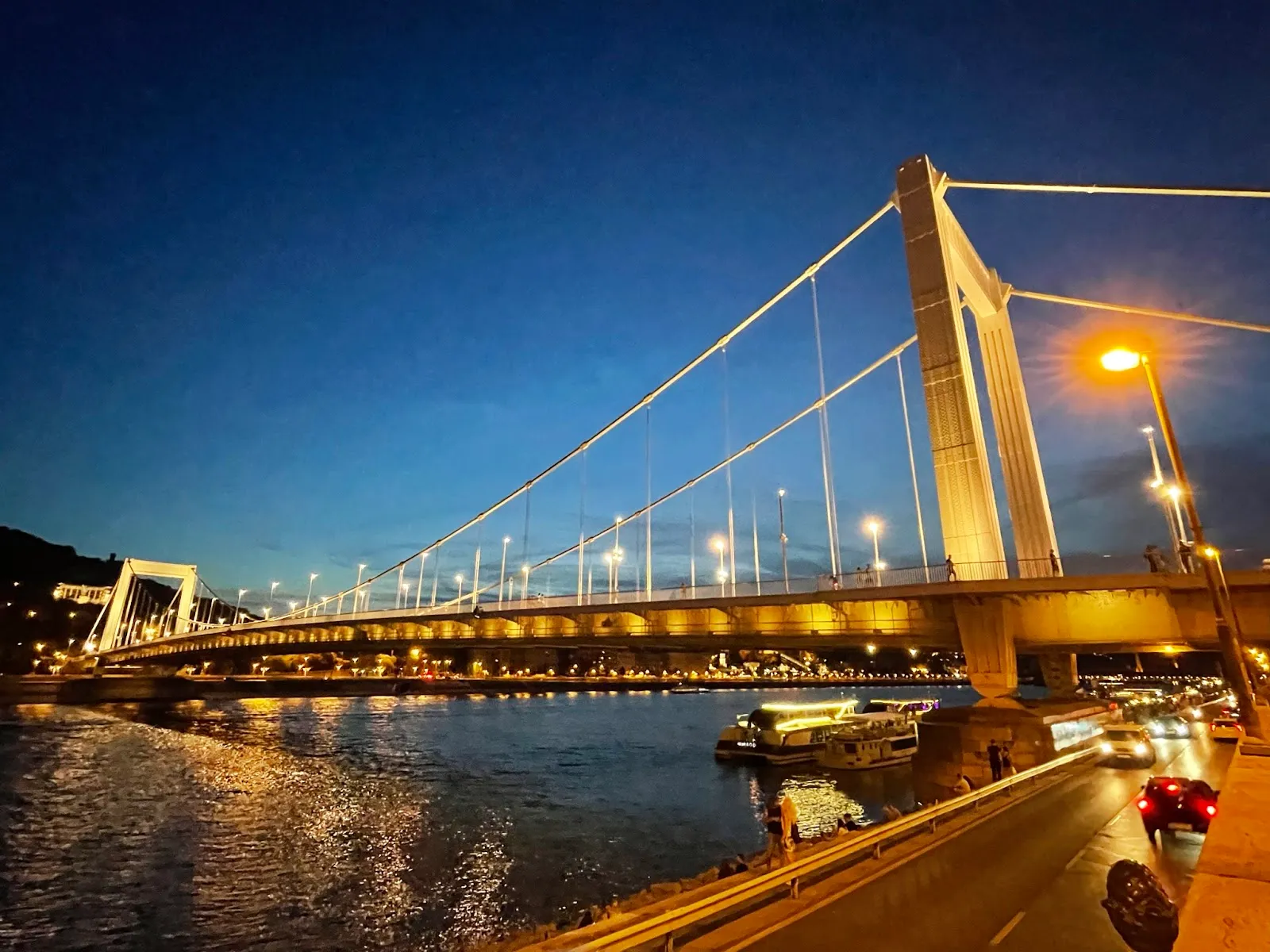
The bridge has a different feel in daylight and after dark. During the day, its light structure stands out against the river and surrounding buildings. In the evening, city lights reflect on the water. Early morning and late evening are useful choices if you want a quieter walk.
From the Buda end, paths and steps climb toward the Citadella on Gellért Hill. The bridge itself can be crossed as part of a longer riverside walk, or visited briefly for the views before continuing into either side of the city.
Perguntas frequentes
How long should I spend at Elisabeth Bridge?
Allow about 20 to 30 minutes to walk across and stop for river views.
What can you see from Elisabeth Bridge?
The bridge gives views of the Danube, Budapest’s skyline, Gellért Hill and the riverbanks. Boats pass below.
When is a good time to visit Elisabeth Bridge?
Visit in daylight to see its design clearly, or in the evening for city lights reflected on the Danube. Early morning and late evening can be quieter.
What is near the Buda end of Elisabeth Bridge?
Paths and steps lead uphill toward the Citadella on Gellért Hill. A statue of Empress Elisabeth is in a small garden near the bridge’s Buda end.