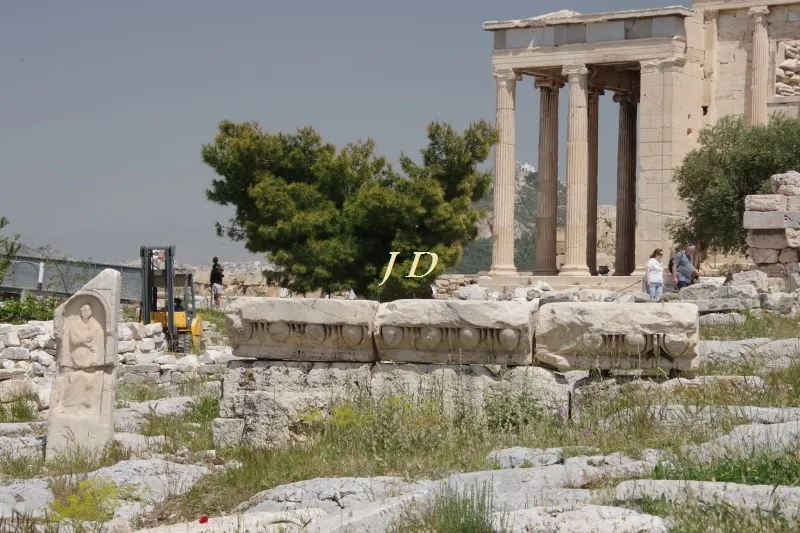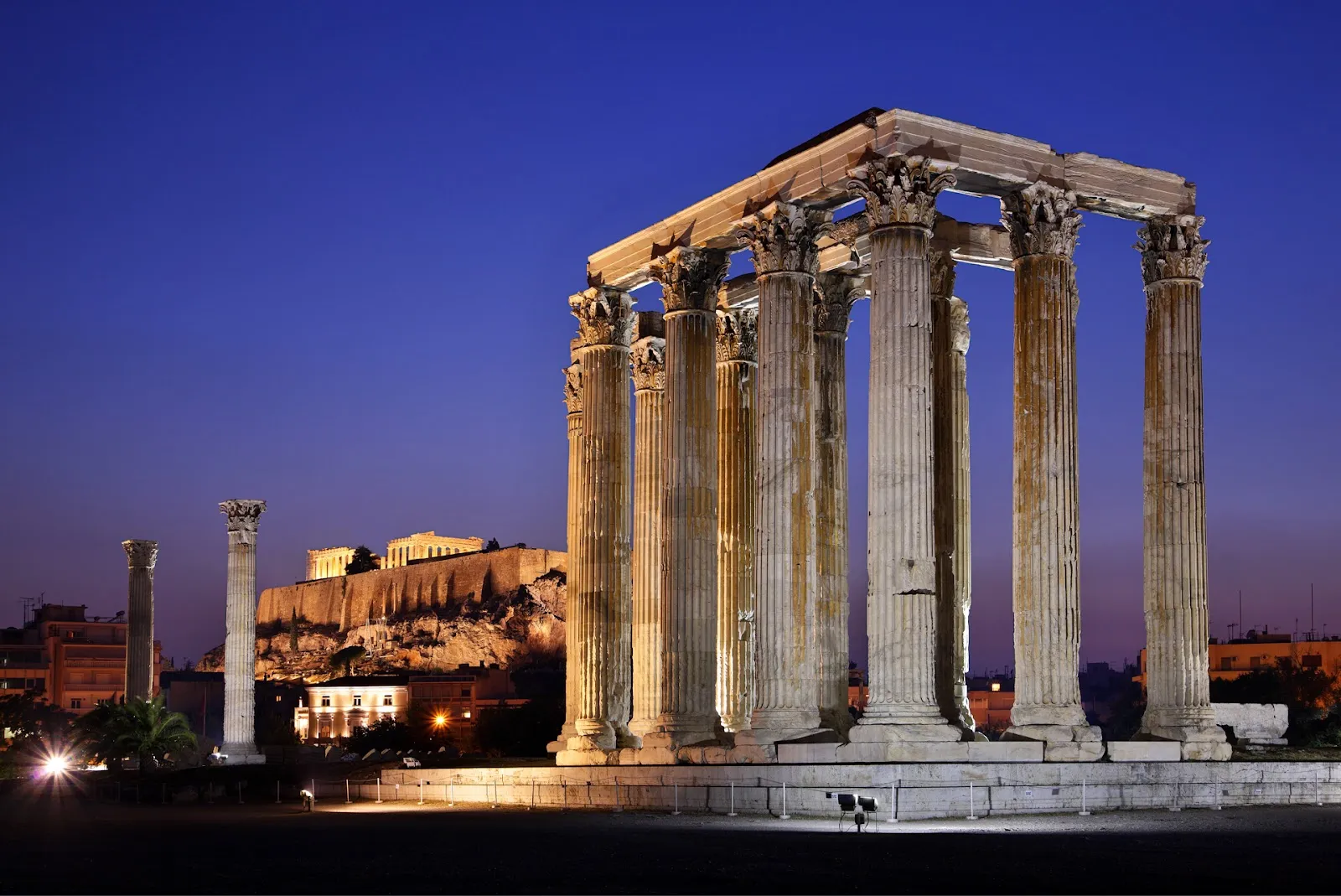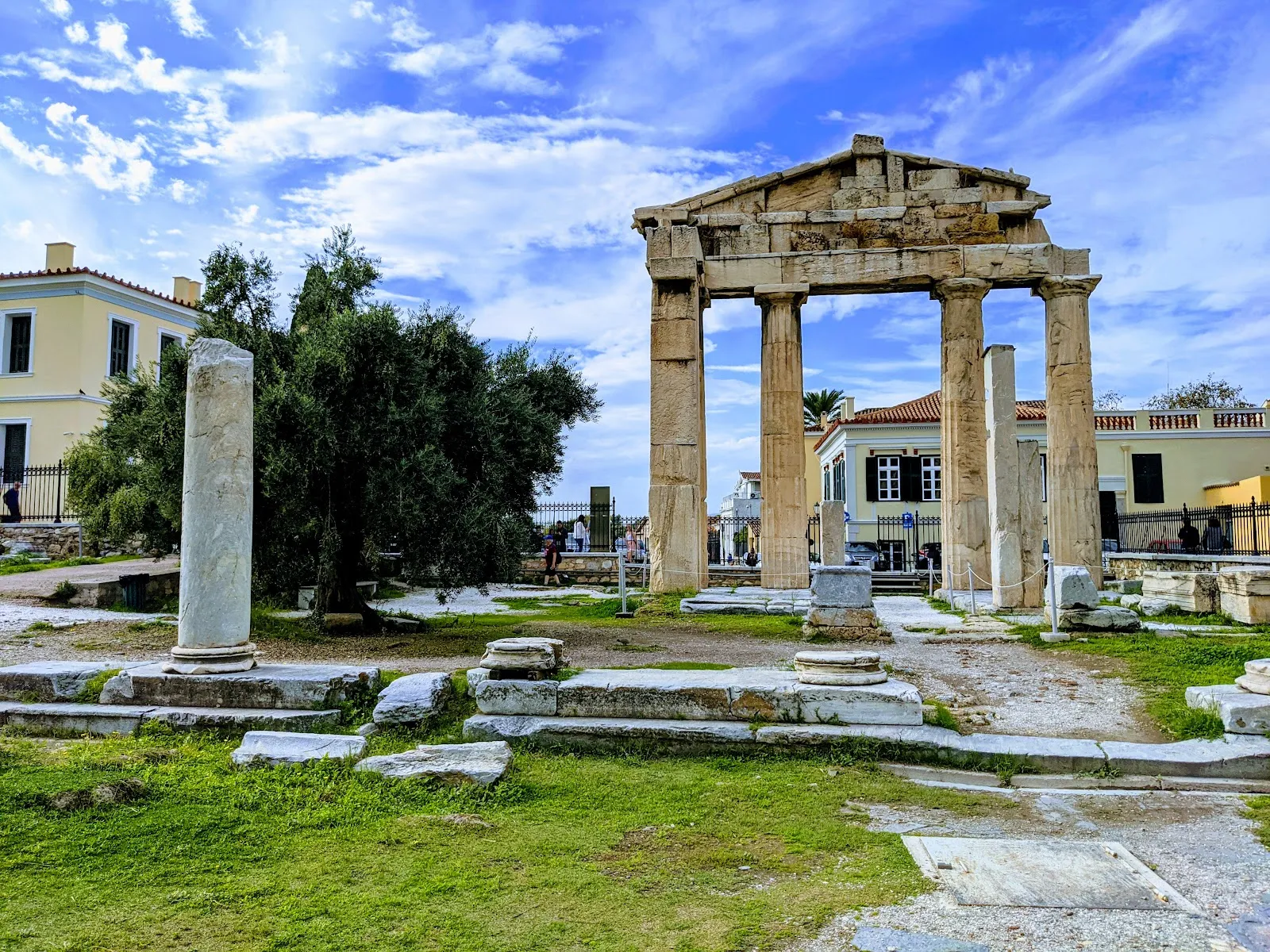
A short walk from Monastiraki Square, the Roman Agora was Athens’ commercial centre under Roman rule. Its compact ruins include the Gate of Athena Archegetis, marble columns and the Tower of the Winds, an octagonal structure built for timekeeping and weather observation. The site is smaller and quieter than the Ancient Agora, so it suits a brief stop focused on a few distinctive remains. You can also view much of it from outside the fence; enter for a closer look at the buildings and courtyard.
A marketplace under Roman rule
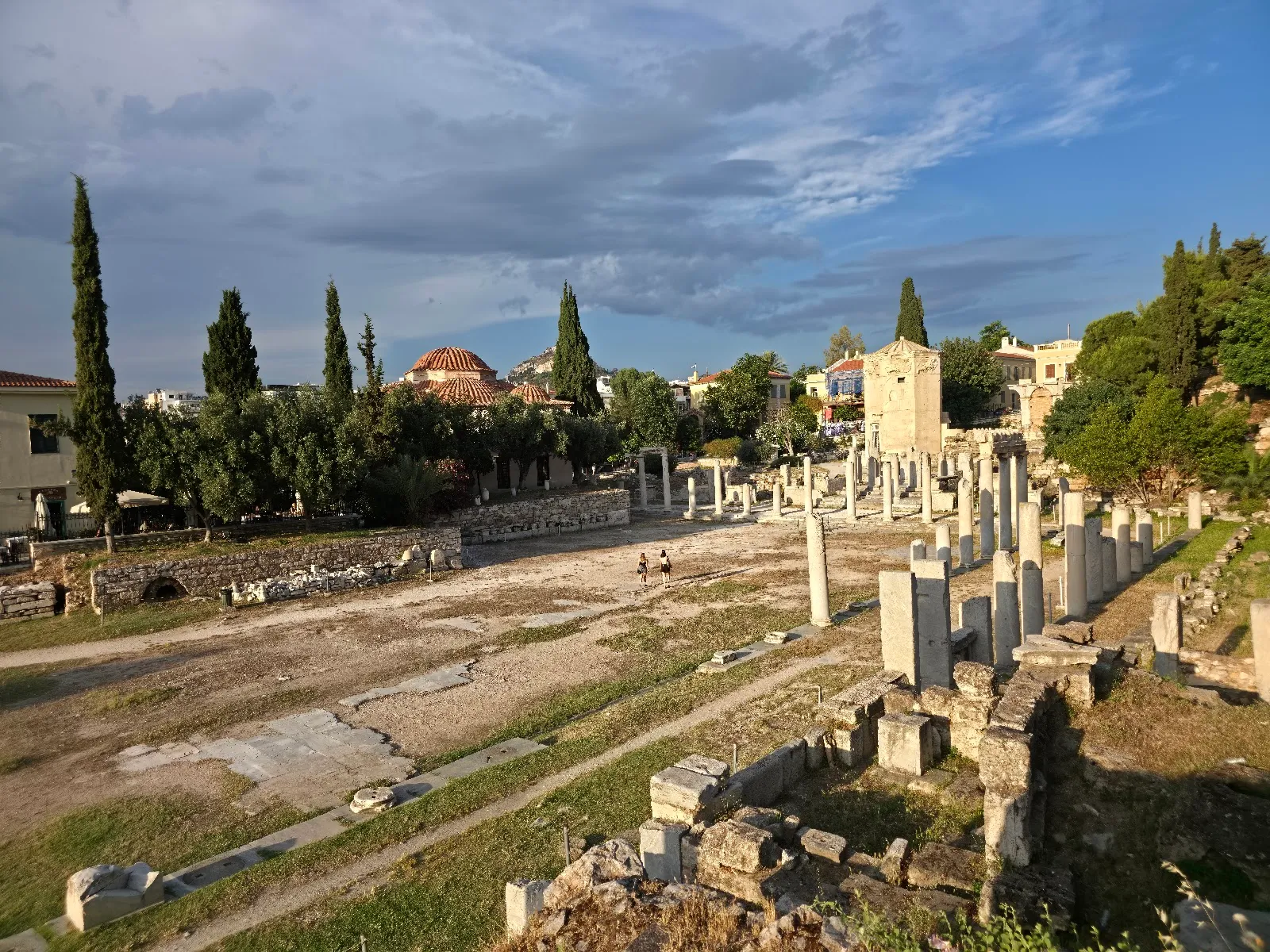
The Roman Agora was built in the late first century BC, when Athens was under Roman rule. It took over the city’s commercial role from the Ancient Agora. The market occupied a larger area than the archaeological site visitors see today, and its open-air stalls served people buying and selling goods.
Julius Caesar and Emperor Augustus helped fund its construction. Unlike the Ancient Agora, which had a wider civic role, the Roman Agora was primarily a marketplace. Its remains offer a glimpse of the commercial centre of Roman Athens, though much of the original complex has not survived.
The Tower of the Winds
The site’s best-preserved landmark is the Tower of the Winds, an octagonal structure of Pentelic marble. Built in the first century, it is associated with the astronomer Andronicus of Cyrrhus. The tower combined several ways to track time and conditions: it served as a sundial, a water clock and a weather vane, and was also used as a compass.
Its roof remains intact, setting it apart from the surrounding ruins. The tower stands on the eastern side of the site and is the main reason to look closely around the courtyard. Its combination of practical functions makes it easier to picture how the market’s visitors kept time and observed the weather.
Gates and remains around the courtyard
The Gate of Athena Archegetis forms the Roman Agora’s western entrance. Its name connects the gateway with Athena, while its monumental form marks the approach to the former market. An Ionic entrance stood on the eastern side, giving the complex two principal points of access.
Inside, the surviving columns and fragments of buildings are spread across an open courtyard. The ruins are less extensive than those at the Ancient Agora, and the site is easy to take in during a short visit. From outside the fence, you can see much of the complex; entry gives you a closer view of the gate, the remains and the Tower of the Winds.
Planning a visit near Monastiraki
The Roman Agora is close to Monastiraki Square and Hadrian’s Library, so it fits naturally into a walk through this part of Athens. You can visit it on its own or combine it with the Ancient Agora for a longer look at the city’s archaeological sites.
An early start is useful in summer, when the morning is cooler and the site is less busy. The Roman Agora has a separate admission fee from the Acropolis. A combined archaeological-site ticket is also described among the available options, but check the current ticket terms before setting out.
Perguntas frequentes
Where is the Roman Agora in Athens?
It is near Monastiraki Square, at Polignotou 3. Hadrian’s Library and the Ancient Agora are nearby.
What is the main thing to see at the Roman Agora?
The Tower of the Winds is the site’s standout structure. The Gate of Athena Archegetis and the remains around the courtyard are also worth a closer look.
Can you see the Roman Agora without entering?
Much of the archaeological site is visible from outside the fence. Entry lets you explore the remains more closely.
How long should you allow for the Roman Agora?
Allow around 30 to 60 minutes for a short walk around the compact site.