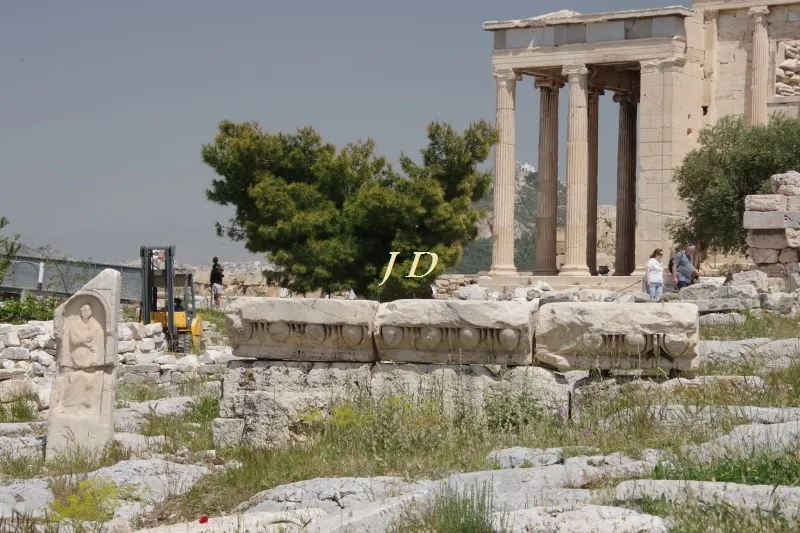
Southwest of the Acropolis, Philopappos Hill is a green park with walking trails, archaeological remains and several viewpoints. The paths pass olive trees, marble features and, near the summit, the Philopappos Monument, an ancient mausoleum. From the hill you can look across Athens and towards the Acropolis from more than one angle. It is a quieter place for a walk or picnic near the city’s best-known ancient site. Go near sunset for warm light over the Acropolis, or choose an early visit for a calmer walk.
A green hill beside the Acropolis
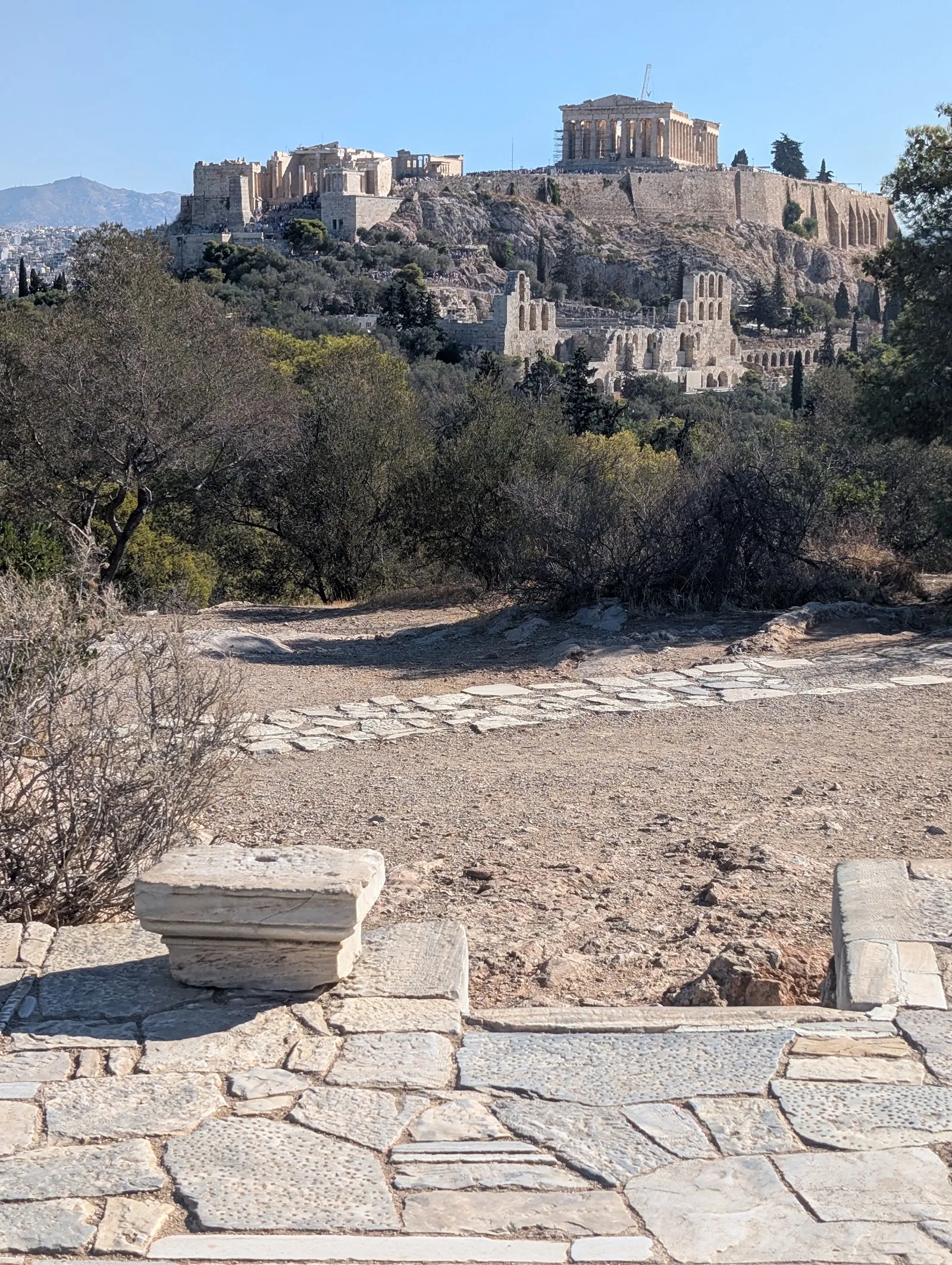
Philopappos Hill lies southwest of the Acropolis and forms part of a group of hills linked by walking paths. Also known as the Hill of the Muses, it gives you a green, open route through central Athens, with trees, archaeological remains and changing views along the way. The hill is a popular place for local walks as well as a stop for visitors exploring the area around the Acropolis.
The park has several trails and viewpoints, so the walk need not end at the summit. Some paths include marble steps, and the climb is described as manageable, though rocky ground can be slippery. Pause at different points to see how the Acropolis and the city appear from each angle.
The monument and the hill’s history

At the highest point stands the Philopappos Monument, an ancient mausoleum associated with Gaius Julius Antiochus Epiphanes Philopappos, a Roman consul and benefactor of Athens. The hill takes its name from the monument. It is also called Mouseion Hill, or the Hill of the Muses.
Other historical features lie among the trails. One place on the hill is believed to have been Socrates’ prison. The wider park includes archaeological remains, so the walk takes you past traces of the past as well as through wooded sections. The paths also connect with the neighbouring Pnyx and Hill of the Nymphs.
Choosing a trail and viewpoint
You can enter the hill by more than one route, and there is no need to reach the top to find a worthwhile view. Several points along the climb face the Acropolis; the monument is a natural destination if you want to explore the summit as well. From there and other open spots, the city spreads out below.
For a different perspective, take another trail on the way back rather than retracing every step. The park’s paths provide varied views, and the wooded areas offer a break from the busier streets nearby. Allow for uneven or slippery ground when choosing footwear.
When to go
The hill is especially popular around sunset, when the light falls across the Acropolis and the city. It is also a place for evening walks, and the illuminated Acropolis can be seen after dark. Early morning or a weekday can bring a quieter walk, although the Acropolis faces east, so morning light is less favourable for photographs of it.
Bring what you need for a pause if you plan to picnic; benches and green areas make it possible to sit and take in the view. The park is close to the city centre, making it an easy outdoor addition to a visit around the Acropolis.
Perguntas frequentes
Is Philopappos Hill free to visit?
Yes. Philopappos Hill is a free public park.
When is the best time to visit Philopappos Hill?
Go shortly before sunset for views of the Acropolis in changing light. Early morning or a weekday can be quieter.
Do you have to climb to the summit for an Acropolis view?
No. There are viewpoints along the trails before you reach the Philopappos Monument.
What should I wear for the walk?
Choose shoes with a good grip, since some rocky sections can be slippery.