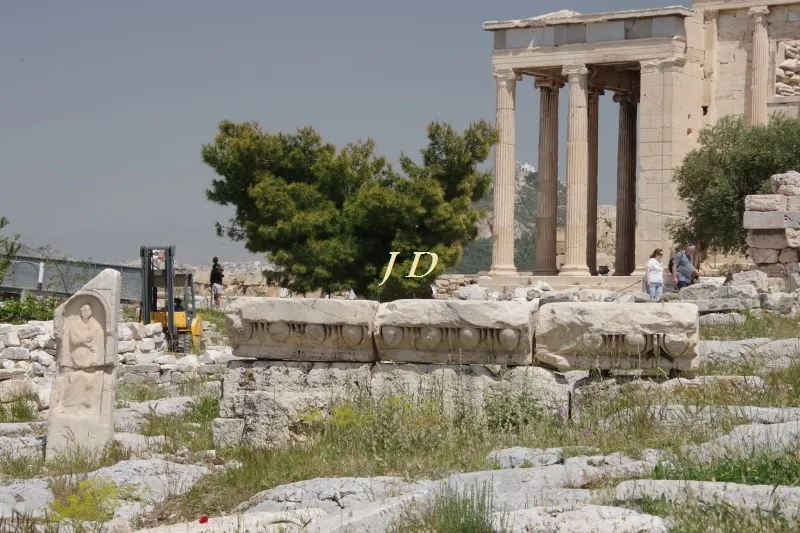
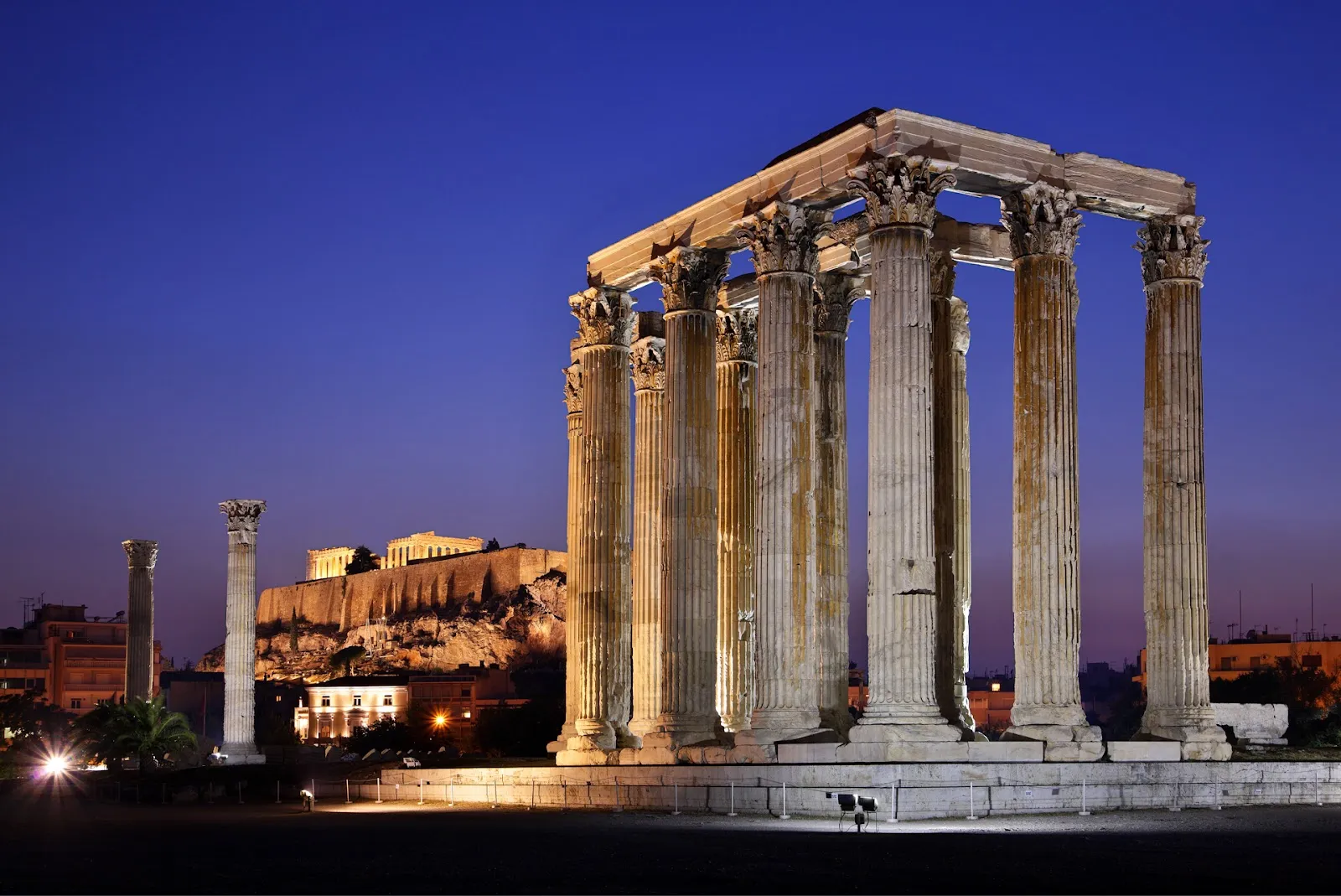
The Byzantine & Christian Museum, at 22 Vasilissis Sofias Avenue in Athens, traces Christian art and daily life from the 3rd to the 20th century. Its collection includes icons, mosaics, frescoes, manuscripts, ceramics, textiles and coins, arranged to show changes across Early Christian, Byzantine, medieval and post-Byzantine periods. The museum occupies Villa Ilissia, a mansion built for the Duchess of Plaisance, and has a garden courtyard with an outdoor café. Allow time for both the galleries and the grounds.
A collection across the centuries
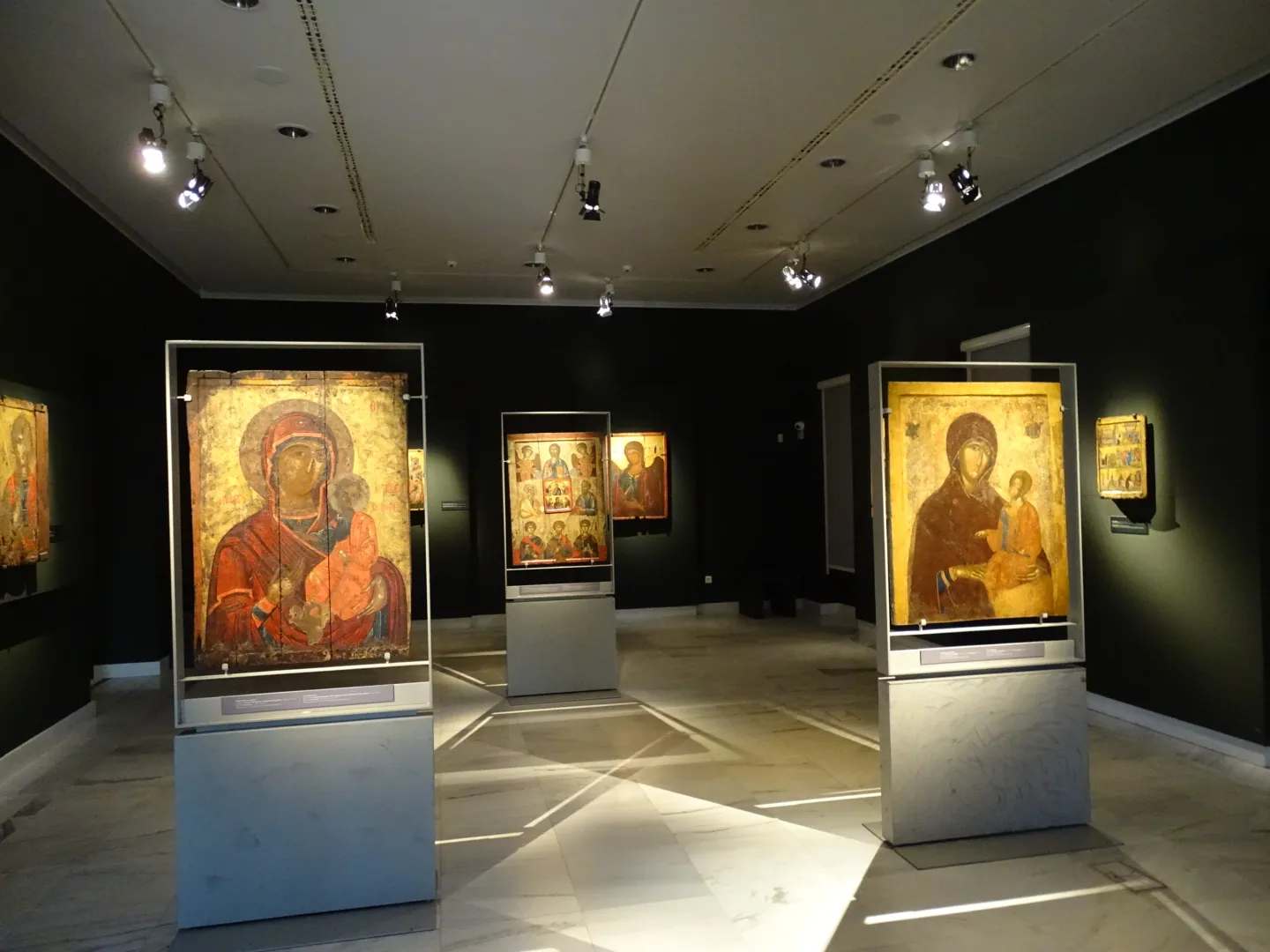
The museum brings together art and objects from the Early Christian, Byzantine, medieval, post-Byzantine and later periods. The collection spans the 3rd to the 20th century and includes works from across the Greek world and regions where Hellenism flourished.
Icons and mosaics are among the central draws, but the galleries also contain frescoes, sculpture, manuscripts, ceramics, textiles, coins and jewellery. Together, these objects give a view of religious art and material life over many centuries.
Following the galleries
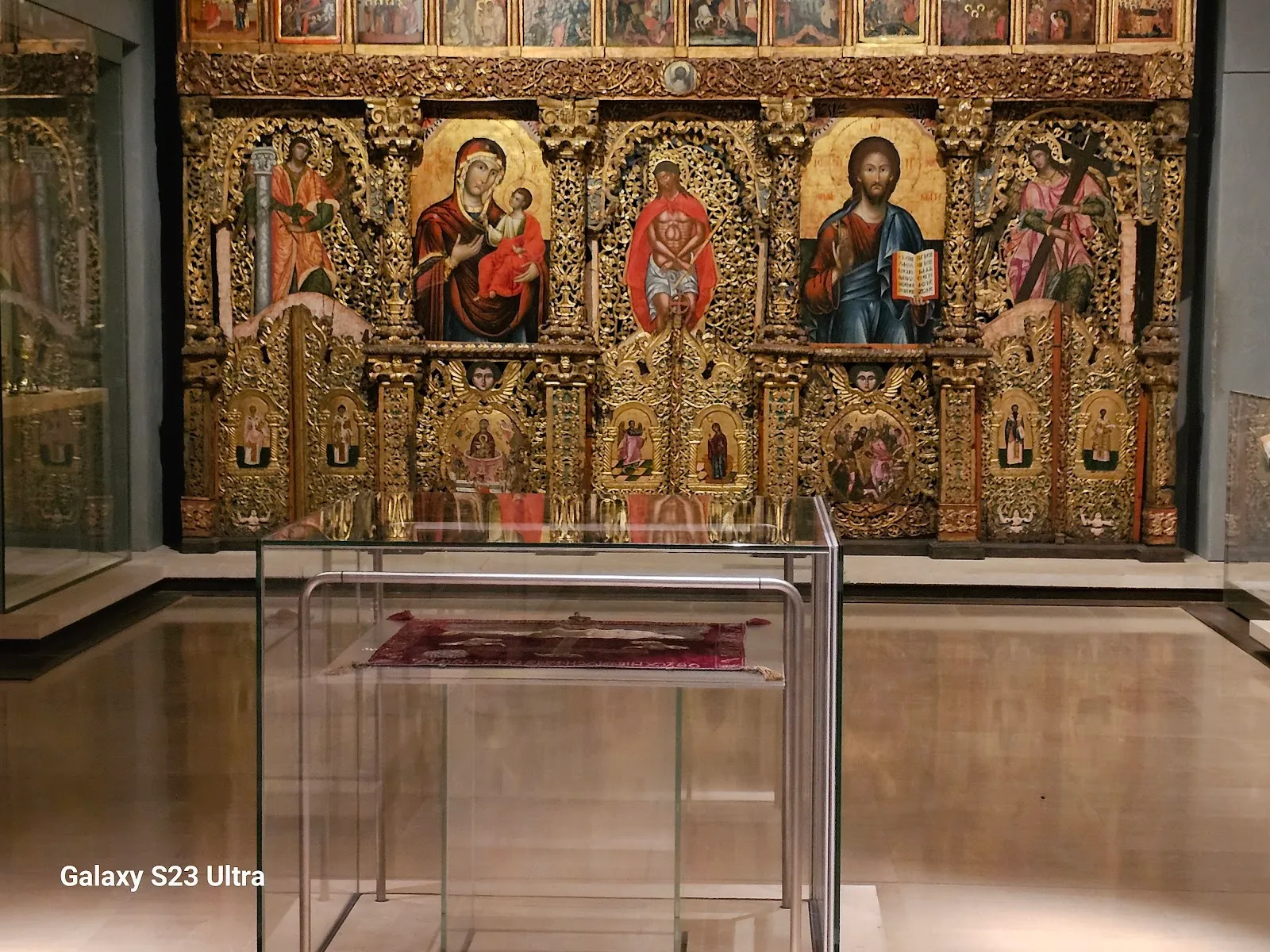
The works are arranged chronologically, so moving through the galleries helps you follow the development of Christian art and the emergence of distinct Byzantine styles. Look beyond the icons to details such as wall paintings, pottery and personal objects, which broaden the story beyond religious imagery.
Some frescoes removed from churches are displayed on panels, while the variety of objects includes both finely worked pieces and items connected with daily life. Temporary exhibitions can add a contemporary perspective; check what is on display before your visit.
Villa Ilissia and the garden
The museum is housed in Villa Ilissia, a residence built between 1840 and 1848 for the Duchess of Plaisance. The building’s villa character makes it a striking setting for the collection, and its history belongs to the early years of modern Athens.
Outside, the courtyard garden offers a quieter place to pause, with archaeological finds and shaded areas. An outdoor café provides a spot for a drink or meal, and the museum shop sells certified reproductions of Byzantine art.
Planning your visit
The museum is at 22 Vasilissis Sofias Avenue, close to Evangelismos metro station. It is closed on Tuesdays, and advance tickets are recommended. The building has wheelchair-accessible entrances, lifts and restrooms.
Allow around two hours for the visit, including time in the garden. Renovation work may affect access to individual displays, so check current information before setting out. The museum’s chronological layout makes it easier to plan a focused route if you have limited time.
Perguntas frequentes
How long do you need at the Byzantine & Christian Museum?
Allow about two hours to explore the galleries and garden.
What can you see at the Byzantine & Christian Museum?
The collection includes icons, mosaics, frescoes, sculpture, manuscripts, ceramics, textiles, coins and jewellery, dating from the 3rd to the 20th century.
Is the Byzantine & Christian Museum accessible for wheelchair users?
The museum has a wheelchair-accessible entrance, lifts and restrooms.
Is the museum open every day?
No. It is closed on Tuesdays.