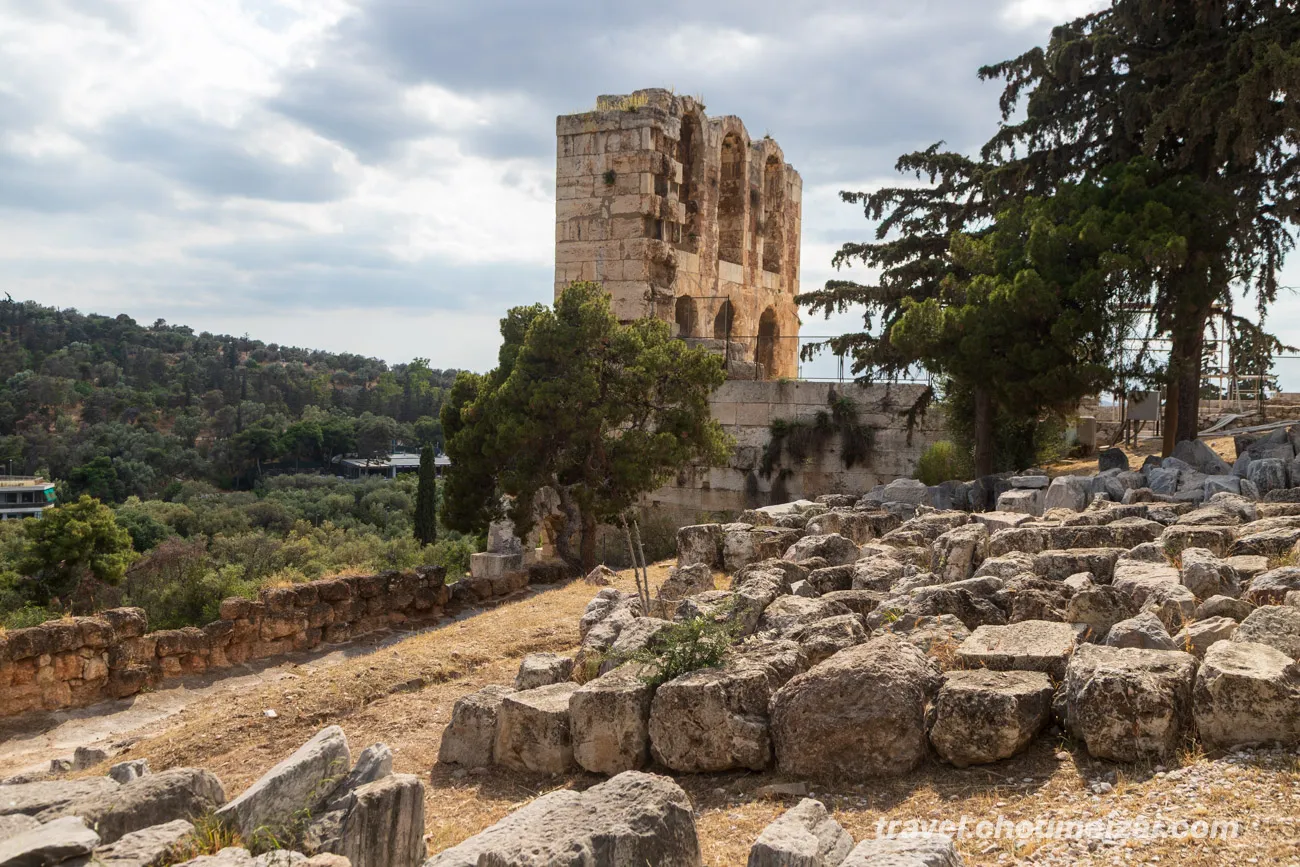
On the Acropolis’s south slope, the Stoa of Eumenes is a long Hellenistic colonnade between the Theater of Dionysus and the Odeon of Herodes Atticus. King Eumenes II of Pergamon gave it to Athens around 160 BC. Its remaining arches offer a close look at ancient stonework and hint at the scale of the original building. The stoa sheltered theatergoers from bad weather and stored stage props, linking this quiet architectural stop to the practical life of the nearby theaters.
A colonnade beside the theaters
The Stoa of Eumenes stands on the south slope of the Acropolis, between the Theater of Dionysus and the Odeon of Herodes Atticus. It was built around 160 BC and donated to Athens by Eumenes II, king of Pergamon.
The building was a covered gallery for people attending performances. It also provided space to keep theatrical props. Its position beside the theaters connected the colonnade directly to the practical needs of audiences and stage productions.
Reading the remains
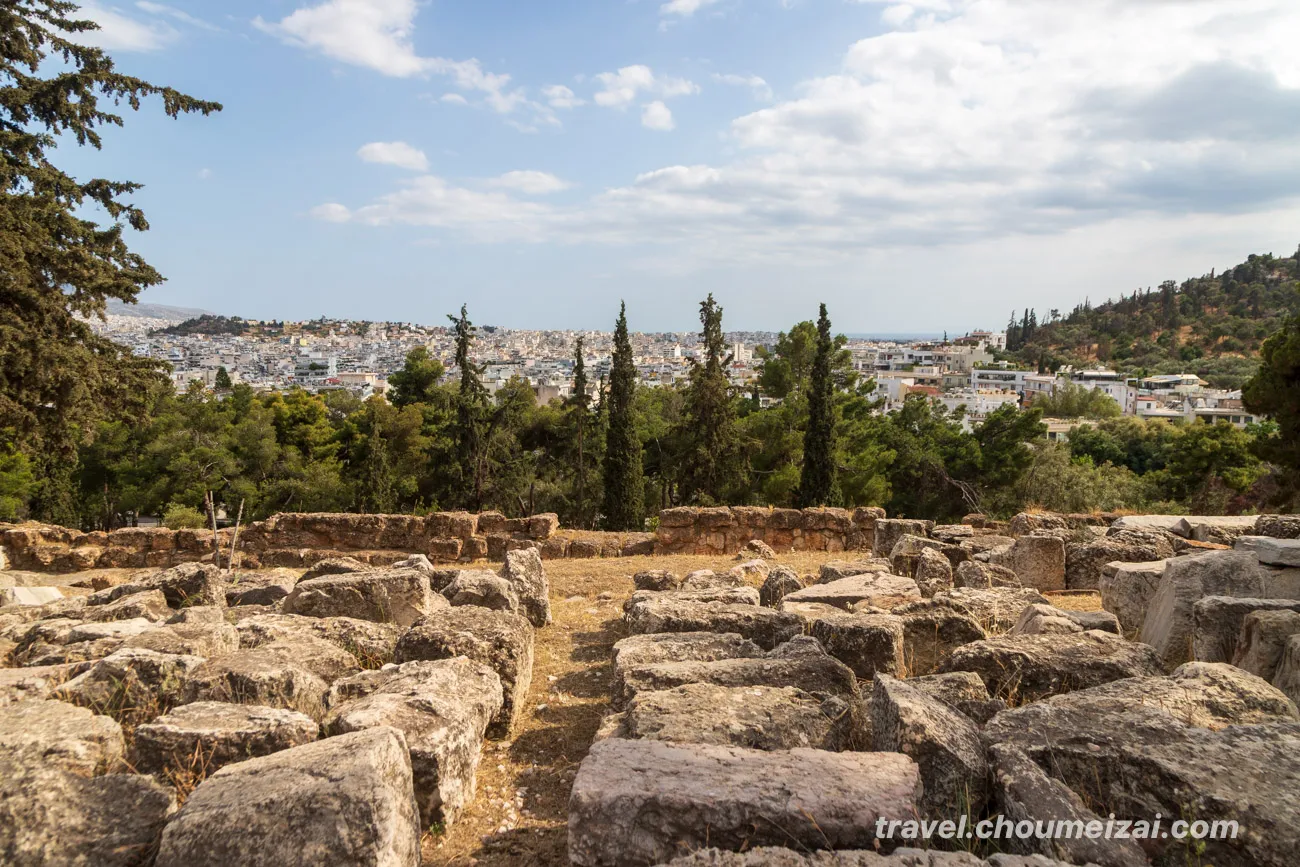
The stoa was a long Hellenistic structure, and its remaining arches give a sense of its original scale. Stoas near theaters could shelter spectators from bad weather; in summer, the surviving arches also provide some shade.
As you look around, consider the building alongside the Stoa of Attalos in the Ancient Agora. The two structures offer a way to compare colonnades built for public use in ancient Athens. The Theater of Dionysus and Odeon of Herodes Atticus are close by, so the stoa fits naturally into a visit to the nearby theater sites.
Perguntas frequentes
Where is the Stoa of Eumenes?
It is on the south slope of the Acropolis, between the Theater of Dionysus and the Odeon of Herodes Atticus.
When was the Stoa of Eumenes built?
It was built around 160 BC and given to Athens by Eumenes II of Pergamon.
What was the stoa used for?
It sheltered theatergoers from bad weather and provided storage for stage props.
When is a good time to visit?
Early morning or late afternoon can help you avoid busier periods.