
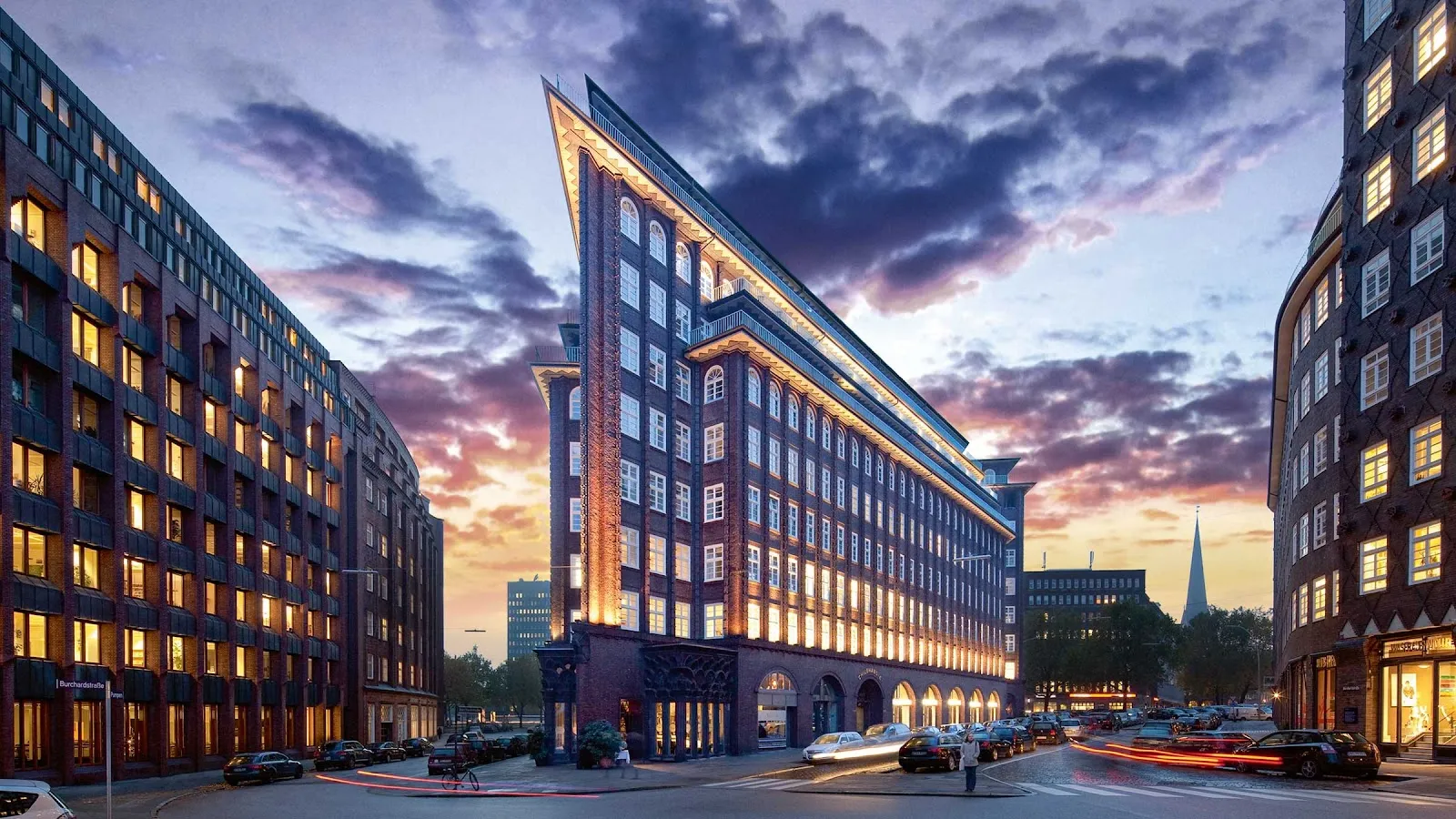
Chilehaus is a ten-storey office building in Hamburg’s Kontorhaus District and part of the UNESCO-listed area. Architect Fritz Höger designed it for merchant Henry B. Sloman, who made his fortune trading in Chile. Its pointed eastern corner and curved brick walls give the building the outline of a ship, while rows of windows and staggered balconies reward a closer look. The visit is mainly outdoors: walk around the façades, then continue on foot to nearby office buildings such as Sprinkenhof.
A merchant’s commission
Hamburg merchant Henry B. Sloman made his fortune trading saltpeter in Chile. After returning to the city, he commissioned architect Fritz Höger to design an office building on an irregular site in the business district. The project took shape between 1922 and 1924, during the period of Germany’s recovery after the First World War.
The building was named for the country where Sloman had built his wealth. Its scale and confident design made it a symbol of Hamburg’s economic revival. Chilehaus later became part of the UNESCO-listed Kontorhaus District, alongside the nearby Speicherstadt.
Brickwork shaped like a ship
Höger used brick to create a dramatic outline without abandoning the practical form of an office building. At the eastern end, the façades meet at a sharp point that recalls a ship’s prow. The walls curve around the corner, and staggered balconies give parts of the exterior the appearance of decks.
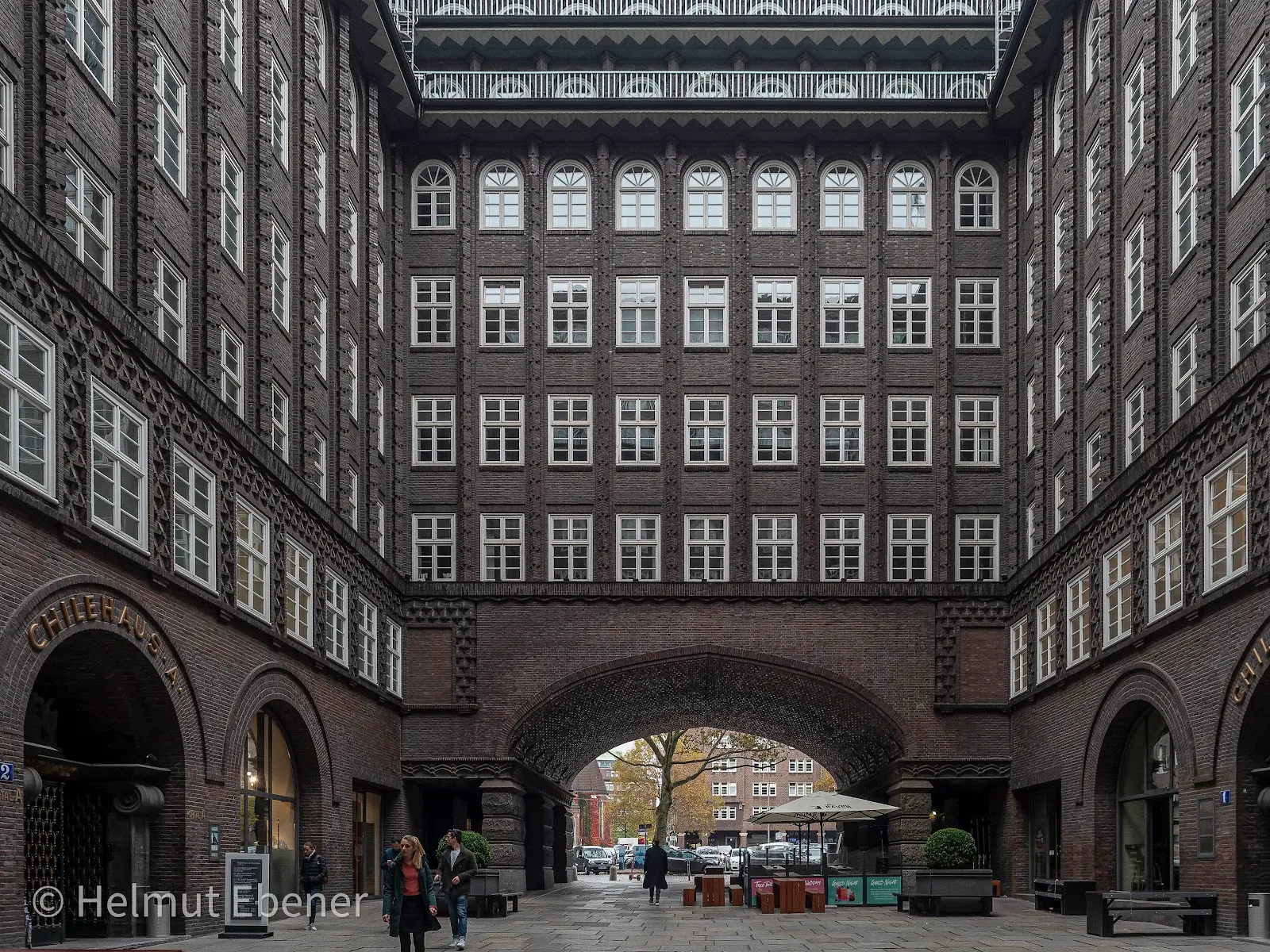
From a distance, the pointed end is the clearest feature to look for. Up close, notice how the repeated windows and detailed brickwork shape the long façades. The ten-storey building is an example of Brick Expressionism, an architectural style that developed in Germany and the Netherlands during the 1920s.
Walking around the building
Chilehaus is an office building, so the public visit is focused on its exterior rather than indoor rooms. Walk around the structure to see how its shape changes from one side to another. The eastern façade is especially useful for understanding the ship-like design, while the curved corners and balconies stand out from street level.
Allow around 15 to 30 minutes for the building itself, or give yourself longer to explore the surrounding Kontorhaus District on foot. Sprinkenhof and the office buildings around Burchardplatz provide nearby architectural stops. Early morning or late afternoon light can bring out the brickwork in photographs.
Perguntas frequentes
Can you go inside Chilehaus?
The visit is focused on the exterior; there is no public interior access for casual visitors.
How long should you spend at Chilehaus?
Allow about 15 to 30 minutes to admire the exterior. Add time if you plan to walk around the nearby Kontorhaus District.
What is Chilehaus known for?
It is a ten-storey office building and an example of 1920s Brick Expressionism. Its pointed eastern corner and curved façades resemble a ship.
When is a good time to photograph Chilehaus?
Early morning or late afternoon light can suit photographs of the building’s distinctive exterior.


