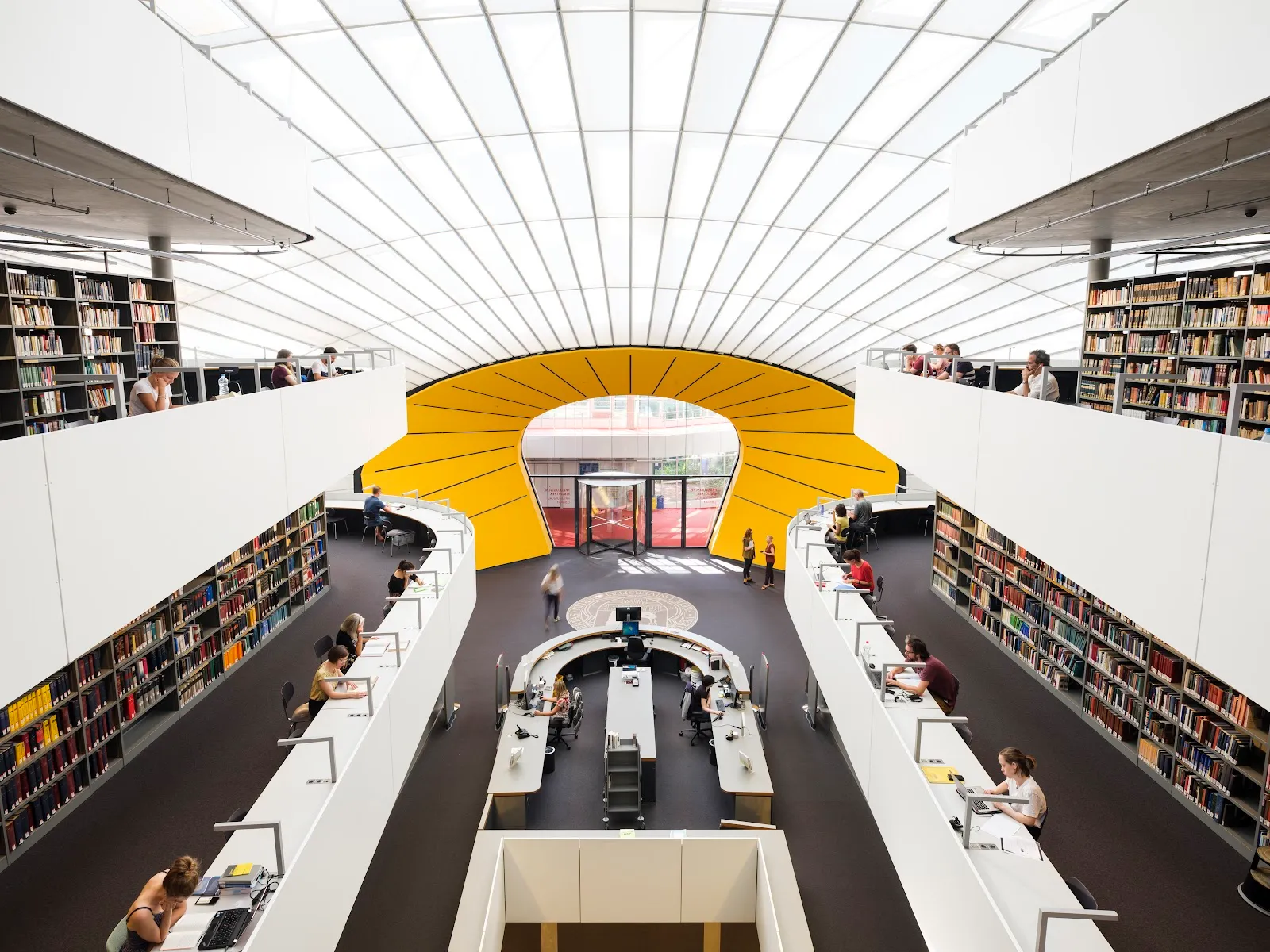
Gropius Bau is a Berlin exhibition venue at Niederkirchnerstraße 7, close to a surviving section of the Berlin Wall. Its programme changes, with shows spanning modern and contemporary art, photography, archaeology and cultural history, so check what is on before you go. The nineteenth-century building has a Renaissance-style exterior and a spacious interior suited to large-scale installations. Look out for the decorative floor mosaics, which draw on different periods and areas of the arts and crafts movement. Families can also find child-focused installations and play areas.
An exhibition venue in a historic building
Gropius Bau is an exhibition building rather than a museum with a permanent collection. Its programme changes, with temporary shows covering modern and contemporary art, photography, archaeology and cultural history. Some exhibitions focus on individual artists; others bring together work around a subject or period. Check the current programme before setting out, since what you can see depends on the dates of your visit.
The building opened in 1881 as a museum and school for decorative arts, designed by Martin Gropius and Heino Schmieden. Its Renaissance-style architecture gives the exterior a formal character, while the large interior spaces can accommodate substantial exhibitions and immersive installations. The contrast between the historic facade and contemporary work is part of the visit.
A building shaped by Berlin’s history
The venue stands on Niederkirchnerstraße beside remnants of the Berlin Wall, placing it close to a physical trace of the city’s former division. The building itself was heavily damaged during the Second World War. After Martin Gropius argued for its reconstruction, it reopened in 1981. Its location and fabric connect the exhibition visit with the surrounding history, without separating the building from the art shown inside.
Look down as you move through the interior: the floor mosaics incorporate references to different periods and branches of the arts and crafts movement. They reward a slower look between exhibition rooms. The building’s generous scale also means that shows can use the space for large works and installations.
Planning your visit
The exhibition programme is the main reason to come, so choose a date around a show that interests you. Past programming has included artists such as Frida Kahlo and Ai Weiwei, alongside photography and themed exhibitions. These are examples of earlier shows, not a guide to what is currently on view.
Families will find child-oriented installations and play areas in some programmes, including the interactive project Bau Bau. Check whether a family-focused activity is running during your visit. The venue has a coat check, restrooms and a restaurant, and the entrance and restrooms are wheelchair accessible. Booking ahead is recommended. Opening days and times vary by day, and the building is closed on Tuesdays.
Perguntas frequentes
Does Gropius Bau have a permanent collection?
No. It is an exhibition venue with a changing programme of temporary shows.
How long should I plan for a visit?
Allow about 2 to 3 hours to explore the exhibitions and building.
Is Gropius Bau suitable for children?
Yes. Some programmes include child-focused installations and play areas. Check the current programme to see what is available.
Is Gropius Bau wheelchair accessible?
The venue has a wheelchair-accessible entrance and restrooms.