On Cimiez hill in Nice, the Musée d’Archéologie de Nice sits beside the Musée Matisse on the site of Cemenelum, the Roman settlement that became the area’s main centre. Inside, you can see objects recovered from local excavations, including a marble statue of Antonia Minor and displays on Roman burial customs. Outside, paths cross the remains of bathhouses, streets, houses and shops. It is a compact stop for Roman history, especially if you are already visiting the Matisse museum next door.
Cemenelum on Cimiez hill
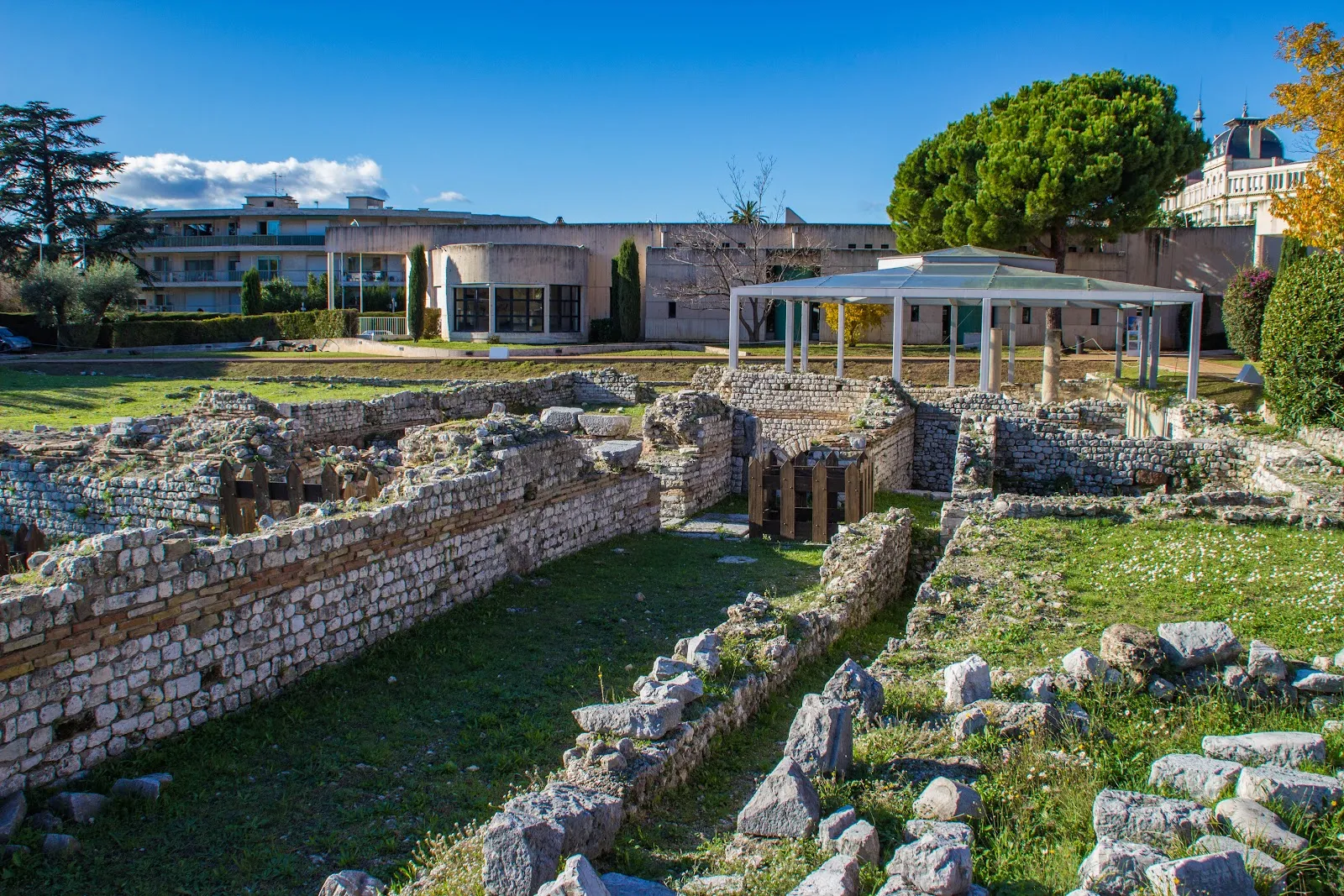
The museum stands on the archaeological site of Cemenelum, the Roman settlement on Cimiez hill that served as the main Roman centre in the area. Its indoor collection focuses on objects recovered from nearby excavations, connecting the displays to the remains outside.
The site gives a glimpse of settlement life across the area now known as the Alpes-Maritimes. Finds include pottery, jewellery and mosaics, alongside objects connected with daily life and trade. The museum’s material also covers periods beyond Roman times, including pre-Roman history and the Middle Ages.
Objects and burial customs
The museum’s displays include a tall marble statue of Antonia Minor, the niece of Emperor Augustus. A separate section explores Roman funeral practices, with sarcophagi, burial features and tools among the objects on view.
Some displays are interactive, including one that lets you smell interpretations of ancient recipes. Written information is largely in French or Latin, so a translation app can help with the indoor displays. An English-language pamphlet is available for understanding the outdoor archaeological area.
Bathhouses and traces of the town
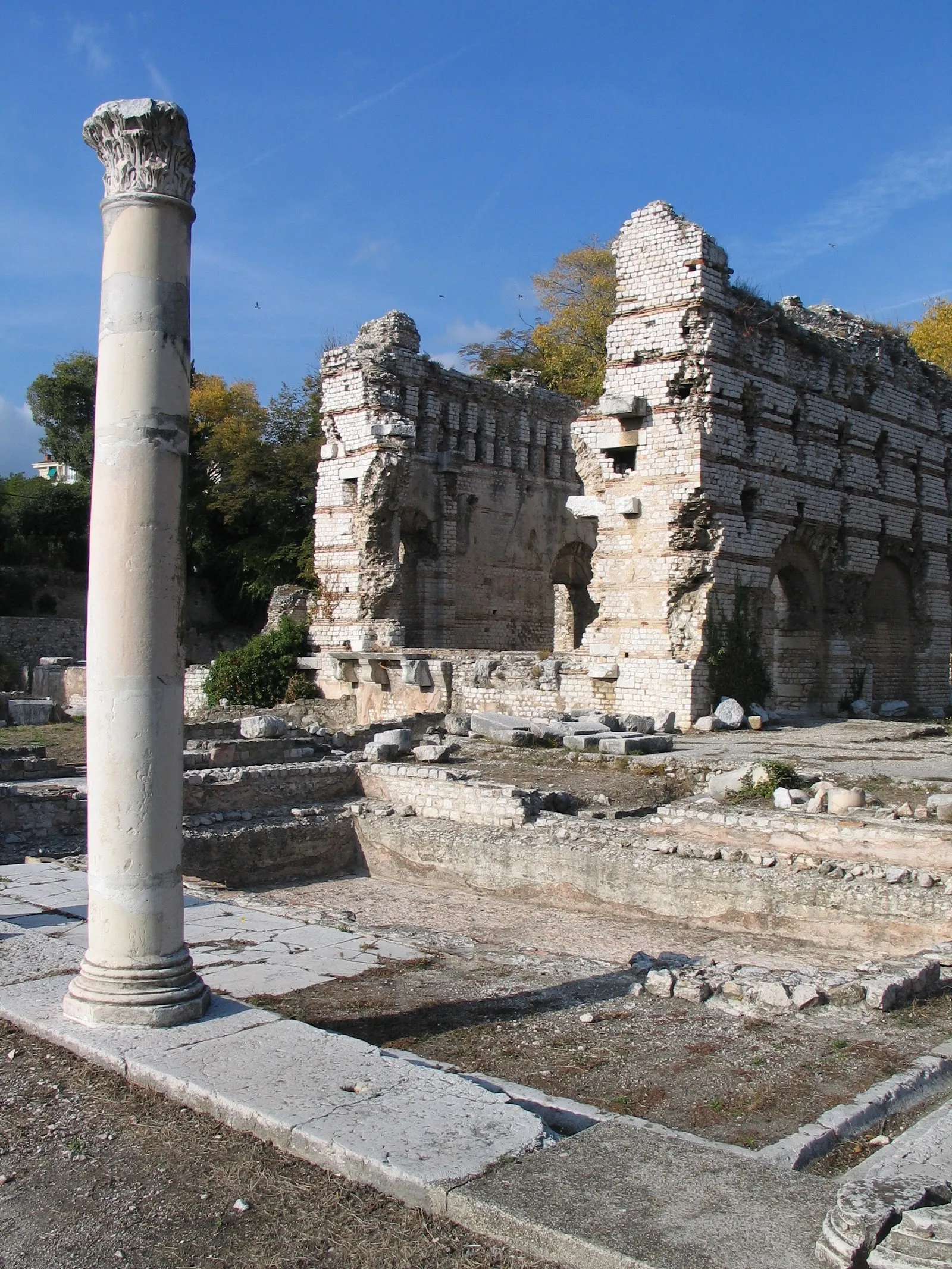
Outside, the excavated remains include Roman bath buildings, parts of streets, and foundations associated with houses and shops. The bath complex preserves areas identified as the north and east baths, with remains of the bathing system visible across the site. The ruins show how the settlement was arranged beyond the museum’s cases.
Numbered illustrations, photographs and archaeologists’ sketches help explain the buildings and their sanitary systems. The remains are spread across the grounds, so allow time to walk between them and read the accompanying material.
Planning a visit
The archaeological museum and site are beside the Musée Matisse. Visiting the two together makes sense if you are already spending time in Cimiez, though the archaeological museum is a separate stop focused on ancient history.
The museum has a wheelchair-accessible entrance and restroom, as well as accessible parking. Advance tickets are recommended. A Nice municipal Museum Pass has included this museum, but check the current pass details before planning around it.
Perguntas frequentes
Where is the Musée d’Archéologie de Nice?
It is at 160 Avenue des Arènes de Cimiez in Nice, beside the Musée Matisse on the archaeological site of Cemenelum.
What can you see at the museum?
The indoor displays include Roman finds, a marble statue of Antonia Minor and material on burial customs. Outside are remains of bathhouses, streets, houses and shops.
How long does a visit take?
One reported visit took about 25 minutes. Allow extra time if you plan to explore the outdoor remains or visit the Musée Matisse next door.
Is there English information?
Most indoor written information is in French or Latin. An English-language pamphlet is available for the outdoor archaeological site.