
The Basilica of Notre-Dame de Fourvière rises above Lyon from Fourvière Hill, with a white stone exterior and four prominent towers. Inside, look for detailed mosaics, stained glass and marble decoration; a crypt beneath the main church adds another level to the visit. The esplanade is a reason to come even if you do not go inside: it looks out over Lyon, including the Saône and Rhône rivers. Take the funicular from Vieux Lyon to reach the basilica without the steep uphill walk.
A landmark above Lyon
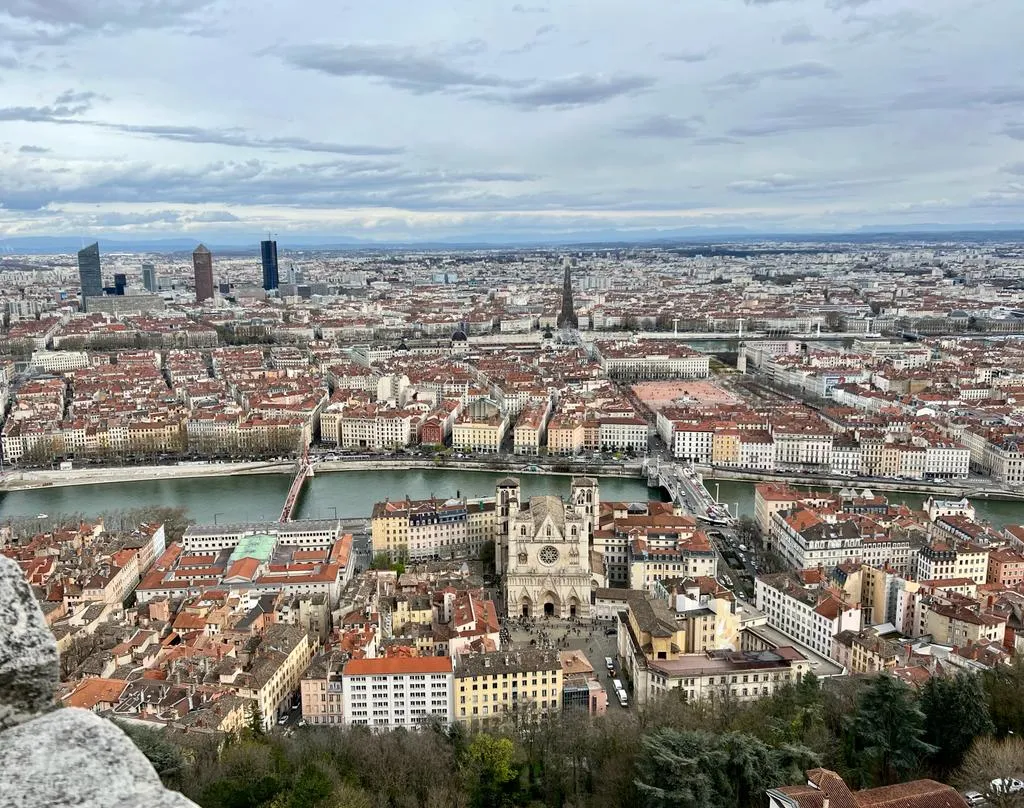
The Basilica of Notre-Dame de Fourvière stands on Fourvière Hill above the old town and is visible from much of Lyon. Built in the late 19th century, it is dedicated to the Virgin Mary. Its position makes the esplanade a natural place to pause and look across the city, with the Saône and Rhône among the landmarks below.
The basilica’s exterior uses white stone and has four prominent towers. Its architecture draws on Romanesque and Byzantine influences, a distinctive choice for a church built during a period when Gothic styles were fashionable. The building’s hilltop setting and unusual outline make it a strong feature of Lyon’s skyline.
Mosaics, stained glass and the crypt
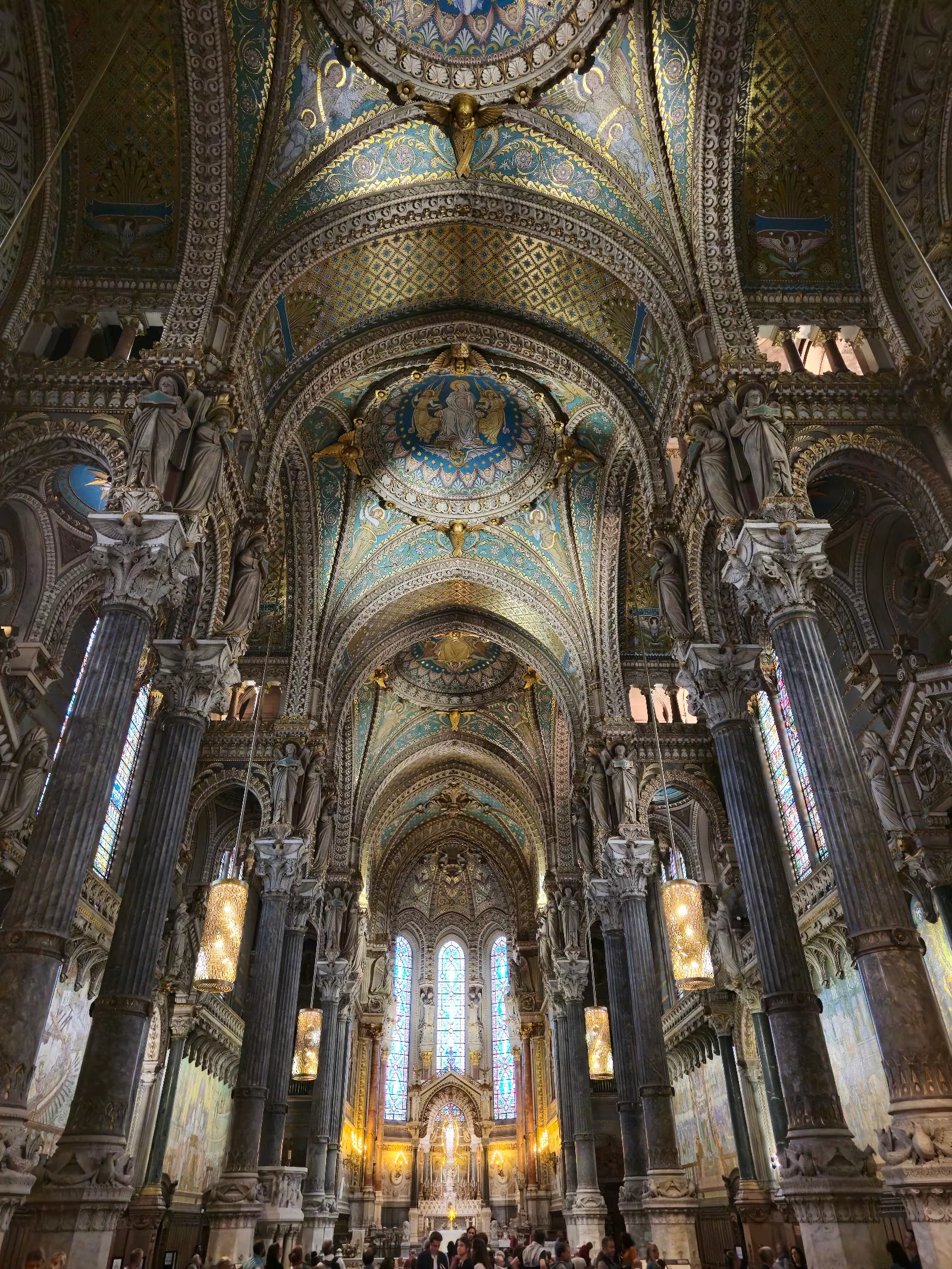
Inside, the decoration is a major part of the visit. Look up at the painted ceilings and around the walls for large mosaics, then notice the stained glass and marble details. The artwork includes biblical scenes and subjects connected with Lyon. Give yourself time to look around: the decoration continues across different parts of the interior, rather than being confined to one focal point.
Below the main church is a spacious crypt with its own chapels and altars. It has a different character from the richly decorated upper church and feels like a separate place of worship beneath it. The crypt is easy to overlook if you leave as soon as you have seen the main interior, so include it in your route.
Getting to Fourvière Hill
The F2 funicular runs up from Vieux Lyon and brings you close to the basilica. You can also walk uphill, but the climb is steep. Taking the funicular makes the ascent simpler and leaves more energy for exploring the hilltop.
The esplanade is accessible even if you do not enter the church, and the views make the trip worthwhile on their own. On clear days, the outlook can extend beyond Lyon toward the Alps. The nearby ancient theatre is also a short walk away, so you can combine the basilica with a visit to the Roman remains on Fourvière.
Planning an interior visit
The basilica is open to visitors, but access arrangements can differ for the church, guided visits and the towers or roof. Walking around the basilica and its basement is free; guided visits and tower or roof access require payment. If you want a guided visit or to climb higher, check the current arrangements before setting out. Advance tickets are recommended for visits that require them.
The basilica is an active Catholic place of worship as well as a landmark. Keep your voice low inside and treat people who are praying with consideration. If you are interested in the interior, leave time for both the upper church and the crypt; the esplanade and exterior can be explored separately.
Perguntas frequentes
Is entry to the Basilica of Notre-Dame de Fourvière free?
Walking around the basilica and its basement is free. Guided visits and access to the towers or roof require payment.
How do you get to the basilica?
Take the F2 funicular from Vieux Lyon to reach the basilica area, or walk uphill. The climb is steep.
What can you see inside the basilica?
The upper church has mosaics, stained glass, marble decoration and painted ceilings. Beneath it, the crypt has chapels and altars.
Can you see Lyon without going inside?
Yes. The esplanade outside the basilica has views over Lyon and its two rivers.


