
At Lyon’s southern tip, where the Rhône and Saône meet, the Musée des Confluences brings natural history and anthropology together under one angular glass-and-steel roof. Its permanent galleries trace four themes, from the origins of the world to human societies and ideas of the afterlife, with fossils, animal specimens and cultural objects among the displays. Temporary exhibitions add changing subjects, and information is available in English as well as French. The building is part of the visit too: head to the upper levels for views across Lyon and the rivers.
A museum at the meeting of two rivers
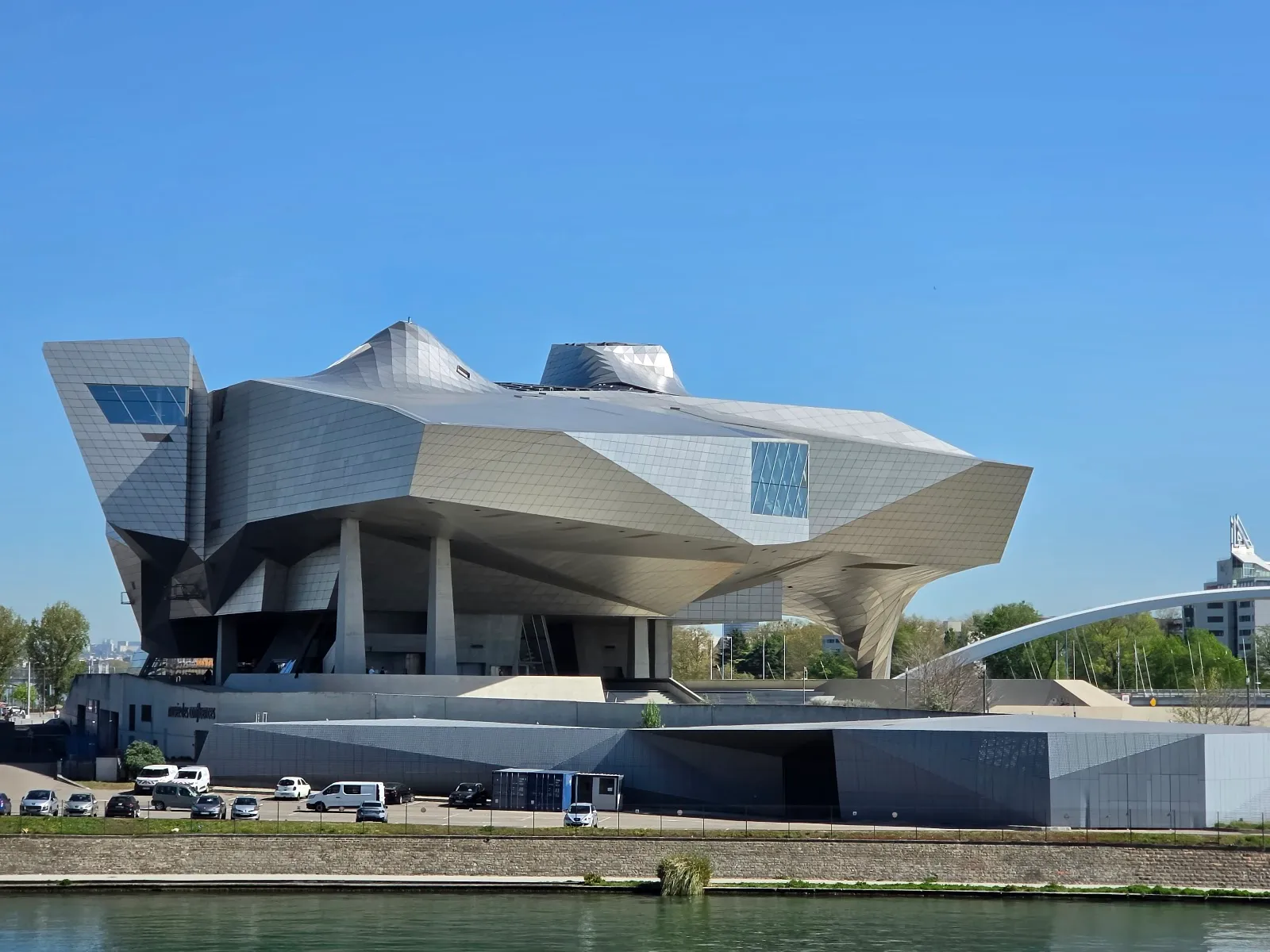
The Musée des Confluences stands at the southern end of Lyon’s Presqu’île, beside the point where the Rhône and Saône join. Its location gives the museum its name and places it in the Confluence district, among newer buildings and former dockland surroundings.
The building is made of glass, steel and concrete, with sharply angled forms that change as you move around it. Reflecting pools sit near the entrance. The structure is worth taking time to look at from outside before heading in, especially if you are interested in contemporary architecture. It opened in 2014 and was designed by the Vienna-based firm Coop Himmelb(l)au.
Four themes, from the origins of life to human societies
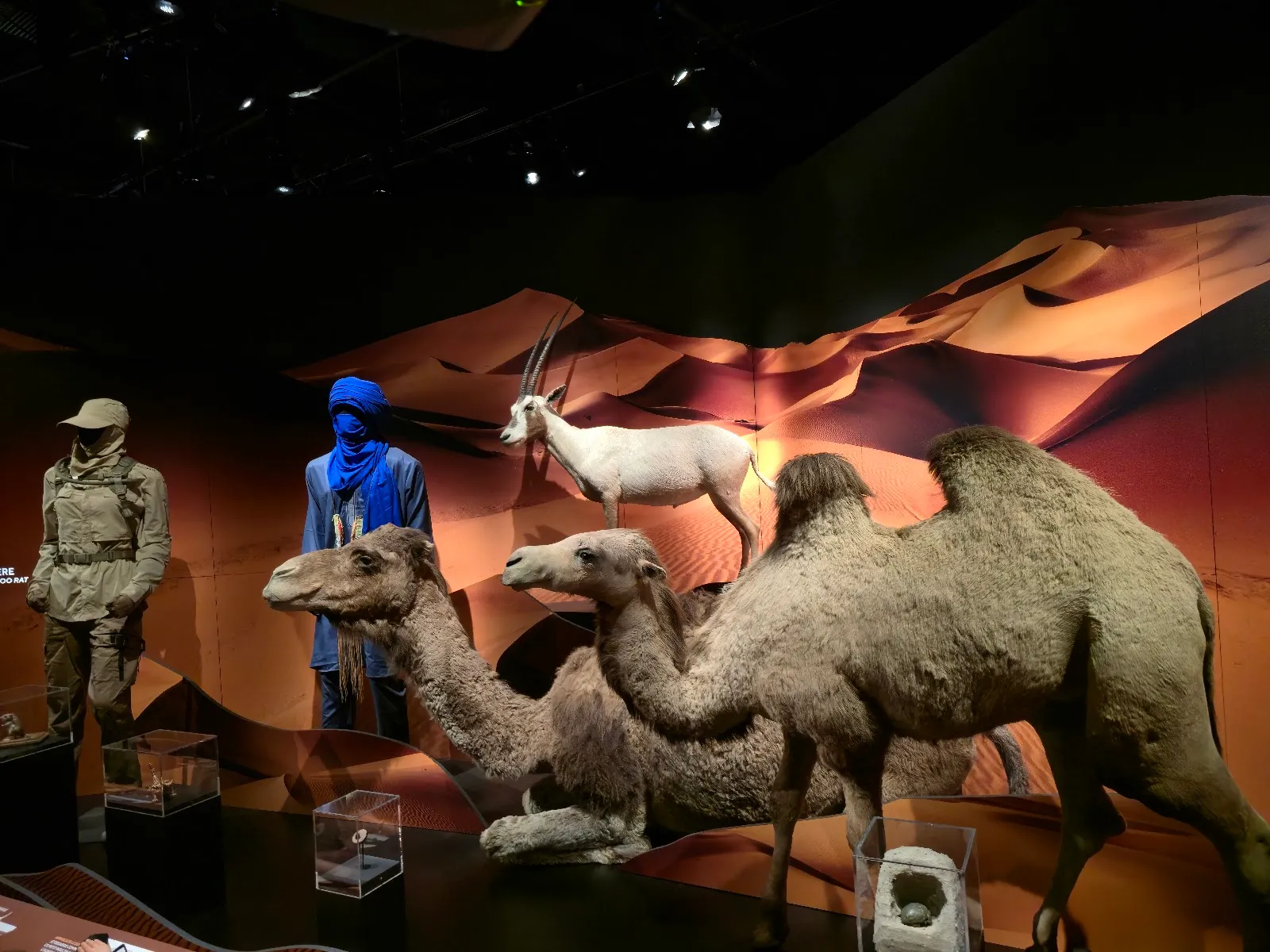
The permanent collection is arranged around four broad themes: Origins, Species, Societies and Eternities. Together, they connect natural history with anthropology and the ways people have understood the world. Displays range from the beginnings of the universe and the development of life to cultures, beliefs and visions of what lies beyond life.
Look for fossils and large animal specimens, including dinosaur skeletons, as well as objects connected with human societies. The mix crosses subjects that museums often keep separate, so a visit moves between the natural world and human history rather than staying within one field. Interactive elements and carefully organized displays help make the galleries accessible to children and adults alike.
The collection includes material from science, anthropology and cultural history. Temporary exhibitions bring additional subjects into the museum, so the exact lineup can change. Check the museum’s website before your visit if you want to plan around a particular exhibition.
Planning your visit
Set aside several hours if you want to see both the permanent galleries and temporary exhibitions. The museum involves a good deal of walking, and its broad range of subjects can keep you moving from one display to the next. English-language information is available alongside French, which helps if you do not read French fluently.
The building has elevators and an accessible entrance, and the museum lists wheelchair-accessible facilities. Families will find exhibits aimed at younger visitors, including dinosaur displays and interactive features. A café on the fourth floor gives you a place to pause, with views over Lyon; there is also a restaurant on site.
Bus C10 and other nearby public transport services can help with the journey. If you are taking the tram, stay attentive around the Musée des Confluences stop. Do not hand over your bank card or disclose your PIN to anyone who approaches with unsolicited ticket-buying advice.
Perguntas frequentes
What is the Musée des Confluences about?
It brings natural history and anthropology together, with permanent galleries on origins, species, societies and beliefs about the afterlife. Temporary exhibitions cover additional subjects.
How long should I plan for a visit?
Allow about 3 to 4 hours to explore the galleries. There is a lot of walking, especially if you include temporary exhibitions.
Is information available in English?
Yes. English-language information is available alongside French.
How do I get to the museum?
Bus C10 and other nearby public transport services provide access. Take care around the tram stop and do not share your card PIN with strangers.


