Planear uma viagem
Idioma: Português
Planeador de viagensPlaneie a sua viagem num mapa

Principais destinos

EnglishDeutschFrançaisEspañolPortuguêsPortuguês (BR)Italiano
Aviso de viagem · EgitoAlguns governos aconselham a não viajar para partes de Egito.Os avisos abrangem apenas estas áreas: Faixa de 50 km ao longo da fronteira com a Líbia, Faixa de Gaza, Fronteira com a Líbia (sem profundidade definida), Governadoria do Sinai Norte, Fronteira com o Sudão (sem profundidade definida), Deserto Ocidental, Governadoria de Ismailia (a leste do Canal de Suez), Norte da Governadoria do Sinai Sul (além da estrada Santa Catarina–Nuweiba).As recomendações dependem do seu passaporte. Leia as recomendações do seu próprio governo antes de reservar.Recomendações oficiais
Áreas com avisos
  • Faixa de 50 km ao longo da fronteira com a Líbia · evitar todas as viagens · Canadá, Nova Zelândia
  • Faixa de Gaza · evitar todas as viagens · Canadá, França, Nova Zelândia
  • Fronteira com a Líbia (sem profundidade definida) · evitar todas as viagens · Alemanha, Espanha, França, Itália
  • Governadoria do Sinai Norte · evitar todas as viagens · Canadá, Espanha, França, Irlanda, Nova Zelândia, Reino Unido
  • Fronteira com o Sudão (sem profundidade definida) · evitar todas as viagens · Alemanha, Espanha, França, Itália
  • Deserto Ocidental · evitar todas as viagens · Canadá, Nova Zelândia, Reino Unido, EUA
  • Governadoria de Ismailia (a leste do Canal de Suez) · evitar viagens não essenciais · Canadá, Reino Unido
  • Norte da Governadoria do Sinai Sul (além da estrada Santa Catarina–Nuweiba) · evitar viagens não essenciais · Canadá, Nova Zelândia, Reino Unido

Também indicado por um governo: Faixa de 20 km ao longo da fronteira com a Líbia (Reino Unido), Zonas de fronteira (zonas militares) (EUA), Área da fronteira Egito-Israel (Alemanha), Península do Sinai norte e central (EUA), Governadoria de Port Said (a leste do Canal de Suez) (Canadá), Zona de fronteira de Rafah (Espanha), Governadoria de Suez (a leste do Canal de Suez) (Canadá), Estrada Bahariya–Siwa (Reino Unido), Trapézio de Bir Tawil (Reino Unido), Deserto a oeste de Mersa Matruh, Faium e Abu Simbel (França), Região do Gebel Uweinat ao Gilf el-Kebir (Itália), Triângulo de Halaib (Reino Unido), Áreas desérticas não turísticas (Itália), Posto de fronteira de Rafah (Irlanda), Península do Sinai Sul (Alemanha)

GovernoRecomendaçõesAtualizadoLer as recomendações
Reino Unido (FCDO)No advice against the whole country (regional advisories)–Ler as recomendações
Estados Unidos (Departamento de Estado)Exercise increased caution (regional advisories)15/07/2025Ler as recomendações
Canadá (Assuntos Mundiais)Exercise a high degree of caution (regional advisories)–Ler as recomendações
Alemanha (Ministério dos Negócios Estrangeiros)Besondere Vorsicht walten lassen (keine Gesamtwarnung) (regional advisories)13/10/2026Ler as recomendações
Nova Zelândia (SafeTravel)Exercise increased caution elsewhere in Egypt (regional advisories)–Ler as recomendações
Irlanda (Departamento dos Negócios Estrangeiros)High degree of caution (regional advisories)–Ler as recomendações
França (Ministério para a Europa e Negócios Estrangeiros)Increased vigilance for the rest of the country (regional advisories)–Ler as recomendações

Verificado diariamente a partir das recomendações publicadas pelos governos; última verificação 2/11/2026.RoamLedger resume as recomendações oficiais; não são recomendações de nenhum governo.

Hanging Church
Igreja

Hanging Church

The Hanging Church, known in Arabic as Al-Muallaqa and officially as Saint Virgin Mary's Coptic Orthodox Church, stands in Old Cairo's Coptic quarter.

The Hanging Church, known in Arabic as Al-Muallaqa and officially as Saint Virgin Mary's Coptic Orthodox Church, stands in Old Cairo's Coptic quarter. It is built over the gatehouse of the Roman fortress of Babylon, with its nave carried on palm logs and layers of stone. Inside, more than 100 icons, many made of ebony and inlaid with ivory, hang alongside carved wooden screens that show Christian stories. The church is still used for worship, so it feels calm and lived in. Plan to combine it with the Coptic Museum, St Sergius and Bacchus Church and the Ben Ezra Synagogue.

Why it is called the Hanging Church
Hanging Church
Hanging Church

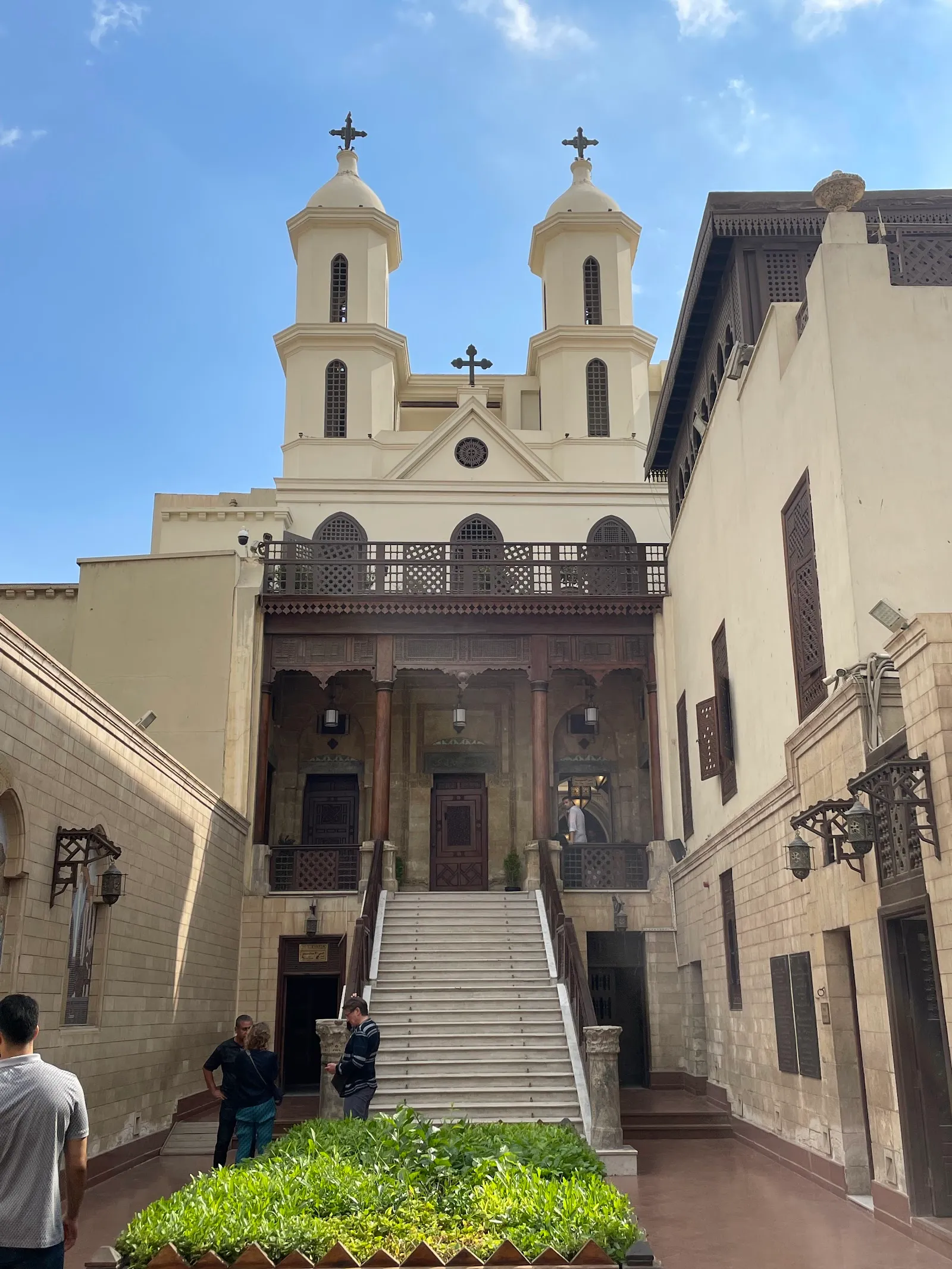
The church stands above the gatehouse of the Roman fortress of Babylon. Its nave rests on palm logs and layers of stone laid over the old towers, so the building appears to hang over the passage below. The Arabic name Al-Muallaqa means suspended, which refers to this setting.

When the church was first built, the pillars of the gatehouse could be seen beneath it, which made the hanging effect clear. The ground has risen over the centuries, and those pillars are now buried.

Parts of the floor are made of glass, so you can look down toward the Roman remains below.

Inside the church
Hanging Church
Hanging Church

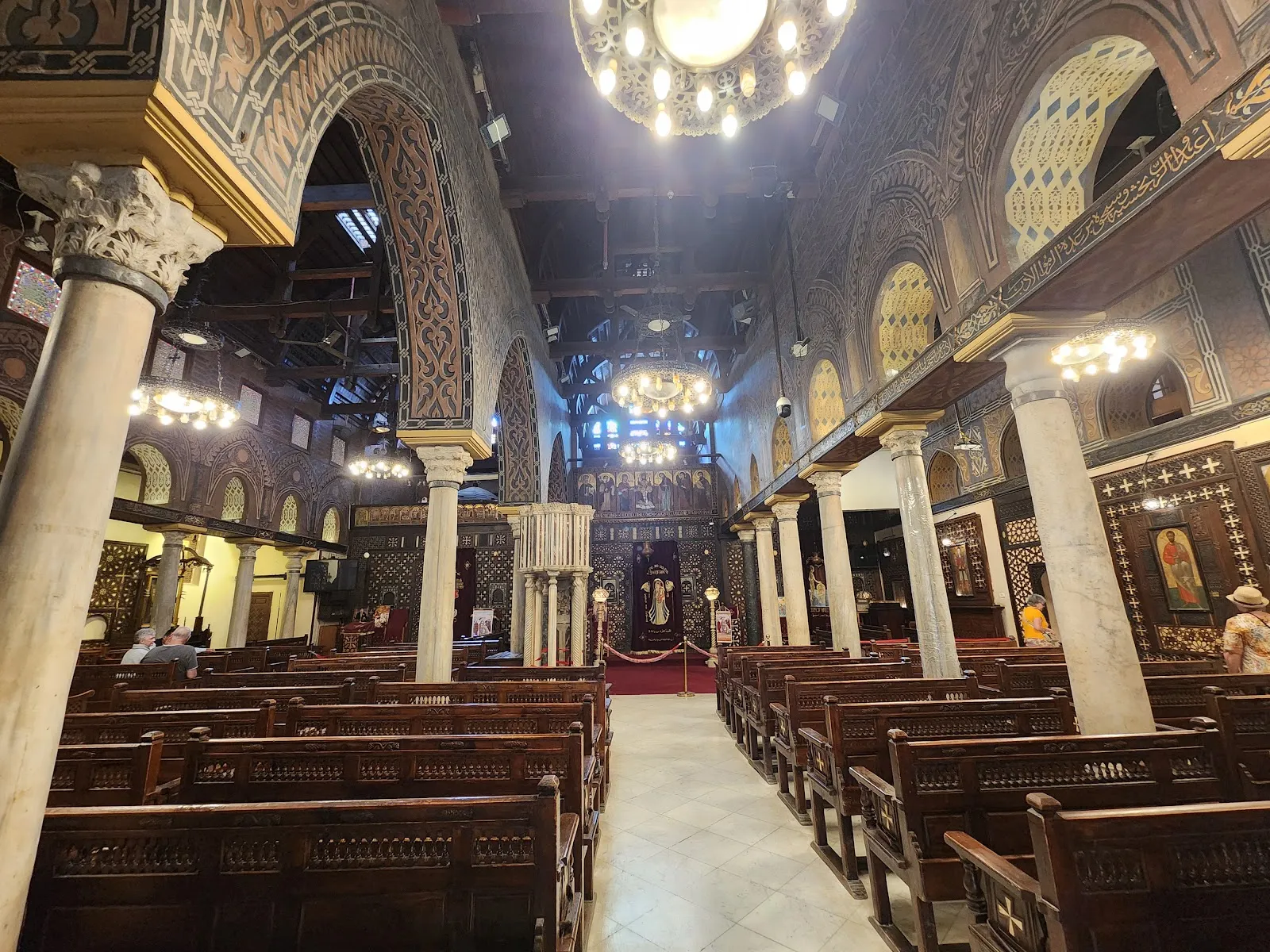
The church follows the basilica plan, with three aisles and wooden roofs. Its wooden ceiling is shaped like an upturned Noah's Ark. Thirteen pillars stand in the nave, said to represent Christ and his apostles.

More than 100 icons decorate the church. Many are made of ebony, some inlaid with ivory. The oldest and most sacred date to the 8th century. Among the subjects are the Virgin Mary, St John the Baptist and St George. The sanctuary has ebony and ivory work and a marble pulpit, and the interior includes an iconostasis.

To reach the church, visitors climb 29 steps from the open courtyard. The stone facade at the entrance carries inscriptions in Coptic and Arabic.

Coptic Cairo around the church

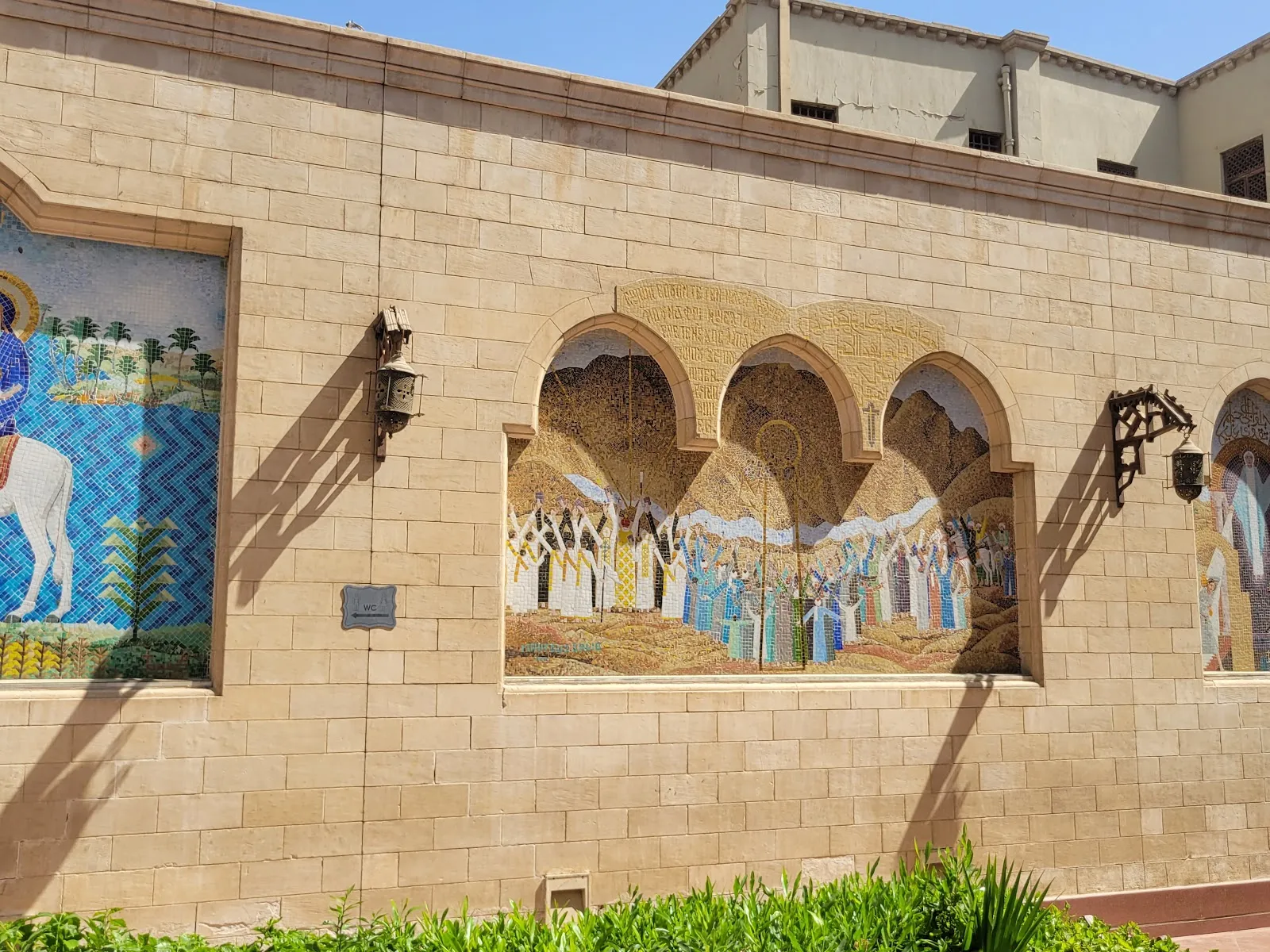
The church is part of Coptic Cairo, a district that includes the Babylon Fortress, the Coptic Museum, the Greek Church of St George and several other churches. The Coptic Museum has a large collection of Christian artifacts and charges an entrance fee. Most of the churches here can be entered without a fee.

Christian tradition holds that the Holy Family visited this area and stayed at the site of St Sergius and Bacchus Church, also called Abu Serga. The Ben Ezra Synagogue and the Mosque of Amr ibn al-As are also nearby. Few places show Christianity, Judaism and Islam so close together.

The metro is the simplest way in. Take the line to Mar Girgis station, then walk to Sharia Mar Girgis. The church is just south of the Coptic Museum.

Restoration and the church today

The church has been rebuilt and renovated several times. Before its latest restoration, it suffered from air pollution, high groundwater, humidity and leaks from an old sewage system. Smoke had stained the wooden ceiling, and the 1992 earthquake cracked its walls and foundations.

After 16 years of restoration, the church is open to the public. It remains a working parish. Mass is held on Friday and Sunday mornings. Parishioners still come to pray over a collection of saints' relics and an icon of the Virgin Mary.

Perguntas frequentes

Is there an entry fee?

Entry to the Hanging Church is free, and donations toward its upkeep are appreciated. The Coptic Museum next door charges a separate entrance fee.

Is the church still used for worship?

Yes. Mass is held on Friday and Sunday mornings, and parishioners still come to pray here.

How do I get there?

Take the metro to Mar Girgis station. The church is on Sharia Mar Girgis, just south of the Coptic Museum.

When is the best time to visit?

Go early in the morning, before the crowds arrive.

Mais locais imperdíveis em Cairo

Explorar tudo