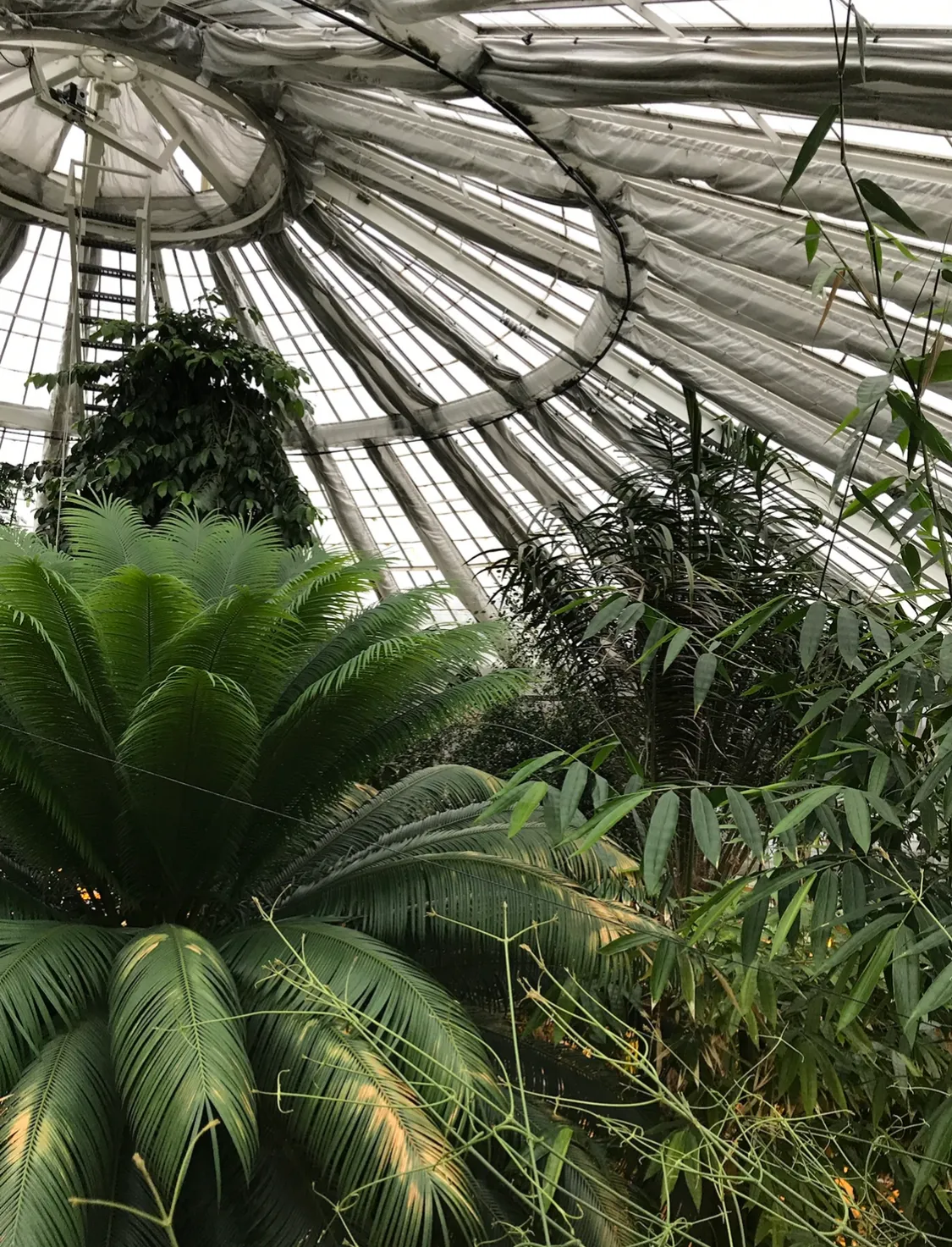
Copenhagen’s Botanical Garden is a leafy stop near Nørreport and Rosenborg Castle, with outdoor paths, ponds and Denmark’s largest collection of living plants. The garden is free to enter; the historic glasshouses, including the Palm House, require a ticket. Inside the Palm House, tropical greenery and a spiral staircase leading to a high walkway make a striking change from the city streets. Take a quieter walk among the beds and trees, or look for turtles, fish and birds around the water. Renovation work may limit access in parts of the garden.
A garden in central Copenhagen
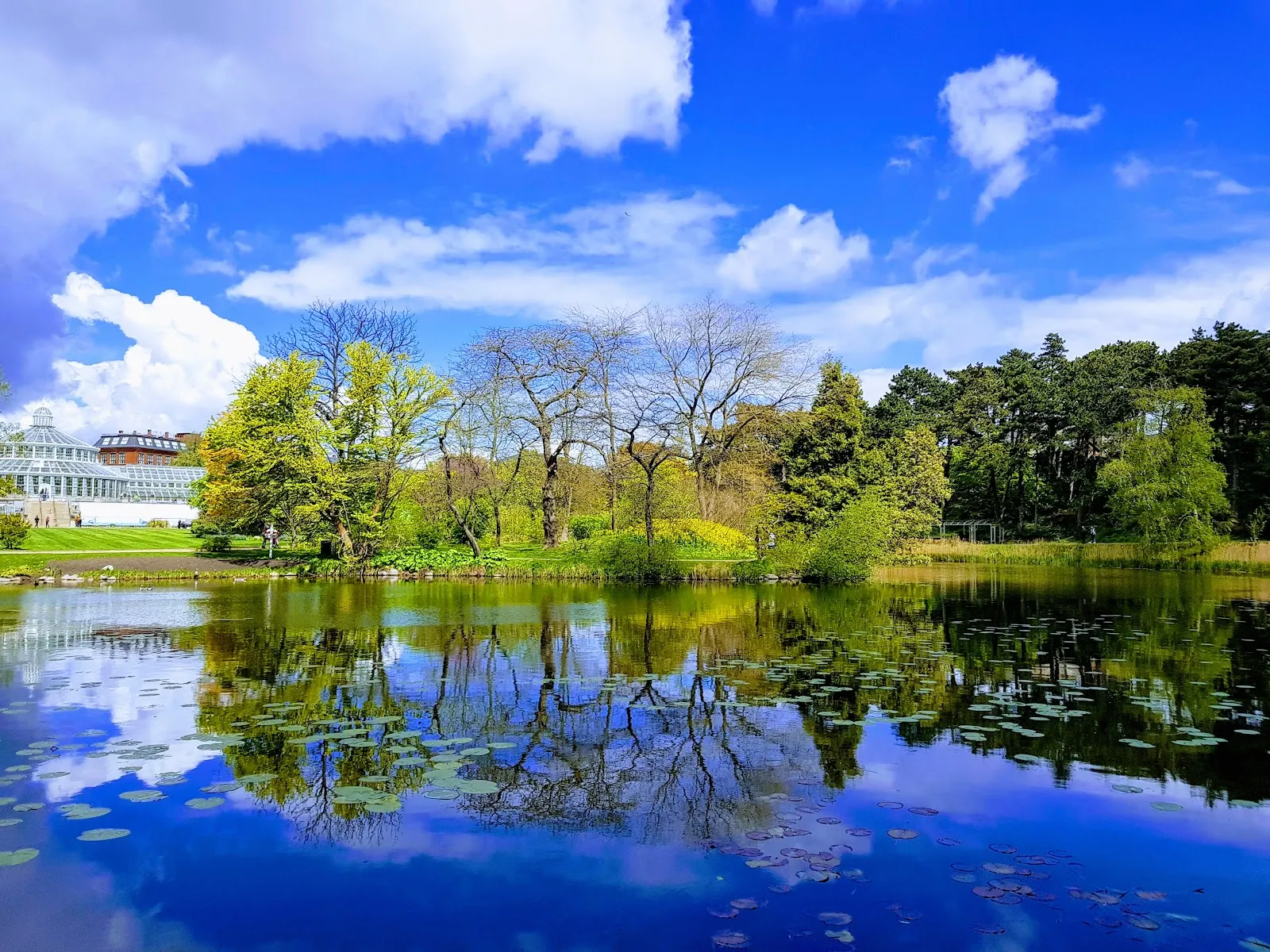
The Botanical Garden sits on Gothersgade, close to Nørreport and across from Rosenborg Castle. Its grounds cover about 10 hectares, with lawns, water, garden beds and winding paths. The garden belongs to the Natural History Museum of Denmark and is part of the University of Copenhagen.
The garden was founded in 1600 and moved more than once before reaching its present site in the late 19th century. Its plant collection includes more than 13,000 species, divided among outdoor areas and glasshouses. Some sections focus on particular regions or kinds of plants, so a walk can take you from Danish flora to tropical and desert environments.
The Palm House and glasshouses
The Palm House is the garden’s best-known glasshouse. Built in the 19th century, it rises above the surrounding paths and shelters tropical plants. A narrow spiral staircase leads to a walkway high among the greenery, giving a different view of the palms and the structure’s glass and ironwork.
Other glasshouses contain plants suited to different climates, including cacti and succulents. The warm, humid rooms can feel quite different from the outdoor paths, and conditions vary between spaces. The Butterfly House is another indoor attraction, with living butterflies among the plants; it is described as a seasonal feature, so check whether it is open for your visit.
Entry to the outdoor garden is free, while indoor areas such as the Palm House require a ticket. The available details give different admission prices, so check the current fee before setting out.
Paths, ponds and a seasonal visit
Outside the glasshouses, paths wind past lawns, shaded woodland areas, a rock garden and ponds. The water draws fish and turtles, and birds can be seen around the garden. Benches provide places to pause along the walk, and the grounds suit a short break between central Copenhagen sights as well as a slower visit focused on plants.
Winter changes the character of the garden: bare branches and frost can make the outdoor walk feel subdued, while the glasshouses offer warmth and green foliage. In spring, the rhododendron garden is noted for its flowering display. Ongoing renovation work may restrict access in some areas, so be prepared to adjust your route.
Perguntas frequentes
Is Copenhagen’s Botanical Garden free to enter?
The outdoor garden is free to enter. The Palm House and other indoor areas require a ticket.
How long should I spend at the Botanical Garden?
Allow about 1 to 2 hours for a walk through the grounds and, if you wish, time inside the glasshouses.
What is inside the Palm House?
The 19th-century glasshouse contains tropical plants and a spiral staircase leading to an elevated walkway.
Can you see butterflies at the Botanical Garden?
There is a Butterfly House with living butterflies among the plants. It is described as seasonal, so check whether it is open during your visit.