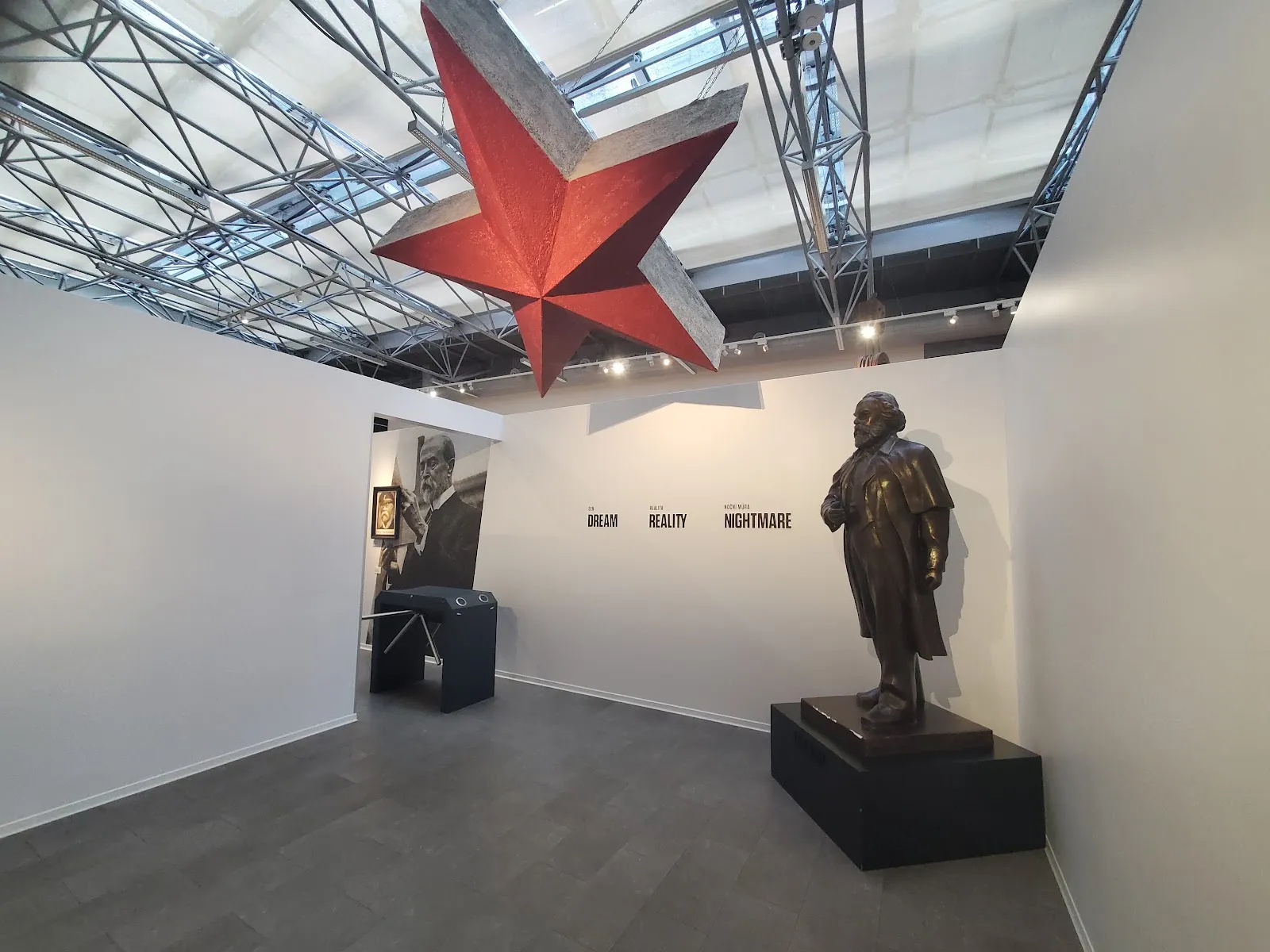
The Museum of Communism in Prague’s New Town traces life in Czechoslovakia under communist rule, from 1948 to the Velvet Revolution in 1989. Photographs, propaganda, documents, films and personal accounts sit alongside recreated spaces, including a classroom, a shop and an interrogation room. The exhibition covers both everyday routines and the work of the secret police. Allow time to read: much of the display uses detailed text panels, so the museum suits visitors interested in recent history more than young children.
A museum of Czechoslovakia under communist rule
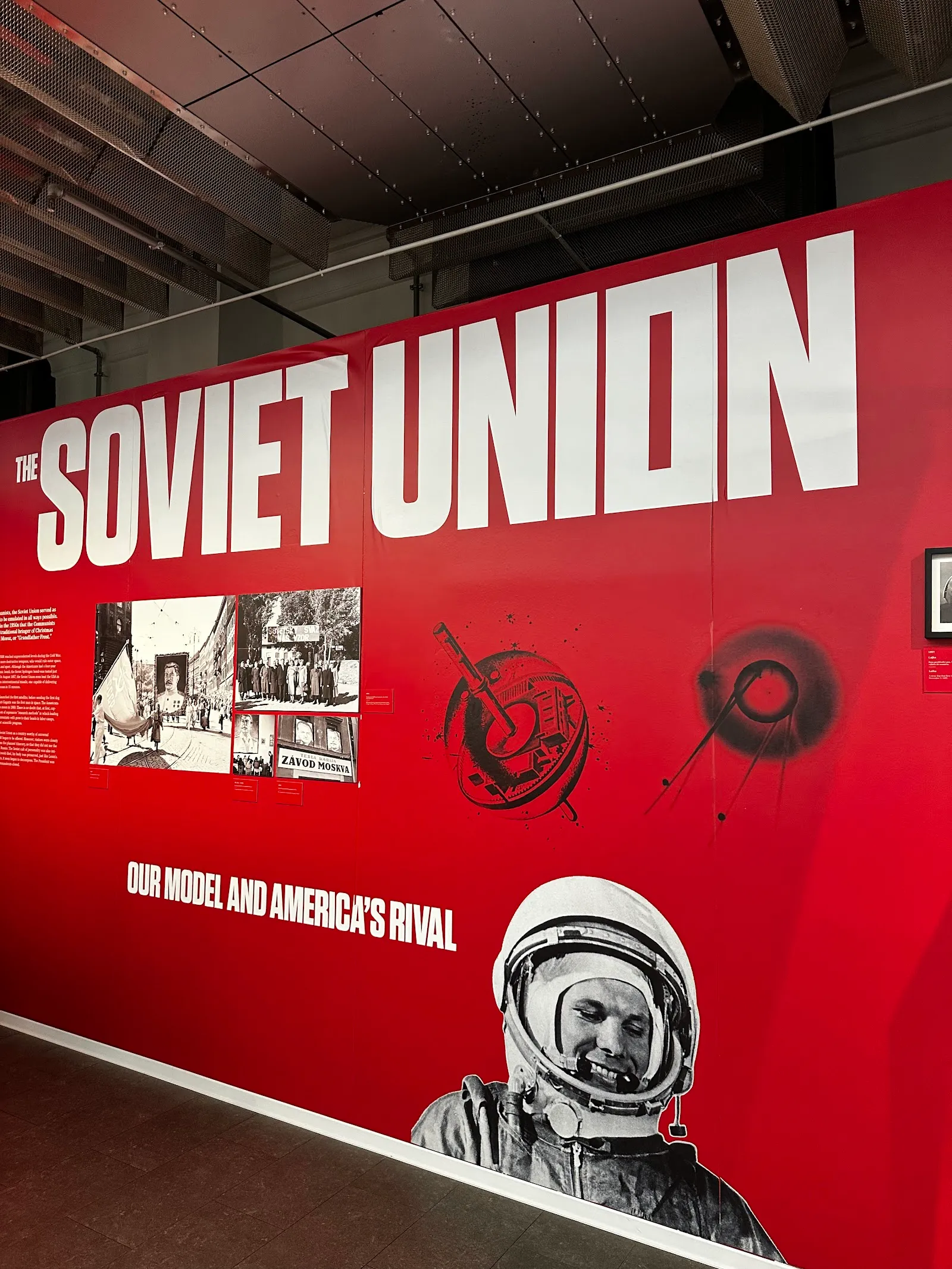
The Museum of Communism focuses on Czechoslovakia from 1948 to 1989, the period between the start of communist rule and the Velvet Revolution. Its account places political history alongside the experience of ordinary people, covering daily life as well as propaganda, censorship, secret police activity and persecution.
The exhibition combines photographs, documents, films, personal accounts and objects from the era. Propaganda posters and military items help set the scene, while multimedia displays and oral histories bring individual experiences into the story. The result is a focused introduction to a consequential period of modern Czech history.
Recreated rooms and everyday objects
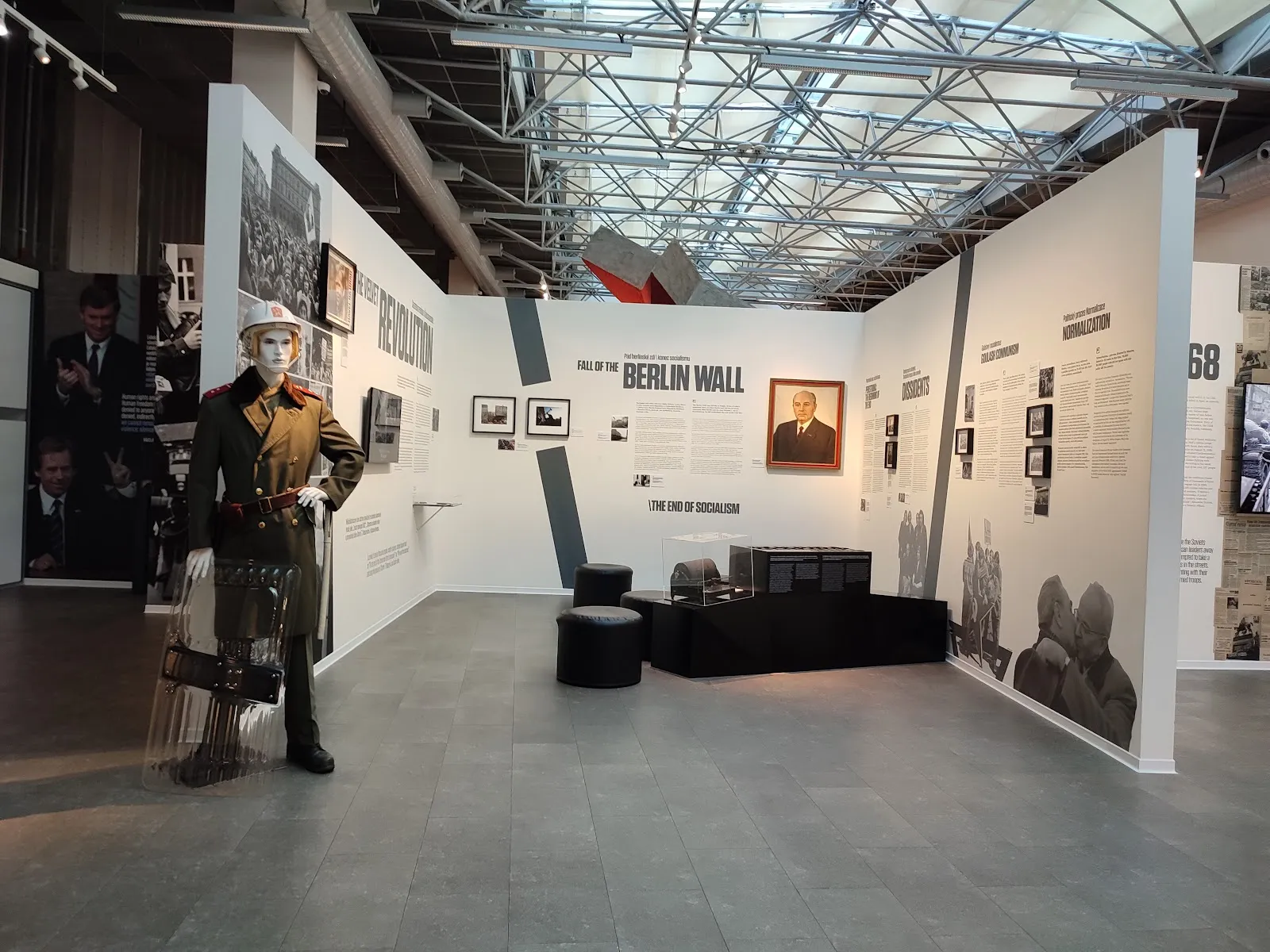
Several displays recreate spaces associated with life under the regime. A school classroom and a shop give a sense of everyday environments; an interrogation room shows a more frightening side of state power. Other displays include a workshop and a factory setting, as well as objects connected with civilian preparations for chemical warfare.
These reconstructions sit alongside period photographs, documents and propaganda. Some objects are everyday items rather than rare historical pieces, so the exhibition’s value lies in the way it combines material from the period with context about how people lived.
The Velvet Revolution and personal accounts
The Velvet Revolution of 1989 marks the end point of the museum’s timeline. Footage of the events gives visitors a visual account of the protests after the exhibition has explored the suppression of opposition. Personal accounts, including interviews with refugees, add individual perspectives to the political history.
Allow time for these materials. The museum uses substantial text panels, and some video and interview content takes time to watch. Visitors who want a quick walk-through may prefer to focus on the recreated rooms and multimedia displays; those who enjoy reading historical context can follow the exhibition in greater depth.
Planning your visit
The museum is at V Celnici 1031/4 in Nové Město. It is within walking distance of Prague’s Old Town and New Town, and near Náměstí Republiky. The exhibition is text-heavy, with panels in Czech and English; written guides in Italian and French are also available at the entrance.
Admission is paid, with discounts available for students, seniors and children. Tickets in advance are recommended. The museum has a wheelchair-accessible elevator and a restroom, and a restaurant is listed on site. Its detailed reading and serious subject matter make it a stronger fit for adults and older children than for young children.
Perguntas frequentes
What does the Museum of Communism cover?
It explores life in Czechoslovakia under communist rule from 1948 to the Velvet Revolution in 1989, including daily life, propaganda and political repression.
How long should I allow for a visit?
Allow about two hours, especially if you plan to read the panels and spend time with the interviews and videos.
Are the exhibition panels available in English?
Yes. The panels are in Czech and English. Written guides in Italian and French are available at the entrance.
Is there a discount on admission?
Discounted admission is available for students, seniors and children. Tickets in advance are recommended.