
Athabasca Glacier flows from the Columbia Icefield beside the Icefields Parkway, near the boundary of Jasper and Banff national parks. From the marked trails, you can walk towards the glacier’s toe and see how far the ice has retreated; signs trace its former edges. For a closer look, guided trips take visitors onto the ice by Ice Explorer or on foot. The glacier is part of a changing landscape: it has receded substantially over the past century, with meltwater and exposed rock marking its retreat.
Where the glacier meets the Icefields Parkway
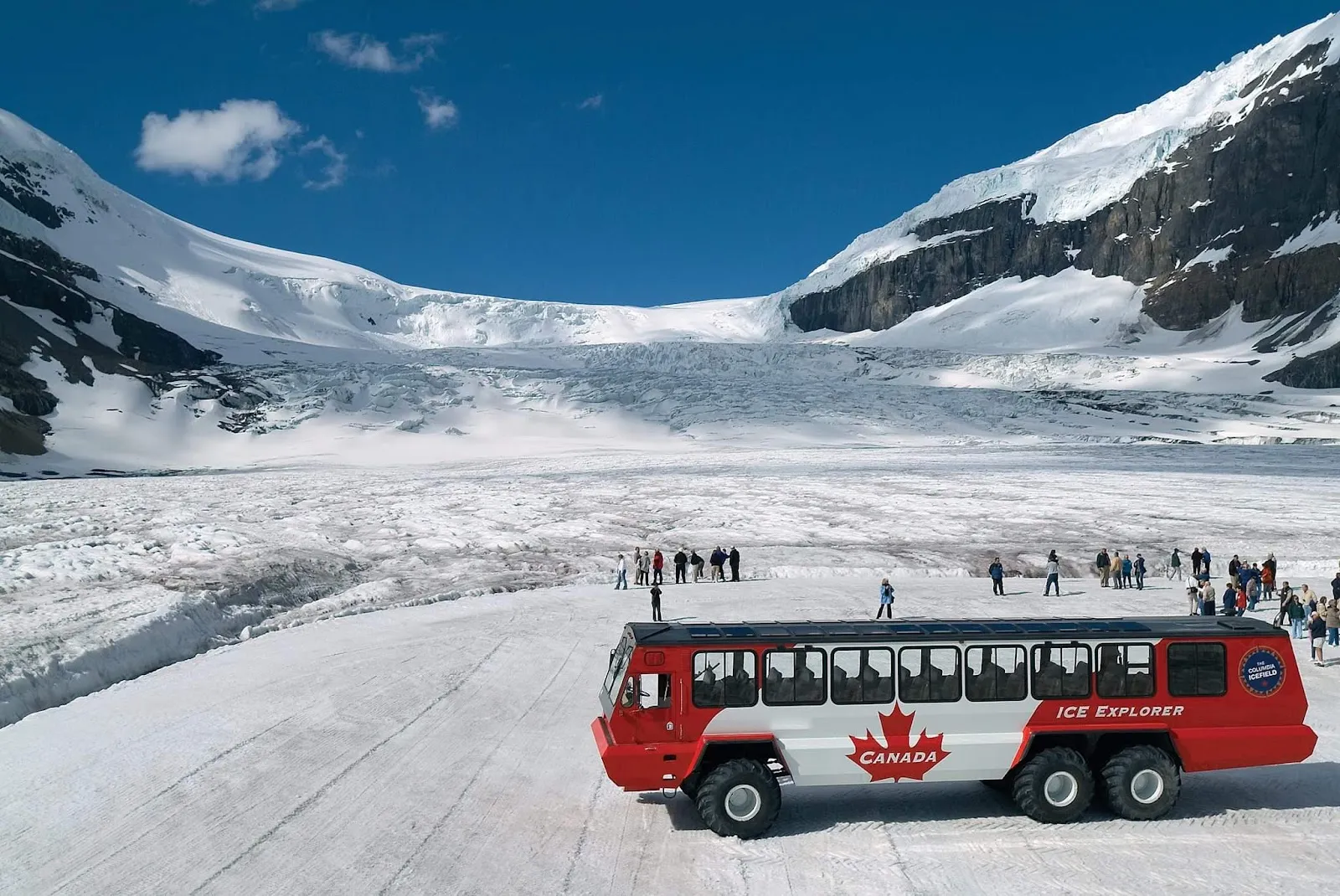
Athabasca Glacier is one of six glaciers fed by the Columbia Icefield, a large field of connected ice along the Continental Divide. The glacier flows towards the Athabasca Valley and comes close to the Icefields Parkway, making it one of the more accessible glaciers in the Canadian Rockies. Its ice tongue is about six kilometres long.
The glacier has moved back from the road over time. Signs near the route show where its edge once lay, giving you a way to read the changing landscape as you walk. Exposed rock, meltwater and the present-day ice edge make the retreat visible on the ground. The glacier has receded substantially since the 19th century and continues to lose ground.
Walking towards the glacier’s toe
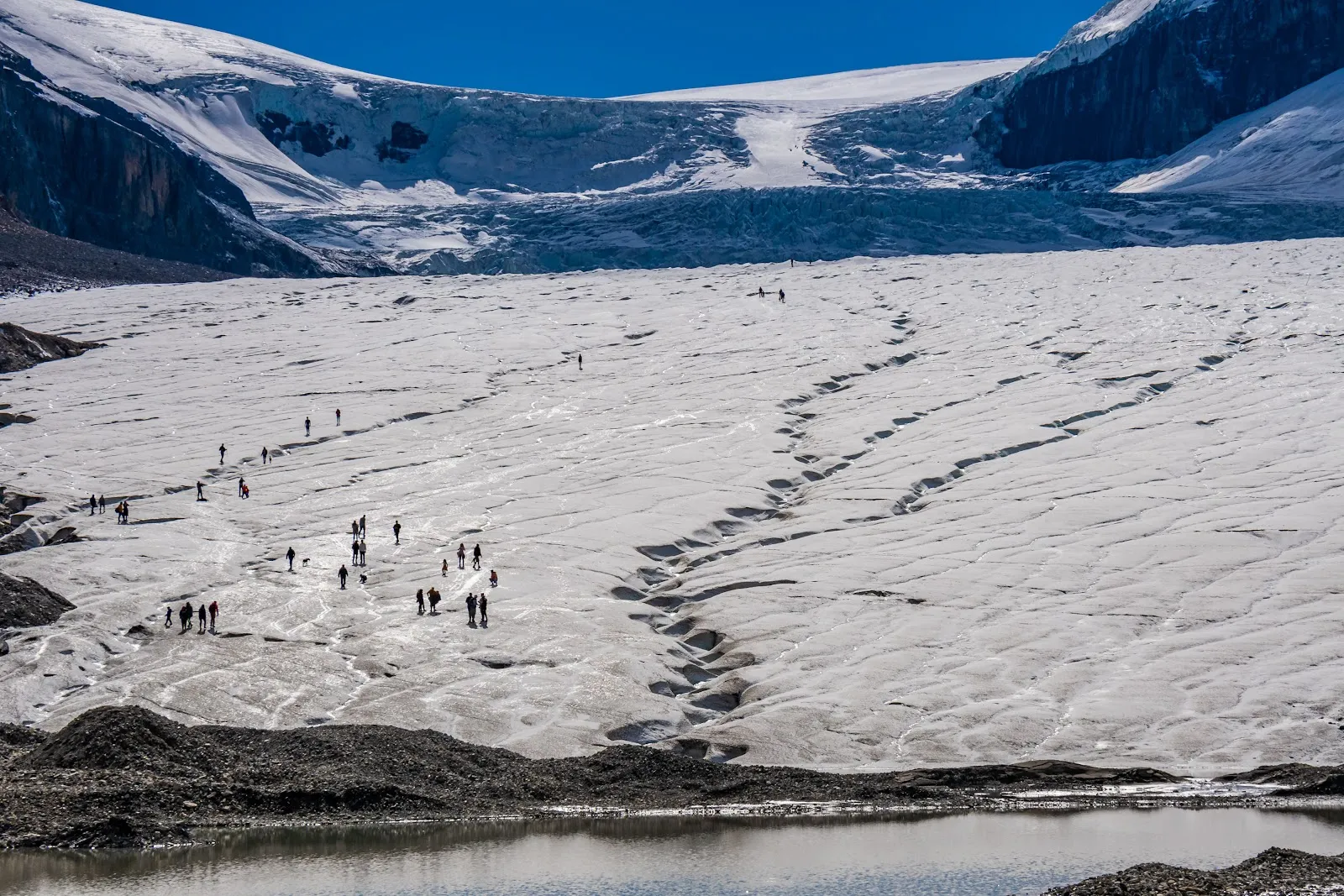
You can view the glacier from the Icefield Centre area or follow marked trails towards its toe, the lower end of the ice. The route brings you closer to the glacier without stepping onto it. Conditions underfoot can be steep or gravelly, so sturdy footwear and trekking poles can help on the approach. Carry water and dress for colder air near the ice.
The glacier’s surface is not safe to explore independently. Deep, sometimes hidden crevasses pose a serious risk, even when parts of the ice look accessible. Keep to the marked route and obey the safety signs. If you want to walk on the glacier, choose a guided trip with the appropriate equipment and supervision.
Guided trips and the Discovery Centre
Guided options include travel onto the glacier in an Ice Explorer, a large vehicle built for icy terrain, and guided walks on the ice. Some operators offer half-day or full-day glacier walks. Tours provide a closer look at the ice and explain how glaciers form and how the landscape is changing. Check tour details and arrange a place in advance if you plan to join one.
The Columbia Icefield Discovery Centre is across the road from the glacier. Its exhibits cover the icefield and glaciers, and the centre is a starting point for tours. The Columbia Icefield Skywalk is another nearby paid attraction, with a glass-floored walkway above the valley. These activities are separate ways to experience the area, so allow time for the option that suits your plans.
Perguntas frequentes
Can you walk on Athabasca Glacier?
Yes, but go with a guided tour and proper equipment. Walking onto the glacier independently is dangerous because hidden crevasses can be difficult to see.
Can you see Athabasca Glacier without taking a tour?
Yes. You can view it from the Icefield Centre area and walk along marked trails towards its toe. The trails do not make it safe to step onto the glacier.
How do you get close to the glacier?
Follow the marked trail towards the toe, or book a guided trip onto the ice by Ice Explorer or on foot.
What can you learn at the Columbia Icefield Discovery Centre?
The centre has exhibits about the Columbia Icefield and its glaciers. It is also a starting point for glacier tours.


