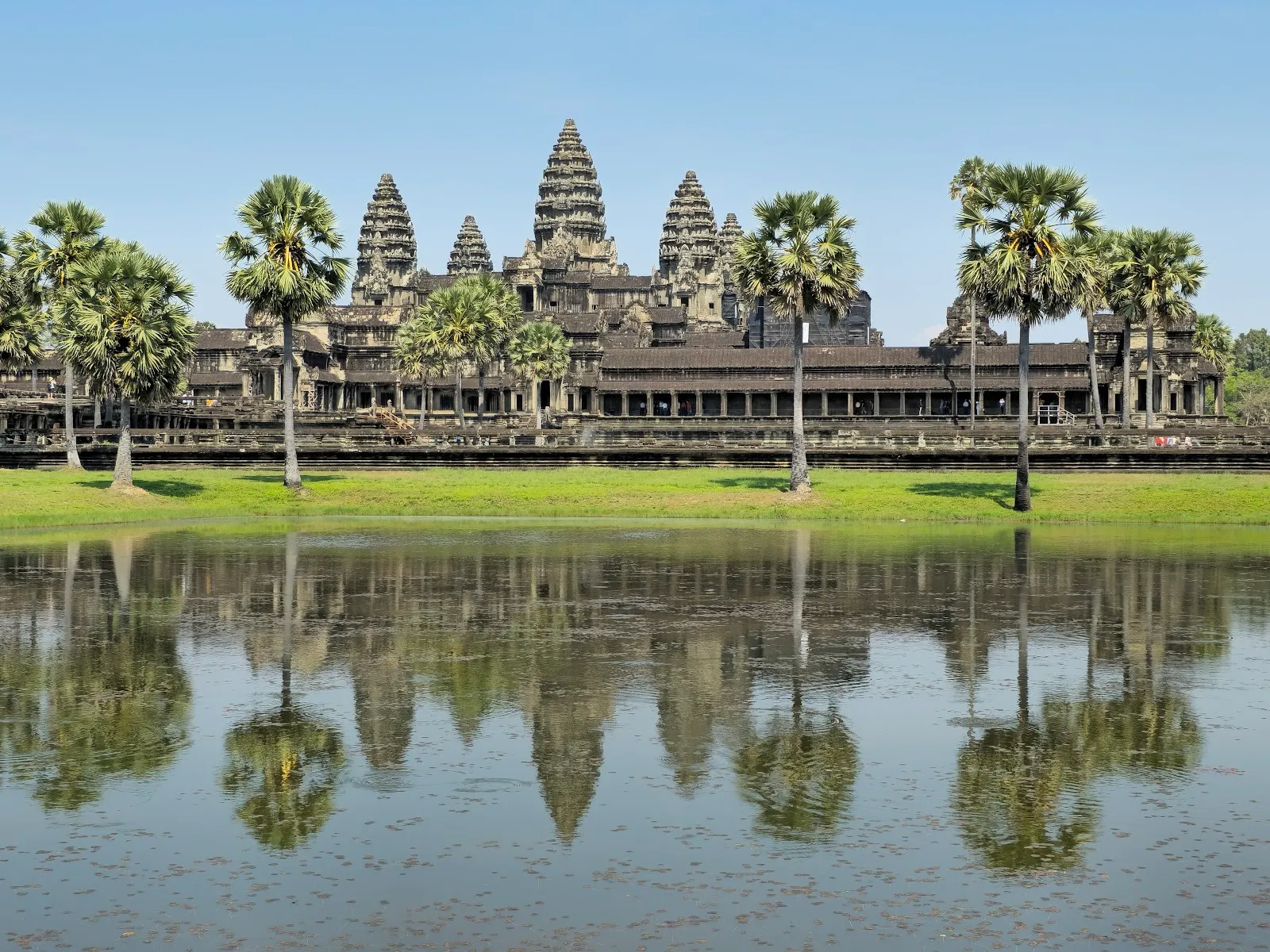
Angkor Wat is a vast temple complex in Angkor Archaeological Park, just north of Siem Reap. Built in the 12th century for the Hindu god Vishnu, it later became a Buddhist place of worship and remains an active religious site. Its towers, long galleries and carved stonework reward a slow walk through the grounds. At dawn, the temple’s silhouette appears above the reflection pool, a popular view that draws early arrivals. Angkor Wat is also a starting point for exploring the many other temples across the park.
A temple built for Vishnu
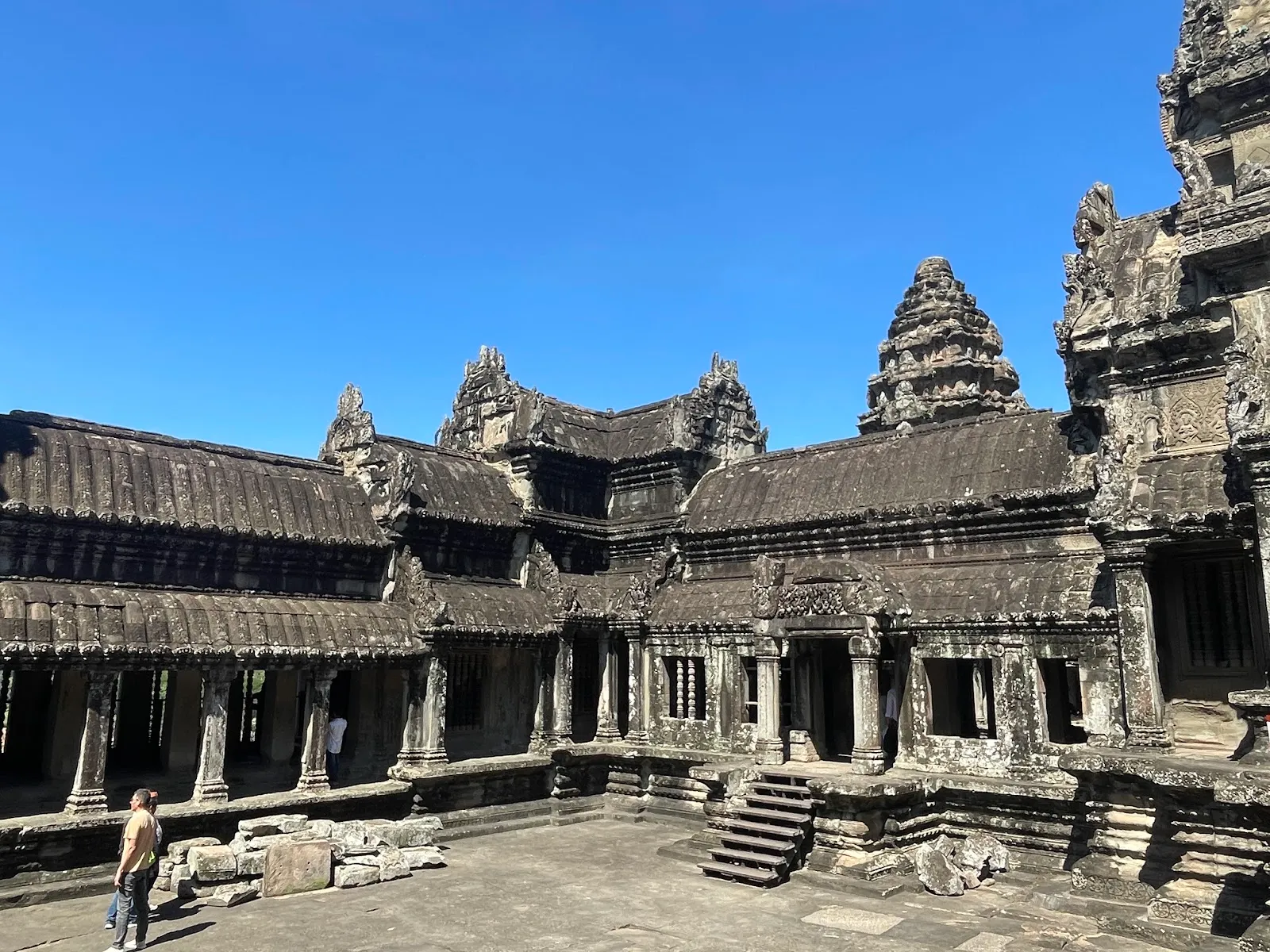
Angkor Wat was built in the 12th century under King Suryavarman II as a Hindu temple dedicated to Vishnu. It later became a Buddhist place of worship. Both traditions remain part of the temple’s religious history, and the site continues to be sacred.
The temple is in Angkor Archaeological Park, north of Siem Reap. The wider park contains temples and other remains from former Khmer capitals, so a visit to Angkor Wat can be part of a longer route through the area.
The galleries and central tower
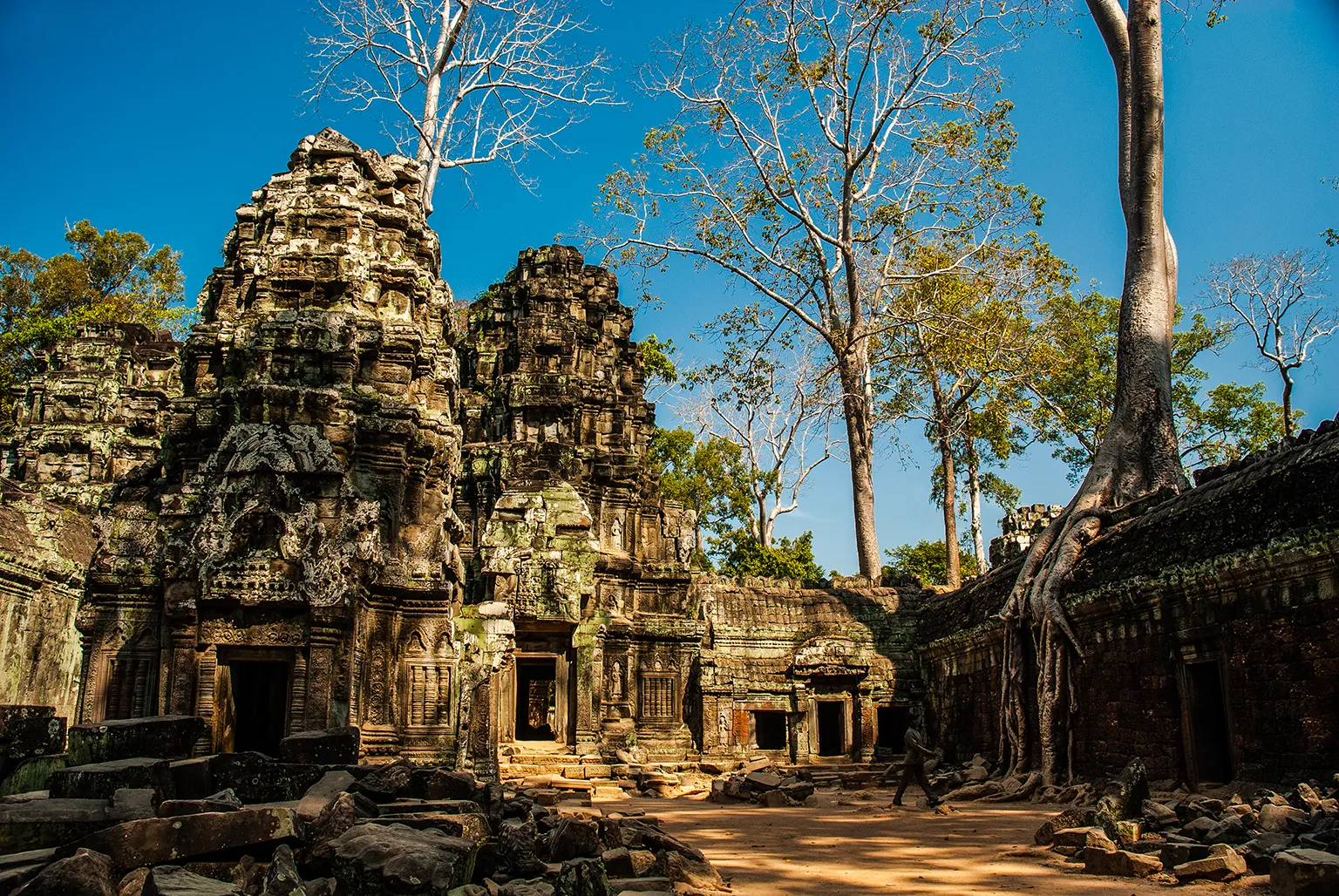
The complex is arranged around a central sanctuary and rises through tiers of galleries to a tower about 55 metres above the ground. The layout combines altars and corridors in a carefully ordered plan. From outside, the towers give the temple its distinctive profile; inside, galleries lead past carved stone surfaces and through successive levels.
A long series of bas-reliefs runs around the central complex. These carved scenes, along with figures of apsaras, are among the details to look for as you move through the galleries. Take time to examine the walls rather than treating the temple only as a viewpoint. The scale of the grounds and the amount of stonework make a quick circuit difficult.
Planning time across the park
Angkor Wat is one site within a much larger archaeological park, which also includes Angkor Thom, Bayon and Ta Prohm. A one-day pass can suit a shorter visit, while three- and seven-day options give you more time to divide the temples across separate outings. The park is extensive, and reaching several sites in one day takes planning. Bicycles and tuk-tuks are among the ways to get between temples; a guide can also help organize a route.
If you want to see the sunrise, set out before dawn. The reflection pool is a well-known place to watch the sky brighten behind the temple, so arriving early gives you time to reach the water’s edge. During the day, expect plenty of walking and bring water and sun protection. Keep your pass accessible for checks at park entry points.
Perguntas frequentes
How many days should I spend at Angkor Wat?
Angkor Wat itself can take several hours to explore. The wider park has many temples, and passes are available for one, three or seven days.
Can you see sunrise at Angkor Wat?
Yes. Arrive before dawn to reach the reflection pool and watch the sky brighten behind the temple.
What should I bring to Angkor Wat?
Bring water, a hat, sunscreen and comfortable shoes. Expect to walk in hot, humid conditions.
Is Angkor Wat the only temple in the park?
No. Angkor Wat is part of Angkor Archaeological Park, which includes sites such as Angkor Thom, Bayon and Ta Prohm.