
The Castle of the Counts, known in Dutch as Gravensteen, is a 12th-century stone fortress on the Leie canal in the old centre of Ghent. Count Philip of Alsace built it around 1180, and it still has its moat, thick walls, turrets and battlements. You walk through it with an audio guide, past armour, weapons and a guillotine, and down to the torture chambers in the cellars. Climb to the ramparts for a view over the city's towers. Expect a lot of stairs, and book a timed ticket ahead.
Why Philip of Alsace built it
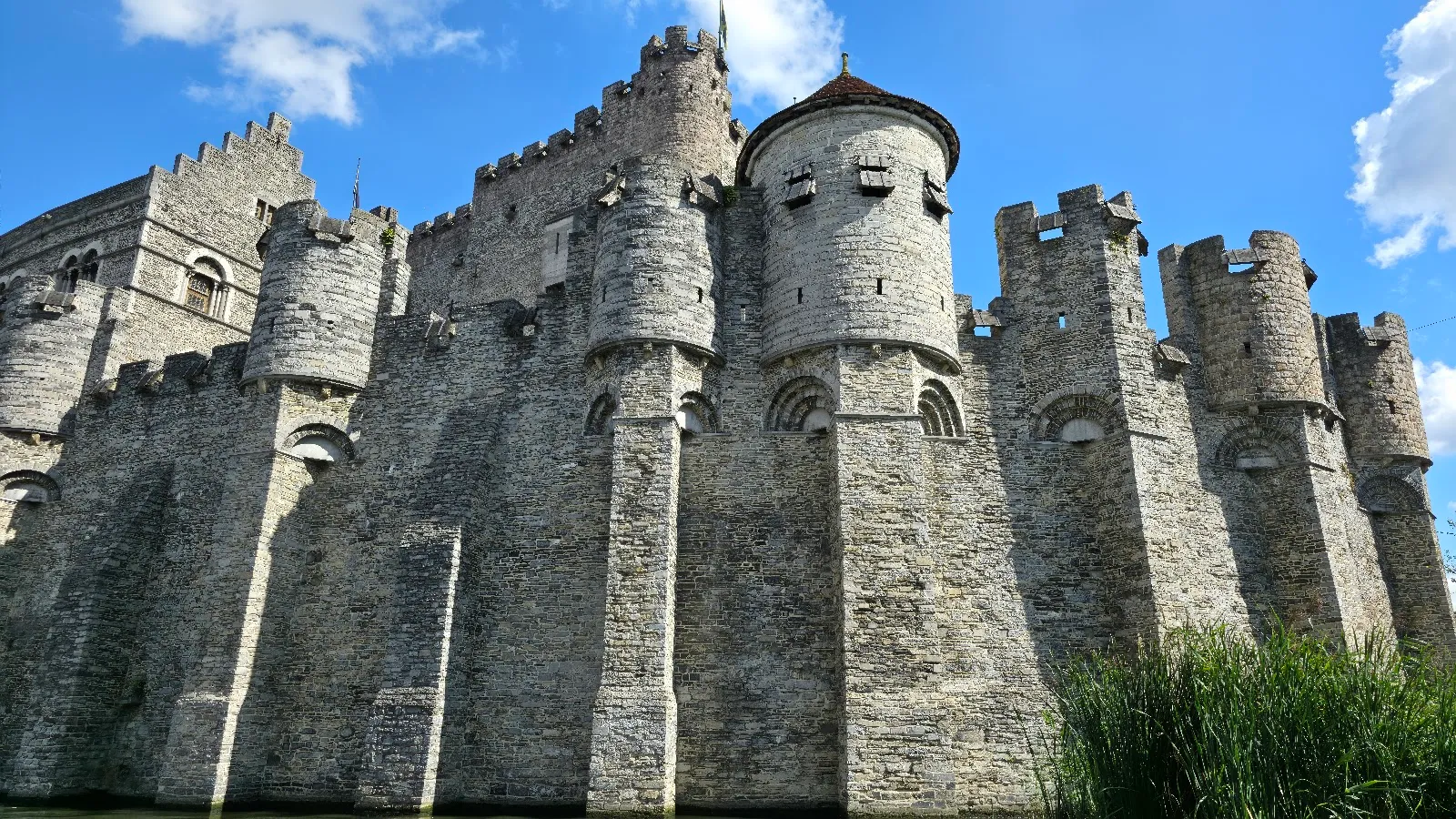
The stone castle dates from around 1180, when Count Philip of Alsace had it built beside the Leie. He is said to have modelled it on fortresses he saw while on crusade. Wooden fortifications stood on the same spot before it.
The castle was also a political statement. It went up as a show of strength against the grand houses that Ghent's wealthy patricians were building, and its walls, about two metres thick, and its moat were meant to be seen. The Counts of Flanders lived here until 1353. Today it is the only medieval moated castle in Flanders with a largely intact defence system.
Court, prison, mint and cotton mill
After the counts left, the building was put to other uses. It served as a courthouse and a prison, and it was also a mint. In the 19th century the site became a cotton mill.
At the end of that century the castle was due to be demolished and the land sold. It was saved, restored at length and opened to the public. The restorers read the historical records in a very romantic way, which is why the castle has so many turrets and why it does not look exactly as it did in the Middle Ages.
The castle has one more story from modern times. On 16 November 1949 a group of students occupied it to protest a rise in the price of a glass of beer.
What you see inside
The rooms hold armour, swords and other weapons, and a guillotine and instruments of torture. The torture chambers are in the cellars, where the atmosphere is gloomy and sober. The rooms are sparsely furnished, because the original furnishings have not survived, so the castle itself is the main exhibit.
A visit covers the gatehouse, the count's residential rooms, the prison pit and the ramparts. In the Christmas season a winter bar opens in the medieval stable, serving hot and cold drinks and snacks.
The audio guide and the view from the top
The tour is self-guided with an audio guide, available in nine languages. You can choose a shorter version or a longer one narrated with humour, which mixes jokes with the castle's history. Families with children often pick the comic version. The narration helps explain how the castle was laid out and used.
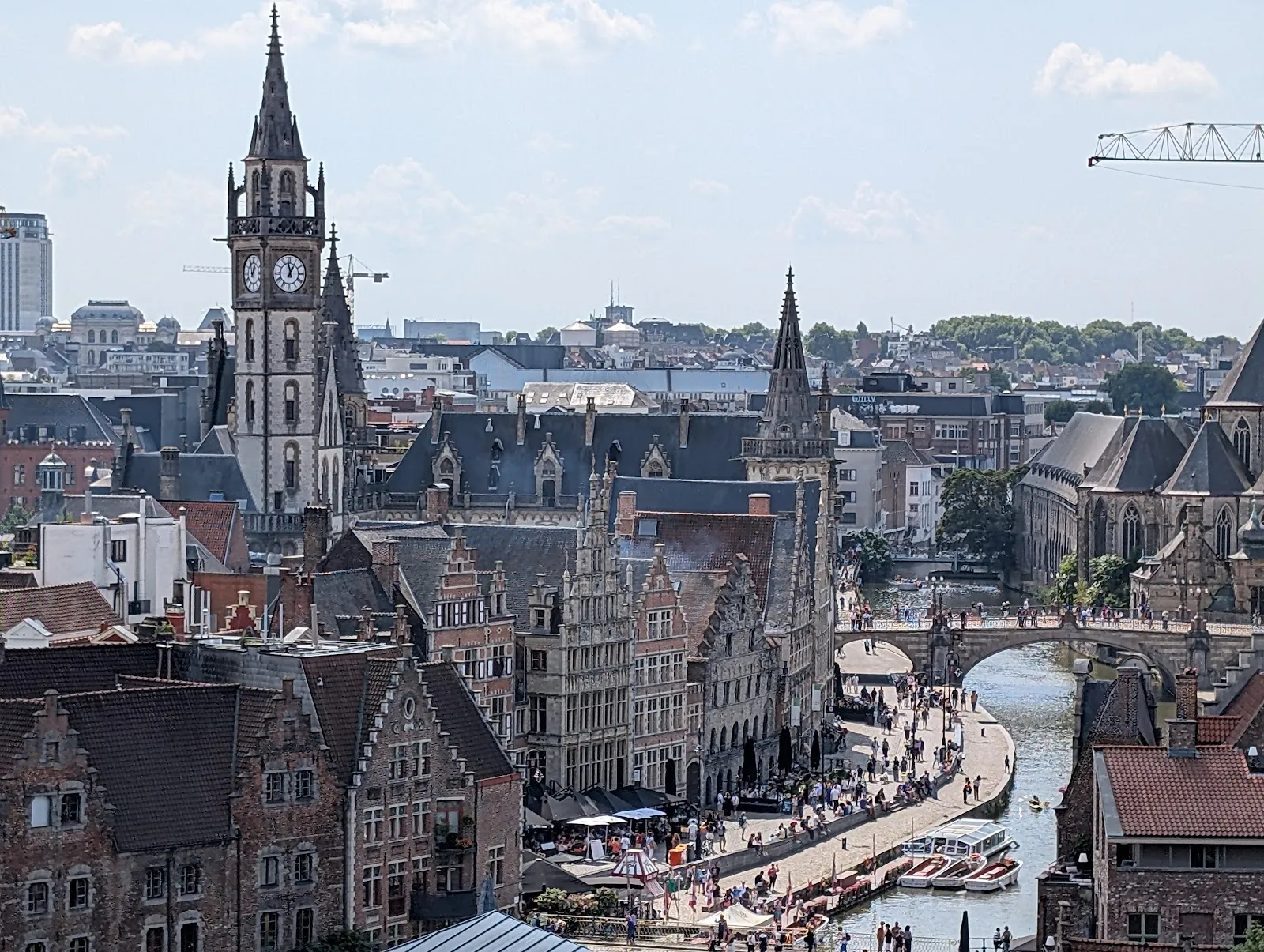
Keep time for the top. Walk along the ramparts and climb the spiral staircase to the tower. From up there you can see across the old town and pick out three towers: St Nicholas' Church, the Belfry and St Bavo's Cathedral.
Perguntas frequentes
Do I need to book tickets for the Castle of the Counts in advance?
Yes, it is best to. Tickets are timed and each entrance slot has a limited number, so booking online avoids a queue and the risk of a sold-out slot.
How long does a visit take?
Plan on about 1.5 to 2 hours, including the audio guide and a walk along the ramparts.
Is the Castle of the Counts good for children?
Yes. The comic audio guide keeps children engaged, and there are towers, a moat and old weapons to see. The many steep stairs need some care with small children.
Is there an audio guide, and in which languages?
Yes, the tour is a self-guided audio tour in nine languages. There is a shorter version and a longer, comic one.
Who built the Castle of the Counts?
Count Philip of Alsace built the stone castle around 1180. The Counts of Flanders lived there until 1353.
Where is the Castle of the Counts?
It stands at Sint-Veerleplein 11 in the old centre of Ghent, on the bank of the Leie canal. The city's tourist office is directly opposite.


