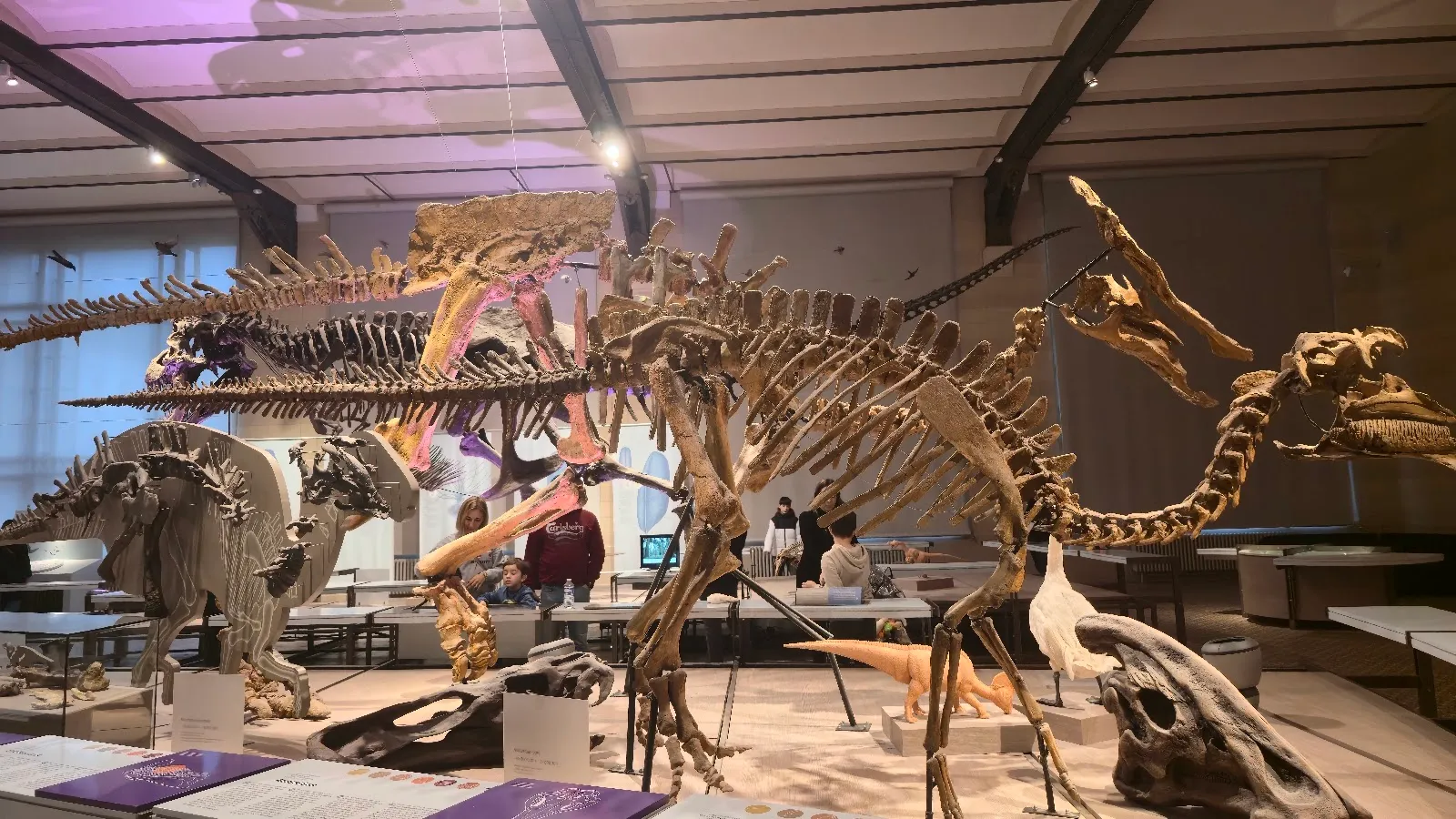
The Royal Belgian Institute of Natural Sciences is a natural history museum on Rue Vautier in Brussels, near the European Parliament. Its centrepiece is the Dinosaur Hall, devoted to dinosaurs and known for its fossil Iguanodons discovered at Bernissart in 1878. Elsewhere, galleries explore evolution, human biology, animals, minerals and biodiversity, with interactive activities for children and adults. Set aside two to three hours to see the main displays, and pick up a map at the entrance to help you navigate the galleries.
The Bernissart Iguanodons
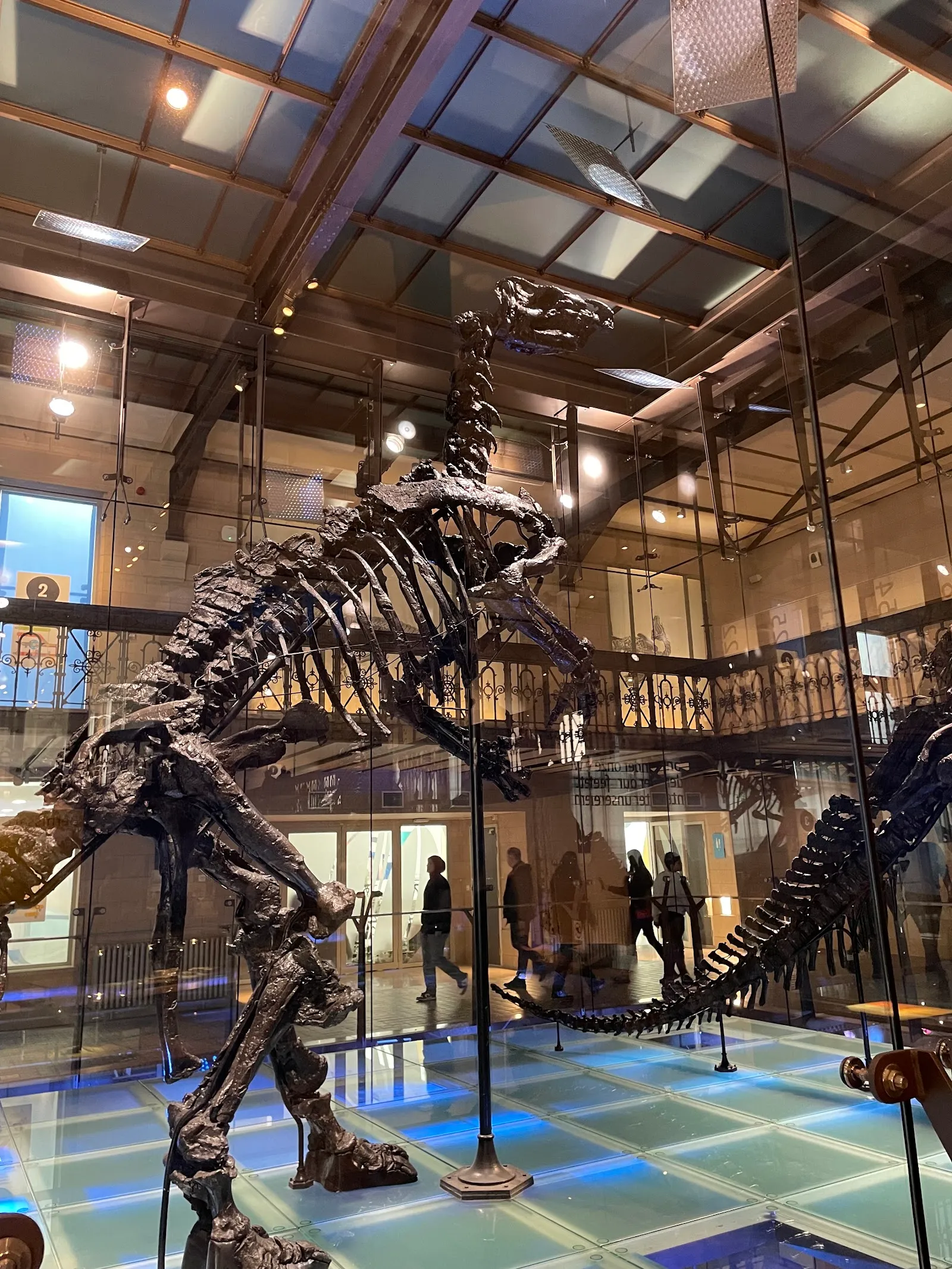
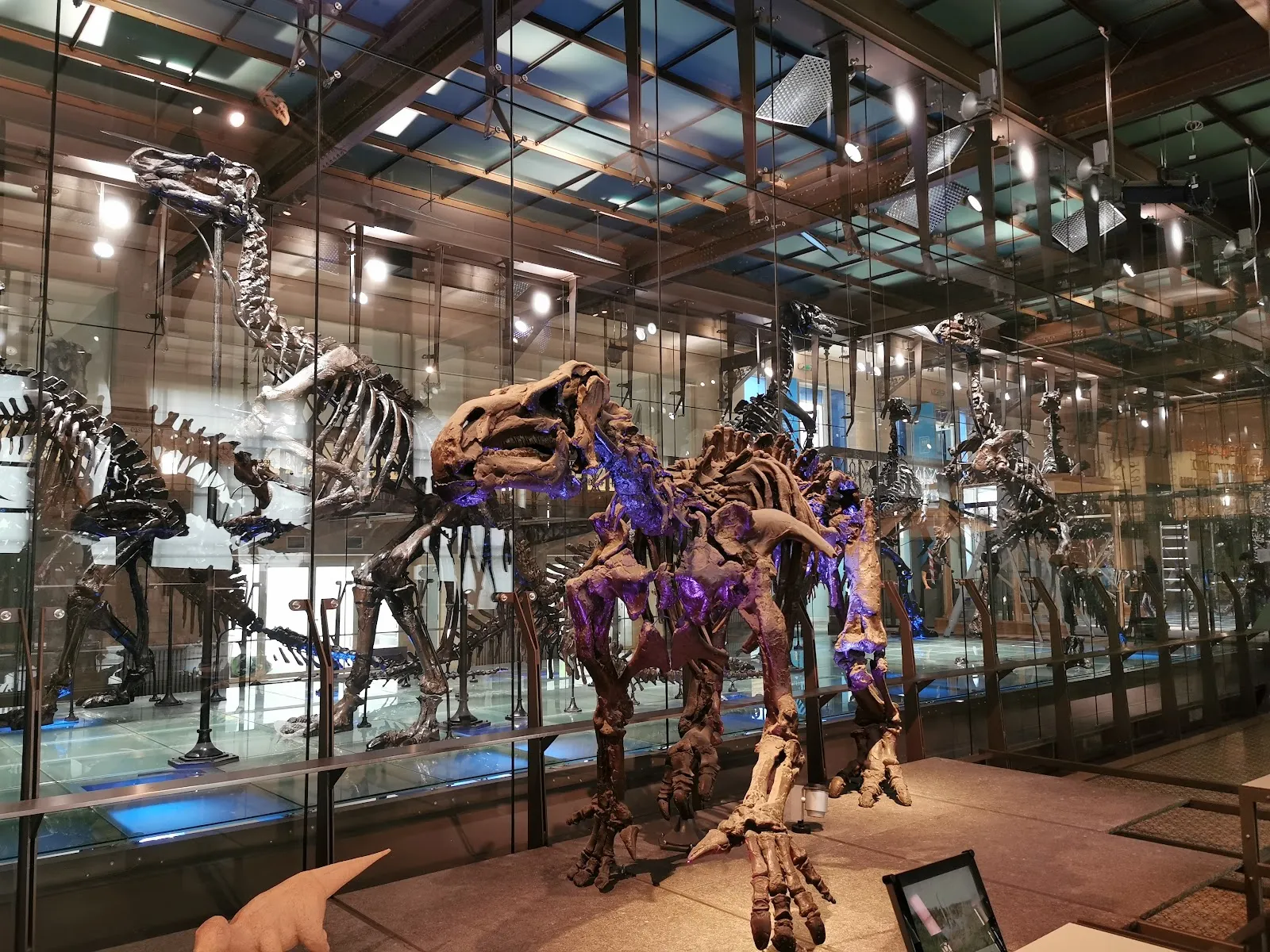
The Dinosaur Hall is the museum’s defining gallery. It centres on fossil Iguanodons discovered in 1878 in a coal mine at Bernissart, Belgium. The find included 30 relatively complete skeletons, and the museum displays fossil Iguanodons among its dinosaur collection.
The fossils connect the galleries to a specific discovery in Belgium. Displays and interactive elements help explain the fossils and the process of fossilisation. Children can try activities such as a sand-box dinosaur dig, while adults can explore the palaeontology displays and videos.
More than dinosaurs
The museum’s other galleries cover natural history from several angles, including evolution, human biology, animals, geology and biodiversity. The Gallery of Evolution and the human-focused displays trace changes in life, while BiodiverCITY turns attention to species in urban environments.
Collections include minerals, rocks, fossils and animal specimens. Displays also cover mammals, whales and marine life. The range gives visitors interested in natural sciences plenty to explore beyond the dinosaur exhibits, though not every object in the museum’s collection is on display.
Planning your visit
The museum is at Rue Vautier 29, near the European Parliament and Leopold Park. Its many galleries make it worth allowing two to three hours for a substantial visit. Getting a map at the entrance can help you decide which sections to see and find your way between them.
The museum has interactive activities for children as well as material for adult visitors. It is a family-friendly choice if you want a museum visit that combines hands-on tasks with displays about Earth’s natural history.
Wheelchair-accessible facilities are listed, but narrow ramps and doorways can make some parts of the visit difficult. If you use a wheelchair, take those obstacles into account when planning. The museum has a restaurant, though the canteen may not suit visitors looking for a low-cost meal.
Perguntas frequentes
How long should you spend at the Royal Belgian Institute of Natural Sciences?
Allow two to three hours to explore the museum’s main galleries.
What is the museum best known for?
Its Dinosaur Hall, which displays fossil Iguanodons discovered at Bernissart in 1878.
Is entry free on any day?
Entry is free on the first Wednesday of the month.
Is the museum wheelchair accessible?
The museum lists wheelchair-accessible facilities, but narrow ramps and doorways can pose difficulties in some areas.