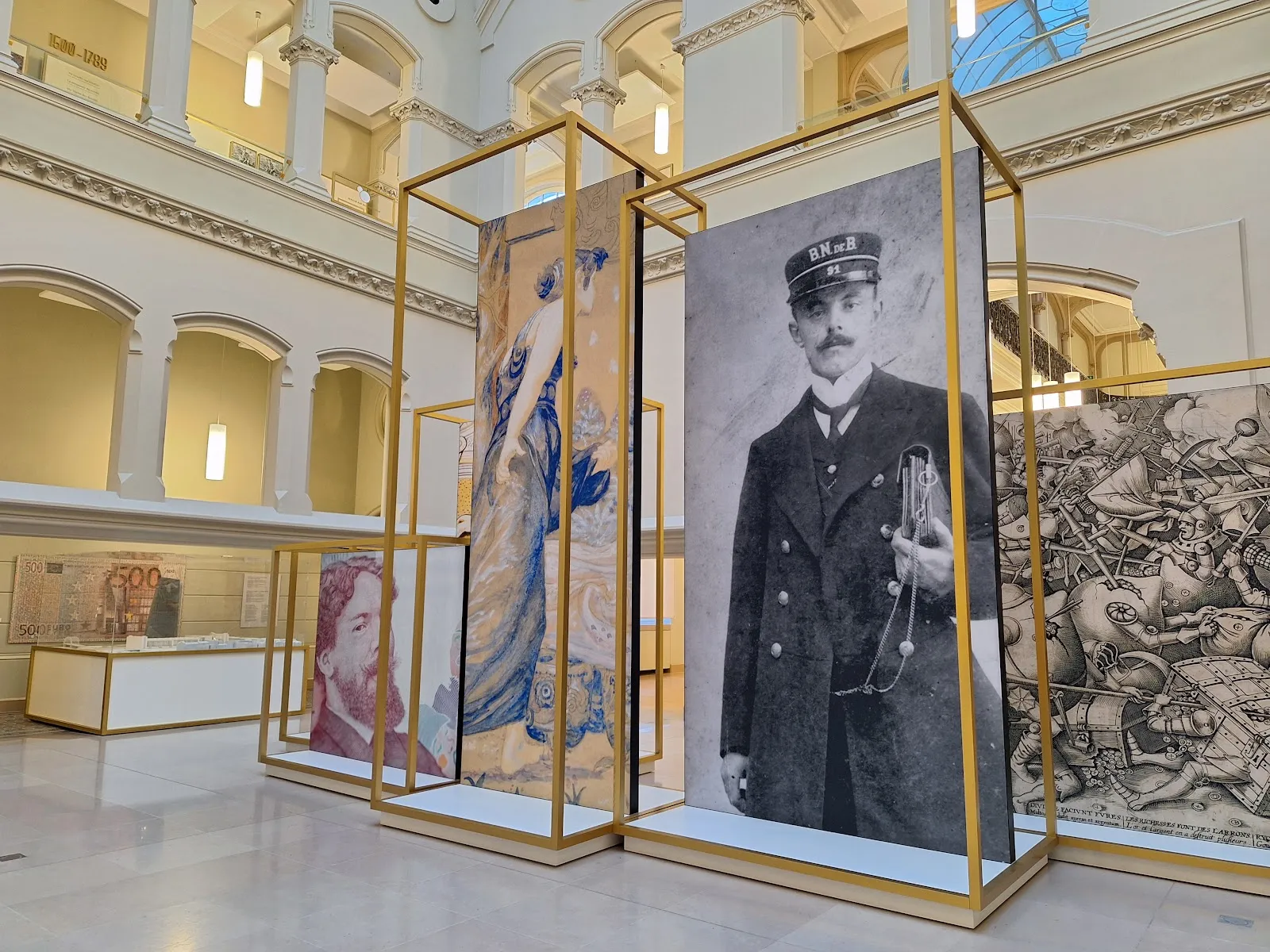
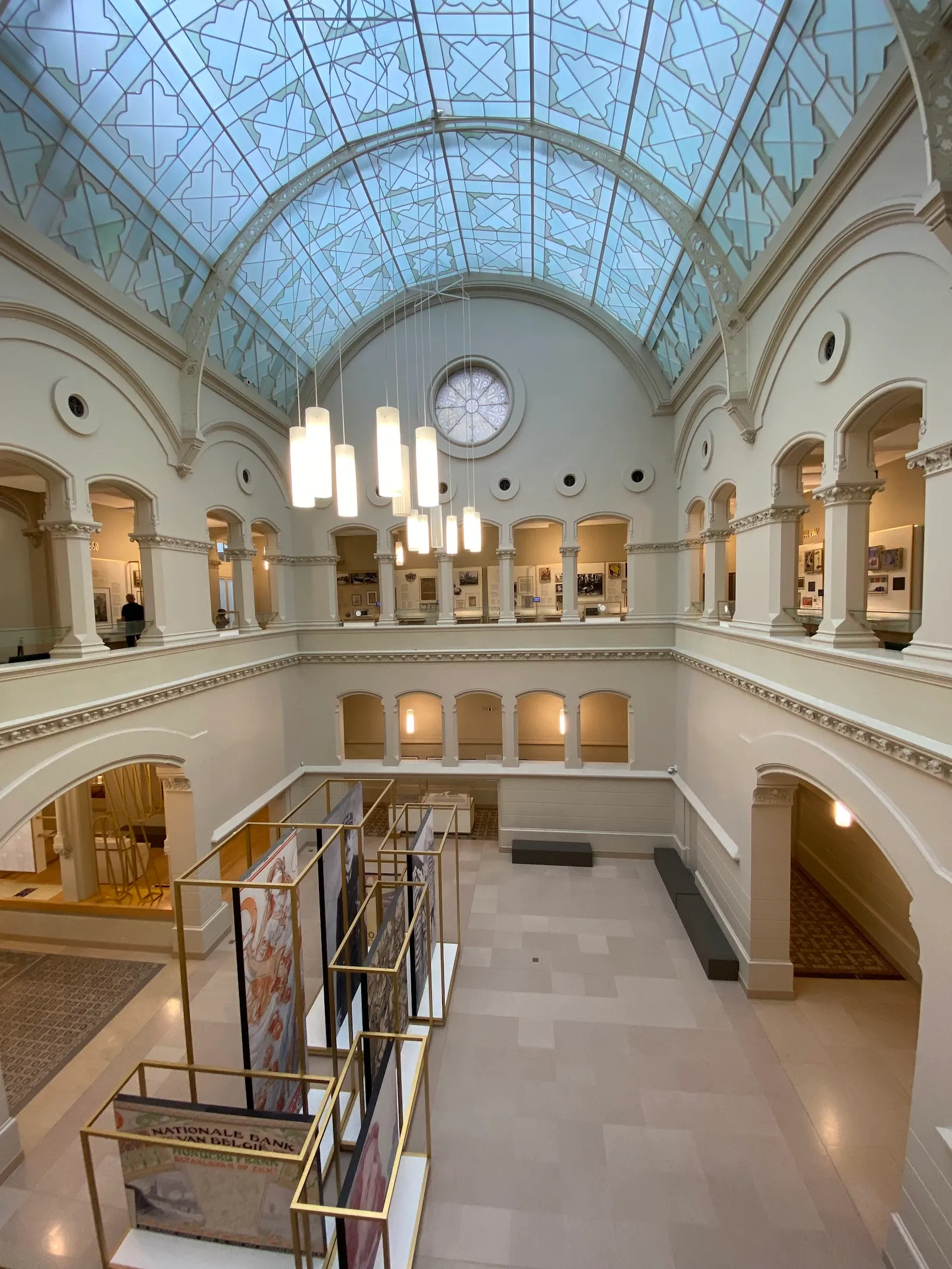
The Museum of the National Bank of Belgium is a free museum in a 19th-century bank building on Rue Montagne aux Herbes Potagères in Brussels. Its exhibitions trace the history of money, from ancient forms of exchange and coins to the euro, and explain the National Bank’s role. Coins, banknotes, objects and interactive displays bring the subject to life, with audio guides adding context. Allow time for both exhibitions, including the displays on the euro and the bank’s work.
Money from early exchange to the euro
The exhibition begins with the history of money and trade, including the development from barter to recognised currencies. It spans a long timeline, from early money in Mesopotamia to the euro, and places the Belgian National Bank’s role in that story.
Coins made from gold, silver and bronze, along with banknotes and other objects, show how money has changed across periods and regions. Displays also cover means of payment and security features on euro banknotes. Audio guides and interactive screens provide further explanation, and activities let visitors test their knowledge of the euro and try a simulation involving inflation.
The bank building and its vault
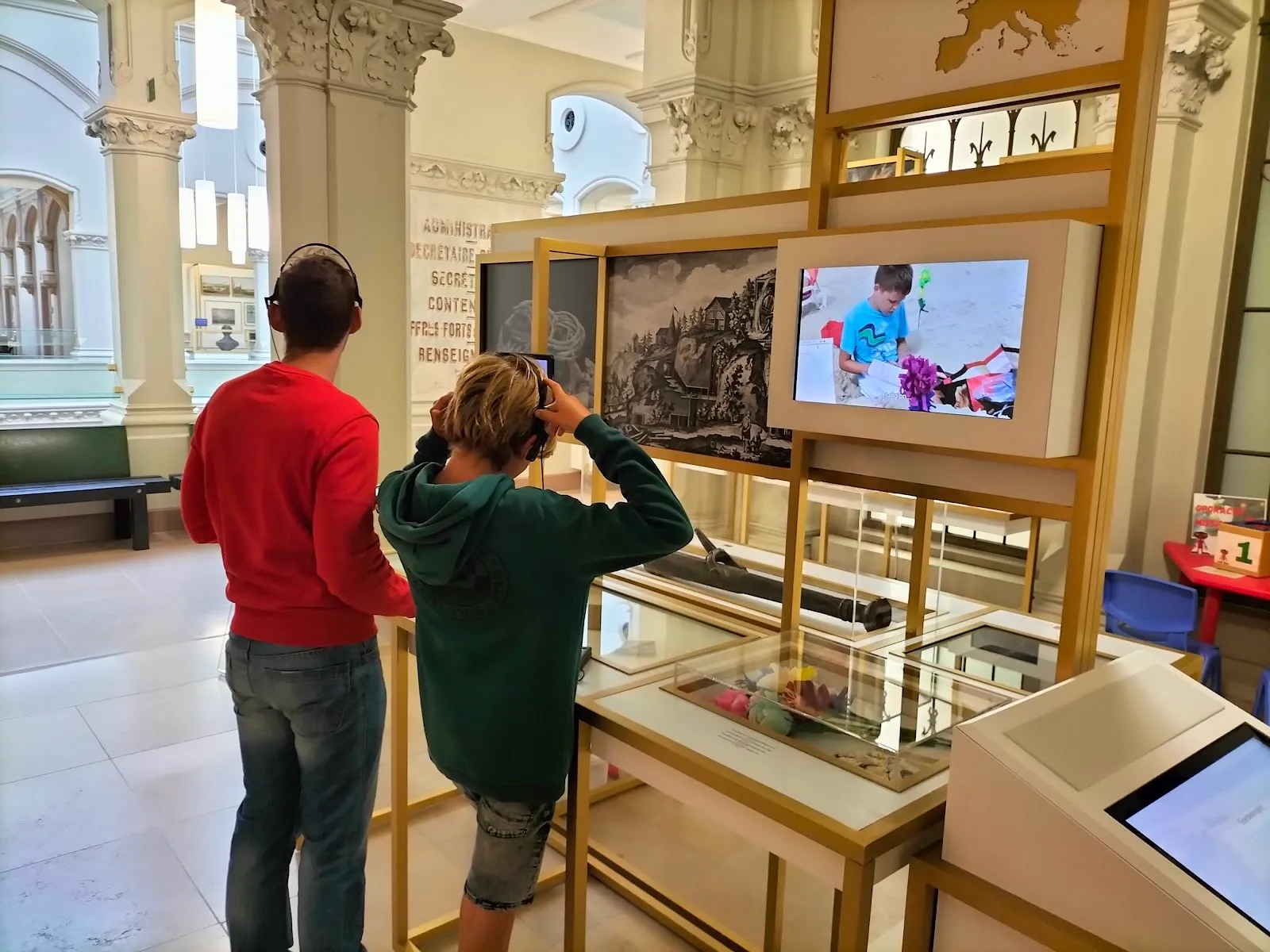
The museum occupies a 19th-century bank building. The historic setting gives context to exhibitions about central banking and the handling of money.
A former basement vault contains secure boxes once used to store valuables and important documents. Access to the vault may depend on the type of visit, so check with the museum if seeing it is important to your plans. Exhibits are labelled in English, French, Dutch and German.
Perguntas frequentes
Is the Museum of the National Bank of Belgium free?
Yes. Entry is free.
How long do you need at the museum?
Plan for about one to two hours. Allow around two hours if you want to explore both exhibitions in detail.
What can you see at the museum?
The exhibitions cover the history of money and the euro, with coins, banknotes, interactive displays and information about the National Bank of Belgium.
Can you visit the old vault?
The former basement vault is part of the museum, but access during an independent visit is unclear. Ask the museum about access before you go.