The Secession is an art exhibition hall at Friedrichstraße 12 in Vienna, close to the Naschmarkt and a short walk from the MuseumsQuartier. Joseph Maria Olbrich designed the white building for the Vienna Secession, a group of artists who broke with traditional institutions in 1897. Its gilded laurel-leaf dome is a landmark in its own right. Inside, Gustav Klimt’s Beethoven Frieze is the main draw, shown in a basement room with Beethoven’s music. Contemporary exhibitions bring changing perspectives on modern art.
A hall built for a break with tradition
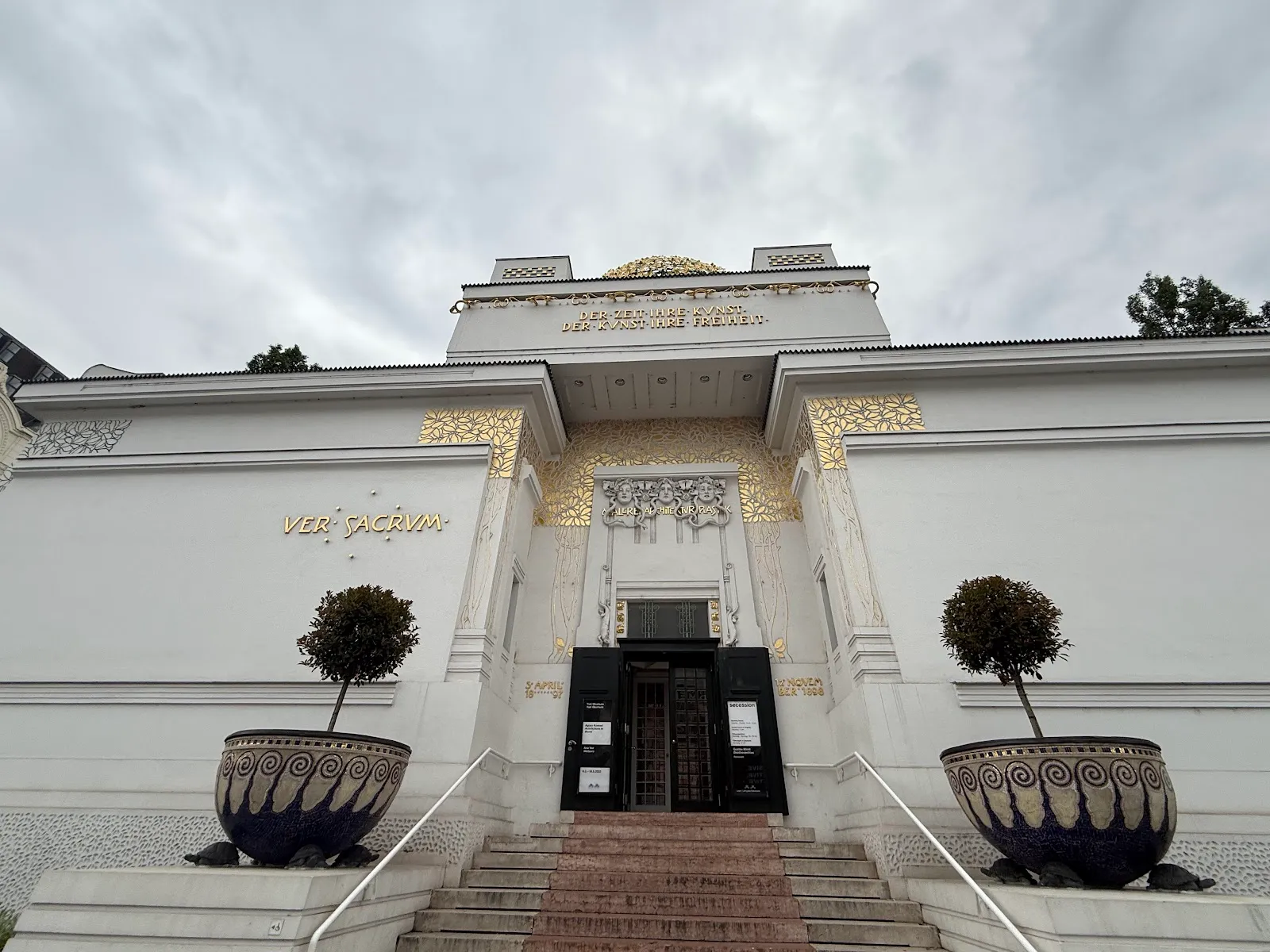
The Secession building was designed by Joseph Maria Olbrich as an exhibition hall for the Vienna Secession. The group formed in 1897 after artists including Gustav Klimt left the Association of Austrian Artists, whose support for traditional styles they opposed. Painters, sculptors and architects were among its members.
The building was completed in 1898. Its purpose was practical as well as symbolic: it gave the Secessionists a place to exhibit work outside the established institutions. The group’s ideas shaped the building’s design, which paired a restrained white facade with a striking gilded dome.
The dome and the facade
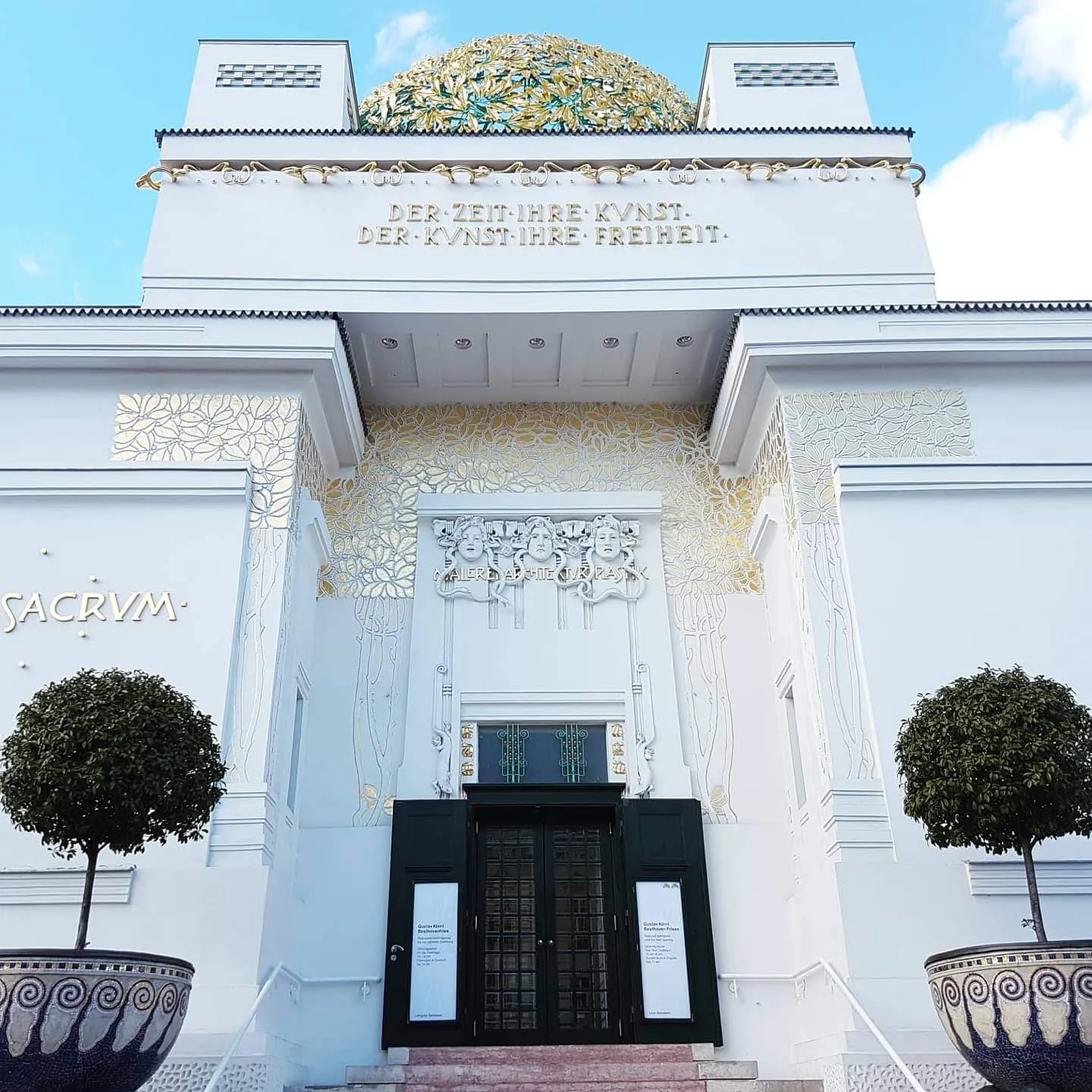
Olbrich’s design is an example of Viennese Art Nouveau, also known as Jugendstil. The dome is formed from gilded laurel leaves and is often nicknamed the Golden Cabbage. Its rounded shape stands out against the building’s pared-back exterior.
The contrast between the openwork dome and the plain facade makes the building legible from outside, even if you do not go in. The Secession remains an exhibition space, so a visit combines the historic structure with art shown there today.
Klimt’s Beethoven Frieze
The basement is home to Gustav Klimt’s Beethoven Frieze, a monumental work made for the 1902 Beethoven exhibition. The mural is 34 metres long and takes its inspiration from Beethoven’s Ninth Symphony. It is shown with Beethoven’s music, linking the images on the walls to the symphony that informed the work.
The frieze is the building’s principal permanent artwork. The room gives it space to be viewed as a continuous composition rather than as a series of separate pictures. If you are especially interested in Klimt, make this part of your visit a priority.
Contemporary exhibitions
The Secession also presents temporary exhibitions of contemporary art. Their subjects and approaches change, and some works connect clearly with the building’s history while others take a different direction. These shows can ask for more time and interpretation than the Beethoven Frieze.
The contrast is part of the visit: a historic exhibition hall continues to show current art. Check the Secession’s website for information about what is on display during your trip.
Perguntas frequentes
Where is the Secession in Vienna?
It is at Friedrichstraße 12, near the Naschmarkt and within walking distance of the MuseumsQuartier.
What is the main artwork inside the Secession?
Gustav Klimt’s 34-metre Beethoven Frieze is displayed in the basement, with Beethoven’s music in the room.
Is the Secession open on Mondays?
No. It is closed on Mondays and open Tuesday to Sunday from 10 am to 6 pm.
Does the Secession have contemporary art exhibitions?
Yes. Alongside the Beethoven Frieze, the building hosts changing exhibitions of contemporary art.