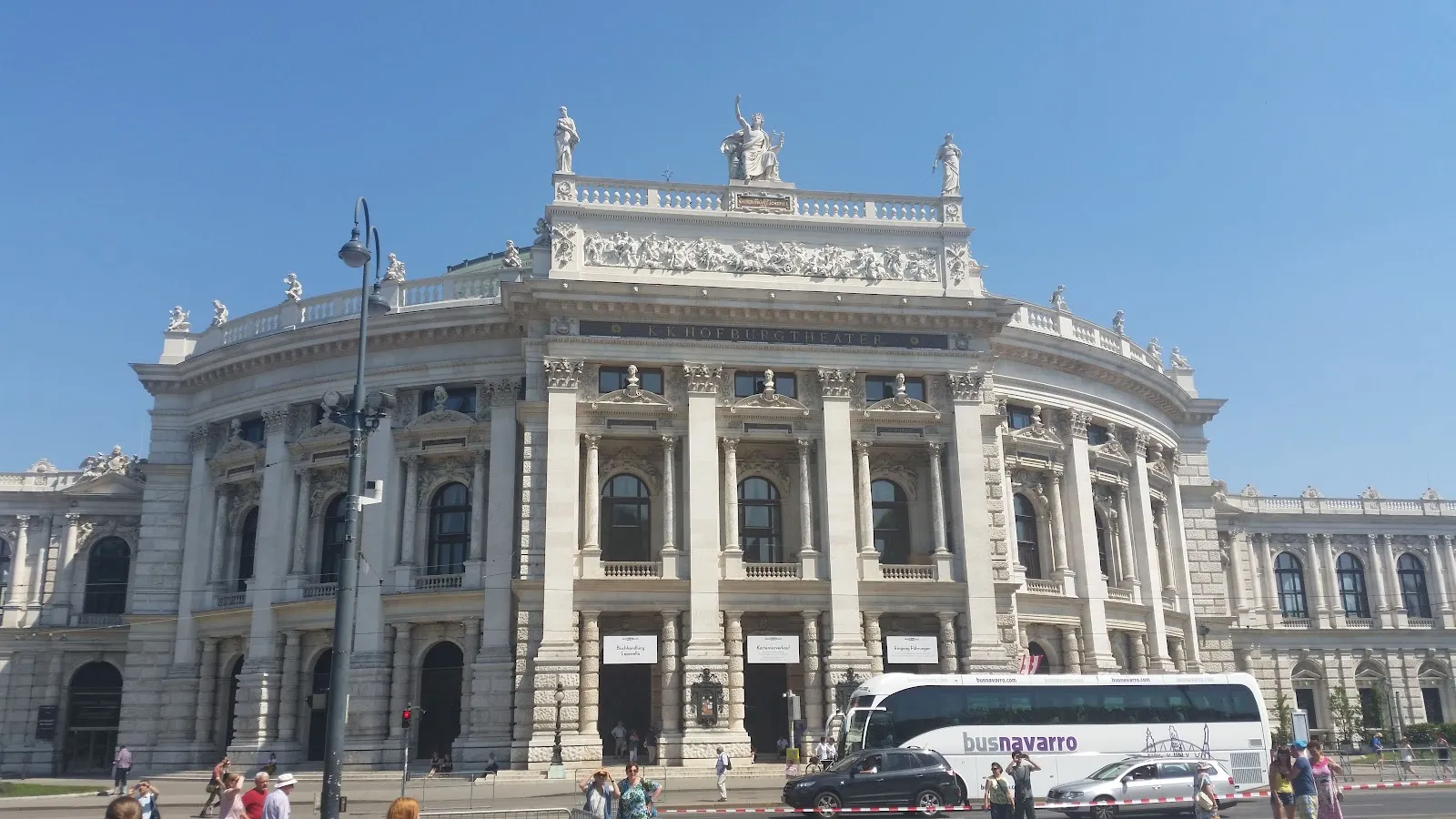
The Burgtheater, Austria’s national theatre, stands on Vienna’s Ringstrasse opposite the Rathaus. Opened in 1741, it is one of Europe’s largest theatres and a leading German-language stage, with classical and contemporary plays. Its late 19th-century building has a grand curved façade and richly decorated interiors. If you can’t attend a performance, look for a guided tour: the staircases and ceiling paintings include early work by Gustav Klimt and Franz Matsch. Tours are not available on every date, so check before planning your visit.
A theatre founded in 1741
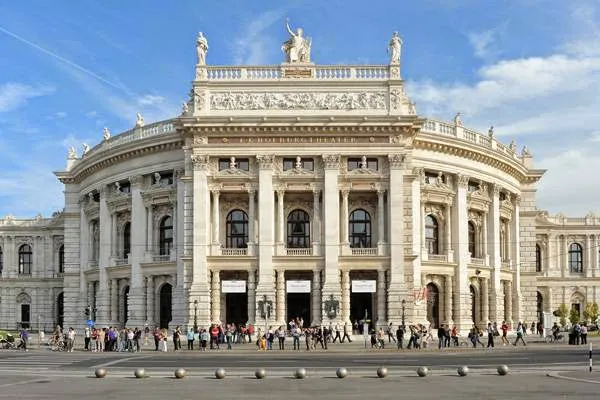
The Burgtheater began in 1741, when Empress Maria Theresa ordered a theatre beside the palace. It was first known as the K. K. Hoftheater nächst der Burg. The institution later moved into a purpose-built building on the Ringstrasse, where it became part of the monumental group of public buildings around Vienna’s historic centre.
The present theatre was designed by Gottfried Semper and Karl von Hasenauer. Work on the building ran from 1874 to 1888. Its place opposite the Rathaus makes it easy to include while walking along the Ringstrasse, alongside other major civic and cultural buildings.
The building and its paintings
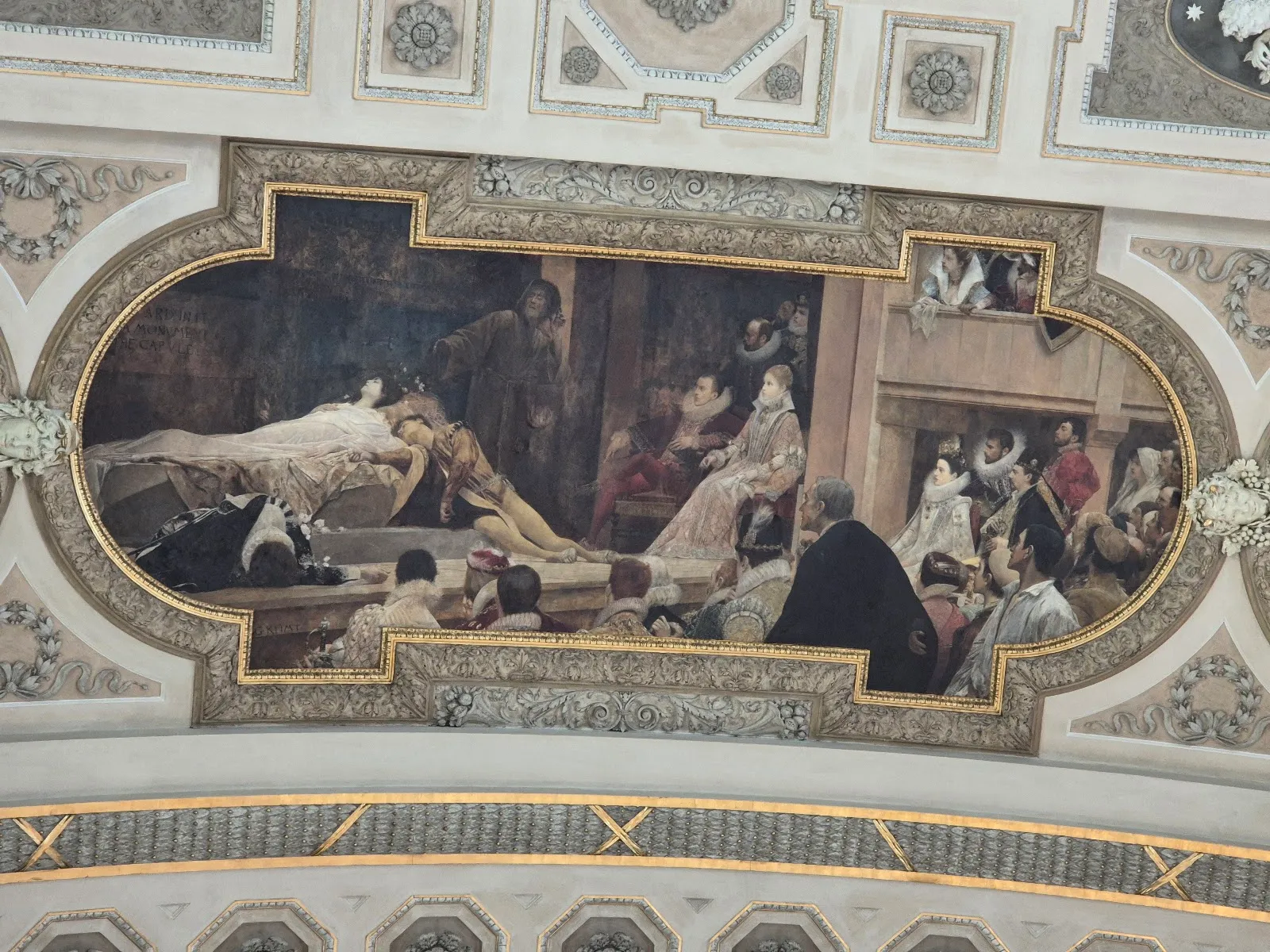
The theatre’s curved façade and classical proportions make a strong impression from the street. Inside, the grand staircases are among the details to look for. Their painted decoration includes early work by Gustav Klimt and paintings by Franz Matsch. Guided tours can help put the artwork and the theatre’s history in context, but access is not available on every date. Check current tour arrangements before setting aside time for one.
The Burgtheater was badly damaged during the Second World War, including by bombing and fire in 1945. It was rebuilt and reopened in 1955. Its reconstruction preserved the theatre’s traditional character while restoring it as a working performance venue.
Plays and visiting
The Burgtheater stages classical and contemporary works, chiefly in German, and is one of the most important theatres in the German-speaking world. A performance is the way to experience the building as a theatre; the programme also includes work by Austrian playwrights. The theatre has a permanent ensemble and affiliated venues, including the Akademietheater, Kasino and Vestibül.
For a visit focused on the architecture and art, look for a guided tour on a day without a performance. Tour schedules can change, and some visitors have found that access to the painted staircases was restricted, even when attending a show. If a tour is unavailable, the exterior remains accessible to view from the Ringstrasse. Advance booking is recommended for performances.
Perguntas frequentes
When was the Burgtheater founded?
The theatre opened in 1741 by order of Empress Maria Theresa.
Can you take a tour of the Burgtheater?
Guided tours are available on some dates, but not consistently. Check the theatre’s current tour schedule before visiting.
What can you see inside the Burgtheater?
The interior includes grand staircases and ceiling paintings, with early work by Gustav Klimt and paintings by Franz Matsch. Access to these areas can depend on tour and performance arrangements.
What kind of performances does the Burgtheater stage?
It presents classical and contemporary plays, chiefly in German, including works by Austrian playwrights.