Belvedere Palace is a Baroque palace and museum complex in Vienna’s 3rd district, with the Upper and Lower Belvedere set among formal gardens. The Upper Palace holds Gustav Klimt’s The Kiss, alongside works by Egon Schiele, Claude Monet and Vincent van Gogh. Inside, galleries span Austrian art from the Middle Ages to the present; outside, fountains, sculptures and a long garden axis frame views towards the city. Visit both palaces for art and architecture, or take a garden walk if you have less time.
A summer residence turned museum complex
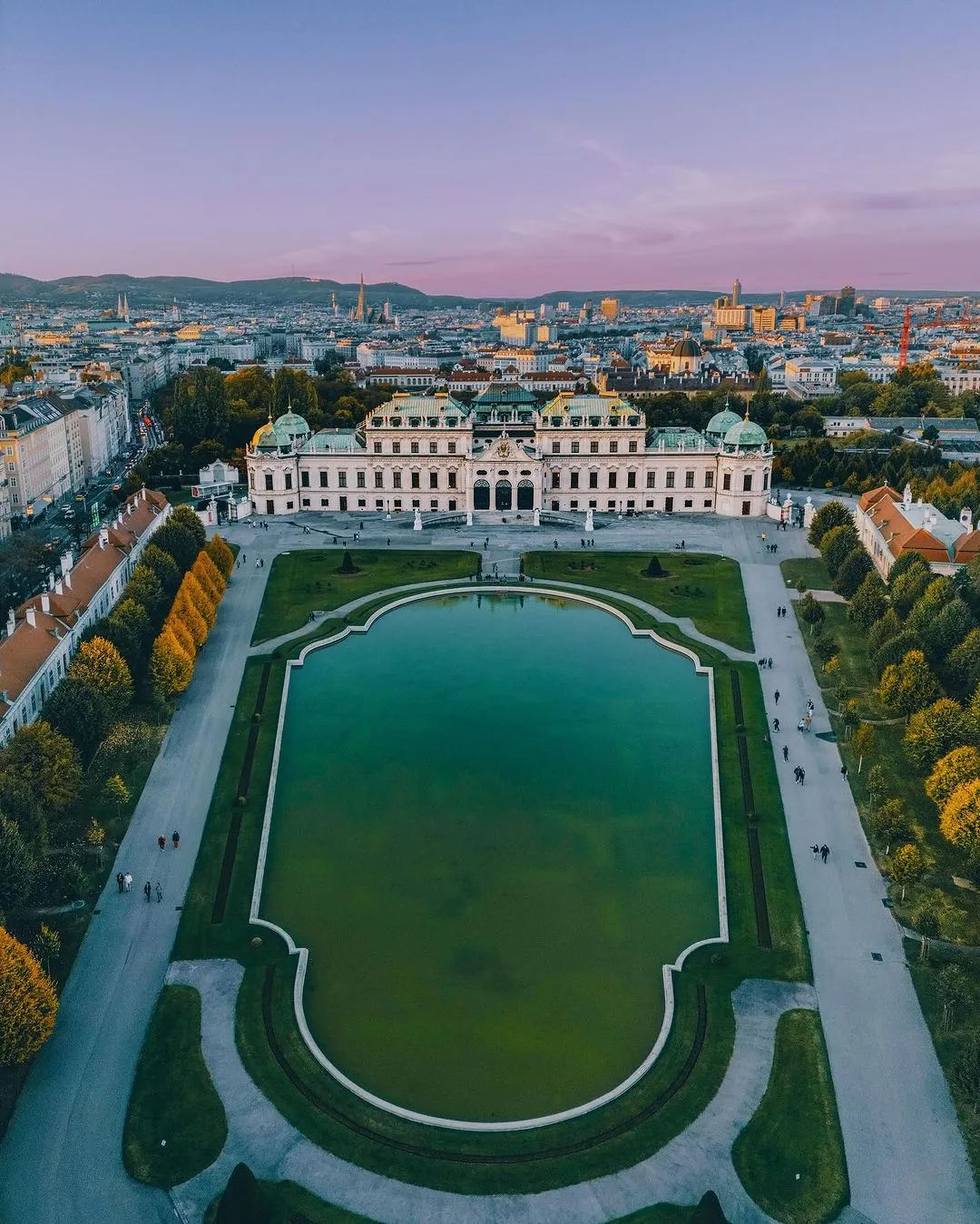
Prince Eugene of Savoy commissioned Belvedere as a summer residence in the early 18th century. Designed by Johann Lukas von Hildebrandt, the complex has two palaces: the Upper Belvedere and the Lower Belvedere. A formal garden links them across a slope, with the Upper Palace at the higher end and views stretching beyond the grounds towards Vienna.
The palaces had different roles in the prince’s time. The Upper Belvedere was used for receptions and other formal occasions, while the Lower Belvedere was also part of his residence. Today, both buildings are exhibition spaces. The Orangery and Palace Stables are part of the wider museum complex, and Belvedere 21 presents contemporary art.
What to see in the galleries
The Upper Belvedere is the main stop for many art visitors. Its collection includes Gustav Klimt’s The Kiss, as well as works by Egon Schiele, Claude Monet and Vincent van Gogh. Klimt’s paintings are a major draw, but the galleries also cover Austrian art across a wider range of periods. Works from the Middle Ages and Baroque era are part of the collection, alongside later art.
The Lower Belvedere has its own exhibitions, including temporary displays. Its role as a museum means the two palaces do not duplicate the same visit: check what is on at each before deciding how much time to set aside. Belvedere 21 adds a contemporary focus, with art from Austria and other countries, as well as film and music.
The garden between the palaces
The garden is laid out in the French style, with broad terraces, fountains and sculptures. Its central axis connects the two palaces, so walking from one to the other gives you changing views of the buildings and the city. The slope is part of the design: from the Upper Belvedere, the grounds descend towards the Lower Palace.
You can visit the gardens without spending the same amount of time inside the museum galleries. Benches and green areas provide places to pause, and paths make a garden walk an option if your schedule is tight. The gardens also give a different view of the architecture than the palace interiors, with the façades, water features and planted areas arranged along the route.
Planning time for your visit
A visit that includes the Upper and Lower Belvedere and Belvedere 21 can take about three hours. If you are short on time, focus on the Upper Palace for Klimt and the main art collection, then walk through the gardens. The complex is closer to Vienna’s centre than Schönbrunn Palace, and its buildings and grounds can be easier to fit into a shorter city itinerary.
Exhibition tickets can be bought online. If seeing The Kiss is your main reason for coming, plan your palace visit around the Upper Belvedere rather than assuming a garden stroll will include the painting. Staff protect the artworks from close contact, so give the displays space as you move through the galleries.
Perguntas frequentes
Where is Belvedere Palace?
It is in Vienna’s 3rd district, in the southeast of the city.
Can you see The Kiss at Belvedere Palace?
Yes. Gustav Klimt’s The Kiss is displayed in the Upper Belvedere.
How much time should I allow?
About three hours is a useful estimate if you plan to visit the Upper and Lower Belvedere and Belvedere 21.
What is the difference between the Upper and Lower Belvedere?
Both are museum spaces in the former palace complex. The Upper Belvedere holds The Kiss and a major art collection; the Lower Belvedere hosts exhibitions, including temporary displays.